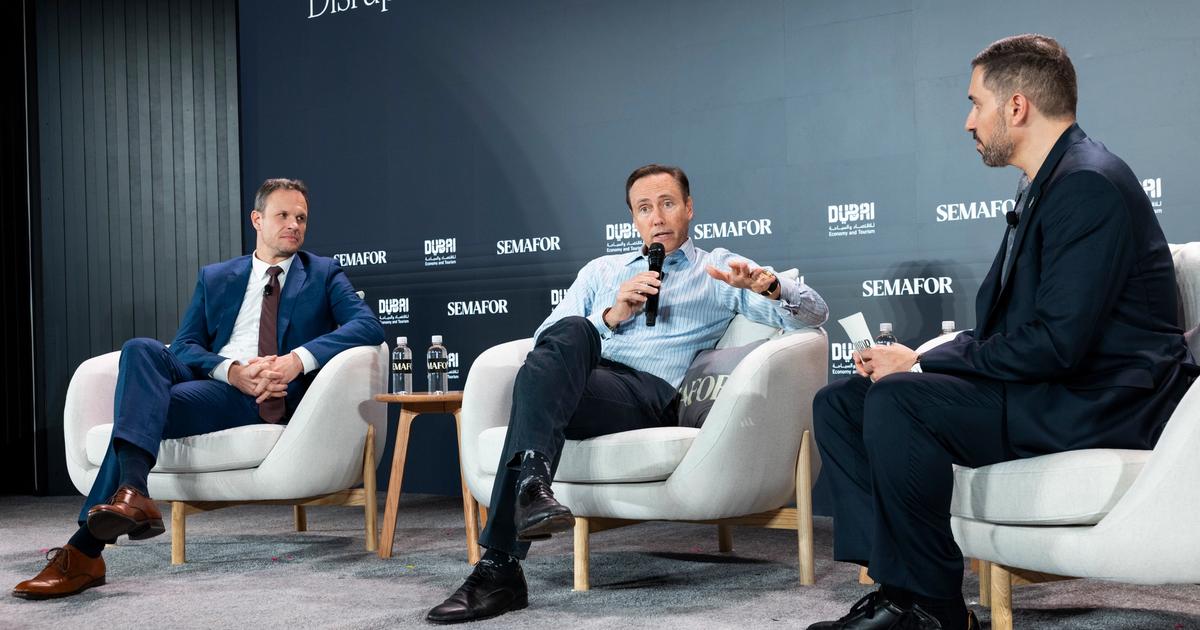
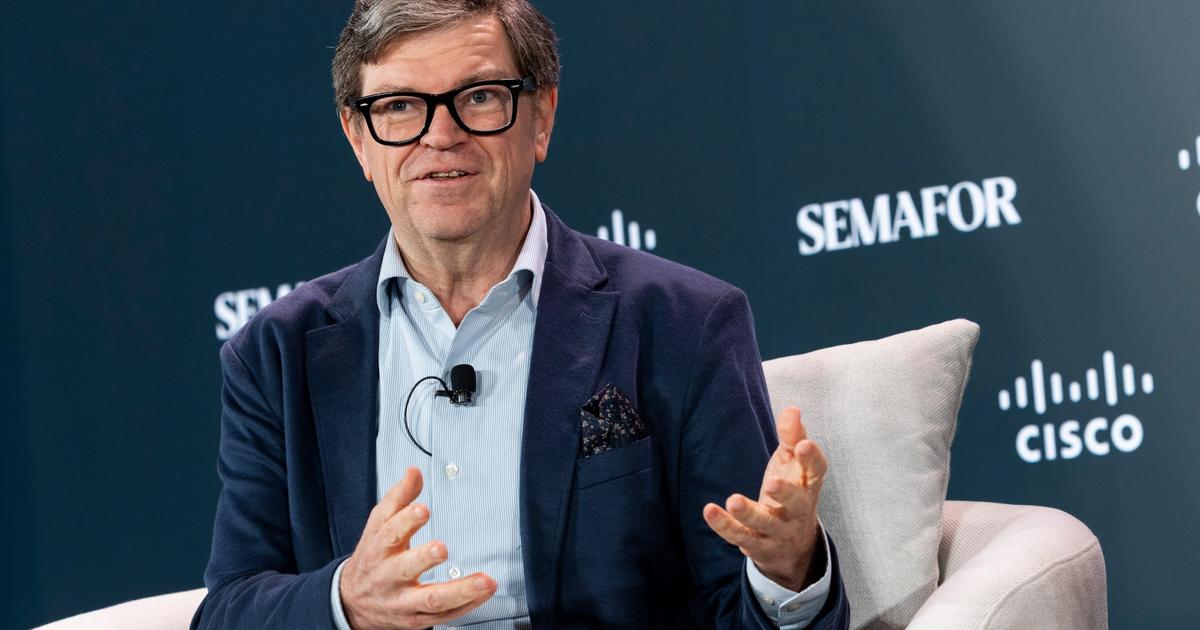
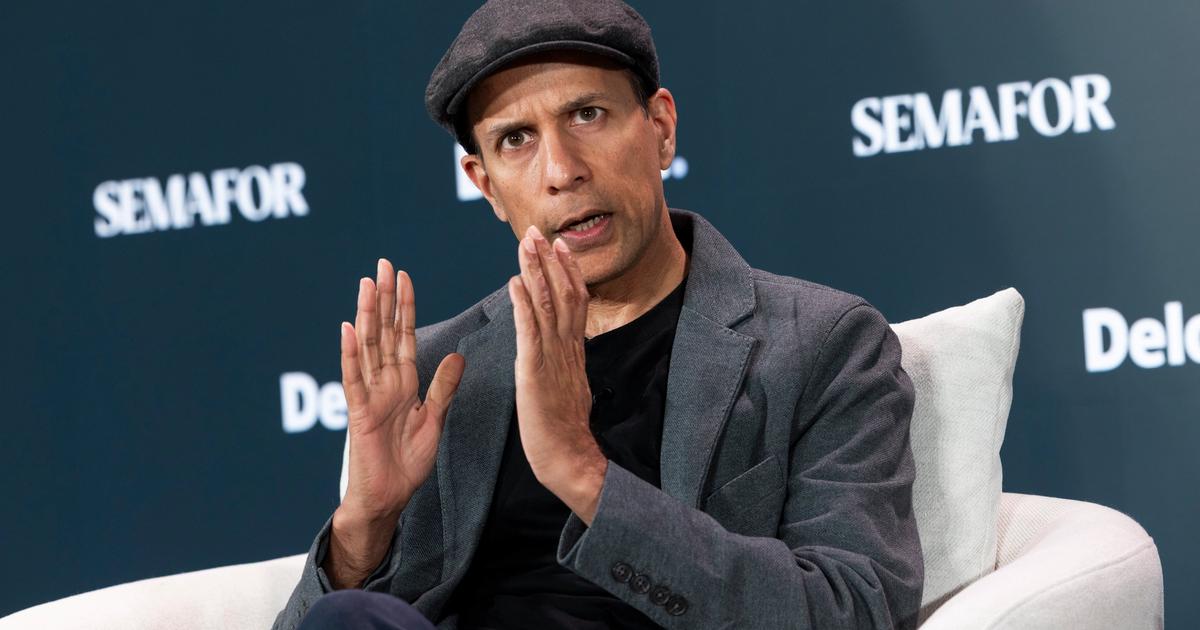
Photo via Semafor

Europe needs ‘innovation-friendly’ regulation to catch up on AI, German official says

Read the original at Semafor ↗
Cite

Kesslen, B. (2026, November 17). Europe needs ‘innovation-friendly’ regulation to catch up on AI, German official says. Semafor. https://www.semafor.com/article/11/17/2026/europe-needs-innovation-friendly-regulation-to-catch-up-on-ai-german-official-says

Dated from the outlet's own feed. Check the original for its byline.

Semafor · collected 2026-11-17 · by Ben Kesslen

Quick Summary

Germany’s director-general for digital policy, Marco-Alexander Breit, stated at Semafor’s Silicon Valley & The World conference that Europe needs more innovation-friendly regulations to compete in the AI race. Breit emphasized the need for regulatory changes to prevent European AI leaders from leaving Europe, while also acknowledging that the EU AI Act, despite being mostly favorable, adds a higher threshold for European companies. Former UK Prime Minister Rishi Sunak also criticized the EU AI Act for attempting to legislate for every conceivable use case but agreed that some regulation is necessary to address the risks posed by AI technologies.
Written by AI on 2026-11-20, from this article's own text only (the story summary below draws on all the coverage).

AI analysis

Story summary

Germany’s director-general for digital policy and economic affairs, Marco-Alexander Breit, called for more innovation-friendly regulation in Europe to compete in the AI race. Speaking at Semafor’s Silicon Valley & The World event on November 17, 2026, Breit acknowledged the need to reduce regulatory barriers to ensure European AI leaders can stay and succeed in Europe. He agreed with Steve Jurvetson, Managing Director of Future Ventures, who argued that European innovation is stifled by excessive regulation. While Breit noted that Europe is not entirely without opportunities, he emphasized the need to streamline regulations to help European companies step up their AI capabilities. Germany aims to quadruple its data center capacity by 2030 to support this growth.

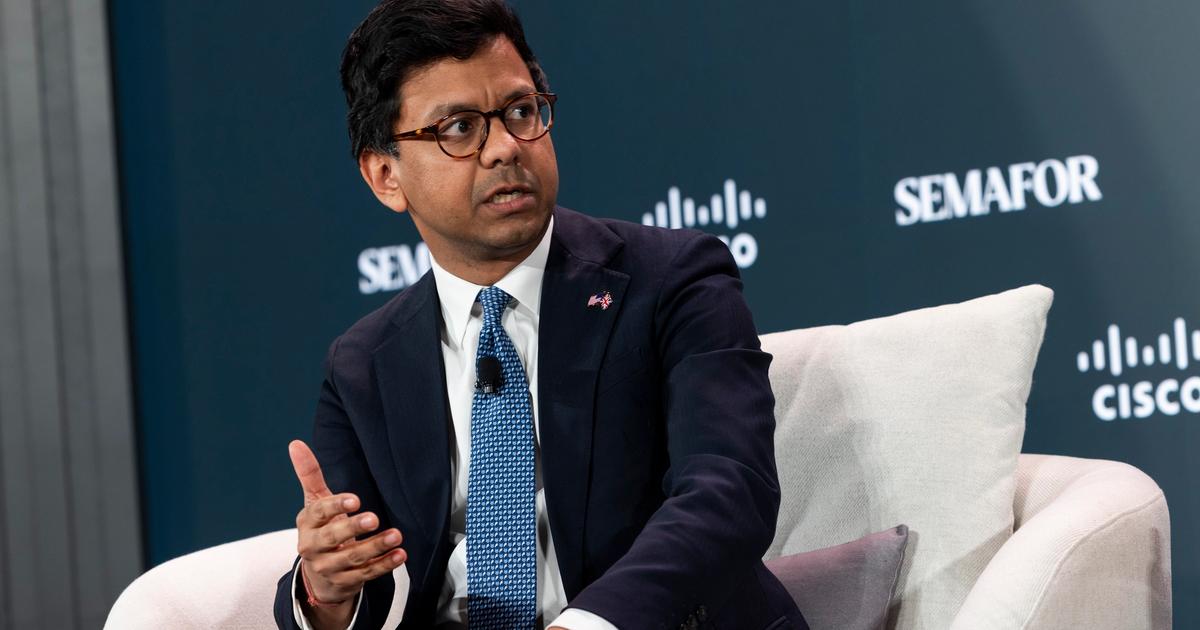
Written for “Europe Needs Innovation Friendly Regulation” on 2026-11-21, grounded in this article and the 0 other(s) covering the same event.

Compared with similar articles

This article reads leans strongly right and hedges 0% of its claims. Each row says how that neighbour differs.
Semafor
Leans right further left than this Hedges 5 of 23 claims Outlet record 64/100
“The articles describe different parts of the same conference but focus on distinct events and speakers.”
Semafor
Leans left further left than this Hedges 0 of 10 claims Outlet record 64/100
“While both articles discuss the same conference and mention similar themes regarding Europe's position in the AI race, they describe different specific discussions and points made by the speakers.”

Story

Europe Needs Innovation Friendly Regulation
Politics · 1 article(s) covering the same event.
How this article was measured signals, leaning charts, publisher record, byline, topics and claims

Signals How these are calculated →

Claims extracted
10
sentences that state something as happening or true
Uncertain
0%
0 of 10 hedged ("reportedly", "may", "according to")
Leaning
Leans strongly right
of the writing, not the subject · beta estimate
Publisher signals
64/100
Semafor's corrections and hedging, across everything collected from it. Not a measure of accuracy.
Outlets on this story
1
Politics
Same framing elsewhere
1
articles that frame the event the way this one does
Analyzed 2026-11-20 · how these are computed

How this is being covered How these are calculated →

Article leaning vs. publisher reliability
Source leaning vs. consistency

Publisher

Semafor · 1931 article(s) · 7 correction(s) detected
Running correction rate · 7 correction(s)

Who wrote this

Ben Kesslen
7 article(s) here · 1 carrying a prediction
LeCun predicts a short period “where AI tools facilitate cyberattacks and favor the attacker over the defender,” but that will be “just a short period of transition.”
Investing in African AI would be “creating a market,” Gill said, and could improve AI’s reputation by showing how it can be used to improve water scarcity, public health, and public services issues.
While Breit pushed back, saying, “it’s not all doom and gloom in Europe,” he acknowledged that red tape and regulation needed to be cut, arguing that change would ensure European AI leaders “don’t need to leave Europe to work on AI and change the world and make a lot of money.” Breit said he agreed with the vast majority of the EU AI Act, for example, but continued on to say that “it actually adds to a higher threshold for European companies to step up their game in the AI world,” he said.
That may be one reason, he said, for recent high-level technological disruptions, like the outages this week reported by banks and airlines.
“If it wasn’t for Jensen, there wouldn’t be a lot of funding going into US open model companies like Reflection and others.
Also by Ben Kesslen
Nothing else under this byline is closely related to this article, so these are simply their most recent.
All 7 articles by Ben Kesslen →

Topics

European Germany Semafor Silicon Valley & The World the EU AI Act

Subjects

Breit ORG · 3× European NORP · 3× Germany GPE · 2× Semafor ORG · 2× Silicon Valley & The World ORG · 2× Marco-Alexander Breit PERSON · 1× Mohammed Sergie PERSON · 1× State Modernisation ORG · 1× Steve Jurvetson PERSON · 1× the Federal Ministry for Digital Affairs ORG · 1×

Narrative

While Breit pushed back, saying, “it’s not all doom and gloom in Europe,” he acknowledged that red tape and regulation needed to be cut, arguing that change would ensure European AI leaders “don’t need to leave Europe to work on AI and change the world and make a lot of money.” Breit said he agreed with the vast majority of the EU AI Act, for example, but continued on to say that “it actually adds to a higher threshold for European companies to step up their game in the AI world,” he said.
framing: assertive · carried by 1 article(s) · first seen 2026-11-20
While Breit pushed back, saying, “it’s not all doom and gloom in Europe,” he acknowledged that red tape and regulation needed to be cut, arguing that change would ensure European AI leaders “don’t need to leave Europe to work on AI and change the world and make a lot of money.” Breit said he agreed with the vast majority of the EU AI Act, for example, but continued on to say that “it actually adds to a higher threshold for European companies to step up their game in the AI world,” he said.

Claims (10 extracted, 0 hedged)

Europe must enact more innovation-friendly regulation if it wants to compete in the AI race, Germany’s director-general for digital policy and economic affairs at the Federal Ministry for Digital Affairs and State Modernisation said Tuesday. asserted
general → enact → Affairs
There are “a lot of things we need to do to catch up in the race,” Marco-Alexander Breit said at Semafor’s Silicon Valley & The World. asserted
Breit → be → Valley
“One of these is actually having a more innovation-friendly regulatory framework, especially in Brussels.” asserted
One → have → Brussels
Germany also needs to “step up” its capacities and capabilities, he told Semafor’s Mohammed Sergie, adding that the country hopes to quadruple its data center capacity by 2030. asserted
country → need → 2030
Steve Jurvetson, Managing Director and Founder of Future Ventures, who joined Breit on stage, went further, saying Europe is “trapped in a sort of regulatory doom loop” that smothers innovation. asserted
that → join → innovation
Jurvetson said “regulation is the elephant in the room” that “is stifling European innovation at every step of the way.” asserted
that → say → way
While Breit pushed back, saying, “it’s not all doom and gloom in Europe,” he acknowledged that red tape and regulation needed to be cut, arguing that change would ensure European AI leaders “don’t need to leave Europe to work on AI and change the world and make a lot of money.” Breit said he agreed with the vast majority of the EU AI Act, for example, but continued on to say that “it actually adds to a higher threshold for European companies to step up their game in the AI world,” he said. asserted
he → push → world
“So it actually hurts our economy even more than people maybe think in Silicon Valley that it hurts the US companies.” asserted
it → hurt → companies
Speaking earlier at Silicon Valley & The World, former UK Prime Minister Rishi Sunak also criticized the EU AI Act, saying “trying to legislate for every conceivable use case was not the right approach.” asserted
trying → speak → case
Still, Sunak said he supports some regulation, because despite being bullish on new AI technologies, “they bring new risks with them.” asserted
they → say → them
Give feedback · no sign-in needed

No sign-in needed for now. Your note is sent without a name, so it cannot be answered.

History Support