Photo via Toronto Star

Toronto drivers got Doug Ford's message that it's OK to speed

Read the original at Toronto Star ↗
Cite

Blais, É. (2026, November 18). Toronto drivers got Doug Ford's message that it's OK to speed. Toronto Star. https://www.thestar.com/opinion/contributors/toronto-drivers-got-doug-ford-s-message-that-it-s-ok-to-speed/article_4ef093d7-f745-4006-825a-8acd4638c144.html

Dated from the outlet's own feed. Check the original for its byline.

Toronto Star · collected 2026-11-18 · by Éric Blais

Quick Summary

In September 2025, Ontario Premier Doug Ford banned municipal speed cameras, calling them a "cash grab." This move effectively legitimized speeding for many drivers, as ticket issuance near former camera sites tripled within a year despite no immediate change in enforcement practices. A Toronto Star analysis of city data revealed that speeding violations increased significantly after Ford’s announcement, even before the cameras were officially removed. The article discusses how political messaging can influence public behavior and societal norms around traffic laws.
Written by AI on 2026-11-18, from this article's own text only (the story summary below draws on all the coverage).

AI analysis

Story summary

In September 2025, Ontario Premier Doug Ford banned municipal speed cameras, calling them a "cash grab," which implied that speeding could be more tolerated. A Toronto Star analysis of city data published recently found that speeding near former camera sites began increasing weeks before the cameras were actually removed. The announcement led many drivers to view the speed limit as more of a suggestion, with the real concern being getting caught rather than the act of speeding itself. For instance, on Highway 401, drivers now slow down when Waze alerts them about police cars ahead but resume their original speeds shortly after passing the patrol. While the government has set aside $210 million for speed bumps and roundabouts, and Toronto installed about 700 humps and cushions last year, the message that speeding is acceptable seems to have taken hold among many drivers.

Written for “Doug Ford Endorses Speeding” on 2026-11-21, grounded in this article and the 0 other(s) covering the same event.

Compared with similar articles

This article reads leans strongly right and hedges 8% of its claims. Each row says how that neighbour differs.
Toronto Sun
Hedges 0 of 21 claims Outlet record 96/100
“The articles discuss similar themes but describe different incidents and contexts related to speeding in Toronto.”
Toronto Star
Leans right further left than this Hedges 9 of 61 claims Outlet record 64/100
“The articles describe different aspects of the same issue (speeding in Toronto), but they do not report on the same specific incident or outcome.”

Story

Doug Ford Endorses Speeding
Politics · 1 article(s) covering the same event.
How this article was measured signals, leaning charts, publisher record, byline, topics and claims

Signals How these are calculated →

Claims extracted
36
sentences that state something as happening or true
Uncertain
8%
3 of 36 hedged ("reportedly", "may", "according to")
Leaning
Leans strongly right
of the writing, not the subject · beta estimate
Publisher signals
64/100
Toronto Star's corrections and hedging, across everything collected from it. Not a measure of accuracy.
Outlets on this story
1
Politics
Same framing elsewhere
1
articles that frame the event the way this one does
Analyzed 2026-11-18 · how these are computed

How this is being covered How these are calculated →

Article leaning vs. publisher reliability
Source leaning vs. consistency

Publisher

Toronto Star · 16434 article(s) · 31 correction(s) detected
Running correction rate · 31 correction(s)
2026-11-17
Correction
2026-10-26
Correction
2026-10-24
Correction
2026-10-07
Correction
2026-09-24
Correction

Who wrote this

Éric Blais
6 article(s) here · 1 carrying a prediction
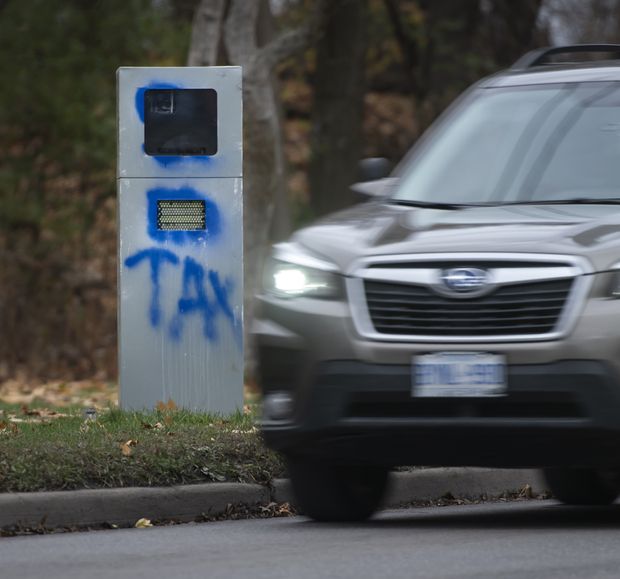
When Premier Doug Ford announced in September 2025 that municipal speed cameras would be banned, he called them a “cash grab.”
Trump can’t run in 2028, and a message aimed at him will soon be a speech without an audience.
Last week, Ottawa exhaled when about 75 per cent of Albertans voted to stay in Canada and Alberta Premier Danielle Smith promised there would be no second try.
The binding referendum some had hoped to trigger will not happen.
That would be like Premier Doug Ford having the Ontario PCs pick up the tab for his government’s “Protecting Ontario” ads.
What hangs from my bag is the same scallop shell every pilgrim wears, the one that will point me toward Santiago for another 540 kms.
Also by Éric Blais
Nothing else under this byline is closely related to this article, so these are simply their most recent.
All 6 articles by Éric Blais →

Topics

Ford Toronto Toronto Star Waze

Subjects

Toronto GPE · 2× Cass Sunstein PERSON · 1× Conservatives NORP · 1× Doug Ford PERSON · 1× Ford PERSON · 1× Toronto Star ORG · 1×

Narrative

A government is entitled to respond to public frustration, and this one set aside $210 million for speed bumps and roundabouts, while Toronto says it installed some 700 humps and cushions last year.
framing: assertive · carried by 1 article(s) · first seen 2026-11-18
When Premier Doug Ford announced in September 2025 that municipal speed cameras would be banned, he called them a “cash grab.”
2026-11-18 · Toronto Star
Toronto drivers got Doug Ford's message that it's OK to speed · assertive framing

Claims (36 extracted, 3 hedged)

Every morning on Highway 401, thousands of drivers glance at their phones as Waze warns of a police car parked ahead. asserted
Waze → glance → car
They ease off the gas, pass the cruiser at a respectable 100 km/h, and a kilometre later go back to whatever speed they were doing before. asserted
they → ease → speed
Nobody thinks of this as cheating. asserted
Nobody → think → cheating
It is just how many of us drive, and if anyone objects, we have the oldest excuse on the road: we were only keeping up with traffic. asserted
we → drive → traffic
For many, the speed limit is a suggestion, and the only rule that matters is not getting caught. asserted
that → matter → many
That was a private attitude until last year, when the province effectively turned it into policy. asserted
province → turn → policy
When Premier Doug Ford announced in September 2025 that municipal speed cameras would be banned, he called them a “cash grab.” asserted
he → announce → them
In doing so, the premier implied speeding could be tolerated. uncertain
speeding → do → ?
The driver doing 60 km/h in a school zone became the victim, the camera that photographed him became the offender, and the real injustice became getting caught, rather than speeding. asserted
injustice → do → him
Speeders got it right away. asserted
Speeders → get → it
A Toronto Star analysis of city data, published this month, found that speeding near former camera sites began climbing after the announcement, weeks before the cameras came down. asserted
cameras → publish → announcement
For roughly seven weeks they kept working, and the tickets kept coming, so the odds of being caught were unchanged. asserted
odds → keep → weeks
Message had changed asserted
Message → change → ?
What had changed was the message from Queen’s Park, and drivers heard it clearly: if the cameras were unfair, so was slowing down for them. asserted
slowing → change → them
A year later, the number of vehicles travelling at least 20 km/h over the limit near those sites has tripled. asserted
number → travel → sites
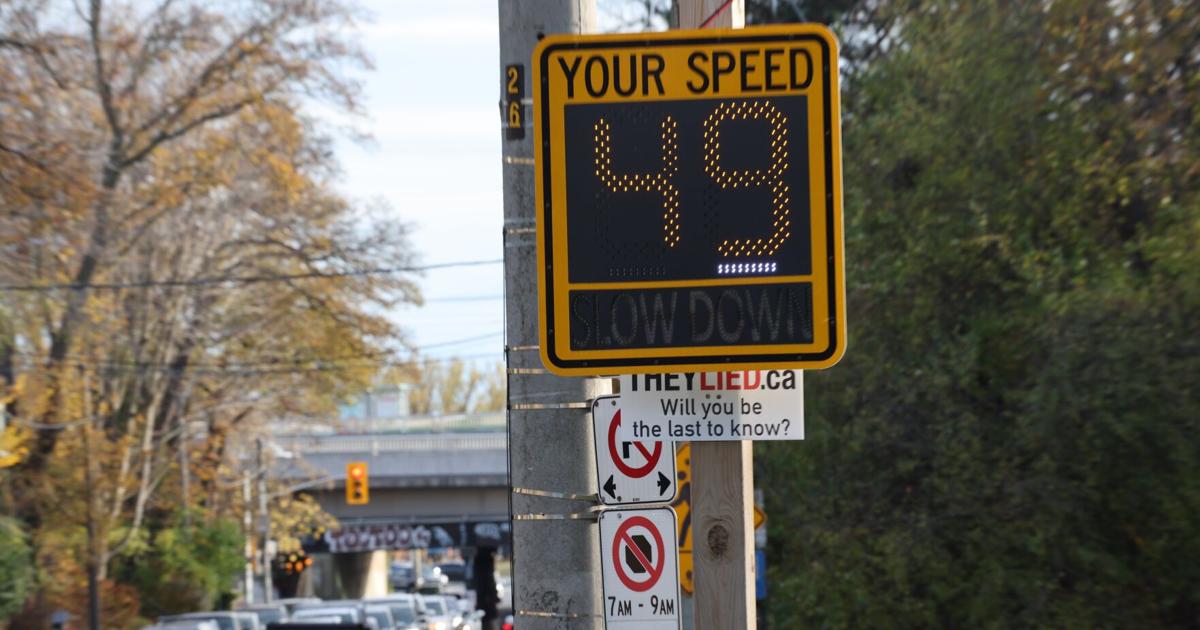
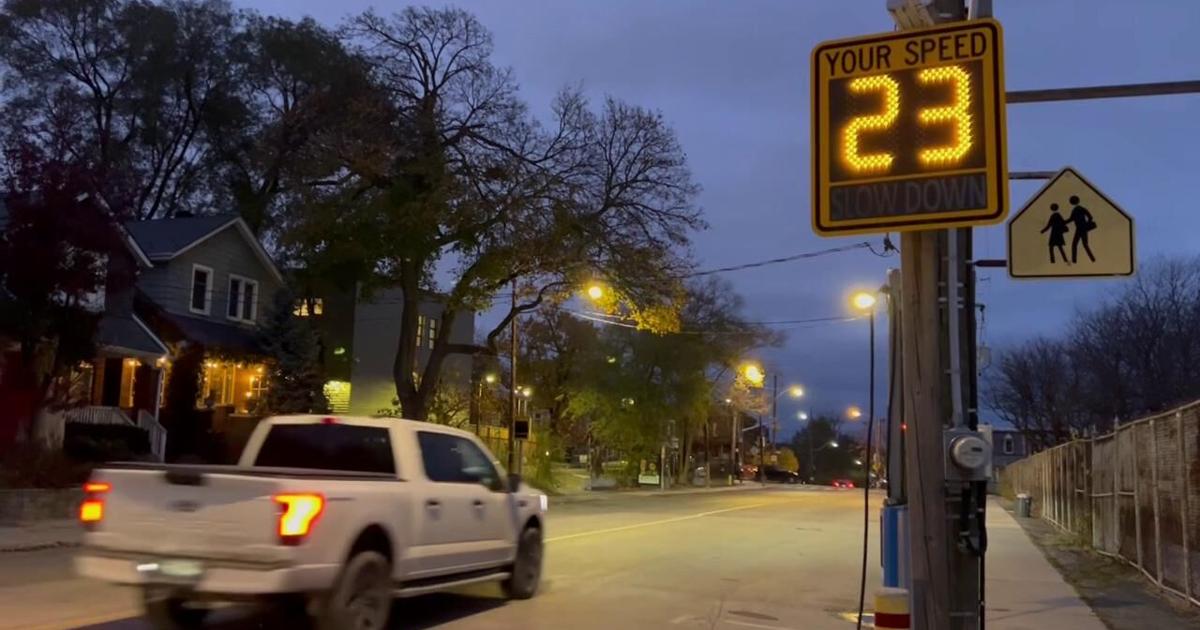
On Parkside Drive, where a 40 km/h limit was once enforced by the city’s most frequently vandalized camera, a nearby sign now records more than 3,000 drivers a month doing 60 km/h or faster. asserted
sign → enforce → km
The legal scholar Cass Sunstein calls this the expressive function of law. asserted
scholar → call → law
In this case, the rules of the road, and the people who make them, tell us what society considers acceptable. asserted
society → make → us
A premier’s words carry that weight. asserted
words → carry → weight
When he describes enforcement as a cash grab, drivers hear that the speed limit itself is negotiable. asserted
limit → describe → grab
Ford’s defenders have a reasonable objection. asserted
defenders → have → objection
Many people resented the cameras, and tickets that arrived weeks after the fact added to the grievance. asserted
that → resent → grievance
A government is entitled to respond to public frustration, and this one set aside $210 million for speed bumps and roundabouts, while Toronto says it installed some 700 humps and cushions last year. asserted
it → entitle → humps
The answer to an unpopular enforcement tool, however, is usually to fix it rather than tell the public it was being robbed. asserted
it → fix → public
(A year ago, in these pages, I suggested letting drivers earn a camera’s removal.) uncertain
drivers → suggest → removal
Whatever the new bumps have achieved, speeding near the old camera sites has still tripled. asserted
speeding → achieve → sites
“What your speed” signs more than 500 metres away recorded a 43 per cent increase, compared with 223 per cent near former cameras. asserted
signs → record → cameras
What changed was the likelihood of consequences. asserted
changed → change → consequences
Worth slowing down The data also suggests that years of slower driving never became a habit. uncertain
years → slow → driving
Most of us weren’t respecting the law so much as calculating the odds, the way a Waze user calculates the distance to the next speed trap. asserted
user → respect → trap
The cameras, and the signs warning of them, made it worth slowing down. asserted
it → warn → them
Once both came down, it no longer was. asserted
it → come → ?
Toronto has already recorded more traffic deaths this year than in all of 2025, with the sharpest increases among pedestrians and motorcyclists. asserted
Toronto → record → pedestrians
No single decision explains that, but speed determines whether a collision is survivable, and the people most exposed are the ones who never got a say in how fast the cars around them would go. asserted
cars → explain → them
Conservatives have long called themselves the party of law and order. asserted
Conservatives → call → law
This government has signalled something narrower: you can break the law, as long as nobody is watching. asserted
nobody → signal → law

Give feedback · no sign-in needed

No sign-in needed for now. Your note is sent without a name, so it cannot be answered.

History Support