Photo via The Daily Wire

Strict School Phone Bans Are Paying Off For Students

Read the original at The Daily Wire ↗
Cite

Berkemeyer, D. (2026, November 18). Strict School Phone Bans Are Paying Off For Students. The Daily Wire. https://www.dailywire.com/news/strict-school-phone-bans-are-paying-off-for-students

Dated from the outlet's own feed. Check the original for its byline.

The Daily Wire · collected 2026-11-18 · by Drew Berkemeyer

Quick Summary

A new study from Harvard University’s Center for Education Policy Research shows that strict school cellphone bans are leading to modest academic improvements. The study, conducted between 2021 and 2026, found that students at schools with stringent phone restrictions made the equivalent of an additional one to two weeks of learning per year. Researchers compared test scores of approximately 3.3 million students from 3rd to 10th grade at 4,600 schools, finding that the strongest academic gains were seen at schools with the strictest policies, particularly those requiring phones to be locked away in pouches throughout the day.
Written by AI on 2026-11-20, from this article's own text only (the story summary below draws on all the coverage).
See how they differ ↓

AI analysis

Story summary

A new study by Harvard University's Center for Education Policy Research finds that strict school cellphone bans, which require students to lock their phones in pouches during the entire school day, result in modest academic gains. Analyzing test scores from 3.3 million students at 4,600 schools between 2021 and 2026, the study shows these bans improve math and reading scores by the equivalent of 1-2 weeks of additional learning per year. The research indicates that such bans could help reverse roughly half of the annual learning losses observed since 2013. However, the study also notes that while these gains are statistically significant, they are small and may not be substantial enough to close the achievement gap entirely.

Written for “School Phone Bans Improve Test Scores” on 2026-11-21, grounded in this article and the 5 other(s) covering the same event.

How they differ

6 outlets covered “School Phone Bans Improve Test Scores”.

What each outlet says

One AI summary per outlet of its latest article on this story, written from that article alone and checked against it. Open the article for the outlet's own words.

The Daily WireThis outlet18 Nov

A new study from Harvard University’s Center for Education Policy Research shows that strict school cellphone bans are leading to modest academic improvements. The study, conducted between 2021 and 2026, found that students at schools with stringent phone restrictions made the equivalent of an additional one to two weeks of learning per year. Researchers compared test scores of approximately 3.3 million students…

Strict School Phone Bans Are Paying Off For Students (this article)
NPR17 Nov

A new study suggests that strict cellphone bans in schools may help improve students' reading and math achievement, reversing some of the learning losses observed since around 2013. Researchers from Harvard University and Dartmouth College analyzed test scores of over 3 million students across the country before and after schools implemented locked pouches to store phones during school hours. The study found that…

Do school cellphone bans work? New study says yes – but it's complicated →
The Guardian17 Nov

A study by Harvard’s Center for Education Policy Research found that strict cellphone restrictions in US schools lead to small academic improvements, equivalent to about an additional week or two of learning over a school year. Analyzing test scores of 3.3 million students across 4,600 schools, the researchers concluded that while the gains are modest, they could accumulate over time. The study suggests that phone…

School phone bans result in ‘modest’ academic gains for students, study shows →
CBS News18 Nov

A study from Harvard University indicates that banning cellphones in schools can enhance academic performance. Co-author Tom Kane discusses the findings, which suggest positive impacts on learning outcomes when students are not permitted to use their cellphones during school hours.

School cellphone bans improve learning, Harvard study finds →
New York Post18 Nov

A Harvard study reveals that school cellphone bans may boost student academic performance, with gains equivalent to one to two extra weeks of learning per year. The research, conducted between 2021 and 2026, tracked 3.3 million students across 4,600 US schools, finding that strict bans, such as requiring phones to be locked away all day, led to the most significant improvements in math and reading scores. New York…

School cell phone bans are boosting grades — and teachers are reporting even bigger classroom benefits →
The Straits Times21 Nov

A new national analysis reveals that school phone bans are modestly improving students' academic performance in the US. Schools implementing strict bans, where students must keep their phones locked up all day, have seen math and reading test scores improve as if students had an additional one to two weeks of schooling annually.

US school phone bans are gradually improving test scores, new evidence shows →

Where they agree and split

Framing

How the first headlines put it

Attributed to a source1
Stated as fact1
The headlines (2)

Do school cellphone bans work? New study says yes – but it's complicated NPR · attributed to a source

School phone bans result in ‘modest’ academic gains for students, study shows The Guardian · stated as fact

The full story: what happened, how it changed, and all 6 articles →

Compared with similar articles

This article reads leans right and hedges 18% of its claims. Each row says how that neighbour differs.
New York Post
Leans right Hedges 5 of 26 claims Outlet record 66/100
CBS News
Hedges 0 of 2 claims Outlet record 66/100
NPR
Hedges 6 of 50 claims Outlet record 60/100
The Guardian
Leans right Hedges 7 of 40 claims Outlet record 64/100
New York Post
Leans left further left than this Hedges 1 of 22 claims Outlet record 66/100
“The articles discuss different aspects of school phone bans and their effectiveness, with one focusing on LAUSD's specific implementation and survey results, and the other on a nationwide study's findings.”
The Independent
Hedges 10 of 41 claims Outlet record 59/100
“The articles discuss the broader trend and outcomes of cellphone bans in schools, but do not describe the same specific event or incident happening at a particular time and place.”

Story

School Phone Bans Improve Test Scores
Education · 6 article(s) covering the same event. Compare every outlet's account →
How this article was measured signals, leaning charts, publisher record, byline, topics and claims

Signals How these are calculated →

Claims extracted
34
sentences that state something as happening or true
Uncertain
18%
6 of 34 hedged ("reportedly", "may", "according to")
Leaning
Leans right
of the writing, not the subject · beta estimate
Publisher signals
60/100
The Daily Wire's corrections and hedging, across everything collected from it. Not a measure of accuracy.
Outlets on this story
6
Education
Same framing elsewhere
1
articles that frame the event the way this one does
Analyzed 2026-11-20 · how these are computed

How this is being covered How these are calculated →

Article leaning vs. publisher reliability
Source leaning vs. consistency

Publisher

The Daily Wire · 489 article(s) · 2 correction(s) detected
Running correction rate · 2 correction(s)

Who wrote this

Drew Berkemeyer
48 article(s) here · 1 carrying a prediction
The Bipartisan American Affordability and Jobs Act, backed by two Republican and two Democratic senators, would accelerate federal reviews for energy and infrastructure projects while requiring data centers to pay for more of the electricity infrastructure they need.
Trump offered few details about how the proposed penalty would work, what companies or projects it would cover, or when it could take effect.
New York City Democrat Mayor Zohran Mamdani is moving ahead with a plan to shutter the notorious Rikers Island jail complex.
“Based on our investigation so far, we believe the attackers accessed certain marketing data held by those vendors, which may include some customer names and email addresses.”
Senate Majority Leader John Thune (R-SD) is watching Democrats’ escalating fight over who will lead their party in the Senate next year, warning that a shift toward the left-wing could make bipartisan cooperation even more difficult.
He will still need to win a formal vote of the full chamber on January 3, but he is now the clear favorite to prevail.
The top Democrat on the House Oversight Committee is putting President Donald Trump’s family members, senior aides, and former administration officials on notice, giving Americans a glimpse at what the incoming Democrat-controlled House will prioritize.
He cautioned against placing too much weight on small academic gains, but said their cumulative effect could become meaningful if they persist over time.
2026-11-18 · assertive framing · Strict School Phone Bans Are Paying Off For Students
The Justice Department must submit proposed redactions by Friday, with the judge indicating that some documents could become public as soon as Monday.
President Donald Trump said Tuesday that the United States is taking reports that Iran may be considering a major attack in Washington, D.C., “very seriously.”
Also by Drew Berkemeyer
Nothing else under this byline is closely related to this article, so these are simply their most recent.
All 48 articles by Drew Berkemeyer →

Topics

American Center for Education Policy Research Harvard Harvard University’s The New York Times

Subjects

Harvard ORG · 4× American NORP · 2× Brian Jacob PERSON · 1× Center for Education Policy Research ORG · 1× Harvard University’s ORG · 1× NPR ORG · 1× The New York Times ORG · 1× Thomas Kane PERSON · 1× University of Michigan ORG · 1×

Narrative

“The earlier studies on cellphone bans have been dismissed as implying small impacts, and in-school cellphone use has been ruled out as playing a big role in the decline,” Thomas Kane, a Harvard education professor and co-author of the study, told The New York Times.
framing: assertive · carried by 1 article(s) · first seen 2026-11-20
He cautioned against placing too much weight on small academic gains, but said their cumulative effect could become meaningful if they persist over time.
2026-11-20 · The Daily Wire
Strict School Phone Bans Are Paying Off For Students · assertive framing

Claims (34 extracted, 6 hedged)

School cellphone bans are beginning to produce measurable academic gains, according to a new nationwide study that found students at schools with strict restrictions made the equivalent of an additional one to two weeks of learning over the course of a year. uncertain
students → begin → year
The study, published Tuesday by Harvard University’s Center for Education Policy Research, examined test scores from approximately 3.3 million students between 3rd and 10th grade at 4,600 schools between 2021 and 2026. asserted
study → publish → 2021
Researchers compared academic growth at schools that prohibited students from accessing their phones throughout the school day with growth at similar schools without strict bans. asserted
that → compare → bans
Students at schools requiring phones to be locked away in pouches saw modest improvements in both math and reading. asserted
Students → require → math
Researchers estimated the gains reversed roughly half of the annual learning losses experienced by students in the years leading up to the COVID-19 pandemic. asserted
gains → estimate → pandemic
“The earlier studies on cellphone bans have been dismissed as implying small impacts, and in-school cellphone use has been ruled out as playing a big role in the decline,” Thomas Kane, a Harvard education professor and co-author of the study, told The New York Times. asserted
Kane → dismiss → Times
“But we think that’s mistaken.” asserted
that → think → ?
The findings arrive as states and school districts increasingly restrict students’ access to smartphones. asserted
states → arrive → smartphones
Forty-six states have enacted school cellphone bans or restrictions, although the policies vary considerably. asserted
policies → enact → bans
Some schools require students to lock their devices away for the entire day, while others allow phones to remain in backpacks or permit their use during lunch and between classes. asserted
phones → require → classes
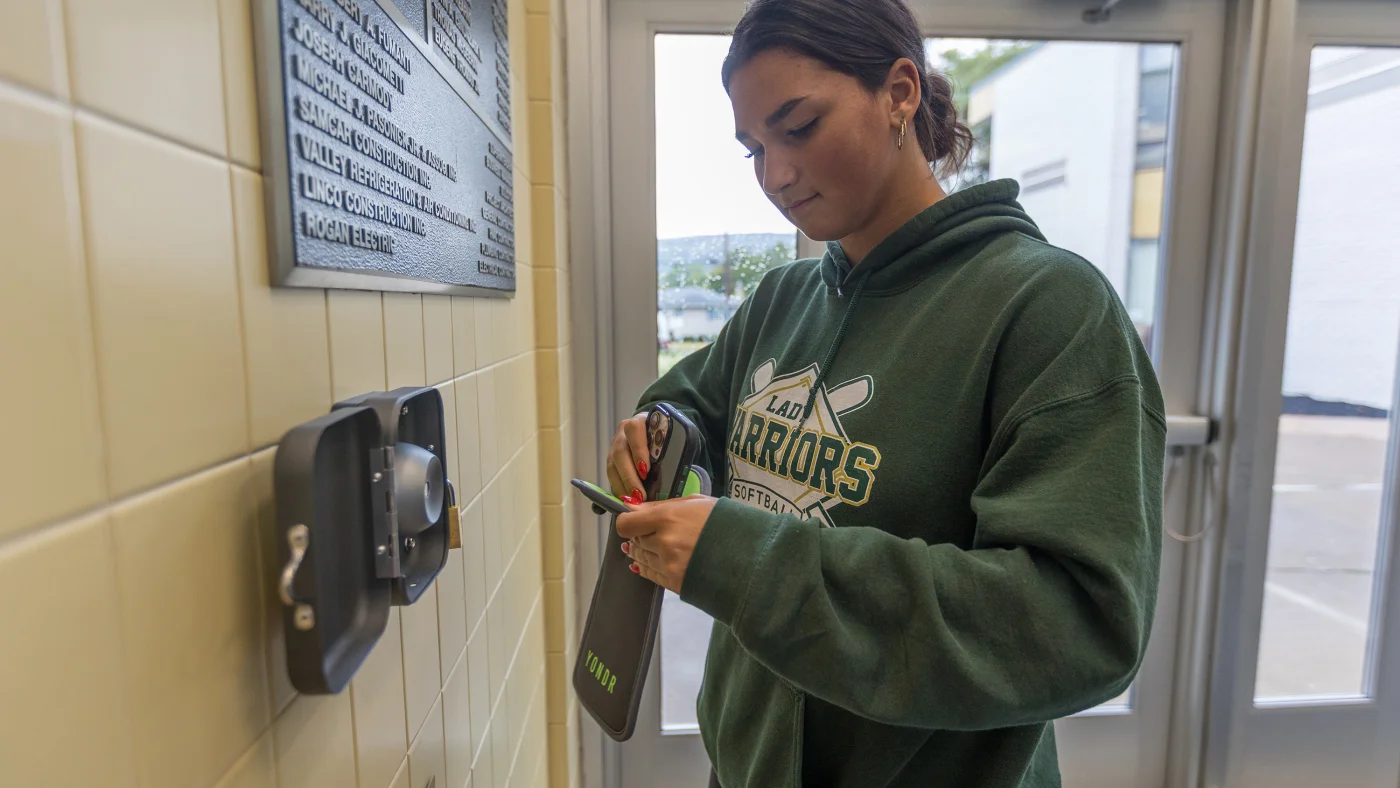
The study found the strongest academic improvements at schools with the strictest restrictions, particularly those requiring students to place their phones in locked pouches that cannot be opened until dismissal. asserted
that → find → dismissal
Less restrictive policies also appeared to produce gains, although researchers expressed less confidence in those results. asserted
researchers → appear → results
The findings offer support for policies that have gained momentum among educators and lawmakers concerned about the effects of smartphones on students’ academic performance. asserted
that → offer → performance
But researchers cautioned that the improvements remain modest and that phone restrictions alone are unlikely to reverse the broader decline in American student achievement. asserted
restrictions → caution → achievement
A separate nationwide study published earlier this year found that phone bans had close to zero overall effect on standardized test scores, although researchers identified some positive effects in high school math. asserted
researchers → publish → math
The two studies used different approaches. asserted
studies → use → approaches
The newer Harvard analysis tracked individual students’ test scores over time, while the earlier research examined average scores at schools adopting phone restrictions. asserted
research → track → restrictions
The Harvard study also relied on a smaller subset of schools using the NWEA testing system. asserted
study → rely → system
Brian Jacob, a University of Michigan professor who co-authored the earlier study, said the newer findings were broadly consistent with his team’s research, even though its positive results were not statistically significant overall. asserted
results → co → research
He cautioned against placing too much weight on small academic gains, but said their cumulative effect could become meaningful if they persist over time. uncertain
they → caution → time
The question of whether those improvements will continue remains unsettled. asserted
improvements → continue → ?
The Harvard researchers found that gains did not appear to disappear after the first year of a ban, instead continuing through as many as three years of implementation. asserted
gains → find → implementation
American student achievement began declining around 2013, years before the pandemic disrupted schools nationwide, according to NPR. uncertain
pandemic → begin → NPR
Researchers have pointed to several potential explanations, including changes in school accountability policies, chronic absenteeism and the widespread adoption of smartphones. asserted
Researchers → point → smartphones
Smartphone access among teenagers increased dramatically during that period. asserted
access → increase → period
In 2011, fewer than one-quarter of teenagers had access to smartphones, according to the researchers. uncertain
quarter → have → researchers
By 2018, approximately 95% did. asserted
% → do → 2018
The study’s authors believe restricting access during school hours could help recover some of the learning lost during that period. uncertain
restricting → believe → period
Kane argued that the approach is relatively inexpensive, estimating the cost of phone pouches at approximately $25 per student. asserted
approach → argue → student
Still, researchers say schools cannot eliminate digital distractions simply by collecting students’ phones. asserted
schools → say → phones
School-issued laptops and other devices can provide alternative ways to access social media and messaging platforms, while smartphone use outside school hours may also affect students’ sleep, mental health, and ability to concentrate on homework. uncertain
use → issue → homework
The researchers also emphasized that test scores capture only part of the potential effects of phone restrictions. asserted
scores → emphasize → restrictions
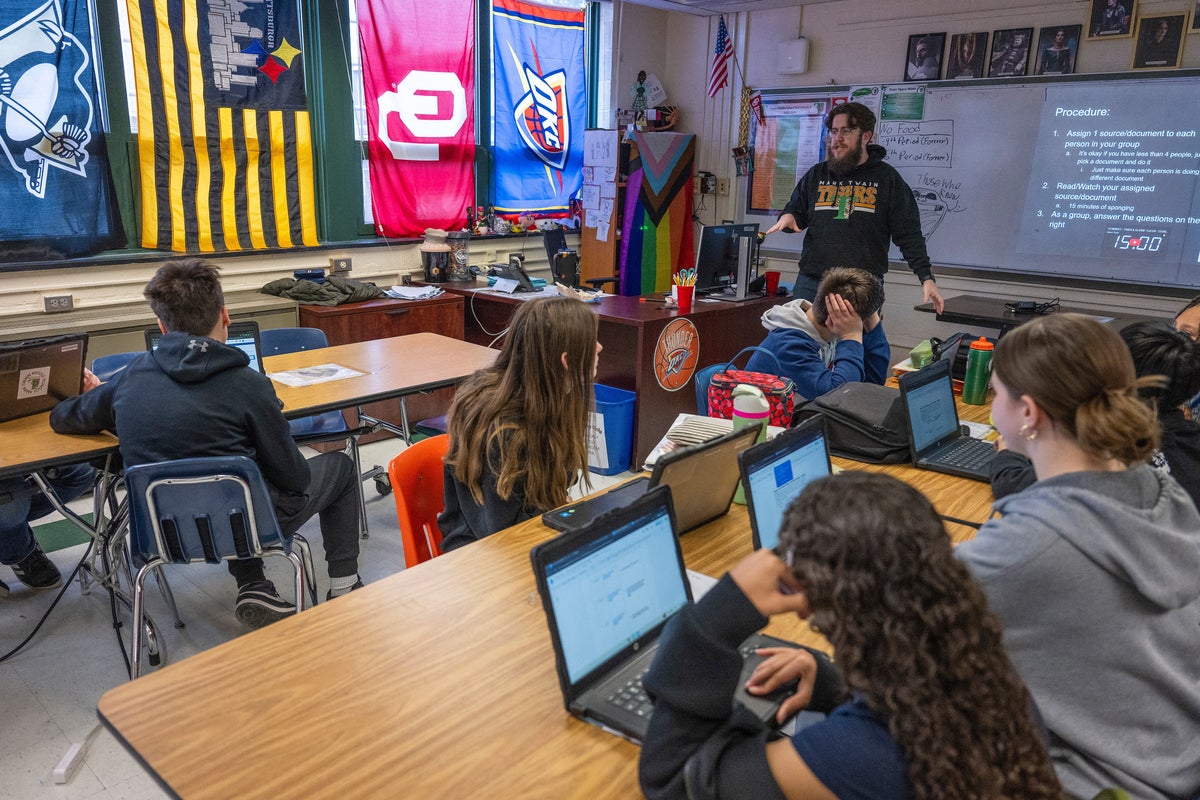
Teachers have reported that students without phones spend more time talking with classmates, playing, and participating in classroom discussions. asserted
students → report → discussions
Whether those broader benefits translate into lasting improvements in student well-being and academic performance will require further research. asserted
translate → translate → research
Give feedback · no sign-in needed

No sign-in needed for now. Your note is sent without a name, so it cannot be answered.

History Support