Photo via CBS News

Largest U.S. data centers use as much power as some countries

Read the original at CBS News ↗
Cite

Cerullo, M. (2026, November 18). Largest U.S. data centers use as much power as some countries. CBS News. https://www.cbsnews.com/news/hyperscale-data-centers-electricity-harvard-study/

Dated from the outlet's own feed. Check the original for its byline.

CBS News · collected 2026-11-18 · by Megan Cerullo

Quick Summary

Harvard University researchers found that the largest U.S. data centers, known as hyperscale data centers, consumed 82 terawatt-hours of electricity—equivalent to the energy use of a state like Missouri or a country like Denmark—between 2024 and 2025, which is about 1.8% of all U.S. electricity. The study, published in Nature Sustainability, analyzed 403 facilities and estimated their total carbon emissions at around 26 metric tons of carbon dioxide. Lead author Gianluca Guidi highlighted the environmental impact of these facilities, emphasizing their constant energy consumption for running and cooling servers, and called for more sustainable practices in data center construction.
Written by AI on 2026-11-19, from this article's own text only (the story summary below draws on all the coverage).
See how they differ ↓

AI analysis

Story summary

A new Harvard University study published in *Nature Sustainability* finds that the largest data centers in the U.S. collectively emitted approximately 25.7 million metric tons of carbon dioxide in a year, equivalent to Denmark's total annual emissions. The study analyzed 403 hyperscale data centers between May 2024 and April 2025, revealing that more than half of their electricity was generated from fossil fuels. This research highlights the significant environmental impact of these facilities, particularly as the growth in artificial intelligence accelerates demand.

Written for “US Data Center Emissions Rival Countries” on 2026-11-21, grounded in this article and the 5 other(s) covering the same event.

How they differ

6 outlets covered “US Data Center Emissions Rival Countries”.

What each outlet says

One AI summary per outlet of its latest article on this story, written from that article alone and checked against it. Open the article for the outlet's own words.

CBS NewsThis outlet18 Nov

Harvard University researchers found that the largest U.S. data centers, known as hyperscale data centers, consumed 82 terawatt-hours of electricity—equivalent to the energy use of a state like Missouri or a country like Denmark—between 2024 and 2025, which is about 1.8% of all U.S. electricity. The study, published in Nature Sustainability, analyzed 403 facilities and estimated their total carbon emissions at…

Largest U.S. data centers use as much power as some countries (this article)
The Guardian16 Nov

A new study published in Nature Sustainability reports that the construction of large datacenters in the US, primarily for handling AI growth, has emitted approximately 25.7 million metric tons of carbon dioxide, equivalent to Denmark’s annual emissions. Conducted until April 2025, the research analyzed 403 “hyperscaler” datacenters, which consumed between 68 to 99 terawatt-hours of electricity, with over half…

Surge of US datacenters adds equivalent of Denmark’s annual emissions, study finds →
Toronto Star16 Nov

A Harvard University study published in Nature Sustainability estimates that the 400 largest data centers in the United States emitted approximately 28.3 million tons of carbon dioxide in one year, surpassing Denmark's annual emissions and reflecting significant pollution from fossil fuels. This research coincides with the launch of a voluntary pledge at the UN COP31 climate talks in Turkey, encouraging companies…

Study estimates magnitude of US data center pollution as climate talks unveil clean AI pledge →
Time16 Nov

A new study published in Nature Sustainability reports that over 400 American hyperscale data centers use between 68 and 99 terawatt-hours of electricity annually, equivalent to the annual electricity consumption of entire U.S. states like Wisconsin or Indiana. The study, which used satellite imagery and EPA data, found that these data centers emit approximately 25.7 million metric tons of carbon dioxide, nearly…

Over 400 American AI Data Centers Use As Much Electricity As Wisconsin, Michigan, or Indiana →
CBC16 Nov

A Harvard University study reveals that the 400 largest data centers in the U.S. emitted approximately 28.3 million tons of carbon dioxide in a year, more than Denmark's annual emissions. The study highlights that over half of these data centers' electricity usage comes from fossil fuels, contributing significantly to global warming. This report coincides with discussions at COP31, where a pledge was launched to…

Data centres in the U.S. put out more carbon emissions in a year than Denmark, says Harvard study →
Semafor17 Nov

A study published in Nature Sustainability estimates that US data centers emit 25.7 million metric tons of carbon annually, comparable to Denmark's total emissions. Harvard researchers found 403 data centers consume nearly 2% of US electricity, mostly from fossil fuels. Major contributors include sites in Iowa, Ohio, and Virginia, which account for about half of the estimated emissions. The study, though not…

US data center emissions rival entire countries →

Where they agree and split

Framing

How the first headlines put it

Attributed to a source1
Stated as fact3
The headlines (4)

Data centres in the U.S. put out more carbon emissions in a year than Denmark, says Harvard study CBC · attributed to a source

Surge of US datacenters adds equivalent of Denmark’s annual emissions, study finds The Guardian · stated as fact

Study estimates magnitude of US data center pollution as climate talks unveil clean AI pledge Toronto Star · stated as fact

Over 400 American AI Data Centers Use As Much Electricity As Wisconsin, Michigan, or Indiana Time · stated as fact

The full story: what happened, how it changed, and all 6 articles →

Compared with similar articles

This article reads unscored and hedges 14% of its claims. Each row says how that neighbour differs.
CBS News
Hedges 1 of 2 claims Outlet record 66/100
“While both articles discuss the same topic and cite the same research, they do not describe the same specific event or incident; rather, they report on different aspects and timing of the study's release and implications.”
Toronto Star
Leans strongly left Hedges 8 of 37 claims Outlet record 64/100
“The articles discuss the same topic and findings but are published on different dates and do not describe the same specific event or incident.”
Semafor
Hedges 2 of 6 claims Outlet record 64/100
TIME
Leans left Hedges 3 of 27 claims Outlet record 60/100
“The articles discuss similar topics but refer to different research periods and specific details, suggesting they are reporting on related but distinct findings.”
The Guardian
Leans left Hedges 6 of 26 claims Outlet record 64/100
“The articles discuss similar topics but report different findings and timeframes for the datacenter emissions and energy consumption.”
CBC News
Hedges 8 of 36 claims Outlet record 60/100
“The articles discuss similar topics but describe different aspects of data center energy consumption and emissions with distinct details and timeframes.”

Story

US Data Center Emissions Rival Countries
Environment · 6 article(s) covering the same event. Compare every outlet's account →
How this article was measured signals, leaning charts, publisher record, byline, topics and claims

Signals How these are calculated →

Claims extracted
21
sentences that state something as happening or true
Uncertain
14%
3 of 21 hedged ("reportedly", "may", "according to")
Leaning
withheld
no quote in the article backed the model's score
Publisher signals
66/100
CBS News's corrections and hedging, across everything collected from it. Not a measure of accuracy.
Outlets on this story
6
Environment
Same framing elsewhere
1
articles that frame the event the way this one does
Analyzed 2026-11-19 · how these are computed

How this is being covered How these are calculated →

Article leaning vs. publisher reliability
Source leaning vs. consistency

Publisher

CBS News · 5942 article(s) · 11 correction(s) detected
Running correction rate · 11 correction(s)

Who wrote this

Megan Cerullo
50 article(s) here · 1 carrying a prediction
Anthropic co-founder and CEO Dario Amodei said in a post on X in August that he believes "it will actually be possible to cure most human disease in ~5-10 years, as crazy as it may sound to ordinary people and frankly to biologists as well (I used to be one!).
"Things could need to escalate quite a bit for this to go from level one to level three, which would maybe start to move the needle for some companies.
Harvard scientist Gianluca Guidi, the lead author of the paper published in Nature Sustainability this week, told CBS News that it took two years to analyze the electricity use and carbon dioxide emissions of 403 hyperscale data centers between May 2024 and April 2025.
Nvidia reported robust growth on Tuesday, with interim CEO Colette Kress set to host her first earnings call since company founder and former chief executive Jensen Huang after revelations of multiple extramarital affairs.
Nvidia co-founder Jensen Huang broke his silence after from the company following revelations of multiple affairs, saying he'd be willing to return as its CEO."I
Huang's exit has heightened concerns that China and other nations could access Nvidia's advanced chips by renting computing resources through data centers in Southeast Asia.
A proposed order bans Family Dollar from misleading customers on prices and requires the company to adopt what the FTC described as a "pricing accuracy program" that is independently assessed and certified annually. "Today's order will ensure Family Dollar stops deceiving consumers about its prices and returns money to consumers harmed by these practices," Christopher Mufarrige, director of the FTC's Bureau of Consumer Protection, said in a statement on Thursday.
Analysts at TD Securities also predict three straight quarter-point hikes, up from their previous forecast of two, because hotter inflation signals that price pressures across the U.S. are broadening.
"It's very stressful knowing that every time the phone rings, you have to pick it up and talk to someone who says you owe them thousands of dollars for something you couldn't help," Coy, 32, a Cypress, Texas, resident, told CBS News. 40% of Americans The phone is also ringing off the hook for millions of other people facing overdue healthcare bills.
Yet Huang's long-range strategic vision, unique qualities as a leader and deep connections in the tech world will be hard to replace, Ives emphasized.
Also by Megan Cerullo
Nothing else under this byline is closely related to this article, so these are simply their most recent.
All 50 articles by Megan Cerullo →

Topics

Denmark Harvard University Missouri U.S. United Nations

Subjects

Guidi PERSON · 5× U.S. GPE · 5× United Nations ORG · 2× CBS News ORG · 1× Denmark GPE · 1× Gianluca Guidi PERSON · 1× Harvard ORG · 1× Harvard University ORG · 1× Missouri GPE · 1× Nature Sustainability ORG · 1×

Narrative

"Every email you send, every photo you post, every show you stream, every question you ask of any generative AI software goes through a building like this," he said of the windowless facilities housing tens of thousands of computers that run around the clock.
framing: assertive · carried by 1 article(s) · first seen 2026-11-19
Harvard scientist Gianluca Guidi, the lead author of the paper published in Nature Sustainability this week, told CBS News that it took two years to analyze the electricity use and carbon dioxide emissions of 403 hyperscale data centers between May 2024 and April 2025.
2026-11-19 · CBS News
Largest U.S. data centers use as much power as some countries · assertive framing

Claims (21 extracted, 3 hedged)

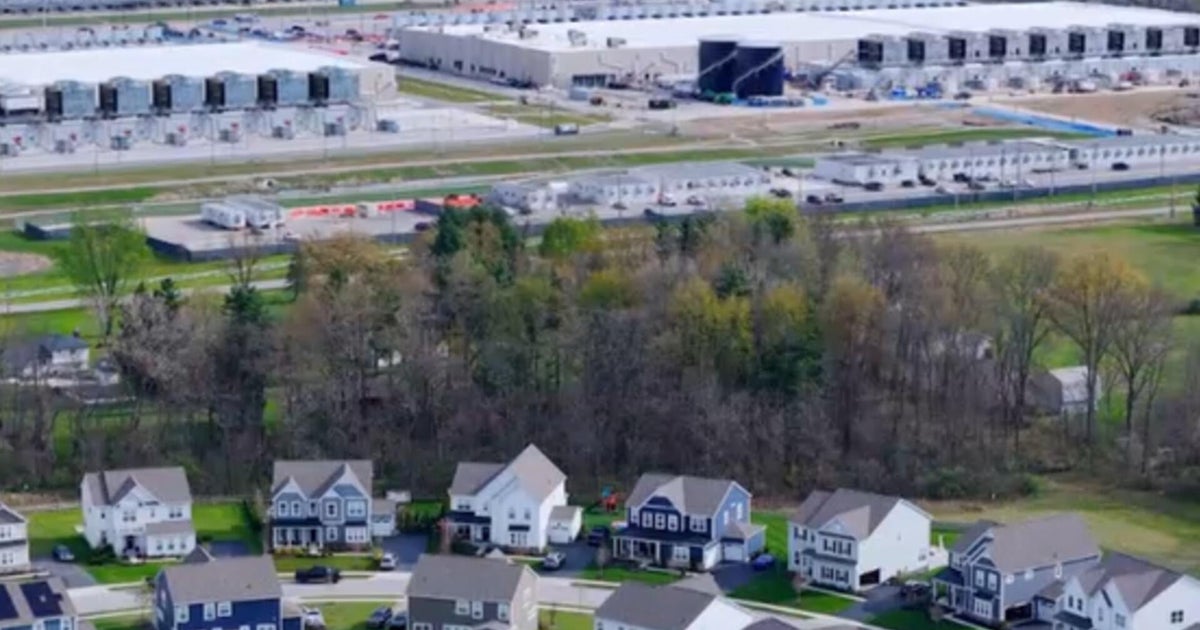
The largest data centers in the U.S. collectively consume roughly as much energy as some individual states and even some countries, according to new research from Harvard University. uncertain
centers → consume → University
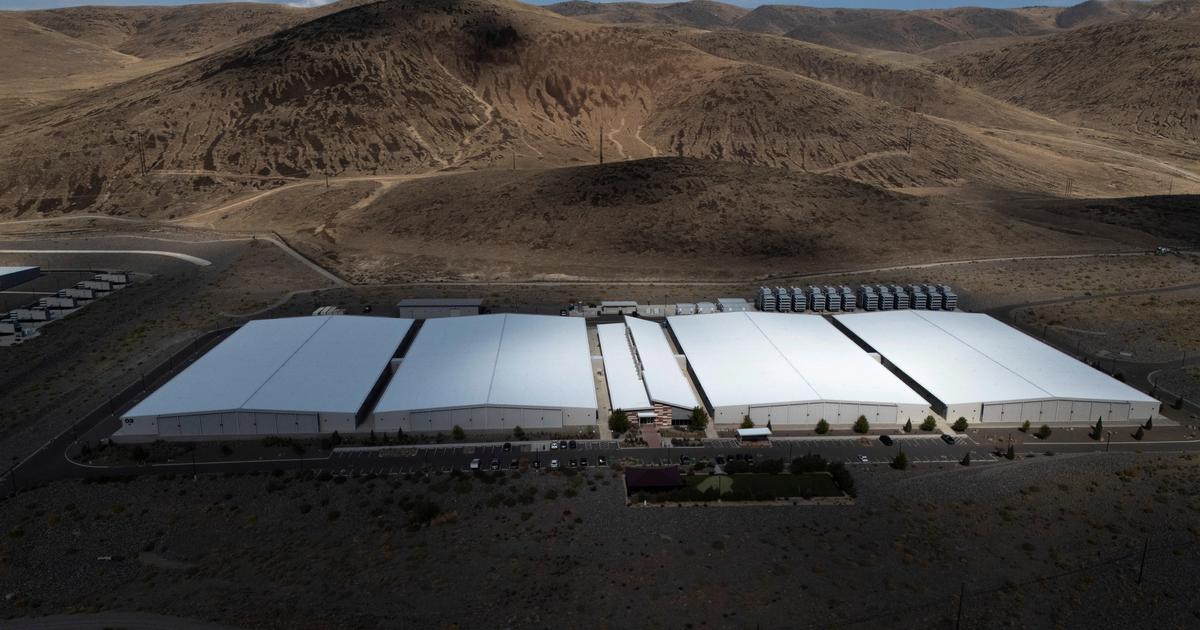
Researchers found that so-called hyperscale data centers, which occupy as much space as several football fields, consumed 82 terawatt-hours of electricity, or 1.8% of all U.S. electricity, between 2024 and 2025. asserted
which → find → 2024
That's roughly the equivalent of what a state like Missouri uses or a nation like Denmark. asserted
state → use → Denmark
Harvard scientist Gianluca Guidi, the lead author of the paper published in Nature Sustainability this week, told CBS News that it took two years to analyze the electricity use and carbon dioxide emissions of 403 hyperscale data centers between May 2024 and April 2025. uncertain
it → publish → May
He added that their estimated energy consumption is likely understated, given the swift pace of the AI buildout across the U.S. "The data stops in April 2025, which in AI time is basically ancient history," Guidi said. asserted
Guidi → add → time
"The industry is growing faster than anyone can track it," Guidi added. asserted
Guidi → grow → it
The study highlights AI's dependence on data centers as well as their outsized impact on the environment. asserted
study → highlight → environment
Guidi explained why the facilities are such heavy electricity users. asserted
facilities → explain → ?
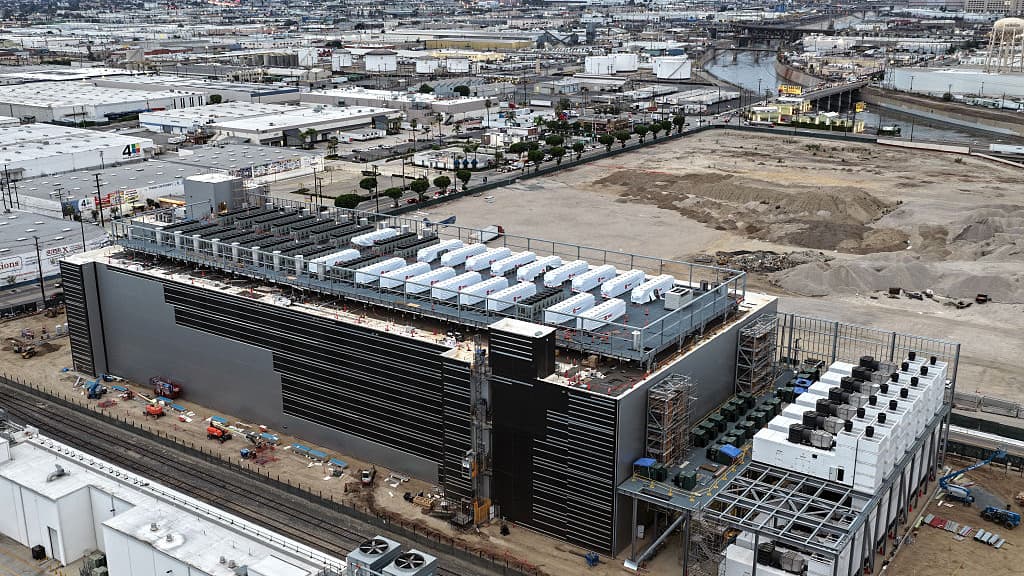
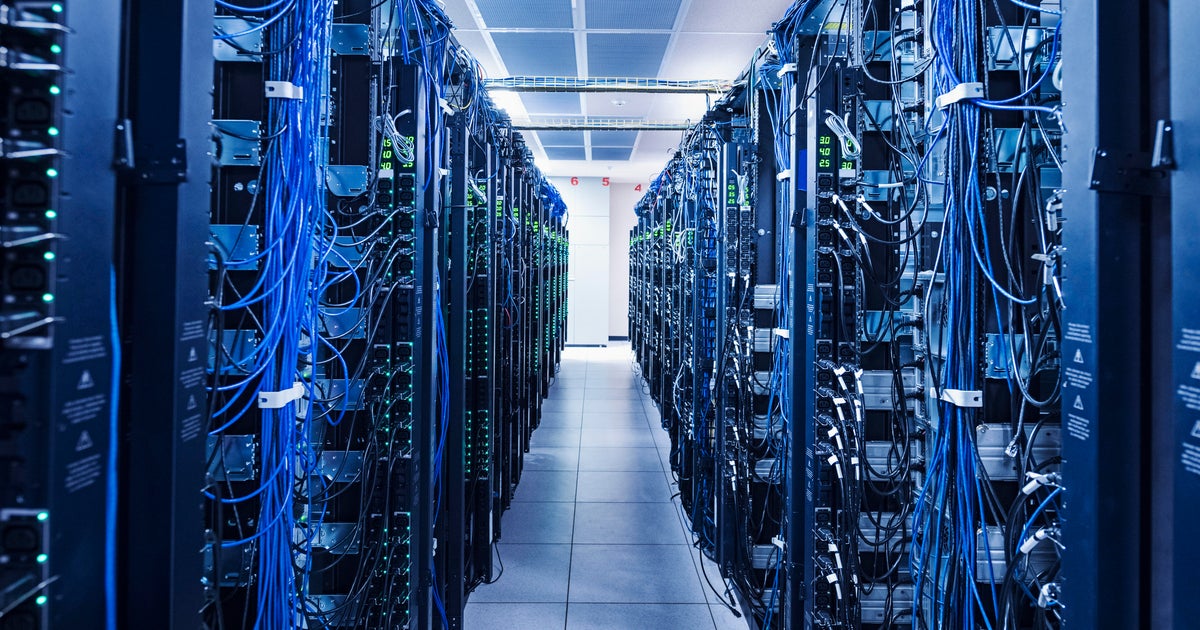
"Every email you send, every photo you post, every show you stream, every question you ask of any generative AI software goes through a building like this," he said of the windowless facilities housing tens of thousands of computers that run around the clock. asserted
that → send → clock
The machines generate a lot of heat and require constant cooling. asserted
machines → generate → cooling
"So it's basically a factory that never sleeps," Guidi said. asserted
Guidi → sleep → ?
While he's excited about AI's capabilities and considers himself an industry proponent, Guidi called for more consideration of when and how facilities are built. asserted
facilities → excite → consideration
"The evidence shouldn't show up after the buildings do, and neither should the public's voice," he said. asserted
he → show → ?
"There are better ways to build this, maybe that cost more, maybe they take longer. asserted
they → be → more
So we have to ask ourselves: Are we confusing what's possible or what's profitable with what's actually good for society?" asserted
what → have → society
He issued a challenge to hyperscalers. asserted
He → issue → hyperscalers
"We've proven we can build AI really fast. asserted
we → prove → AI
Now, let's prove that we can build it right," he said. asserted
he → let → it
Negotiators at the United Nations COP31 climate talks in Turkey earlier this week launched a voluntary pledge calling on companies and governments to power AI with cleaner energy. asserted
Negotiators → launch → energy
"We cannot ask people to accept higher bills, more planet-heating pollution and deeper inequality today in exchange for promises of a better tomorrow," United Nations climate chief Simon Stiell said Monday during the pledge's launch. asserted
Stiell → ask → launch
"Claims about future emissions savings cannot excuse rising pollution now, making climate disasters even worse." So far, the pledge has failed to attract signatures from the U.S. tech companies that are driving the AI buildout. uncertain
that → excuse → buildout
Give feedback · no sign-in needed

No sign-in needed for now. Your note is sent without a name, so it cannot be answered.

History Support