President Donald Trump took aim at Mexico last week, in the wake of the rout of his party in the midterm elections.
asserted
Trump → take → elections
The “INVASION of our Country is taking place again.
asserted
INVASION → take → place
Huge CARAVANS are forming and beginning their illegal march through Mexico,” he announced on Truth Social.
asserted
he → form → Social
He lobbed threats of tariffs at Mexico “if they don’t stop them.”
asserted
they → lob → them
Trump’s renewed anti-immigrant fearmongering — a highlight of the campaign that won him a return to the White House — came as joint U.S. and Mexican military counter-cartel efforts are growing, new details about expanded covert CIA anti-drug operations in Mexico have come to light, and fears of worsening relations and even unilateral U.S. attacks south of the border are on the rise in Mexico.
The Trump administration has, over the last two years, expanded counter-drug efforts across the Americas through a plethora of initiatives from extrajudicial killings of suspected drug traffickers in the Caribbean and Pacific Ocean to ground operations by elite troops in Ecuador to enhanced efforts alongside Mexican forces.
asserted
administration → renew → forces
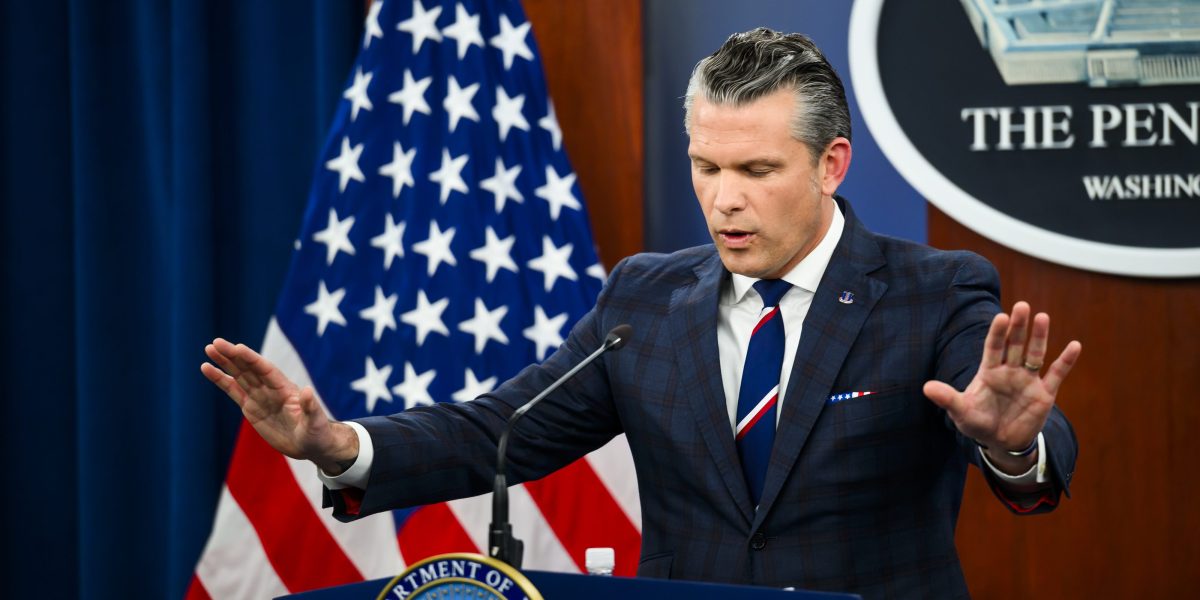
“Right now, we have historic cooperation, military-to-military,” self-styled War Secretary Pete Hegseth said last year.
asserted
Hegseth → have → military
This year, his department established the Joint Interagency Task Force-Counter Cartel to “identify, disrupt, and dismantle cartel operations posing a threat to the United States along the U.S.-Mexico border.”
asserted
department → establish → border
At the same time, the CIA reportedly used a cartel-compromised prosecutor to expand its operations in Mexico after President Claudia Sheinbaum blocked such efforts.
uncertain
Sheinbaum → use → efforts
(The covert operations only came to light when CIA operatives died during a mission.)
asserted
operatives → come → mission
The Trump administration’s latest initiatives are just the latest in a decadeslong string of U.S. security assistance efforts with Mexico that have failed spectacularly, according to a new report by the World Peace Foundation at Tufts University’s Fletcher School released in collaboration with the Costs of War project at Brown University.
uncertain
that → fail → University
The analysis, shared exclusively with The Intercept, examines close to 15 years of U.S. and Mexican efforts to combat the drug trade.
asserted
analysis → share → trade
It offers a stark rebuke of past U.S. efforts, and suggests the Trump administration’s current paradigm for counter-drug policy in Mexico — and counter-cartel policy across the Americas more broadly — is destined to fail.
uncertain
paradigm → offer → Americas
“U.S. military aid to Mexico in the ‘war on drugs’ echoes the same failures of the ‘war on terror,’” said Stephanie Savell, director of the Costs of War project.
asserted
Savell → echo → project
“U.S. security assistance in both cases has fueled forever wars marked by protracted militarization, spiraling violence, and widespread civilian harm.
asserted
assistance → fuel → militarization
These conflicts negatively impact human rights, the economy, and civil institutions.
asserted
conflicts → impact → rights
Despite billions of dollars in U.S. aid over decades, the human, financial, and political costs of Mexico’s drug war have skyrocketed, according to the new report.
uncertain
costs → skyrocket → report
The U.S. poured $3.3 billion into Mexico’s interdiction and counter-drug operations through the Mérida Initiative from 2008 to 2021.
asserted
U.S. → pour → 2021
The researchers found that while Plan Mérida was originally slated to be a shared effort to strengthen government institutions, target crime networks, and reduce cross-border drug flows, both the U.S. and Mexico consistently failed to meet benchmarks, as political will ebbed and flowed and implantation of projects frequently faltered.
asserted
implantation → find → projects
As a result, in Mexico, drug violence spiked, homicide rates tripled, and government authority crumbled.
asserted
authority → spike → Mexico
North of the border, drug demand continued apace and overdose deaths surged, while little was done in the U.S. to stem the flow of firearms and cash that fuels the drug trade.
asserted
that → continue → trade
The authors of the report, Aileen Teague, an assistant professor of international affairs at Texas A&M, and Peyton McGuire, an adjunct professor of political science at Georgia Gwinnett College, detailed the immense human toll of violence in Mexico: more than 460,000 homicides since 2006.
asserted
authors → detail → 2006
“Despite expanded military deployments under Mérida and its successors, Mexico’s homicide rates reached historic highs between 2016 and 2019,” they wrote, adding: “Civilians have borne the overwhelming share of this violence: massacres, kidnappings, and targeted killings have become widespread.”
asserted
massacres → expand → violence
More than 130,000 people have also been reported missing.
asserted
people → report → ?
Femicides, the term for gender-motivated killings, have also spiked during the drug war.
asserted
Femicides → motivate → war
Reported femicides increased from 427 in 2015 to 1,004 in 2021 — a 135 percent increase.
asserted
femicides → report → increase
Last year, in Sinaloa state alone, 105 women were killed.
asserted
women → kill → state
It was the highest toll in 14 years; 73 of the killings were investigated as femicides.
asserted
73 → investigate → femicides
The massive death toll is directly attributable to the U.S. “Many of these homicides are inflicted by firearms trafficked from the United States, which remain a principal source of weapons used by Mexican criminal organizations,” according to Teague and McGuire.
uncertain
which → inflict → Teague
No less than Secretary of State Marco Rubio admitted the same.
asserted
Rubio → admit → same
“Many of the weapons that are in the hands of these cartels are weapons that have been purchased from a source in the United States,” Rubio admitted in 2025.
asserted
Rubio → purchase → 2025
“These weapons have been trafficked.”
asserted
weapons → traffic → ?
An Intercept investigation also found that cartels have even been able to procure ammunition produced for the U.S. military.
asserted
cartels → find → military
Despite clear evidence of the carnage and its cause, most violence in Mexico goes unreported and unpunished.
asserted
violence → go → Mexico
Research shows that in nearly 95 percent of cases, violent crimes go unsolved, exposing massive deficiencies in the Mexican government’s ability to deter, investigate, and prosecute organized crime.
asserted
crimes → show → crime
The carnage, much of it inflicted by cartels, is inextricably bound to declining state authority.
asserted
much → inflict → authority
Recent reporting by the Wall Street Journal highlighted the control of cartels across Mexico.
asserted
reporting → highlight → Mexico
An estimated one-third of the country’s territory is controlled by criminal groups — such as the Sinaloa Cartel and the Jalisco New Generation Cartel — according to U.S. government estimates.
uncertain
third → control → estimates
“This erosion in territorial governance is both a cause and consequence of violence,” write Teague and McGuire.
asserted
Teague → write → violence
U.S. and Mexican efforts to target drug kingpins have fractured criminal groups and caused a proliferation of localized conflicts, overwhelming the abilities of local governments and law enforcement to contain them.
asserted
efforts → target → them
“In turn, weakened institutions proved unable to contain or deter violence, creating a self-reinforcing cycle in which violence degrades state capacity, and diminished state capacity enables further violence,” according to the report.
uncertain
capacity → prove → report
…and 27 more, not listed.
 The Aporia