Photo via New York Post

Iranians are escalating attacks on Strait of Hormuz because they believe they can force Trump into a deal: experts

Read the original at New York Post ↗
Cite

Reyes, R. (2026, November 19). Iranians are escalating attacks on Strait of Hormuz because they believe they can force Trump into a deal: experts. New York Post. https://nypost.com/2026/11/19/world-news/iranians-are-escalating-attacks-on-hormuz-because-they-believe-they-can-force-trump-into-a-deal/

Dated from the outlet's own feed. Check the original for its byline.

New York Post · collected 2026-11-19 · by Ronny Reyes

Quick Summary

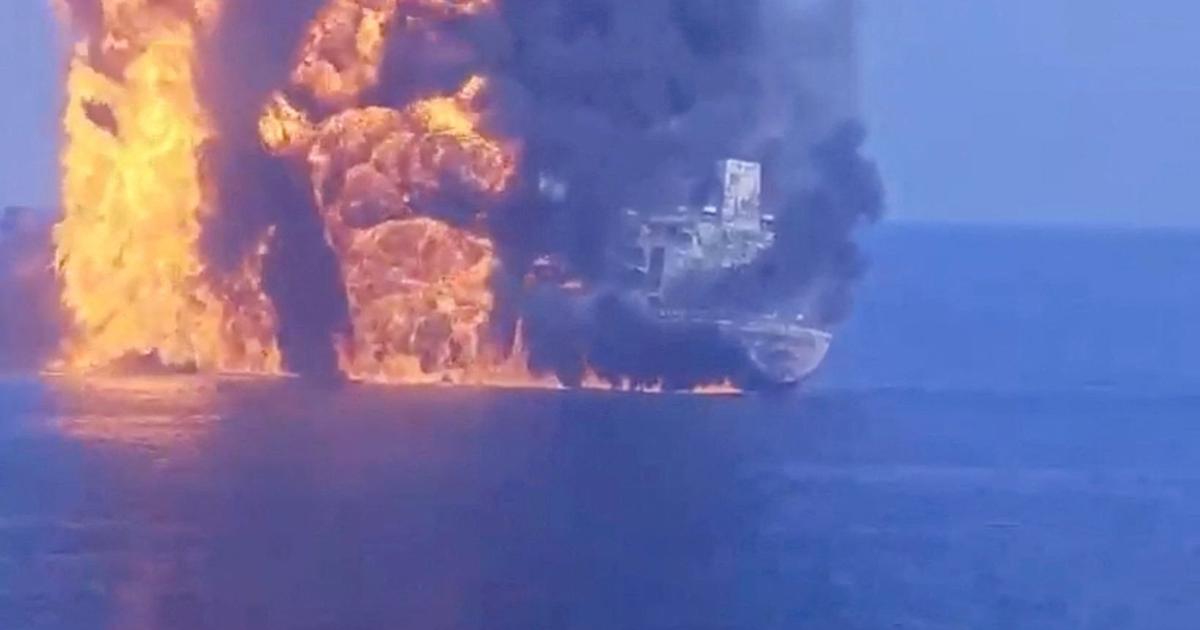
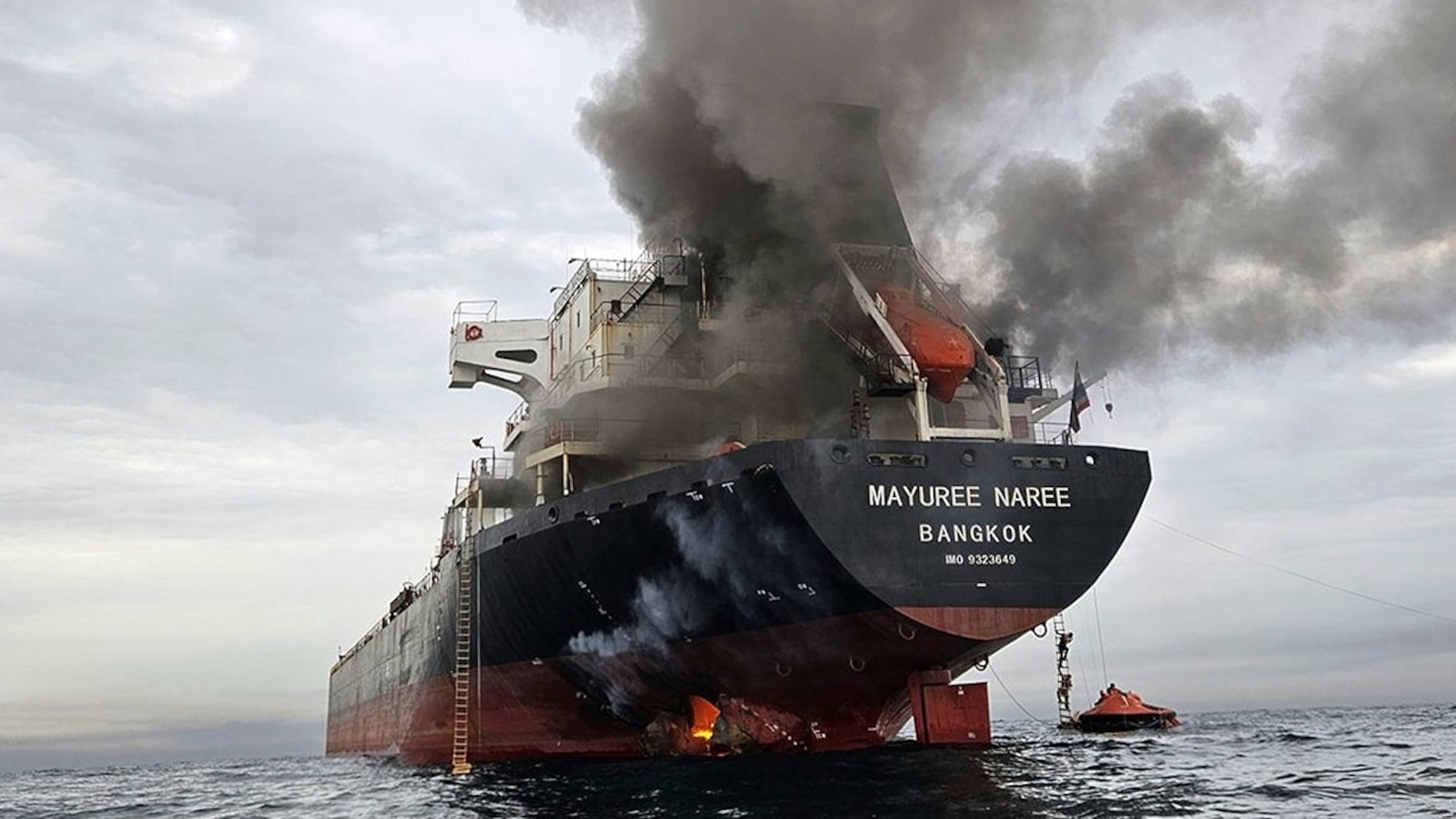
Iran is increasing attacks on oil tankers and US bases in the Middle East to reclaim control over the Strait of Hormuz and force the United States into negotiations, according to experts. In the past week, at least six strikes have been confirmed on tankers, with Iran targeting the busiest ships. The attacks, which also include missile strikes on US bases in Bahrain and Kuwait, demonstrate Iran's willingness to take military risks to end the current economic pressure imposed by the US. Experts suggest that Iran lacks the luxury of time and economic pressure is pushing them towards more aggressive military actions.
Written by AI on 2026-11-20, from this article's own text only (the story summary below draws on all the coverage).

AI analysis

Story summary

Iran is escalating attacks in the Strait of Hormuz and targeting US bases in Bahrain and Kuwait, aiming to force the US into negotiations and reclaim control over the strategic oil passage. In the past week, at least six strikes on tankers have been confirmed by the UK Maritime Trade Operations, with Iran claiming even more attacks. The Islamic Republic sees these actions as a way to show readiness for further conflict and challenge the current status quo, despite the US's economic pressure campaign. Iran's aim is to prevent ships from undermining its control over the strait, through which about 8 million barrels of oil pass daily under US naval escort.

Written for “Iran Attacks Strait Of Hormuz” on 2026-11-21, grounded in this article and the 0 other(s) covering the same event.

Compared with similar articles

This article reads leans strongly right and hedges 25% of its claims. Each row says how that neighbour differs.
Semafor
Hedges 0 of 6 claims Outlet record 64/100
“While both articles discuss recent attacks in the Middle East involving Iran and the US, Article A focuses on a specific 24-hour period with detailed strikes and responses, while Article B provides a broader analysis of Iran's strategy and escalation over a longer period.”
Daily Mail
Leans right further left than this Hedges 1 of 28 claims Outlet record 69/100
“Article A reports on a specific attack on US bases in the Gulf in retaliation for a strike on Qeshm Island, while Article B discusses Iran's broader strategy and multiple attacks in the Strait of Hormuz over a period of time, indicating different specific events or a broader context.”
New York Post
Leans strongly right Hedges 1 of 43 claims Outlet record 66/100
“The articles describe different aspects of the ongoing situation in the Strait of Hormuz, with Article A focusing on the US blockade and its impact on Iran's economy, while Article B discusses Iran's recent attacks and their strategic purpose.”
New York Post
Hedges 1 of 25 claims Outlet record 66/100
“Article A describes a specific incident of Iran firing at Kuwait, while Article B discusses a broader trend of Iran's escalations in the region over a longer period.”
ABC News (US)
Hedges 7 of 43 claims Outlet record 66/100
“While both articles discuss increased attacks on the Strait of Hormuz, Article A focuses on the highest level of attacks since the war began in October and November, while Article B specifically mentions attacks in the past week and discusses Iran's strategic motivations.”
The Independent
Leans right further left than this Hedges 4 of 18 claims Outlet record 59/100
“Article A describes the specific incident of a sixth oil tanker being struck in the Strait of Hormuz on a certain day, while Article B discusses a broader pattern of Iranian attacks over a period of time to force the US into action, not a single specific event.”
The Straits Times
Hedges 0 of 5 claims Outlet record 64/100
“Article A discusses a pattern of attacks in the past week, while Article B describes a specific incident on the day the article was published.”
Al Jazeera
Hedges 0 of 2 claims Outlet record 60/100
“While both articles discuss increased incidents in the Strait of Hormuz, they do not describe the same specific event or incident.”
Euronews
Leans right further left than this Hedges 5 of 26 claims Outlet record 60/100
“The articles describe related events but do not clearly refer to the exact same incident or time frame.”
Semafor
Leans right further left than this Hedges 1 of 4 claims Outlet record 64/100
“The articles describe related but distinct events involving Iran's actions and rhetoric in the Middle East over time, with different specifics and contexts.”

Story

Iran Attacks Strait Of Hormuz
World · 1 article(s) covering the same event.
How this article was measured signals, leaning charts, publisher record, byline, topics and claims

Signals How these are calculated →

Claims extracted
12
sentences that state something as happening or true
Uncertain
25%
3 of 12 hedged ("reportedly", "may", "according to")
Leaning
Leans strongly right
of the writing, not the subject · beta estimate
Publisher signals
66/100
New York Post's corrections and hedging, across everything collected from it. Not a measure of accuracy.
Outlets on this story
1
World
Same framing elsewhere
1
articles that frame the event the way this one does
Analyzed 2026-11-20 · how these are computed

How this is being covered How these are calculated →

Article leaning vs. publisher reliability
Source leaning vs. consistency

Publisher

New York Post · 21764 article(s) · 42 correction(s) detected
Running correction rate · 42 correction(s)

Who wrote this

Ronny Reyes
90 article(s) here · 1 carrying a prediction
Advertisement Tehran has repeatedly stated that it would not allow ships to undermine its claim to the oil chokehold, with Iran specifically targeting the busiest ships that have been making the dangerous back-and-forth trips, according to the Vortexa maritime firm.
Advertisement Duffy went as far as to claim that he would drop L3Harris as a partner if he could. “I want to get away from L3Harris and get to a new one, but they own the network.
The president has since said that he’s not interested in reigniting the war and signaled that he would let America’s economic pressure campaign play out to force Iran to negotiate seriously.
With Russia stepping up attacks on Ukraine’s energy infrastructure in an attempt to freeze the country, nuclear safety regulators representing 38 nations fear that the lack of stable electricity could threaten the country’s power plants’ ability to stay cool and avoid a meltdown.
The figure would match what is already known about Iran’s production capacity.
Any savings from buying the cheaper Russian diesel would be easily wiped out by potential legal fees, likely upcoming congressional investigations, and reputation damage of going through with the exchange, said Jeremy Paner, a former US sanctions official.
President Trump’s special envoy Steve Witkoff said the negotiations would focus on a “post-war security arrangement” and “de-escalation.”
Trump has reiterated that he would keep pushing for diplomacy in Iran, declaring on Monday that the war was “effectively over” despite negotiators being nowhere near to reaching a peace deal.
Additionally, selling more chips to the world’s second largest economy could only help Nvidia’s bottom line.
Alleged Chinese spy Alice Huang may have extracted key details on Nvidia’s products and thoughts on President Trump’s AI stance during “pillow talk” with CEO Jensen Huang, experts said.
Also by Ronny Reyes
Nothing else under this byline is closely related to this article, so these are simply their most recent.
All 90 articles by Ronny Reyes →

Topics

Bahrain Iran Kuwait Tehran The Islamic Republic

Subjects

Iran GPE · 9× Bahrain GPE · 2× Kuwait GPE · 2× Tehran GPE · 2× The Islamic Republic GPE · 2× America GPE · 1× Hamidreza Azizi PERSON · 1× Trump PERSON · 1× Vortexa ORG · 1× the United Kingdom Maritime Trade Operations ORG · 1×

Narrative

Advertisement The attacks also serve as a way for Iran to show the US and its allies that Tehran has rebuilt its missile and drone launchers and is prepared for all-out war to resume, Kristian Coates Ulrichsen, a Middle East expert at Rice University’s Baker Institute, told the Wall Street Journal. “The attacks on Kuwait and Bahrain are a signal that Iran retains both the capability and the intent to target US partners across the Gulf and are a reminder to leaders in the Gulf states that they remain vulnerable to retaliation for U.S. actions in the Strait of Hormuz,” Coates Ulrichsen said.
framing: mixed · carried by 1 article(s) · first seen 2026-11-20
Advertisement Tehran has repeatedly stated that it would not allow ships to undermine its claim to the oil chokehold, with Iran specifically targeting the busiest ships that have been making the dangerous back-and-forth trips, according to the Vortexa maritime firm.

Claims (12 extracted, 3 hedged)

Iran is escalating its attacks in the Middle East as a means to reclaim its control over the Strait of Hormuz and force the US into action for a conclusive end to the war, according to multiple reports. uncertain
Iran → escalate → reports
With about 8 million barrels of oil still exiting through the strait every day under a US naval escort, Iran has stepped up its attacks on tankers to try and stop the flow. asserted
Iran → exit → flow
At least six strikes have been confirmed by the United Kingdom Maritime Trade Operations in the past week, with Iran claiming even more attacks at a pace not seen since the war first began. asserted
war → confirm → pace
Advertisement Tehran has repeatedly stated that it would not allow ships to undermine its claim to the oil chokehold, with Iran specifically targeting the busiest ships that have been making the dangerous back-and-forth trips, according to the Vortexa maritime firm. uncertain
that → state → firm
The Islamic Republic has also targeted US bases in Bahrain and Kuwait in recent days, a clear escalation meant to challenge the current status quo. asserted
Republic → target → quo
Advertisement While Trump has signaled that he is content with allowing the war to remain cold as America’s economic pressure campaign squeezes Iran, the Islamic Republic does not have the luxury to wait around. “ asserted
Republic → signal → luxury
The two sides have very different calculations about the costs of prolonging the confrontation,” Hamidreza Azizi, senior Iran analyst at the International Crisis Group, told Al Jazeera. asserted
Azizi → have → Jazeera
“As economic pressure mounts, Iran may become increasingly willing to take military risks to break the deadlock.” uncertain
Iran → mount → deadlock
Advertisement Lead Iranian negotiator Mohammad Bagher Ghalibaf signaled this very stance during his address to parliament on Sunday, warning the US that lawmakers were told by Supreme Leader Mojtaba Khamenei to end the current stalemate. “We will not remain in a state of ‘neither war nor peace,’” Ghalibaf said. asserted
Ghalibaf → signal → war
“It makes absolutely no difference to us whether the United States wants negotiations or war.” asserted
States → make → negotiations
Advertisement The attacks also serve as a way for Iran to show the US and its allies that Tehran has rebuilt its missile and drone launchers and is prepared for all-out war to resume, Kristian Coates Ulrichsen, a Middle East expert at Rice University’s Baker Institute, told the Wall Street Journal. “The attacks on Kuwait and Bahrain are a signal that Iran retains both the capability and the intent to target US partners across the Gulf and are a reminder to leaders in the Gulf states that they remain vulnerable to retaliation for U.S. actions in the Strait of Hormuz,” Coates Ulrichsen said. asserted
Ulrichsen → serve → Hormuz
“As the Trump administration continues its buildup of force in the region, the attacks are a reminder that the US does not have a monopoly on the escalation ladder,” he added. asserted
he → continue → ladder

Give feedback · no sign-in needed

No sign-in needed for now. Your note is sent without a name, so it cannot be answered.

History Support