That included writing a paper—with the preprint published in July—in which, using the AI detection software Pangram, I unwittingly unmasked H.M. Wolfe’s romantasy novel Daggermouth as, in the words of The Atlantic, the “first bestselling AI novel.”
asserted
I → include → novel
As an academic, that’s not the kind of citation impact you plan for.
asserted
you → ’ → impact
That same week as Daggermouth’s exposure, another author, Jerry Falade, lost a $2 million book deal over AI accusations.
asserted
author → lose → accusations
This followed the cancellation of Mia Ballard’s horror novel Shy Girl by its publisher, Hachette.
asserted
This → follow → publisher
There is something discomforting about realizing that the one thing all these scandals have in common is the race of the authors.
asserted
scandals → be → authors
And, naturally, a lot of self-proclaimed experts immediately started making angry videos alleging that the AI detectors used to expose these authors were inherently racist.
asserted
detectors → proclaim → authors
One commentator, for instance, described the Pangramming of black writers as a “literary stop-and-frisk.”
asserted
commentator → describe → stop
This month, Esquire titled its article on the subject “The AI Police Are Going After Black Writers.”
asserted
Police → title → Writers
Racism can take many forms.
asserted
Racism → take → forms
It can, certainly, manifest in false race-based accusations and indictments.
asserted
It → manifest → accusations
It can also arise when individuals or organizations set lower standards or expectations for people of color than they do for white folks.
asserted
they → arise → folks
It really isn’t such a stretch to ask authors of color, especially those making millions on book deals, to be able to prove that they have written their own work.
asserted
they → ask → work
If the “Pangram Is Racist” argument doesn’t hold up on principle, it doesn’t come through in the data either.
asserted
it → hold → data
There is no extant research showing that state-of-the-art AI detection programs are racially biased.
asserted
programs → be → ?
As a computer science professor, I conducted a small back-of-the-envelope survey—which I’ll get to below—that helps to disprove the “Pangram Is Racist” question.
asserted
Pangram → conduct → question
But the argument also just doesn’t pass the smell test.
asserted
argument → pass → test
As a brown man, I grew up in India reading many black authors such as James Baldwin, Wole Soyinka, Octavia Butler, Toni Morrison, Ben Okri, and Maya Angelou.
asserted
I → grow → Baldwin
As an adult, I have been obsessed with the works of Percival Everett, Colson Whitehead, Chimamanda Ngozi Adichie, Chigozie Obioma, and many other black writers.
asserted
I → obsess → Everett
I would be profoundly shocked if Pangram flagged their books as AI-generated.
asserted
Pangram → flag → books
(And in running stories by Morrison, Angelou, and Adichie through Pangram, I find—to no one’s surprise—that they are 100% human.)
asserted
they → run → surprise
Clearly, Pangram isn’t an out-and-out, no-holds-barred racist.
asserted
holds → bar → ?
But, in the last couple of months, there have been a couple of incidents that have pushed this debate to the forefront of the culture.
asserted
that → push → culture
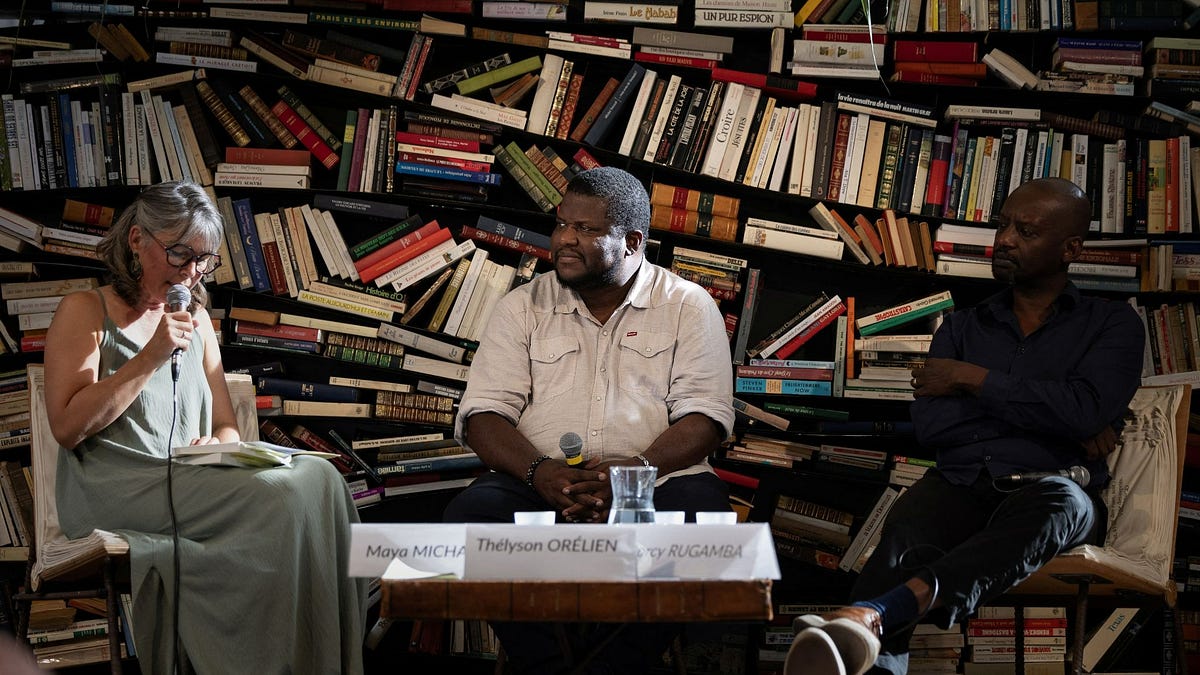
This September, Thélyson Orélien, a black author who had been nominated for the Goncourt, France’s most prestigious literary award, was accused of using AI to write his book It Was Either That Or Die.
asserted
It → nominate → book
Pangram flagged the book as predominantly AI-generated.
asserted
Pangram → flag → book
(Orélien called the accusations “slander and heresy” and said that “not a single sentence” was machine-generated.
asserted
sentence → call → accusations
His publisher ultimately withdrew the book after it turned out that Orélien had also plagiarized extensively.)
asserted
Orélien → withdraw → book
In October, Vauhini Vara published an article in The Atlantic questioning whether Zimbabwean writer Simbarashe Steyn Kundizeza had used generative AI to write his 2026 Caine Prize-winning short story, “The Blue Fighter.”
asserted
Kundizeza → publish → story
A Pangram evaluation finds the story (minus its epigraph) to be 100% AI–generated.
asserted
story → find → epigraph
In response, the Caine Prize—a highly prestigious award dedicated to African writing—took a “human-centered” approach, featuring interviews with the author and parties involved and (somewhat incidentally) “independent and expert-led metadata analysis,” and, after a month-long process, “cleared” Kundizeza.
asserted
Prize → dedicate → Kundizeza
(Apparently, Kundizeza shared drafts, but they haven’t been publicly released.)
asserted
they → share → drafts
Some wise man once said, “Correlation does not imply causation.”
asserted
Correlation → say → causation
But even that man might have doubted himself in the wake of all these accusations.
uncertain
man → doubt → accusations
I am willing to accept that Pangram is not a perfect tool.
asserted
Pangram → accept → ?
But when something is flagged as 100% AI-generated, it’s very hard to convince me that it was written entirely by a human.
asserted
it → flag → human
As a matter of fact, Kundizeza’s short stories written before ChatGPT—“A Way Out” (2018) and “The WhistleBlower” (2021)—both registered as 100% human (as they should have been).
asserted
they → write → Way
I also found a 2025 piece of his that Pangram says was 100% AI generated.
asserted
Pangram → find → his
It is now one of the occupational hazards of being a scientist to be bombarded with AI slop, and so I have become deeply familiar with AI writing tics.
asserted
I → bombard → tics
For instance, AI has a strange affectation for including sentences with trailing participial phrases.
asserted
AI → have → phrases
The tail adds a second action or a sensory detail in the same breath and is often unnecessary.
asserted
tail → add → breath
See, from “The Blue Fighter,” the sentence: “Without another word, he retreated to the bedroom, closing the door with a soft click that somehow hurt more than if he’d slammed it.”
asserted
he → see → it
…and 10 more, not listed.
 The Aporia