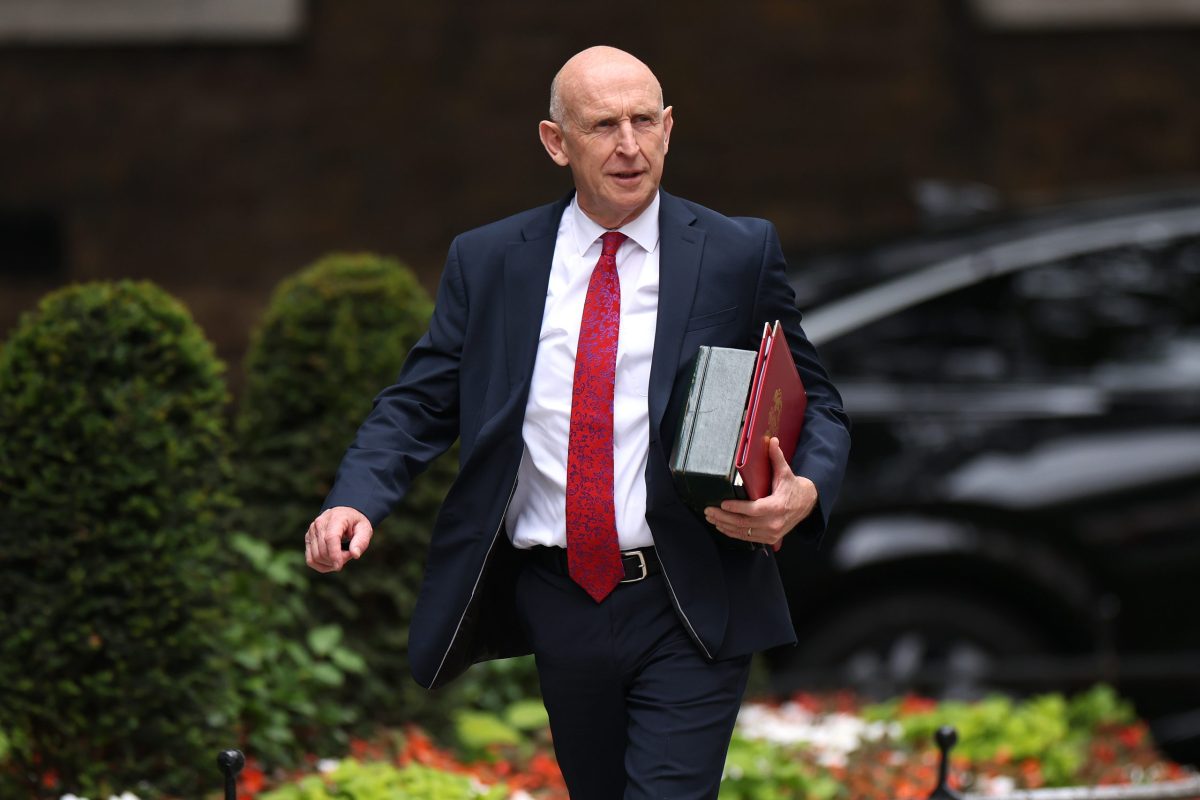
Photo via The Guardian

UK government borrowing rises less than forecast in surprise boost for chancellor John Healey

Read the original at The Guardian ↗
Cite

correspondent, R. P. S. e. (2026, November 20). UK government borrowing rises less than forecast in surprise boost for chancellor John Healey. The Guardian. https://www.theguardian.com/business/2026/nov/20/uk-government-borrowing-rises-less-than-forecast-in-surprise-boost-for-chancellor-john-healey

Dated from the outlet's own feed. Check the original for its byline.

The Guardian · collected 2026-11-20 · by Richard Partington Senior economics correspondent

Quick Summary

The UK government's borrowing in October was £17 billion, which is £800 million higher than the same month last year but less than the £18 billion economists had predicted. This unexpected development provides a boost for Chancellor John Healey, who is managing Britain’s economy amid pressures from the Middle East conflict. Public sector net borrowing for the current financial year so far is £111.3 billion, which is £7.3 billion less than the same period last year. Debt interest payments increased by £2.8 billion to £11.2 billion in October compared to the previous year.
Written by AI on 2026-11-20, from this article's own text only (the story summary below draws on all the coverage).
See how they differ ↓

AI analysis

Story summary

As of November 20, 2026, the UK government reported that public sector net borrowing for October was £17 billion, which is £800 million higher than the same period last year and £800 million above the Office for Budget Responsibility’s (OBR) previous projections. This borrowing figure is the third-highest October borrowing since monthly records began. The rise was primarily driven by higher debt interest costs of £11.2 billion and spending on benefits of £29.3 billion. Despite these pressures, overall borrowing in the financial year so far was £111.3 billion, which is £7.3 billion lower than the same period last year, reflecting that income-related taxes' receipts grew faster than spending. However, the Office for National Statistics (ONS) chief economist, Grant Fitzner, noted that the challenges remain significant for Chancellor John Healey in managing the public finances, with doubts about the government's ability to follow through on its fiscal plans in the coming years.

Written for “UK Government Borrowing Surges Above Forecast” on 2026-11-21, grounded in this article and the 4 other(s) covering the same event.

How they differ

4 outlets covered “UK Government Borrowing Surges Above Forecast”.

What each outlet says

One AI summary per outlet of its latest article on this story, written from that article alone and checked against it. Open the article for the outlet's own words.

The GuardianThis outlet20 Nov

The UK government's borrowing in October was £17 billion, which is £800 million higher than the same month last year but less than the £18 billion economists had predicted. This unexpected development provides a boost for Chancellor John Healey, who is managing Britain’s economy amid pressures from the Middle East conflict. Public sector net borrowing for the current financial year so far is £111.3 billion, which is…

UK government borrowing rises less than forecast in surprise boost for chancellor John Healey (this article)
City A.M.20 Nov

Government borrowing in October reached £17 billion, surpassing forecasts by £800 million and marking a 5% increase from the previous year. This rise was driven by high spending on debt interest and benefits, pushing public debt to 95.8% of GDP, up from the previous year. The article highlights the financial strain on Chancellor Healey, who faces the challenge of balancing tax hikes and spending cuts ahead of the…

Government borrowing rose higher than expected before Budget →
Daily Mail20 Nov

Government borrowing reached £17 billion in October, the third-highest for that month ever, despite a £6.4 billion increase in tax and national insurance revenues. The rise in debt interest costs to £11.2 billion, up £2.8 billion from the previous year, contributed to the high borrowing levels. Additionally, welfare and public service spending increased by £3.6 billion, further boosting borrowing. The Office for…

Surging taxes could not stop record debt interest and Labour's spending splurge pushing Government borrowing to £17bn last month - the third-highest ever →

Compared with similar articles

This article reads leans left and hedges 7% of its claims. Each row says how that neighbour differs.
City AM
Leans right further right than this Hedges 2 of 16 claims Outlet record 94/100
Evening Standard
Hedges 0 of 15 claims Outlet record 64/100
Evening Standard
Leans left Hedges 0 of 7 claims Outlet record 64/100
Daily Mail
Leans strongly right further right than this Hedges 0 of 10 claims Outlet record 69/100

Story

UK Government Borrowing Surges Above Forecast
Politics · 5 article(s) covering the same event. See how they differ ↑
How this article was measured signals, leaning charts, publisher record, byline, topics and claims

Signals How these are calculated →

Claims extracted
15
sentences that state something as happening or true
Uncertain
7%
1 of 15 hedged ("reportedly", "may", "according to")
Leaning
Leans left
of the writing, not the subject · beta estimate
Publisher signals
64/100
The Guardian's corrections and hedging, across everything collected from it. Not a measure of accuracy.
Outlets on this story
5
Politics
Same framing elsewhere
1
articles that frame the event the way this one does
Analyzed 2026-11-20 · how these are computed

How this is being covered How these are calculated →

Article leaning vs. publisher reliability
Source leaning vs. consistency

Publisher

The Guardian · 3741 article(s) · 8 correction(s) detected
Running correction rate · 8 correction(s)

Who wrote this

Richard Partington Senior economics correspondent
21 article(s) here · 1 carrying a prediction
City economists had forecast borrowing would increase to £18bn.
City economists had forecast a reading of 3.6%.
2026-11-18 · assertive framing · UK inflation rises to 3.6% as energy prices increase
The eight, drawn from across the country, will share their stories of jobseeking in uncertain economic times, after the chaos of the Covid pandemic during their final years of education and with AI now upending the jobs market.
The forecasters were clear when John Healey became chancellor in July: Britain’s resilience to the war in the Middle East would not last.
After months of warnings over the valuations of AI companies – amid fears of tinderbox conditions in the world economy fuelled by the Iran war and concerns that the tech bubble could burst – the trigger for the sell-off has been attributed to the Democrats’ sweeping US midterm election victory .
2026-11-06 · assertive framing · US tech stock rout: is the AI bubble bursting?
After Democrats swept aside his Republican party in the midterm elections, analysts said the prospect of a highly erratic lame-duck president would have significant implications for financial markets, growth, inflation, government borrowing costs and living standards.
Angela Rayner has said voters will begin to see a difference in their high street before the next general election as Labour prioritises investment in struggling local communities.
Helen Miller, the director of the IFS, said avoiding a return to austerity for unprotected government departments could require a £17bn top-up to the spending plans for 2030-31.
Britain’s economy has taken a multibillion-pound hit as the war in the Middle East drags down growth and triggers a fresh cost of living crisis, according to the government’s independent forecaster.
Drawn up before Wednesday’s budget, the proposal, which was first reported last week, is expected to form part of the government response to Alan Milburn’s review into why so many young people are unemployed.
Also by Richard Partington Senior economics correspondent
Nothing else under this byline is closely related to this article, so these are simply their most recent.
All 21 articles by Richard Partington Senior economics correspondent →

Topics

Britain Iran ONS The Office for National Statistics Treasury

Subjects

ONS ORG · 3× Britain GPE · 2× Healey PERSON · 2× Emma Reynolds PERSON · 1× G20 ORG · 1× Grant Fitzner PERSON · 1× Iran GPE · 1× John Healey PERSON · 1× The Office for National Statistics ORG · 1× Treasury ORG · 1×

Narrative

In the financial year so far, public sector net borrowing was £111.3bn, the ONS said – £7.3bn less than in the same period last year. Grant Fitzner, the ONS chief economist, said: “Borrowing so far this financial year remained lower than in the same period last year with receipts growing faster than spending.
framing: assertive · carried by 1 article(s) · first seen 2026-11-20
City economists had forecast borrowing would increase to £18bn.

Claims (15 extracted, 1 hedged)

The UK government borrowed less than expected in October despite a rise in debt interest costs, in a boost for chancellor John Healey amid the pressure on Britain’s economy from the Middle East war. asserted
government → borrow → war
The Office for National Statistics (ONS) said public sector net borrowing – the difference between government spending and income – was £17bn in October, about £800m higher than the same month a year ago. asserted
borrowing → say → month
City economists had forecast borrowing would increase to £18bn. asserted
borrowing → forecast → 18bn
In the financial year so far, public sector net borrowing was £111.3bn, the ONS said – £7.3bn less than in the same period last year. Grant Fitzner, the ONS chief economist, said: “Borrowing so far this financial year remained lower than in the same period last year with receipts growing faster than spending. asserted
receipts → say → spending
Income-related taxes’ receipts grew particularly strongly. asserted
receipts → relate → ?
Chief Secretary to the Treasury Emma Reynolds said the Britain was showing “stand-out resilience despite the global impact of the conflict in Iran.” asserted
Britain → say → Iran
“This year we’ve cut borrowing faster than any other G20 country. asserted
we → cut → country
Now we’re going to cut waste and bureaucracy by reprioritising spending and making public services more efficient with AI,” Reynolds added. asserted
Reynolds → go → AI
In his budget last month, Healey raised taxes on banks to fund relief for households being squeezed by the energy shock from the Middle East war. asserted
Healey → raise → war
Against a highly uncertain global backdrop, Healey stuck to the government’s fiscal rules with £15bn of headroom – less than the £23.6bn buffer left by his predecessor, Rachel Reeves, as the conflict drove up the UK government’s borrowing costs. asserted
conflict → stick → costs
After a low-key budget statement designed with febrile bond markets in mind, economists warned the chancellor had set himself up for a “brutal” spending review next year. asserted
chancellor → design → review
Avoiding a return to austerity for unprotected government departments could require a £17bn top-up to the spending plans for 2030-31. uncertain
Avoiding → avoid → 2030
That is before taking into account an additional £11bn needed to fund a commitment to increase defence spending to 3% of GDP. asserted
That → take → GDP
Rising borrowing costs on financial markets drove the UK’s debt interest payments to £11.2bn in October; this was £2.8bn more than in the same month last year. asserted
this → rise → month
Public sector net debt rose to £3.1tn, equivalent to 95.8% of GDP – 1.9 percentage points higher than last year and at levels last seen in the early 1960s. asserted
debt → rise → 1960s
Give feedback · no sign-in needed

No sign-in needed for now. Your note is sent without a name, so it cannot be answered.

History Support