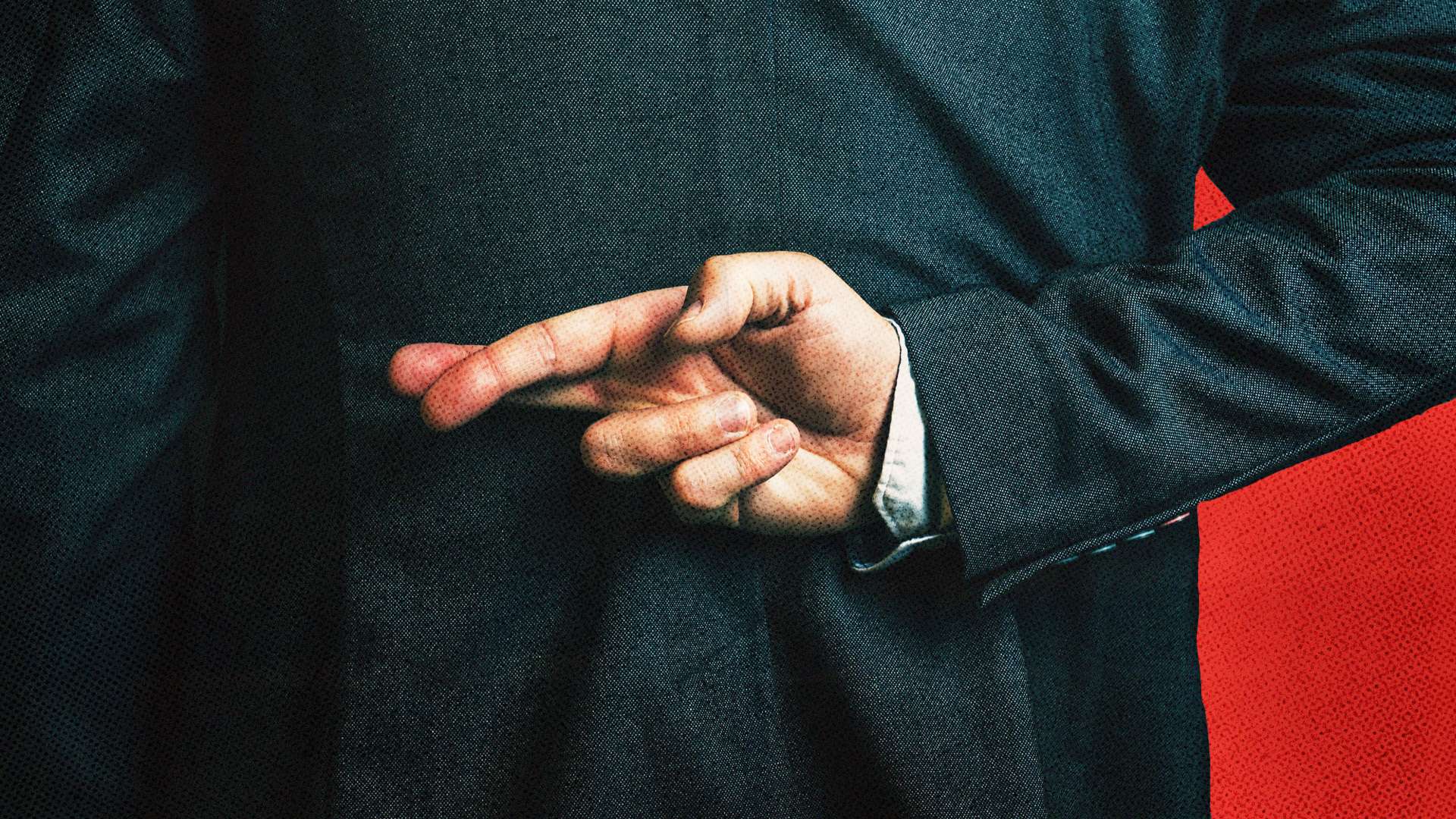
After years of government officials whining here and abroad about speech they label "misinformation," "disinformation," and "fake news," it's fair to ask who the American people trust to respect their free speech rights.
asserted
people → whine → rights
For most Americans, the answer when it comes to the political class is "nobody."
asserted
it → come → class
That's according to a new Foundation for Individual Rights and Expression (FIRE) survey which finds that neither Democrats nor Republicans are trusted to abide by First Amendment protections.
uncertain
Democrats → accord → protections
You are reading The Rattler from J.D. Tuccille and Reason.
asserted
You → read → Tuccille
Neither Major Party Trusted on First Amendment Protections
"Only 9% of Americans are fully confident that the Democratic Party will protect their First Amendment rights, and 10% feel the same about the Republican Party," FIRE reports of the survey results.
asserted
FIRE → trust → results
"All told, a staggering 73% of Americans believe that when it comes to whether people are able to freely express their views, things in America are heading in the wrong direction.
asserted
things → tell → direction
Anybody who has paid attention in recent years to politicians' treatment of critics and dissenting voices should recall President Donald Trump and other officials in his administration threatening the licenses of broadcast news networks they consider hostile.
asserted
they → pay → networks
"ABC & NBC FAKE NEWS, two of the worst and most biased networks in history, give me 97% BAD STORIES," the president complained in August of 2025.
asserted
president → give → 2025
"IF THAT IS THE CASE, THEY ARE SIMPLY AN ARM OF THE DEMOCRAT PARTY AND SHOULD, ACCORDING TO MANY, HAVE THEIR LICENSES REVOKED BY THE FCC.
uncertain
LICENSES → accord → FCC
Federal Communications Commission (FCC) Chairman Brendan Carr echoed that threat.
asserted
Carr → echo → threat
"Broadcasters that are running hoaxes and news distortions – also known as the fake news – have a chance now to correct course before their license renewals come up," Carr warned in March.
asserted
Carr → run → March
Broadcasters must operate in the public interest, and they will lose their licenses if they do not."
asserted
they → operate → licenses
The tone was similar during the Biden administration when the then-president huffed that "the unvaccinated are responsible for their own choices.
asserted
unvaccinated → huff → choices
But those choices have been fueled by dangerous misinformation on cable TV and social media."
asserted
choices → fuel → TV
The Biden White House pressured social media platforms to censor content officials found inconvenient in a behind-the-scenes campaign that a federal judge likened to an "Orwellian 'Ministry of Truth.'"
asserted
judge → pressure → Truth
"Senior officials from the Biden administration, including the White House, repeatedly pressured our teams for months to censor certain COVID-19 content, including humor and satire," Meta CEO Mark Zuckerberg told the House Judiciary Committee.
asserted
Zuckerberg → include → humor
Under FBI pressure, the company also suppressed reports about Hunter Biden's laptop and its incriminating contents.
asserted
company → suppress → laptop
It's just that in the U.S., the First Amendment and a culture that still generally values freedom of speech stand as bulwarks against the authoritarians who seek government power.
asserted
who → value → power
But Americans know that expression is at risk in this country, too.
asserted
expression → know → country
A Plurality of Americans Says Freedom of Speech Is Not Secure
asserted
Freedom → say → Speech
In the FIRE survey, 45 percent of respondents say the right to freedom of speech is "not at all secure" (14 percent) or "not very secure" (31 percent).
asserted
right → say → speech
Only 18 percent call it "completely secure" (4 percent) or "very secure" (14 percent).
asserted
percent → call → it
Seventy-one percent say it's "extremely" or "very" important to be able to criticize politicians, 69 percent say the same of government officials, 62 percent say that of judges, and 59 percent agree when it comes to police.
asserted
it → say → police
But Americans don't believe the major parties share their values around free expression.
asserted
parties → believe → expression
"Only 26% of Americans have 'quite a lot of confidence' or their 'full confidence' that the Democratic Party will protect their First Amendment rights, and only a combined 22% said the same about Republicans," according to FIRE.
Sixty-one percent of respondents have "no" or "very little" confidence that Trump will protect First Amendment rights.
uncertain
Trump → have → rights
Americans apparently noticed those threats to strip broadcasters of licenses for offending the current resident of the White House.
asserted
Americans → notice → House
The FIRE survey didn't ask about specific Democrats, but people have plenty of reason to be wary of officials from that party, too.
asserted
people → ask → party
Rep. Alexandria Ocasio-Cortez (D–N.Y.), a leading hopeful for her party's presidential nomination, is on record insisting that "we're going to have to figure out how we rein in our media environment so that you can't just spew disinformation and misinformation."
asserted
you → lead → disinformation
California Gov. Gavin Newsom denounces Trump's threats to free expression while signing bills (later found unconstitutional) that would regulate "deceptive" internet content.
asserted
that → denounce → content
After watching the world's most powerful man sue, defund, jawbone, deport, threaten, and investigate his critics for nearly two years, it's understandable that most Americans fear that their speech could make them the target of Trump's wrath," commented FIRE Chief Researcher Sean Stevens.
uncertain
Stevens → watch → wrath
"And Americans don't feel like they can trust either of the two major political parties to protect their First Amendment rights.
asserted
they → feel → rights
Americans Disagree on Much, but Blame "Political Polarization" for Speech Threats
Importantly, the survey found broad concern about the state of freedom of speech, with majorities of conservatives, liberals, and moderates agreeing that "political polarization" is at fault.
asserted
polarization → disagree → fault
Respondents then proved the point by disagreeing about everything else that might be to blame, including the current administration, treatment of protesters, the FCC, and the campus climate for speech.
uncertain
that → prove → speech
So long as people can loudly and publicly hold contrary opinions without risking government penalties, protections for free speech remain robust.
asserted
protections → hold → speech
Problems come when ambitious politicians leverage those disagreements with promises to their supporters to muzzle "those" people who have supposedly bad and dangerous ideas.
asserted
who → come → ideas
In many countries, this proves to provide a quick path to power, with the ability to speak converted into a privilege for those in favor with the regime.
asserted
this → prove → regime
To their credit, Americans perceive authoritarian dangers from the political class.
asserted
Americans → perceive → class
We'll see if they can put aside their differences long enough to work together to protect the right to openly disagree with each other.
asserted
they → see → other
 The Aporia