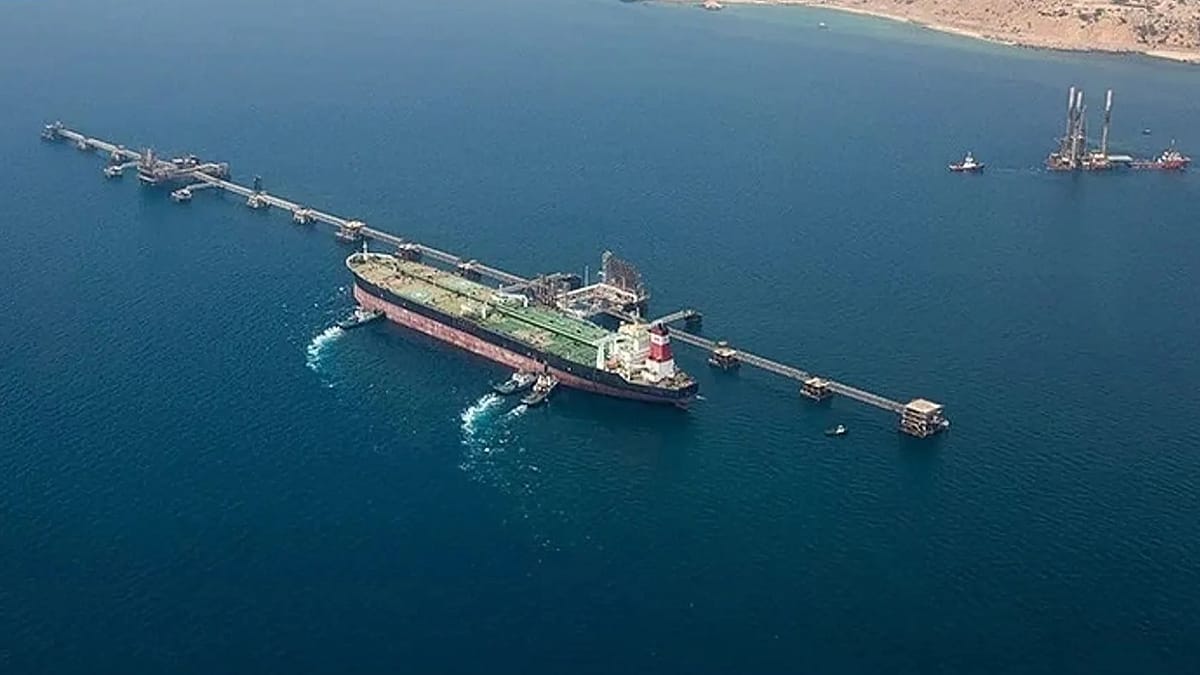
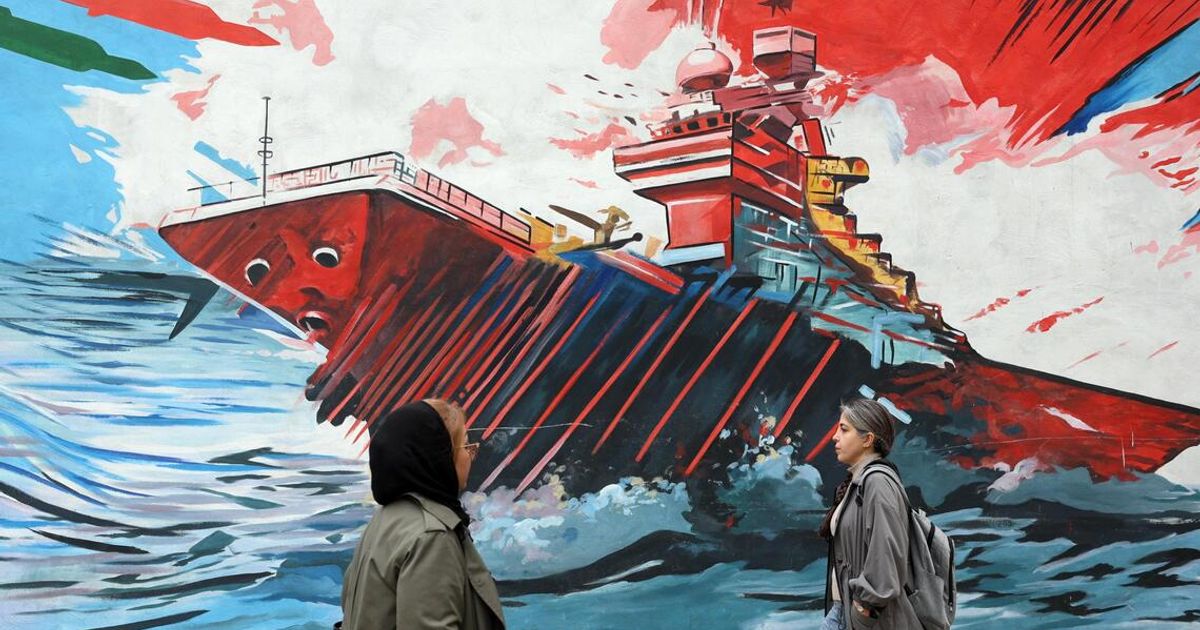
The United States military has tightened its naval blockade of Iran, warning that vessels receiving Iranian cargo through ship-to-ship transfers will face military action.
asserted
vessels → tighten → action
US Central Command (CENTCOM), in an advisory on Wednesday, said ships receiving cargo from vessels loaded at Iranian ports or along the country’s coastline could be considered to be “evading the blockade”.
uncertain
ships → say → blockade
Recommended Stories
list of 3 items- list 1 of 3US official says Hormuz insurance hits $64m: Is the strait really open?
asserted
strait → say → m
- list 2 of 3Kuwait, Bahrain face new Iran attacks after US strike on Qeshm Island
- list 3 of 3‘Too early’ to determine impact of US blockade on Iran, with Tehran defiant
The move is aimed at closing a potential loophole that has allowed some Iranian petroleum products to reach international markets, despite Washington’s blockade of Iranian ports and oil exports since mid-July.
asserted
products → face → July
It comes as Tehran seeks ways to revive its oil exports, with Iran’s Islamic Revolutionary Guard Corps (IRGC) repeatedly warning of retaliation against attacks on Iranian vessels.
asserted
Corps → come → vessels
Analysts say that while Iran is unlikely to break the blockade militarily, it could seek to make its enforcement politically and economically costly for Washington, raising the risk of a wider regional confrontation.
uncertain
enforcement → say → confrontation
“This is potentially one of the most dangerous escalation scenarios we have seen in recent weeks,” Andreas Krieg, associate professor in Security Studies at King’s College London, told Al Jazeera.
asserted
Krieg → see → Jazeera
So, can Iran circumvent the blockade, and could attempts to do so trigger a wider confrontation?
uncertain
attempts → circumvent → confrontation
US Central Command (CENTCOM) said on Wednesday that ships receiving cargo from vessels loaded at Iranian ports or along the country’s coastline could be considered to be evading the blockade.
“Any ship that receives cargo via a ship-to-ship transfer with a vessel subject to the blockade and carrying cargo loaded at an Iranian port or coastline may be considered to be evading the blockade, even if it has not entered Iranian ports or the Iranian coastline,” CENTCOM said.
uncertain
CENTCOM → say → ports
“Such ships may be stopped, boarded, diverted, captured, or directed to proceed to the Iranian port where the cargo originated.”
uncertain
cargo → stop → port
CENTCOM also warned that ships failing to comply with its orders could face enforcement action, including the use of force.
uncertain
ships → warn → force
Washington initially imposed the blockade on April 13, lifted it in June following an understanding with Tehran, and reinstated it on July 14 after the agreement collapsed.
What has Iran said?
asserted
Iran → impose → What
Iranian authorities have yet to issue a direct response to CENTCOM’s announcement, but Tehran has repeatedly warned against US efforts to restrict its trade.
asserted
Tehran → have → trade
An article published by Iran’s semi-official state outlet Fars News Agency on Wednesday proposed sending a group of oil tankers through the blockade while threatening retaliation against regional energy infrastructure if US forces intervened.
“To break the naval blockade, Iran can move a group of oil tankers to break out of the blockade,” the commentary said.
asserted
commentary → publish → blockade
It suggested that any attack or obstruction could prompt Iran to target energy infrastructure in the region, “especially UAE oil”.
uncertain
attack → suggest → region
Earlier this month, IRGC spokesman Brigadier General Hossein Mohebi rejected Washington’s ability to impose a comprehensive economic blockade on Iran.
asserted
Mohebi → reject → Iran
“America can never achieve the type of economic blockade it’s after, whichever iteration it takes,” Mohebi said, according to Fars.
uncertain
Mohebi → achieve → Fars
He also warned that Iran would retaliate if US forces attacked its vessels.
asserted
forces → warn → vessels
“Naturally, in a war, they might hit one of our vessels.
uncertain
they → hit → vessels
But we’ll hit harder,” he said.
asserted
he → hit → ?
Can Iran break the blockade?
asserted
Iran → break → blockade
Iran has managed to bypass parts of the blockade, but restoring large-scale crude exports presents a much greater challenge.
asserted
restoring → manage → challenge
Before the US-Israeli war began in February, Iran exported roughly 1.5 million to 2 million barrels of crude oil per day, with China purchasing the vast majority of its shipments.
asserted
China → begin → shipments
In October, Reuters news agency reported that at least eight tankers carrying Iranian liquefied petroleum gas (LPG) had left the Gulf of Oman since July, citing shipping intelligence and security sources.
asserted
tankers → report → intelligence
Another vessel delivered jet fuel to Myanmar in September, it said.
asserted
it → deliver → September
On Thursday, Reuters, citing maritime monitoring service TankerTrackers.com, reported that a vessel was loading Iranian crude through a ship-to-ship transfer in the Gulf.
asserted
vessel → cite → Gulf
If the shipment reaches its destination, it could become the first successful crude export since Washington reinstated the blockade in July, it added.
uncertain
it → reach → July
Nevertheless, academic Krieg says Iran lacks the military capabilities to challenge the blockade directly.
“Iran can circumvent parts of the blockade, but it cannot break it militarily in any sustainable way.
asserted
it → say → way
The Americans possess overwhelming naval superiority,” he warned.
asserted
he → possess → superiority
“However, policing every shipment, intermediary and ship-to-ship transfer is considerably more complicated than stopping tankers leaving Iranian ports.”
asserted
policing → police → ports
Krieg said Gulf-based commercial networks have also facilitated Iranian oil exports, including through ship-to-ship transfers, although the extent of official government involvement remains unclear.
uncertain
extent → say → involvement
Washington’s latest restrictions could therefore create tensions with Gulf partners whose commercial interests do not necessarily align with US sanctions policy.
uncertain
interests → create → policy
“I think Iran’s objective would be less about physically defeating the blockade than making its enforcement politically and economically unsustainable,” Krieg said.
asserted
Krieg → think → blockade
“Sending tankers to challenge American forces could be designed to create a confrontation rather than simply deliver oil.
uncertain
Sending → send → oil
But commentary in Fars should not be mistaken for an authorised operational plan.”
asserted
commentary → mistake → plan
What would it mean for the conflict and the bigger picture?
The tightened blockade raises the prospect of further military confrontation between Washington and Tehran, particularly if Iranian tankers attempt to defy US restrictions.
asserted
tankers → mean → restrictions
Krieg warned that an American attack on an Iranian vessel could trigger retaliation against Gulf energy infrastructure, potentially drawing neighbouring countries deeper into the conflict.
uncertain
attack → warn → conflict
“A confrontation involving Iranian tankers would introduce another threshold, particularly if American forces destroyed a vessel or caused substantial casualties,” he added.
asserted
he → involve → casualties
Iran could respond by targeting Gulf energy infrastructure, seeking to demonstrate that its neighbours cannot continue exporting oil while Tehran remains cut off from international markets, Krieg noted.
uncertain
Krieg → respond → markets
“Hormuz and Bab el-Mandeb would become interconnected fronts in an attempt to restore the balance of economic pain,” the academic said, referring to the Middle East’s two most vital straits.
asserted
academic → become → straits
…and 10 more, not listed.
 The Aporia