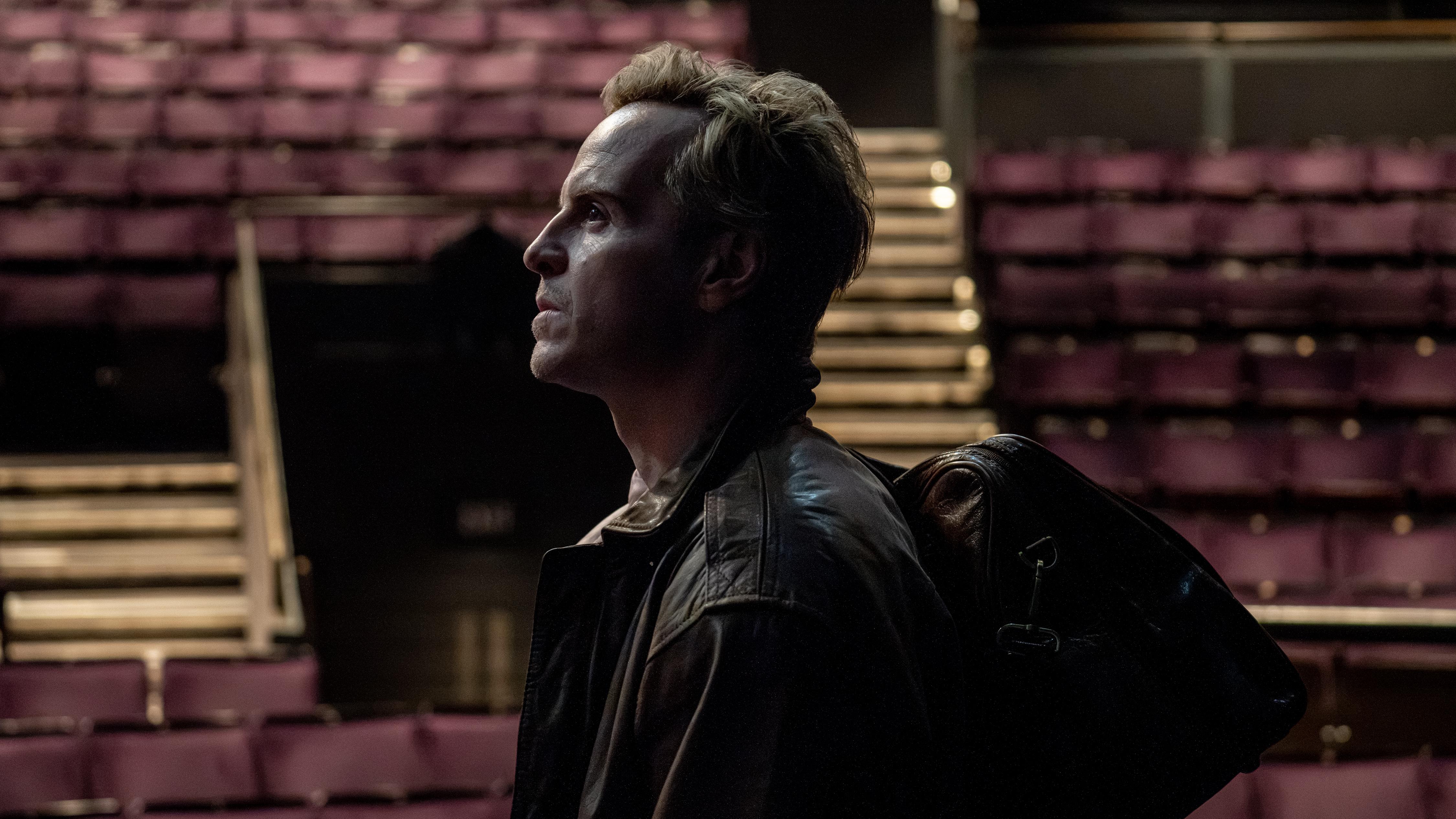
On the evening of Nov. 13, 1989, Ian Charleson walked onto the Olivier stage at London’s National Theatre to play Hamlet for the last time.
asserted
Charleson → walk → time
He was 40 years old and dying of AIDS, though few of the 1,150 or so people watching from the dark knew it.
asserted
few → die → it
The illness had puffed the skin around his eyes and affected his throat and chest, but the change in his face had been explained away as sinus surgery.
asserted
change → puff → surgery
The Olivier is the largest of the National's three auditoriums, its seats curving in a wide arc around the stage.
asserted
seats → curve → stage
It is a notoriously hard room to play to, one that tempts actors to force their voices.
asserted
that → play → voices
Charleson did not.
asserted
Charleson → do → ?
Ian McKellen, who was there that night, later wrote of the younger actor delivering Hamlet's great speeches as one person talks to another, in a voice that stayed firm, making the huge auditorium feel uncharacteristically intimate.
asserted
auditorium → write → voice
When Hamlet wished that his own flesh would melt away, Charleson's hands came up to shield his face, and they were thin and drained of color.
asserted
they → wish → color
At the end of nearly four hours, the audience rose to him.
asserted
audience → rise → him
He never appeared onstage again.
asserted
He → appear → ?
Elsinore, in theaters beginning on Nov. 20, builds up to that climactic night.
asserted
Elsinore → begin → night
Stephen Beresford, the screenwriter of Pride, wrote the film, which follows Charleson through his last months.
asserted
which → write → months
During that time, the actor best known for playing the Scottish sprinter Eric Liddell in the 1981 Olympic drama Chariots of Fire took on Hamlet, the grieving Danish prince and the longest role Shakespeare wrote, just as his body was beginning to fail him.
asserted
body → know → him
Andrew Scott, who plays Charleson with wit and coiled ferocity, leads a cast that includes Olivia Colman as Margaret Johnson, the physician who treated him; Billie Piper as Patsy Pollock, the casting director and friend who cared for him; and Johnny Flynn as Richard Eyre, the director who gave him the part.
asserted
who → play → part
The film moves between the ward at the Royal Free Hospital in north London, where Charleson was a patient, and the rehearsal rooms of the National, where he was a prince, and carries him from the offer of the part, through the arguments over whether he should take it, to the ovation on his last night.
asserted
he → move → night
Beneath the backstage detail and the Shakespeare, Elsinore hinges on the moment when a man who has been told how he will die decides how he will live until then, and on what that decision asked of those who loved him.
asserted
who → hinge → him
Director Simon Stone, whose stage work includes a production of Hamlet, says the people who loved Charleson were caught between protecting him and letting him choose..
asserted
him → include → him
"There's this terrible tension between wanting to preserve someone's life and also letting them determine the way that their own life is going to be lived," he tells TIME.
asserted
he → be → TIME
"At the end of the day it was Ian's choice, and Ian's choice was an extraordinary gift, ultimately, for so many audience members that got to see him play that part.
asserted
him → get → part
The actor his friends remember
Charleson was born in Edinburgh in 1949.
asserted
friends → remember → 1949
Local theater had the boy on stage by the time he was 8, and both his church and his school choir counted him among their sopranos.
asserted
church → have → sopranos
He reached the Royal High School and the University of Edinburgh on scholarships, enrolled to study architecture, and left as an actor.
asserted
He → reach → actor
He trained at the London Academy of Music and Dramatic Art and, by the end of the 1970s, had worked his way to the National and the Royal Shakespeare Company.
asserted
He → train → National
Then came Chariots of Fire and Liddell.
asserted
Chariots → come → Fire
A devout Christian, the real-life athlete would not race on a Sunday, so at the 1924 Olympics he gave up his best event, the 100 meters, and won gold in the 400 instead.
asserted
he → race → 400
The film, known for its slow-motion sprint along a beach and its iconic synthesizer theme, was named Best Picture at the 1982 Academy Awards, and so, a year later, was Gandhi, with Charleson as the clergyman Charlie Andrews.
asserted
Gandhi → know → clergyman
His best work, though, was in the theater, much of it at the National, where Eyre directed him as Sky Masterson in a celebrated Guys and Dolls in 1982, and where, in 1988, he played Brick in Tennessee Williams' Cat on a Hot Tin Roof.
asserted
he → direct → Roof
Beresford interviewed Charleson's friends and colleagues and found that grief had not made them solemn.
asserted
them → interview → friends
"Because he was an actor, his friends are actors, and actors have a strong sense of humor," he says.
asserted
he → have → humor
"So I got a lot of stories from them that were very funny, and that really helped me to find his voice."
asserted
me → get → voice
Charleson, he adds, "really always saw the joke, both in life and in a play."
asserted
he → add → play
Scott heard the same from everyone he asked.
asserted
he → hear → everyone
"He was really deeply loved, Ian, by anyone who encountered him, and he was enormously fun," he says.
asserted
he → love → him
I think he was troubled, of course, as you would be by what he was going through, but I think he was enormously courageous, and he was very witty and funny, and he knew how to have fun.
asserted
he → think → fun
As an attribute in a human being, to be fun-loving is sort of underestimated sometimes.
asserted
be → love → being
But even after his success on screen and stage, one role still felt unfinished: Hamlet.
asserted
role → feel → screen
Charleson was 25 when the Cambridge Theatre Company took him on tour in the part, and he came home unhappy with what he had done.
asserted
he → take → what
In 1988, during the run of Cat on a Hot Tin Roof, he told Eyre across a canteen table at the National that he wanted a run at Shakespeare's great parts.
asserted
he → tell → parts
Shakespeare set the play in the Danish castle of Elsinore, where a prince learns from his father's ghost that his uncle, now king and married to his mother, is the murderer.
asserted
uncle → set → mother
Told to take revenge, Hamlet spends most of the play failing to, feigning madness and asking, in the soliloquy that begins "To be, or not to be," whether life is worth going on with.
asserted
life → tell → soliloquy
…and 124 more, not listed.
 The Aporia