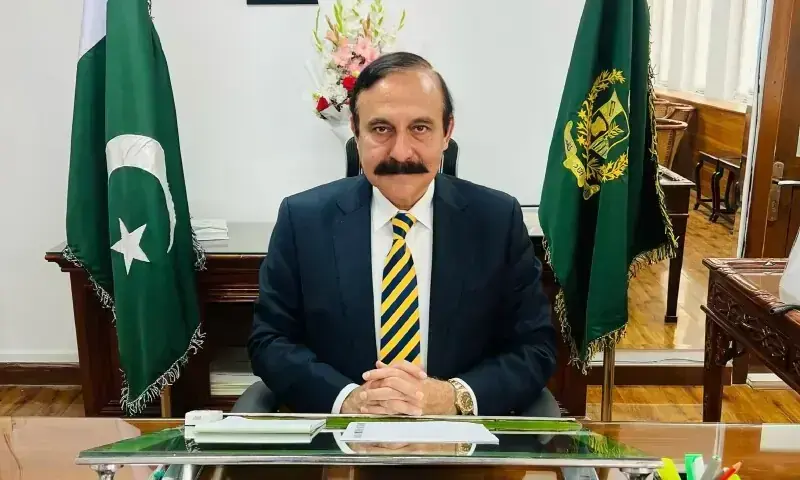
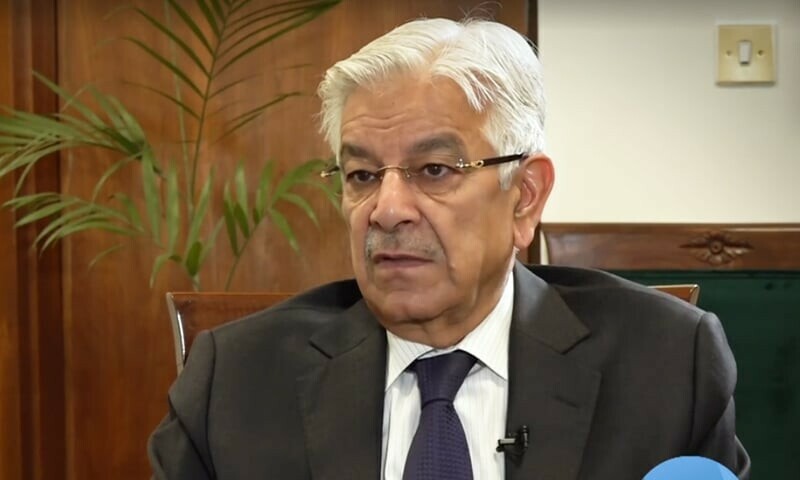
Parliamentary Affairs Minister Tariq Fazal Chaudhry on Friday insisted that a referendum on the formation of new provinces “will happen”.
asserted
referendum → insist → provinces
The remarks come after PPP Chairman Bilawal Bhutto-Zardari delivered a no-holds-barred speech on Tuesday that covered the question of new provinces.
asserted
that → come → provinces
Bilawal had expressed his opposition to the creation of provinces and the idea of holding a referendum for such a move in his speech.
asserted
Bilawal → express → speech
He cautioned that any “forced” attempt to divide provinces, particularly in Sindh, could lead to bloodshed.
uncertain
attempt → caution → bloodshed
However, the federal government maintains that a referendum is a legal and constitutional method of gauging public opinion on new provinces and that no political party should have reservations regarding it.
asserted
party → maintain → it
Speaking to the Geo News programme ‘Naya Pakistan’ on Friday, Chaudhry, when asked about the referendum, insisted that developing consensus on the matter should be a priority for the ruling coalition.
asserted
developing → speak → coalition
“National consensus is very important on the issue of new provinces,” the minister said, highlighting that the PTI-led opposition was also in favour of it.
asserted
opposition → say → it
Chaudhry said that the process of taking the public’s opinion cannot be stopped if a single party opposes it.
asserted
party → say → it
“The referendum will happen,” the minister insisted, adding that the PML-N would undertake “every last effort” to convince the PPP.
asserted
N → happen → PPP
“Referendum is neither non-constitutional nor undemocratic; the public’s opinion can be asked on any important matter,” he remarked.
asserted
he → ask → matter
On being asked about the timeline for the proposed move, Chaudhry said it was premature to talk about it; however, he added that “things will be clarified soon”.
asserted
things → ask → it
Asked if PML-N supremo Nawaz Sharif was on board with the referendum, Chaudhry answered in the affirmative.
asserted
Chaudhry → ask → affirmative
“100 per cent, the prime minister does not make any major decisions without his opinion,” he added.
asserted
he → make → opinion
On being asked if the PPP may join the opposition with PTI and JUI-F, Chaudhry maintained that the party included “mature and seasoned politicians”, expressing hope that the party will continue in its role as a coalition partner.
“I believe matters will not reach a point where they might have to exit the coalition, as we will make sure to onboard them on the decision and vice versa,” he added.
uncertain
he → ask → decision
In response to a question over Bilawal’s recent remarks and whether they were “justified”, he advised that the PPP chairman had the right to present PPP’s perspective related to the formation of new provinces; however, he warned Bilawal against invoking other matters and targeting the PML-N.
“Attacking us (PML-N) or invoking other matters that have nothing to do with the debate related to the provinces was not worthy.”
asserted
that → advise → provinces
Chaudhry was also asked whether the government’s stance on the creation of provinces and the proposed referendum had been delivered to President Asif Ali Zardari in his meeting with Prime Minister Shehbaz Sharif and Interior Minister Mohsin Naqvi a day earlier.
asserted
stance → ask → Sharif
To this, he said that various matters had been discussed during the meeting in Islamabad; however, the main topic was the recent verbal confrontation between the coalition partners, he added.
asserted
he → say → partners
Chaudhry said that during the meeting, both President Zardari and PM Shehbaz decided to resolve all the differences through dialogue.
asserted
Zardari → say → dialogue
He added that the matters between the allied parties had returned to “usual”.
“Most of the matters have backtracked,” the minister remarked.
asserted
minister → add → matters
The PML-N leader said the party leadership would decide when to bring the party’s perspective on new provinces to the media.
asserted
leadership → say → media
Chaudhry also said that before making the remarks publicly, Bilawal should have taken PM Shehbaz into confidence.
asserted
Bilawal → say → confidence
“It is clear that PPP will not exit the coalition,” he reiterated, referring to Bilawal’s comments about the prime minister completing his five-year term in office.
asserted
minister → exit → office
Over the past few months, Interior Minister Mohsin Naqvi has whipped up a political storm since he called for the formation of new administrative units in the country, saying the current “system” of governance had “collapsed” and needed a “reset”.
asserted
system → whip → reset
On November 12, Naqvi also floated the idea of holding a referendum to gauge public opinion on the issue, saying the exercise could settle the contentious debate once and for all.
uncertain
exercise → float → all
However, Bilawal, in his hard-hitting speech on Monday, termed the referendum an “unconstitutional move”, vowing that his party would stand against any such measure.
asserted
party → hit → measure
Bilawal, as well as Sindh Chief Minister Murad Ali Shah and other senior party leaders, have repeatedly declared that the division of Sindh was neither legally nor politically acceptable to the party.
asserted
division → declare → party
Soon after Bilawal’s remarks, Information Minister Attaullah Tarar defended the move, saying it was a legal and constitutional method of gauging public opinion.
asserted
it → defend → opinion
Meanwhile, the Jamiat-Ulema-i-Islam-Fazl (JUI-F) voiced its support for Bilawal’s opposition to a referendum, warning that it could be misused.
uncertain
it → voice → referendum
The party termed Bilawal’s statements “realistic” and viewed them in high regard.
asserted
party → term → regard
Against this backdrop, the Muttahida Qaumi Movement-Pakistan (MQM-P) has also called for a nationwide referendum on the creation of new administrative units, proposing that the exercise be held before the start of 2027 to allow people to decide the future administrative structure of the country.
asserted
people → call → country
 The Aporia