Claims extracted
20
sentences that state something as happening or true
Uncertain
10%
2 of 20 hedged
("reportedly", "may", "according to")
Leaning
withheld
no quote in the article backed the model's score
Publisher signals
64/100
The Guardian's corrections and
hedging, across everything collected from it. Not a measure of accuracy.
Outlets on this story
3
Politics
Same framing elsewhere
1
articles that frame the event the way this one does
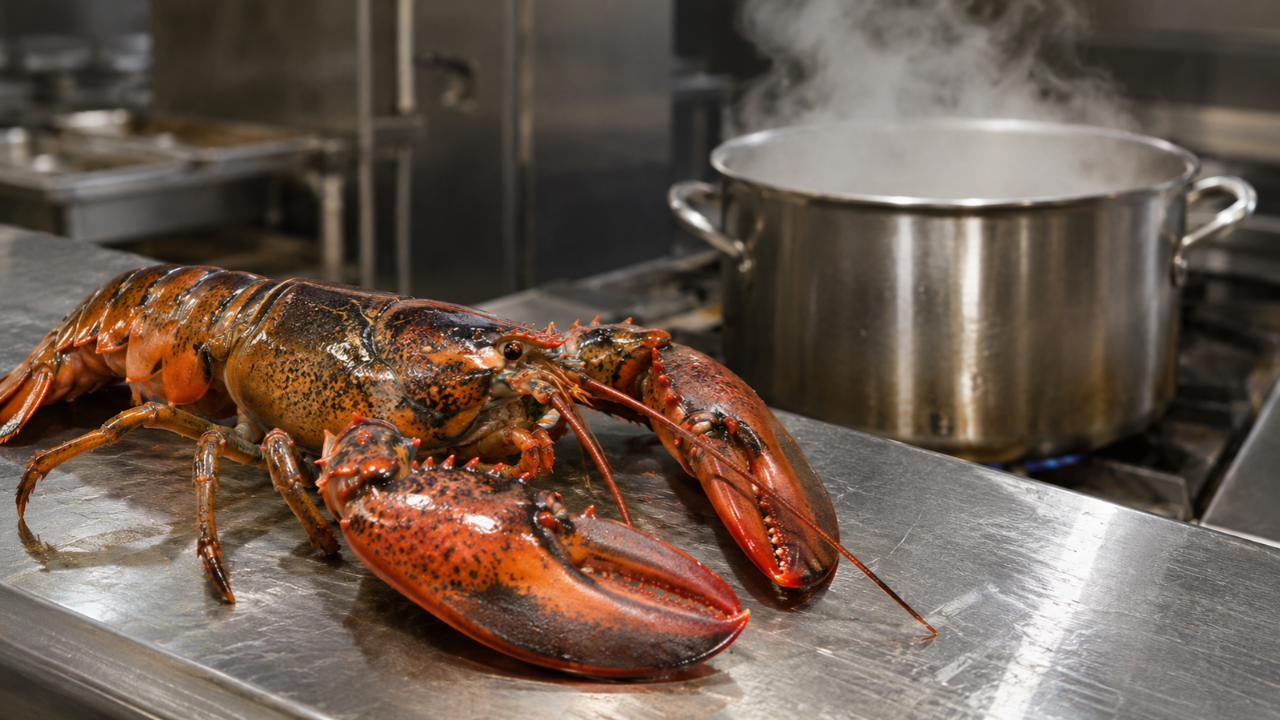
New York City lawmakers are proposing a ban on restaurants boiling lobsters alive.
asserted
restaurants → propose → lobsters
If passed, legislation introduced in the city council, sponsored by Bronx Democrat Oswald Feliz and lower Manhattan’s Harvey Epstein, would ban restaurants from boiling lobsters, crabs and other crustaceans.
asserted
legislation → pass → lobsters
However, it would not prohibit restaurants from serving lobster or crab prepared by other methods.
asserted
it → prohibit → methods
A first violation would carry no monetary penalty with a second or subsequent violation resulting in a civil penalty of up to $100 per violation, the legislation proposes.
asserted
legislation → carry → violation
The sponsors cited “recent scientific studies” indicating that crustaceans commonly served in restaurants experience significant pain when boiled alive without first being stunned, according to a memo accompanying the legislation.
uncertain
crustaceans → cite → legislation
“A growing number of countries, particularly in Europe, have banned this practice in recent years,” the memo said.
asserted
memo → grow → years
“New York City has a responsibility to ensure that these animals are being consumed ethically without being made to suffer unnecessarily.”
asserted
animals → have → responsibility
Switzerland, Norway and New Zealand have adopted rules prohibiting the boiling of lobsters alive without first rendering them unconscious.
asserted
them → adopt → lobsters
The UK’s Labour government has also said that boiling lobsters alive when conscious will be banned as part of a government strategy to improve animal welfare.
asserted
boiling → say → welfare
British government ministers said last December that “live boiling is not an acceptable killing method”.
Suggested methods include chilling a lobster in the freezer for 15 to 20 minutes or packing it in crushed ice before cooking.
uncertain
methods → say → ice
“Once it is in a sleep state it can be humanely killed by physically severing the main nervous system and then draining the animal of blood,” the Cornwall Good Seafood Guide explains.
asserted
Guide → kill → blood
Lobsters can also be quickly and more humanely killed by cutting its underside along the centre line from the head to the tail, the organization said.
asserted
organization → kill → tail
But crabs require a different technique involving spiking the underside to destroy the main nerve.
asserted
crabs → require → nerve
Death by electrocution has also been proposed by a team of Norwegian scientists.
asserted
Death → propose → scientists
Feliz told the New York Post that “boiling an animal alive is the textbook definition of animal cruelty”.
asserted
boiling → tell → cruelty
“Some argue that lobsters don’t feel pain.
asserted
lobsters → argue → pain
If they don’t feel pain, why do they thrash around and desperately try to escape when thrown into boiling water?” he said.
asserted
he → feel → water
The crustacean-killing legislation is the latest effort by New York City lawmakers to restrict culinary practices on animal-welfare grounds.
asserted
legislation → kill → grounds
Legislation to ban the sale of foie gras has been caught up in a fight between city lawmakers and the state.
asserted
Legislation → ban → lawmakers
Earlier this year, the state attorney general, Letitia James, petitioned the state’s top court to consider halting New York City’s foie gras ban, saying the legislation “threatens farm operations in agricultural districts across the State”.
asserted
legislation → petition → State

 The Aporia