Back when I was a kid, if I wanted to call a friend, I had to use the corded phone in our kitchen.
asserted
I → want → kitchen
I can still remember stretching that coiled cord as far as it would go so I could squeeze into the pantry for a little privacy.
uncertain
I → remember → privacy
Now that I’m a parent, I can see how good it was for me.
asserted
it → ’m → me
It kept me in the middle of family life, I wasn’t tempted to disappear into a screen, and my parents could keep tabs on what was going on in my life.
uncertain
what → keep → life
I’ve been thinking about this a lot because, lately, my nearly 6-year-old has been asking to FaceTime friends and family pretty frequently, which usually means borrowing my phone and then getting distracted by everything else on it.
asserted
which → think → it
That matters more than it may seem: A study of more than 50,000 U.S. children published in January 2026 found that kids ages 6 to 17 who spent four or more hours a day on screens had 61% higher odds of depression and 45% higher odds of anxiety.
uncertain
who → matter → anxiety
I’m not the only one thinking about the perils of screentime.
asserted
I → ’m → screentime
Every parent I know is trading ideas for keeping their kids off screens a little longer, and lately a lot of those conversations have turned to the Tin Can, a Wi-Fi landline made just for kids.
asserted
lot → know → kids
So when I got the chance to test one, the timing couldn’t have been better.
asserted
timing → get → one
Keep reading to learn what I found after trying it with my daughter for more than a month.
asserted
I → keep → month
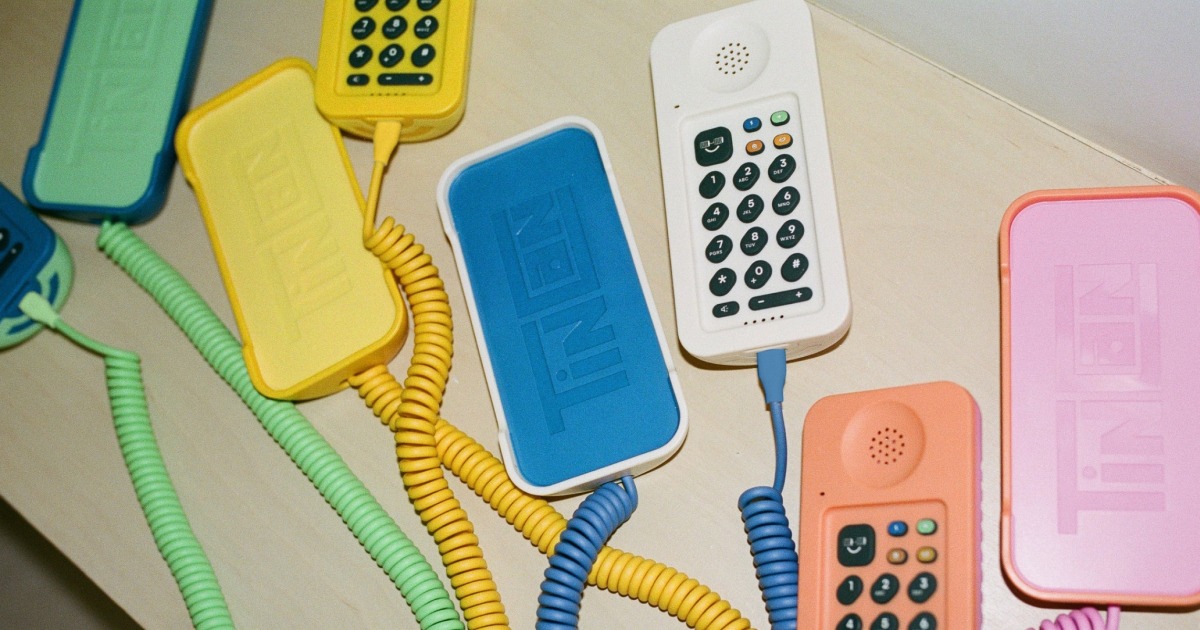
The Tin Can looks like a classic corded landline, but it actually runs on your home Wi-Fi.
asserted
it → look → Fi
Parents set it up and manage it through a companion app that is available for iPhone and Android.
asserted
that → set → iPhone
You choose exactly who your kid can call and who can call them, so strangers can’t reach out through this line.
asserted
strangers → choose → line
If you want your kid to be able to call Grandma’s cell phone or a friend whose family doesn’t have a Tin Can, you’ll need the Party Line Plan, which costs $10 a month.
asserted
which → want → 10
Each phone comes with one free month of the plan.
asserted
phone → come → plan
What I like about the Tin Can
I tested the Tin Can for more than a month with my nearly 6-year-old as the main user.
asserted
I → like → user
We set it up in our hallway and added a handful of approved contacts, including grandparents and a few classmates.
asserted
We → set → grandparents
Here’s what stood out.
asserted
what → ’ → ?
It’s genuinely screen-free
This is the whole point, and it delivers.
asserted
it → ’ → ?
When my kid wanted to talk to a friend, the conversation was the only thing happening — it felt like the early ‘90s all over again.
asserted
it → want → 90s
I control who can call
asserted
who → control → ?
Every contact goes through the parent app first, so only people I’ve approved can call in or out.
asserted
I → go → app
I also set calling hours so the phone goes quiet during early morning hours, dinner and bedtime.
asserted
phone → set → hours
The app’s call log lets me see who my kid has talked to without hovering over the conversation.
asserted
kid → let → conversation
Setup was simple
The phone plugs into a regular outlet and connects to Wi-Fi through the app.
asserted
phone → plug → app
Between downloading the app, adding contacts and plugging in the phone, setup took about 15 minutes.
asserted
setup → download → minutes
One thing to know: it only works on a 2.4GHz Wi-Fi network, which most home routers support.
asserted
routers → know → which
It builds real phone skills
Kids today rarely learn how to answer a phone, say who’s calling or leave a message.
asserted
who → build → message
The Tin Can’s voicemail and speed dial gave my kid a low-stakes way to practice.
asserted
voicemail → give → way
I even incorporated ways for her to practice interacting with people over the phone — for example, I had her call the local library to find out what time they closed.
asserted
they → incorporate → time
I hadn’t thought about it until we got the phone, but this type of thing was a given when I was a kid.
asserted
I → think → thing
But, now, with the internet, kids aren’t forced to rely on human interaction to get the info they need — a skill I’d like to make sure my kids have.
asserted
kids → force → info
It’s just plain fun
asserted
It → ’ → ?
The Tin Can comes in bright colors with playful names, like Landline Lemon and Later Alligator Lilac.
asserted
Can → come → Lemon
It has a corded handset, and the kids can record a custom voicemail greeting.
asserted
kids → have → greeting
Because I keep my cell phone on vibrate, I also realized my daughter had never gotten the opportunity to get excited about an incoming call.
asserted
daughter → keep → call
Having a phone that actually rang turned out to be thrilling for her.
asserted
that → have → her
Potential drawbacks to keep in mind
The best features cost extra
Calls between Tin Cans are free, but that only helps if your kid’s friends have one too.
asserted
friends → keep → one
To call regular cell phones or landlines, you’ll need the Party Line Plan, which costs $10 per month.
asserted
which → call → month
That’s about $120 a year on top of the $100 phone.
asserted
That → ’ → phone
…and 39 more, not listed.
 The Aporia