Photo via Dawn

$35bn per year needed for pre-primary education by 2030: Unesco report

Read the original at Dawn ↗
Cite

Ahmed, A. (2026, November 20). $35bn per year needed for pre-primary education by 2030: Unesco report. Dawn. https://www.dawn.com/news/2046006/35bn-per-year-needed-for-pre-primary-education-by-2030-unesco-report

Dated from the outlet's own feed. Check the original for its byline.

Dawn · collected 2026-11-21 · by Amin Ahmed

Quick Summary

No summary of this article yet; the story summary below covers the event.

AI analysis

Story summary

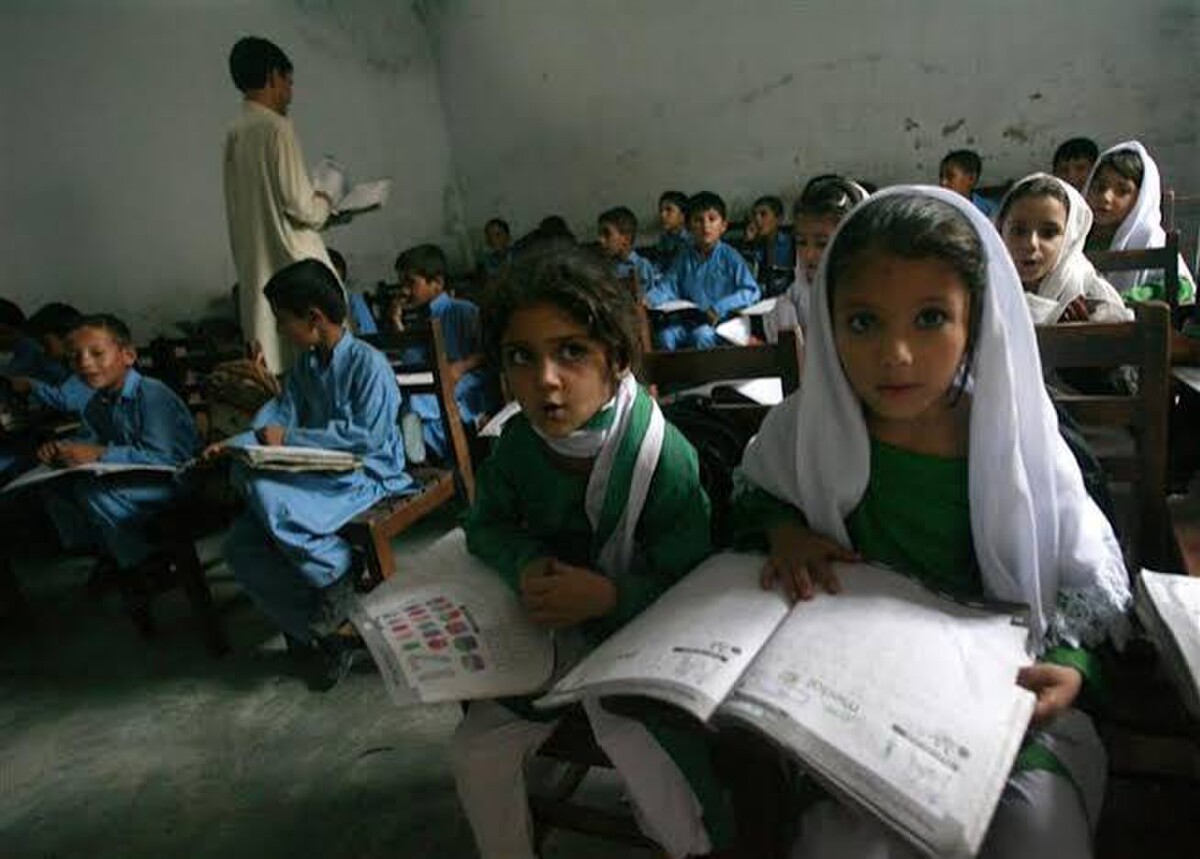
According to a new Unesco report released on World Children’s Day, ensuring every child benefits from at least one year of pre-primary education by 2030 would require an additional $35 billion in annual investment globally. The report, published jointly with Unicef and the OECD, reveals that pre-primary enrolment rates have stagnated over the past decade, with only 6 in 10 children entering primary school having attended preschool. The report highlights that underinvestment in early childhood care and education incurs significant economic costs, estimated at an average of 3% of GDP globally, reaching up to 7% in low-income countries.

Written for “Pre-primary Education Funding Need” on 2026-11-23, grounded in this article and the 0 other(s) covering the same event.

Compared with similar articles

Nothing to compare against. No article is close enough to this one for the pipeline to have linked or judged the pair.

Story

Pre-primary Education Funding Need
Education · 1 article(s) covering the same event.
How this article was measured signals, leaning charts, publisher record, byline, topics and claims

Signals How these are calculated →

Claims extracted
16
sentences that state something as happening or true
Uncertain
12%
2 of 16 hedged ("reportedly", "may", "according to")
Leaning
Leans left
of the writing, not the subject · beta estimate
Publisher signals
65/100
Dawn's corrections and hedging, across everything collected from it. Not a measure of accuracy.
Outlets on this story
1
Education
Same framing elsewhere
1
articles that frame the event the way this one does
Analyzed 2026-11-22 · how these are computed

How this is being covered How these are calculated →

Article leaning vs. publisher reliability
Source leaning vs. consistency

Publisher

Dawn · 3600 article(s) · 7 correction(s) detected
Running correction rate · 7 correction(s)

Who wrote this

Amin Ahmed
19 article(s) here · 1 carrying a prediction
Global expenditure on food imports is expected to increase moderately in 2026, with the global food import bill projected to reach $2,267 billion, up 1.9 per cent from the revised estimate of $2,224.8 billion, according to a new United Nations report.
2026-11-23 · mixed framing · ‘Global food import bill up 1.9pc in 2026’
According to the project’s progress report, all activities are expected to be completed by its closing date in June 2027.
2026-11-22 · assertive framing · Punjab land reforms project reaches 90pc progress
Ensuring that every child benefits from at least one year of pre-primary education by 2030 would require more than $35 billion in additional annual investment globally, according to a new Unesco report released on the World Children’s Day on Friday.
The commission’s tasks would include ensuring coherence between national and inter-provincial policies and water initiatives, and establishing an integrated mechanism to assess the impact of transboundary water projects and other interventions.
2026-11-16 · assertive framing · Water demand outstrips supply in Punjab: UN agency
The financing will support the Sindh Transformational Accelerated Rural Water Supply, Sanitation, and Hygiene Services Phase 1 Project (STAR WASH-1), the World Bank’s resident mission in Islamabad announced on Saturday.
The minister termed Pakistan’s three major seaports — Karachi Port, Port Qasim and Gwadar Port — “strategic gateways that could facilitate regional trade, strengthen transportation links and provide alternative routes for the movement of goods”, according to a press release by the BoI. Sheikh particularly underscored Karachi’s importance as Pakistan’s major industrial and commercial hub, noting that its established industrial base, business infrastructure, financial institutions and port facilities offered significant opportunities for trade, industrial partnerships and foreign investment.
The Sindh Property Revenues Enhancement Programme (Sindh PREP) approved by the World Bank board of executive directors, will benefit Karachi’s 25 local councils.
The WIPO report identified that the near-term environment was more demanding than the previous year: “Global growth of about 3.4pc in 2025 is expected to ease to around 3pc in 2026, held back by higher energy prices and elevated uncertainty, before recovering modestly in 2027.”
In theory, a more multipolar world could strengthen multilateralism, compared to a world order dominated by two competing countries or one superpower.
2026-10-25 · assertive framing · Veto power hinders efforts to end conflicts: UN
Also by Amin Ahmed
Nothing else under this byline is closely related to this article, so these are simply their most recent.
All 19 articles by Amin Ahmed →

Topics

ISLAMABAD OECD Unesco Unicef the World Children’s Day

Subjects

Dawn ORG · 1× GEM ORG · 1× ISLAMABAD GPE · 1× OECD ORG · 1× Unesco ORG · 1× Unesco Global Education Monitoring ORG · 1× Unicef ORG · 1×

Narrative

The 2026 Global Report on Early Childhood Care and Education: Financing for equity, inclusion and quality, published jointly with Unicef and OECD, highlights that underinvestment in early childhood care and education carries a steep economic price, with the cost of inaction estimated at an average of 3 per cent of GDP globally, reaching up to 7 per cent in low-income countries.
framing: assertive · carried by 1 article(s) · first seen 2026-11-22
Ensuring that every child benefits from at least one year of pre-primary education by 2030 would require more than $35 billion in additional annual investment globally, according to a new Unesco report released on the World Children’s Day on Friday.

Claims (16 extracted, 2 hedged)

Ensuring that every child benefits from at least one year of pre-primary education by 2030 would require more than $35 billion in additional annual investment globally, according to a new Unesco report released on the World Children’s Day on Friday. uncertain
child → ensure → Friday
Pre-primary enrolment rates have stalled over the past decade, and only 6 in 10 children entering primary school worldwide have attended at least one year of preschool, with major regional disparities. asserted
children → stall → disparities
The report shows that growing financing gaps and persistent inequalities continue to deprive millions of young children around the world of quality care and education. asserted
gaps → show → care
The 2026 Global Report on Early Childhood Care and Education: Financing for equity, inclusion and quality, published jointly with Unicef and OECD, highlights that underinvestment in early childhood care and education carries a steep economic price, with the cost of inaction estimated at an average of 3 per cent of GDP globally, reaching up to 7 per cent in low-income countries. asserted
cost → publish → countries
Financing gaps, inequalities continue to deprive millions of children worldwide of quality care and education, says report Yet, investing in this critical stage of education can deliver strong economic returns: according to the report, every $1 invested in closing childcare policy gaps could generate an estimated $3.76 in additional global GDP by 2035. uncertain
1 → continue → 2035
This is a crucial issue, as many children are already starting school at a disadvantage. asserted
children → start → disadvantage
Globally, only 64 per cent of children aged 24-59 months are developing as expected for their age, including in early learning, falling to 53 per cent in sub-Saharan Africa. asserted
cent → age → Africa
Investing in quality early childhood care and education can help close these gaps before they become entrenched. asserted
they → invest → gaps
Despite significant progress, with enrolment in early childhood education increasing from 64 per cent in 2003 to 75 per cent in 2024, growth has stalled in the past 10 years. asserted
growth → increase → years
The report estimates that only 59 per cent of all children entering primary school received at least one year of pre-primary education. asserted
cent → estimate → education
This proportion has barely moved since 2015, highlighting how far the world remains from achieving the Sustainable Development Goal target on education. asserted
world → move → education
This global figure hides large regional disparities. asserted
figure → hide → disparities
In 2024, participation one year before primary entry age exceeded 90 per cent in Europe and Northern America and Latin America and the Caribbean, while the rate remained close to 50pc in Northern Africa and Western Asia and sub-Saharan Africa. asserted
rate → exceed → Africa
Although public investment has increased in most countries, government spending on pre-primary education remains insufficient, accounting for only around 3 to 4pc of education budgets on average in low- and middle-income countries. This leads to overcrowded classrooms, underqualified staff and limited inclusion services, especially in low-income and crisis-affected contexts. asserted
This → increase → contexts
New estimates by Unesco Global Education Monitoring (GEM) report show that low- and lower-middle-income countries would need to invest an average of US$69 billion each year between 2027 and 2030 to meet their targets for one year of pre-primary education while maintaining minimum quality standards. asserted
countries → show → standards
Public financing is projected to cover only half of these needs, leaving an average annual financing gap of $35bn. asserted
financing → project → 35bn

Give feedback · no sign-in needed

No sign-in needed for now. Your note is sent without a name, so it cannot be answered.

History Support