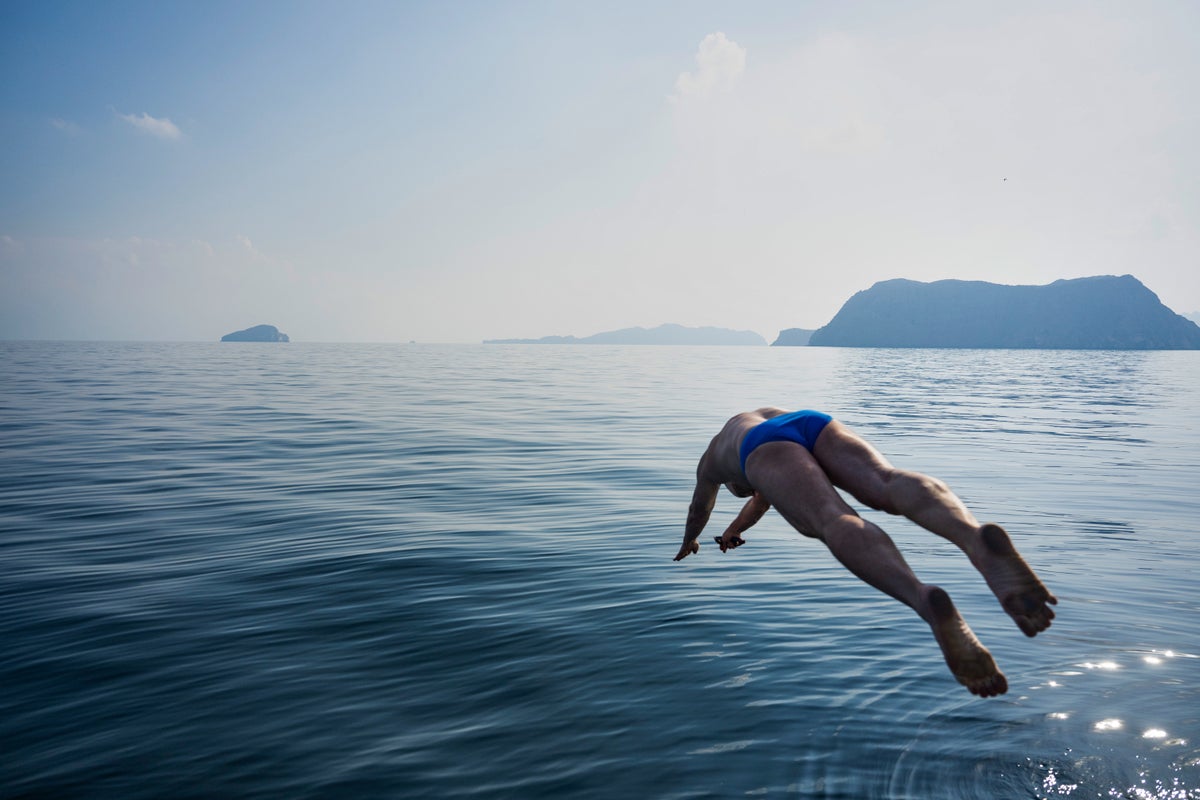
Photo via Al Jazeera

Swimmer braves tanker attacks to expose Hormuz contamination

Read the original at Al Jazeera ↗
Cite

Swimmer braves tanker attacks to expose Hormuz contamination. (2026, November 21). Al Jazeera. https://www.aljazeera.com/video/newsfeed/2026/11/21/swimmer-braves-tanker-attacks-to-expose-hormuz-contamination?traffic_source=rss

Dated from the outlet's own feed. Check the original for its byline.

Al Jazeera · collected 2026-11-21

Quick Summary

Endurance swimmer Lewis Pugh entered the waters of the Strait of Hormuz despite ongoing tanker attacks and explosions to draw attention to marine pollution in the region. Pugh warns that the environmental damage, particularly oil contamination, could persist for decades, even if the conflict subsides. The article presents Pugh’s actions as a protest to highlight the ecological impact of tensions between the US, Israel, and Iran.
Written by AI on 2026-11-21, from this article's own text only (the story summary below draws on all the coverage).
See how they differ ↓

AI analysis

Story summary

British endurance swimmer Lewis Pugh completed a 15-kilometer swim through the Strait of Hormuz on November 21, 2026, to highlight the environmental impact of the ongoing war involving Iran. Pugh, a United Nations Patron of the Oceans, started his swim from the Musandam peninsula and completed it by rounding the Cape of Hormuz. During his swim, he witnessed an oil tanker being hit by an explosion and saw fighter jets in the area. Pugh is believed to be the first person to undertake such a long-distance swim in the strait since the war began. The swim aimed to raise awareness about the threat to marine habitats and wildlife in the region, which has become crucial due to increasing attacks on vessels in the waterway.

Written for “Swimmer Highlights Hormuz Contamination” on 2026-11-21, grounded in this article and the 6 other(s) covering the same event.

How they differ

5 outlets covered “Swimmer Highlights Hormuz Contamination”.

What each outlet says

One AI summary per outlet of its latest article on this story, written from that article alone and checked against it. Open the article for the outlet's own words.

Al JazeeraThis outlet21 Nov

Endurance swimmer Lewis Pugh entered the waters of the Strait of Hormuz despite ongoing tanker attacks and explosions to draw attention to marine pollution in the region. Pugh warns that the environmental damage, particularly oil contamination, could persist for decades, even if the conflict subsides. The article presents Pugh’s actions as a protest to highlight the ecological impact of tensions between the US…

Swimmer braves tanker attacks to expose Hormuz contamination (this article)

Evening Standard21 Nov

A 56-year-old ocean activist, a UN patron of the oceans, swam 15km across the Strait of Hormuz over three days to highlight the environmental impact of the conflict between Iran and the US. Wearing only swimming trunks, goggles, and a UN cap, he began his swim from the Musandam Peninsula and concluded it near the Cape of Hormuz. During the swim, he witnessed attacks on oil tankers and documented smoke from burning…

Briton swims in Strait of Hormuz to highlight ‘environmental cost of war’ →3 articles from Evening Standard on this story
Toronto Star21 Nov

British endurance swimmer Lewis Pugh, a United Nations Patron of the Oceans, swam parts of the Strait of Hormuz over three days to highlight the environmental impact of the war with Iran. Wearing only swimming trunks, goggles, and a U.N. logo cap, Pugh completed about 15 kilometers, starting from the Musandam peninsula and ending at the Cape of Hormuz. During his swim, he witnessed two oil tankers being attacked and…

Endurance athlete swims in Strait of Hormuz to highlight Iran war's impact on wildlife →
The Independent21 Nov

Lewis Pugh, a British endurance swimmer and United Nations Patron of the Oceans, completed a 15-kilometer swim in the Strait of Hormuz to draw attention to the environmental impact of the ongoing conflict in the region. Pugh swam through the strait while oil tankers were being attacked nearby, experiencing firsthand the dangers posed to marine wildlife and ecosystems. He warned that the oil leaks from damaged…

British endurance swimmer Lewis Pugh swims in Strait of Hormuz to highlight Iran war’s impact on wildlife →
Euronews21 Nov

Lewis Pugh, a 56-year-old ocean campaigner, swam through the Strait of Hormuz off Oman’s Musandam Peninsula to highlight the environmental impact of the conflict there. During his swim, he witnessed burning ships and oil spills, which could severely damage marine ecosystems for decades. Despite the dangers, Pugh saw dolphins, turtles, and ospreys, underscoring the area’s ecological importance. He emphasized the need…

Strait of Hormuz: Athlete swims through war zone to expose war's environmental toll →

Compared with similar articles

This article reads leans left and hedges 50% of its claims. Each row says how that neighbour differs.
The Independent
Hedges 2 of 36 claims Outlet record 59/100
The Independent
Leans right further right than this Hedges 4 of 18 claims Outlet record 59/100
“Article A describes a specific incident of a tanker being struck in the Strait of Hormuz, while Article B discusses broader environmental concerns and a swimmer's action to draw attention to pollution and marine life damage, which is not the same specific incident.”
Toronto Star
Leans left Hedges 2 of 35 claims Outlet record 64/100
Al Jazeera
Hedges 0 of 3 claims Outlet record 60/100
“The first article describes oil tankers hitting sea mines in the Strait of Hormuz, while the second article describes a swimmer exposing marine life contamination due to tanker attacks, which appears to be a different incident or consequence.”
Al Jazeera
Hedges 3 of 19 claims Outlet record 60/100
“The articles describe different aspects of the conflict in the Strait of Hormuz, with Article A focusing on a swimmer's protest amid tanker attacks, while Article B reports on specific tanker attacks and a drone alert in Iraq.”

Story

Swimmer Highlights Hormuz Contamination
Environment · 7 article(s) covering the same event. See how they differ ↑
How this article was measured signals, leaning charts, publisher record, byline, topics and claims

Signals How these are calculated →

Claims extracted
2
sentences that state something as happening or true
Uncertain
50%
1 of 2 hedged ("reportedly", "may", "according to")
Leaning
Leans left
of the writing, not the subject · beta estimate
Publisher signals
60/100
Al Jazeera's corrections and hedging, across everything collected from it. Not a measure of accuracy.
Outlets on this story
7
Environment
Same framing elsewhere
1
articles that frame the event the way this one does
Analyzed 2026-11-21 · how these are computed

How this is being covered How these are calculated →

Article leaning vs. publisher reliability
Source leaning vs. consistency

Publisher

Al Jazeera · 6234 article(s) · 4 correction(s) detected
Running correction rate · 4 correction(s)

Who wrote this

No reporter is named on this article.

Topics

Hormuz Iran

Subjects

Hormuz GPE · 1× Iran GPE · 1× Lewis Pugh PERSON · 1×

Narrative

Swimmer braves tanker attacks to expose Hormuz contamination As tankers burned and explosions shook the Strait of Hormuz, endurance swimmer Lewis Pugh entered the water to expose another casualty of the US-Israeli war on Iran: marine life.
framing: mixed · carried by 1 article(s) · first seen 2026-11-21
He warns that oil pollution could take decades to clean up, long after the fighting ends.
2026-11-21 · Al Jazeera
Swimmer braves tanker attacks to expose Hormuz contamination · mixed framing

Claims (2 extracted, 1 hedged)

Swimmer braves tanker attacks to expose Hormuz contamination As tankers burned and explosions shook the Strait of Hormuz, endurance swimmer Lewis Pugh entered the water to expose another casualty of the US-Israeli war on Iran: marine life. asserted
Pugh → brave → Iran
He warns that oil pollution could take decades to clean up, long after the fighting ends. uncertain
fighting → warn → decades
Give feedback · no sign-in needed

No sign-in needed for now. Your note is sent without a name, so it cannot be answered.

History Support