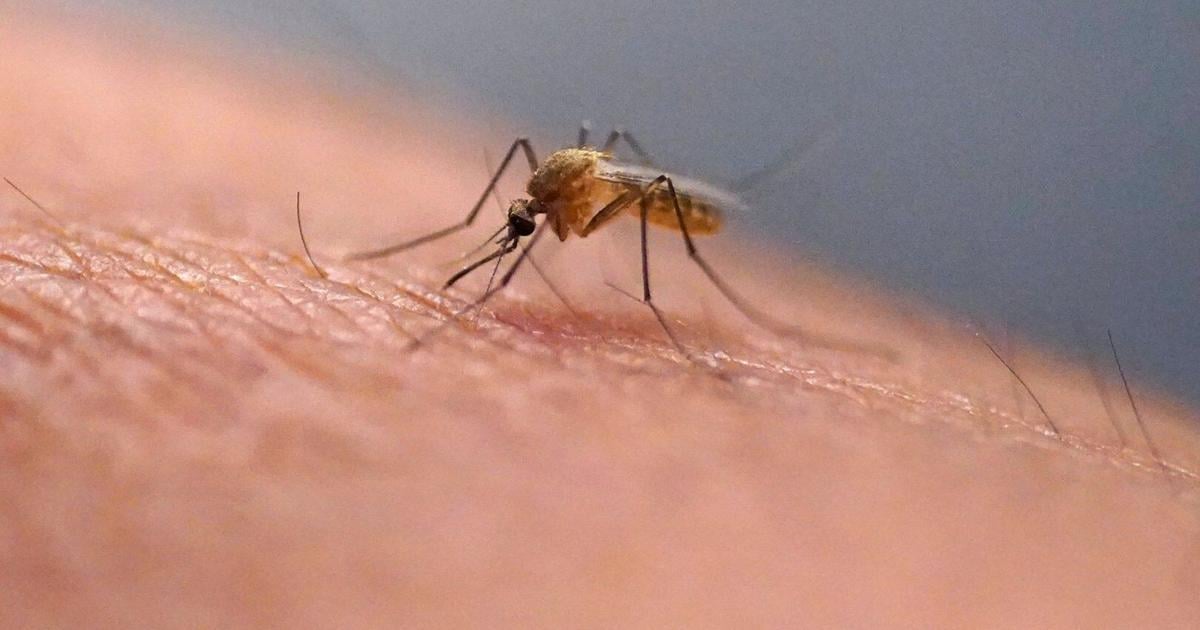
Photo via The Independent

Specially bred mosquitoes help fend off dengue in ‘exciting’ study as Florida grapples with outbreak

Read the original at The Independent ↗
Cite

Neergaard, L. (2026, November 21). Specially bred mosquitoes help fend off dengue in ‘exciting’ study as Florida grapples with outbreak. The Independent. https://www.independent.co.uk/news/world/americas/mosquitoes-dengue-fever-study-florida-cases-b3089175.html

Dated from the outlet's own feed. Check the original for its byline.

The Independent · collected 2026-11-21 · by Lauran Neergaard

Quick Summary

A new study in Brazil shows that specially bred mosquitoes carrying Wolbachia bacteria significantly reduce dengue and chikungunya infections by about 69% in children. The research, involving over 5,700 children, was presented at the American Society of Tropical Medicine and Hygiene. As Florida faces its largest dengue outbreak since the 1940s with over 650 locally acquired cases, this biological approach offers a promising alternative to traditional methods like pesticides.
Written by AI on 2026-11-21, from this article's own text only.

AI analysis

Why this leaning score
This article does not take a side on a contested political question, so it has no leaning score. That is an answer rather than a gap: a match report or a rescue can be warmly or critically written without being left or right, and scoring it anyway is how approval of a subject gets recorded as a political position.
No political leaning scored for article 170000 · logged 2026-11-21

Compared with similar articles

Nothing to compare against. No article is close enough to this one for the pipeline to have linked or judged the pair.
How this article was measured signals, leaning charts, publisher record, byline, topics and claims

Signals How these are calculated →

Claims extracted
18
sentences that state something as happening or true
Uncertain
17%
3 of 18 hedged ("reportedly", "may", "according to")
Leaning
not political
takes no side on a contested political question
Publisher signals
59/100
The Independent's corrections and hedging, across everything collected from it. Not a measure of accuracy.
Outlets on this story
unclustered
not grouped into a story yet
Same framing elsewhere
1
articles that frame the event the way this one does
Analyzed 2026-11-21 · how these are computed

How this is being covered How these are calculated →

Article leaning vs. publisher reliability
Source leaning vs. consistency

Publisher

The Independent · 4787 article(s) · 10 correction(s) detected
Running correction rate · 10 correction(s)

Who wrote this

Lauran Neergaard
8 article(s) here · 1 carrying a prediction
But because people with mild symptoms may not be diagnosed, the new study in Belo Horizonte, Brazil, went further.
An extra hour of sleep is on the way for most Americans, though the “fall back” to standard time will bring darker afternoons, too.
"It's a big step forward for science, for oncology, because this vaccine will apply to many different cancers," said Dr. Michael Atkins, deputy director of Georgetown University's Lombardi Comprehensive Cancer Center.
“It’s a big step forward for science, for oncology, because this vaccine will apply to many different cancers,” said Dr. Michael Atkins, deputy director of Georgetown University’s Lombardi Comprehensive Cancer Center.
The shot-averse could choose a nasal spray, FluMist, if they're ages 2 to 49 and meet other health criteria.
The shot-averse could choose a nasal spray, FluMist, if they’re ages 2 to 49 and meet other health criteria.
Also by Lauran Neergaard
Nothing else under this byline is closely related to this article, so these are simply their most recent.
All 8 articles by Lauran Neergaard →

Topics

Brazil Emory University Florida U.S. the American Society of Tropical Medicine and Hygiene

Subjects

Florida GPE · 4× Brazil GPE · 3× U.S. GPE · 3× Emory University ORG · 1× Hillsborough County GPE · 1× Indonesia GPE · 1× Sri Edupuganti PERSON · 1× Tampa GPE · 1× World Mosquito Program ORG · 1× the American Society of Tropical Medicine and Hygiene ORG · 1×

Narrative

The major study of more than 5,700 children in Brazil, one of the world's dengue hot spots, offers new evidence that breeding mosquitoes unable to transmit viruses can be a viable new strategy instead of relying on pesticides and trying to avoid getting bitten.
framing: assertive · carried by 1 article(s) · first seen 2026-11-21
But because people with mild symptoms may not be diagnosed, the new study in Belo Horizonte, Brazil, went further.

Claims (18 extracted, 3 hedged)

A specially bred mosquito appears to offer strong protection against dengue and chikungunya, according to a new study, as cases of mosquito-borne illnesses spike in Florida. uncertain
cases → breed → Florida
The major study of more than 5,700 children in Brazil, one of the world's dengue hot spots, offers new evidence that breeding mosquitoes unable to transmit viruses can be a viable new strategy instead of relying on pesticides and trying to avoid getting bitten. asserted
breeding → offer → pesticides
Dr Sri Edupuganti of Emory University, part of the international research team, said children in neighborhoods populated by Wolbachia-carrying insects showed about a 69% reduction in dengue and chikungunya infections compared with similar neighborhoods. asserted
children → say → neighborhoods
The effect was sustained even during Brazil's severe 2024 dengue outbreak, she said. asserted
she → sustain → outbreak
The findings were reported at a meeting of the American Society of Tropical Medicine and Hygiene. asserted
findings → report → Medicine
Florida grapples with large outbreak The latest research comes as Florida grapples with an unusually large outbreak of the virus, what appears to be the biggest in any U.S. state since at least the 1940s. asserted
what → grapple → 1940s
Usually in the continental U.S., dengue is found mostly in people who traveled internationally. asserted
who → find → people
But as of Friday, Florida health officials had tallied more than 650 locally acquired cases, about three-quarters of them in Hillsborough County, home to Tampa. asserted
officials → tally → Tampa
Outside the U.S., the nonprofit World Mosquito Program has pioneered the Wolbachia strategy. asserted
Program → pioneer → strategy
Scientists breed mosquitoes to carry a kind of bacteria called Wolbachia. asserted
Scientists → breed → bacteria
How Wolbachia strategy works The bacteria are harmless to people and common in many insects, although not dengue-carrying Aedes aegypti mosquitoes. asserted
bacteria → work → insects
Wolbachia dramatically reduce the mosquitoes' ability to transmit certain viruses. asserted
Wolbachia → reduce → viruses
Female mosquitoes spread the bacteria to their offspring, so releasing enough of the specially bred insects, males and females, into an area allows Wolbachia to gradually become established in the local mosquito population. asserted
Wolbachia → spread → population
Field trials and other studies in Indonesia and elsewhere have shown the strategy can significantly lower dengue diagnoses. asserted
strategy → show → diagnoses
But because people with mild symptoms may not be diagnosed, the new study in Belo Horizonte, Brazil, went further. uncertain
study → diagnose → Horizonte
Researchers tested blood for signs of dengue, chikungunya or the Zika virus. asserted
Researchers → test → dengue
“This is really exciting,” said Dr David Hamer, a global health expert at Boston University who wasn't involved with the Brazilian study. asserted
who → say → study
He predicts that pairing more use of these Wolbachia mosquitoes with existing steps to fight mosquito-borne disease could “knock dengue down to much lower levels” in many places. uncertain
pairing → predict → places

Give feedback · no sign-in needed

No sign-in needed for now. Your note is sent without a name, so it cannot be answered.

History Support