That is 0 articles you have read today.
The Aporia is free and carries no advertising, so readers are the only
thing paying for it. If you are getting this much out of it, a small
donation is what keeps it independent.
You have read 0 articles today.
That is more than the 15 a day The Aporia gives away,
and well past what it can carry on nothing. Your allowance resets at
midnight.
There is no advertising here and nothing about you is sold, so readers
are the only thing paying for it. If the site is worth this much of
your day, it is worth a few dollars.
Everything else stays open: the front page, the
directory and search do
not count against this, and neither does re-opening something you have
already read today.
Photo via Toronto Star
Little Mercury gets its first visitor in years as a pair of spacecraft loop into orbit
Dunn, M. (2026, November 22). Little Mercury gets its first visitor in years as a pair of spacecraft loop into orbit. Toronto Star. https://www.thestar.com/news/world/united-states/little-mercury-gets-its-first-visitor-in-years-as-a-pair-of-spacecraft-loop-into-orbit/article_5f26bbf8-0a81-5690-b6b8-f115d21f09ac.html
Dunn, Marcia. “Little Mercury gets its first visitor in years as a pair of spacecraft loop into orbit.” Toronto Star, 22 Nov. 2026, https://www.thestar.com/news/world/united-states/little-mercury-gets-its-first-visitor-in-years-as-a-pair-of-spacecraft-loop-into-orbit/article_5f26bbf8-0a81-5690-b6b8-f115d21f09ac.html.
Dunn, Marcia. “Little Mercury gets its first visitor in years as a pair of spacecraft loop into orbit.” Toronto Star, November 22, 2026. https://www.thestar.com/news/world/united-states/little-mercury-gets-its-first-visitor-in-years-as-a-pair-of-spacecraft-loop-into-orbit/article_5f26bbf8-0a81-5690-b6b8-f115d21f09ac.html.
Dated from the outlet's own feed. Check the original for its byline.
Toronto Star
· collected 2026-11-22 · by Marcia Dunn
Quick Summary
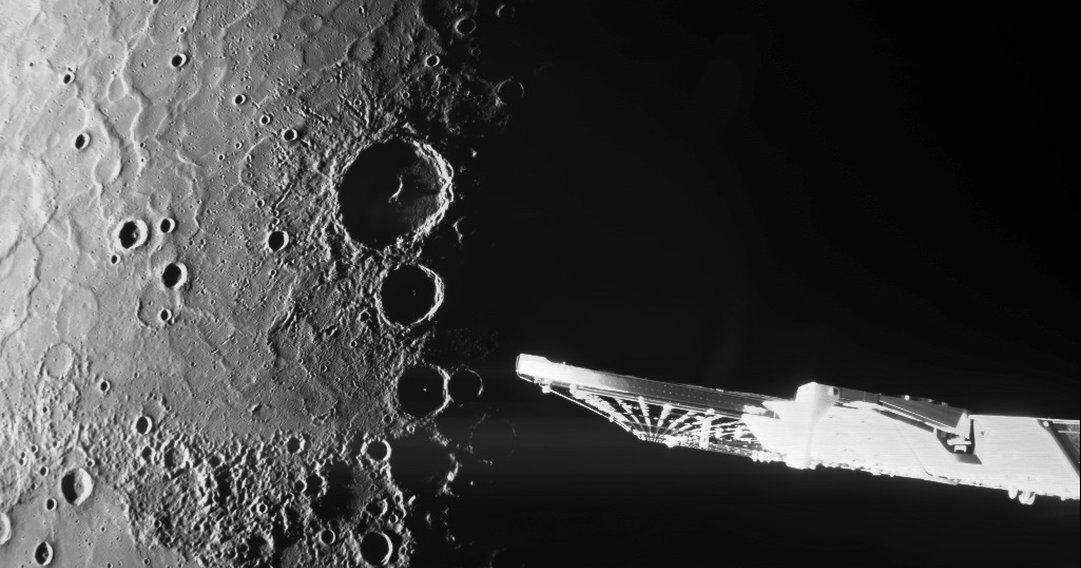
On Saturday, two spacecraft successfully entered orbit around Mercury after an eight-year journey. The mission, called BepiColombo and costing $2 billion, includes one European and one Japanese spacecraft that will separate next month to study Mercury from various altitudes.
Written by AI on 2026-11-22,
from this article's own text only (the story summary below draws on all the coverage).
After an eight-year journey traveling nearly six billion miles, the BepiColombo spacecraft entered orbit around Mercury on Saturday, becoming the third spacecraft to visit the planet. The mission, costing $2 billion, is a joint effort between the European Space Agency and the Japan Aerospace Exploration Agency. The spacecraft will separate into two components next month to study Mercury from different altitudes, focusing on its extreme temperature variations, from 430°C to -180°C, and its interaction with intense solar radiation. The mission aims to solve mysteries such as the presence of ice in Mercury's craters and the origin of the planet's mysterious hollows. Professor Emma Bunce from Leicester University, a principal investigator on the mission, highlighted Mercury's scientific importance, despite being an underexplored planet in the inner Solar System.
Written for “Mercury Gets First Visitor in Years” on 2026-11-22,
grounded in this article and the 2 other(s) covering the same event.
How they differ
3 outlets covered “Mercury Gets First Visitor in Years”.
What each outlet says
One AI summary per outlet of its latest article on this story, written from that article alone and checked against it. Open the article for the outlet's own words.
Toronto StarThis outlet22 Nov
On Saturday, two spacecraft successfully entered orbit around Mercury after an eight-year journey. The mission, called BepiColombo and costing $2 billion, includes one European and one Japanese spacecraft that will separate next month to study Mercury from various altitudes.
Little Mercury gets its first visitor in years as a pair of spacecraft loop into orbit (this article)BBC20 Nov
After an eight-year journey covering nearly six billion miles, the spacecraft BepiColombo is set to orbit Mercury, the closest planet to the Sun. The mission aims to explore Mercury's extreme temperatures, which range from -180°C to 430°C, and investigate mysteries like the presence of ice in its craters and the nature of its surface hollows. The spacecraft will execute a critical 11-minute maneuver to enter orbit…
A pair of spacecraft from the European Space Agency and Japan Aerospace Exploration Agency successfully entered orbit around Mercury after an eight-year journey. This marks the third visit to Mercury by spacecraft and the first in over a decade. The $2 billion mission, named BepiColombo, will study the planet's mysteries from different altitudes once the two spacecraft separate next month. The mission aims to map…
The linked robotic explorers — one European, the other Japanese — will separate from one another next month in order to map and study the scorching little planet from different altitudes.
NASA could not confirm the newest distance record until the signal reached the control team at California’s Jet Propulsion Laboratory via the deep space telescope near Madrid.
When Voyager 1 reaches that remarkable milestone on Wednesday, its radio signals will take precisely 24 hours traveling at the speed of light to reach Earth — in other words, one light-day.
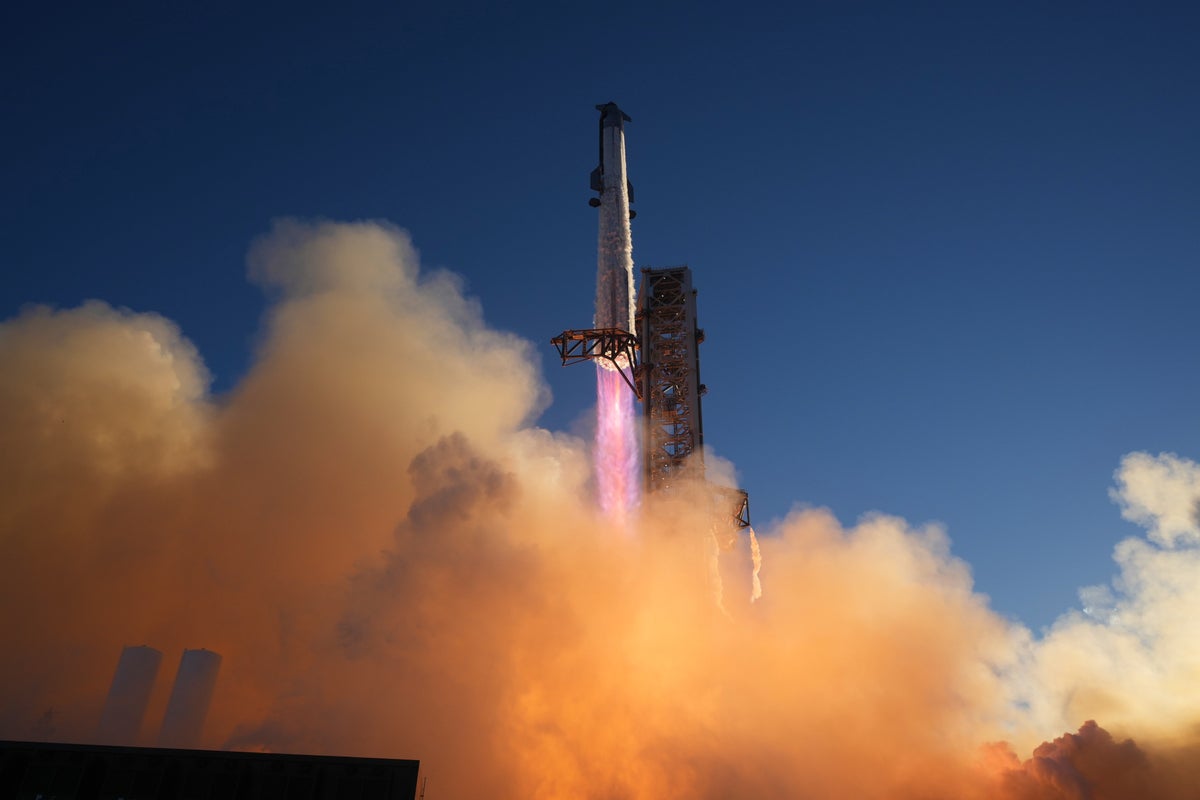
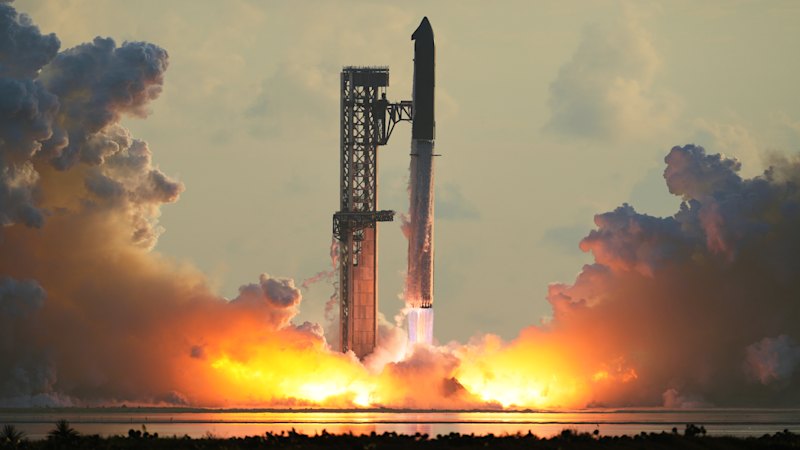
If all goes well, the massive booster will return to its Texas pad six minutes after blasting off and the bullet-shaped spacecraft will steer there the next day.
Five of the world’s space agencies joined forces for the five-year mission that will attempt to land a robotic prospector plus a rover on Phobos, the larger and closer of Mars’ two pint-sized moons.
framing: assertive ·
carried by 1 article(s) ·
first seen 2026-11-22
The linked robotic explorers — one European, the other Japanese — will separate from one another next month in order to map and study the scorching little planet from different altitudes.
A pair of spacecraft slipped into orbit around Mercury on Saturday after an eight-year cruise through the inner solar system to unravel our littlest planet’s mountain of mysteries.
asserted
pair → slip → mysteries
The linked robotic explorers — one European, the other Japanese — will separate from one another next month in order to map and study the scorching little planet from different altitudes.
asserted
other → link → altitudes
The $2 billion (1.7 billion euros) mission is known collectively as BepiColombo.
asserted
mission → know → BepiColombo
Give feedback · no sign-in needed
No sign-in needed for now. Your note is sent without a name, so it cannot be answered.
 The Aporia