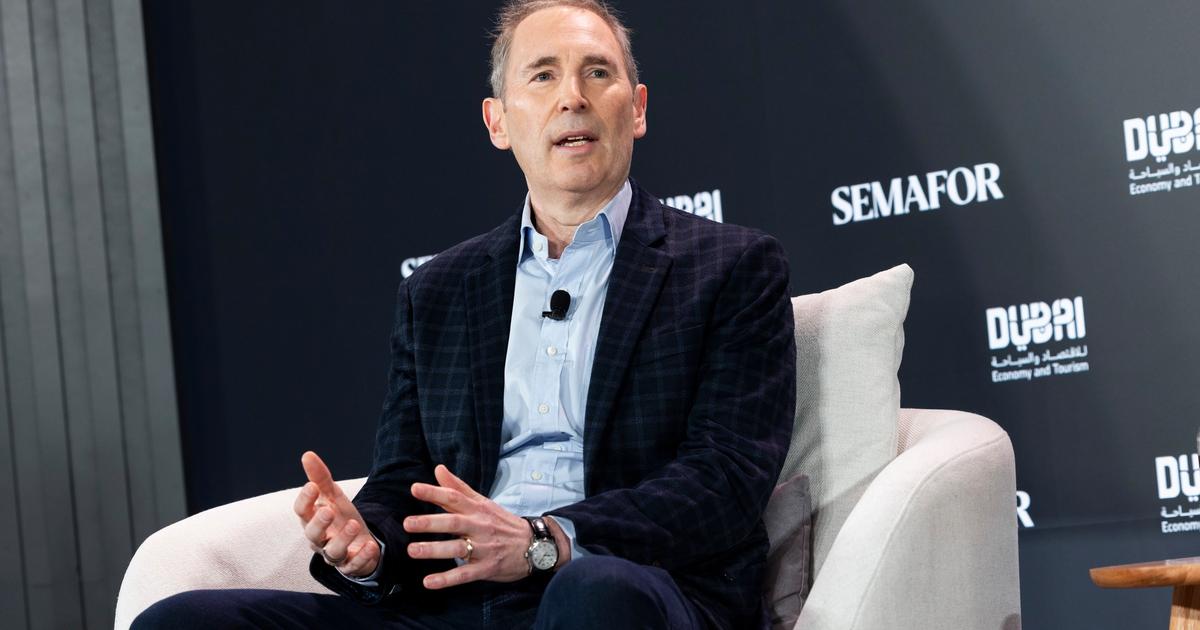
Photo via Semafor

Nvidia’s case for taming AI agents

Read the original at Semafor ↗
Cite

Capelouto, J. (2026, September 17). Nvidia’s case for taming AI agents. Semafor. https://www.semafor.com/article/09/17/2026/nvidias-case-for-taming-ai-agents

Dated when The Aporia collected the article, usually within hours of publication. Check the original for its exact date and byline.

Semafor · collected 2026-09-17 · by J.D. Capelouto

Quick Summary

Nvidia’s VP of agentic AI, Adel El Hallak, argues that controlling how AI agents operate through their "harness" is crucial for AI safety, rather than slowing down model development. He claims that technical safeguards can secure AI without creating fear and uncertainty, contrasting this with calls from figures like Anthropic CEO Dario Amodei to slow progress due to rapid advancement risks. While El Hallak supports industry-led initiatives like the Open Secure AI Alliance, Democratic Representative Pete Aguilar advocates for federal regulation, arguing tech companies cannot be trusted to regulate themselves adequately.
Written by AI on 2026-09-18, from this article's own text only (the story summary below draws on all the coverage).

AI analysis

Story summary

Nvidia's Vice President of Agentic AI, Adel El Hallak, argued against fears surrounding artificial intelligence (AI) during an interview with Semafor. He emphasized that the systems supporting AI models are crucial for their safety and dismissed concerns about fear, uncertainty, and doubt (FUD). In contrast to those calling for a slowdown in AI development due to safety risks, Nvidia CEO Jensen Huang supports continued rapid progress while maintaining safety measures. El Hallak noted that advancements in AI models allow for both speed and security, countering the notion that companies cannot effectively safeguard advanced technology on their own. Rep. Pete Aguilar countered this viewpoint, advocating for federal regulations instead of relying solely on industry self-regulation.

Written for “AI Regulation Discussion” on 2026-11-21, grounded in this article and the 0 other(s) covering the same event.

Compared with similar articles

This article reads unscored and hedges 25% of its claims. Each row says how that neighbour differs.
September 13, 2026 Different event
Letters from an American
Leans left Hedges 10 of 65 claims
“The articles discuss different perspectives on AI safety and regulation, with Article A focusing on Dario Amodei's essay and Article B highlighting Nvidia’s VP of agentic AI's viewpoint.”
Al Jazeera
Hedges 0 of 11 claims Outlet record 60/100
“The articles discuss related themes but describe different events and perspectives on AI regulation and safety.”
BBC News
Hedges 6 of 33 claims Outlet record 65/100
“The articles discuss different aspects of AI safety and sentiment within the industry but do not describe the same specific incident or occurrence.”
The Free Press
Hedges 1 of 12 claims Outlet record 96/100
“The articles discuss different perspectives on AI safety and regulation, but they are not reporting on the same specific incident or occurrence.”
New York Post
Hedges 7 of 25 claims Outlet record 66/100
“The articles discuss different perspectives on AI regulation and safety from two separate individuals (Andrew Yang and Adel El Hallak) with distinct viewpoints.”

Story

AI Regulation Discussion
Technology · 1 article(s) covering the same event.
How this article was measured signals, leaning charts, publisher record, byline, topics and claims

Signals How these are calculated →

Claims extracted
12
sentences that state something as happening or true
Uncertain
25%
3 of 12 hedged ("reportedly", "may", "according to")
Leaning
withheld
no quote in the article backed the model's score
Publisher signals
64/100
Semafor's corrections and hedging, across everything collected from it. Not a measure of accuracy.
Outlets on this story
1
Technology
Same framing elsewhere
1
articles that frame the event the way this one does
Analyzed 2026-09-18 · how these are computed

How this is being covered How these are calculated →

Article leaning vs. publisher reliability
Source leaning vs. consistency

Publisher

Semafor · 1931 article(s) · 7 correction(s) detected
Running correction rate · 7 correction(s)

Who wrote this

J.D. Capelouto
41 article(s) here · 1 carrying a prediction
Some global tech leaders at Semafor’s Silicon Valley & The World suggested that backlash to data centers or a potential financing bubble might provide the necessary brakes that the industry needs.
Amazon CEO Andy Jassy said Tuesday it would be a “historic mistake” for the US to pull back on its AI infrastructure buildout following the data center backlash during the midterm elections.
Asked whether “winter is coming” — a nod to fears that the AI boom could face a correction — Al Mubarak said it was, but that “winter doesn’t mean minus 30 degrees.
Speaking alongside Huffington on the panel, Willett Advisors CEO Steven Rattner said the idea of bringing Huang back as CEO is “ridiculous.”
Billionaire hedge fund manager Bill Ackman said Monday it was “unlikely” that he would get directly involved in an effort to reinstate former Nvidia CEO Jensen Huang.
Indians see AI as less of a threat than people in the US because fewer workers hold the “cognitive and office-oriented jobs” that the technology could replace, one of the country’s top tech officials said.
Those ties went beyond business: Hou referenced a New York Times article in which Huang’s longtime hairstylist admitted he was too upset to sleep, drank a bottle of red wine, and prayed for the former chip CEO after his resignation.
They see the model as particularly useful in sales and executive hiring, where a search firm could prompt it to evaluate an interview transcript to gauge how a candidate will behave under pressure.
2026-11-12 · assertive framing · A new AI model wants to read between the lines
“If we leave a market altogether, there’s no question somebody else would step in,” he told Michael Milken in May 2025.
2026-11-11 · assertive framing · Tracking how Jensen Huang changed his stance on China
The votes were hyperlocal and often emotional in nature, but they could carry financial consequences, because some of the projects at stake were already in motion.
Also by J.D. Capelouto
Nothing else under this byline is closely related to this article, so these are simply their most recent.
All 41 articles by J.D. Capelouto →

Topics

Anthropic News Nvidia Semafor the Open Secure AI Alliance

Subjects

Nvidia ORG · 2× Adel El Hallak PERSON · 1× Anthropic ORG · 1× Dario Amodei PERSON · 1× El Hallak PERSON · 1× El Hallak’s PERSON · 1× Huang PERSON · 1× Jensen Huang PERSON · 1× News ORG · 1× Semafor ORG · 1×

Narrative

“The world’s not going to slow down.” Room for Disagreement Some in Washington argue tech companies can’t be trusted to take up these issues on their own. “This is not an industry that can regulate itself,” Democratic Rep. Pete Aguilar said this week, arguing for the need for federal industry-wide rules on AI safety.
framing: mixed · carried by 1 article(s) · first seen 2026-09-18
El Hallak’s argument provides insight into the more technical case — as opposed to the geopolitical or ideological ones — for why AI doomerism may be overblown.
2026-09-18 · Semafor
Nvidia’s case for taming AI agents · mixed framing

Claims (12 extracted, 3 hedged)

The scaffolding that’s built around an AI model is just as important — if not more important — for AI safety than the model itself, Nvidia’s VP of agentic AI told Semafor. asserted
VP → build → Semafor
“Rather than creating fear and FUD, let’s just secure it. asserted
’s → create → it
We know how. asserted
We → know → ?
We’ve done these things before,” Adel El Hallak said, referencing the acronym for fear, uncertainty and doubt. asserted
Hallak → do → fear
El Hallak’s argument provides insight into the more technical case — as opposed to the geopolitical or ideological ones — for why AI doomerism may be overblown. uncertain
doomerism → provide → ones
Know More Nvidia CEO Jensen Huang has emerged as the most prominent tech figure voicing skepticism about recent claims by leaders like Anthropic CEO Dario Amodei that AI labs should slow down model development because the tech is quickly advancing beyond companies’ abilities to safeguard it. uncertain
tech → know → it
AI agents are central to that fear because they can take actions on their own, though regulation of agentic AI specifically is not discussed as much as is broad oversight of the models. asserted
oversight → take → models
Huang this week rejected the notion that the industry has to choose between safety and speed, saying “you could definitely have both at the same time.” uncertain
you → reject → time
El Hallak said advances in AI models make “harness engineering” more critical — a harness is the layer of instructions and code that governs how an AI agent operates in practice. asserted
agent → say → practice
“If you’re training a capable agent, it is important that you don’t put a lion in and expect to be able to control it in a horse’s pen.” asserted
you → train → pen
He couldn’t comment on whether government regulation of the agentic layer is needed, but pointed to industry initiatives like the Open Secure AI Alliance as a venue for that kind of work, to figure out “at which part of the layer do we need to add more strengths and more guardrails and more safeguards.” asserted
we → comment → strengths
“The world’s not going to slow down.” Room for Disagreement Some in Washington argue tech companies can’t be trusted to take up these issues on their own. “This is not an industry that can regulate itself,” Democratic Rep. Pete Aguilar said this week, arguing for the need for federal industry-wide rules on AI safety. asserted
Aguilar → go → safety
Give feedback · no sign-in needed

No sign-in needed for now. Your note is sent without a name, so it cannot be answered.

History Support