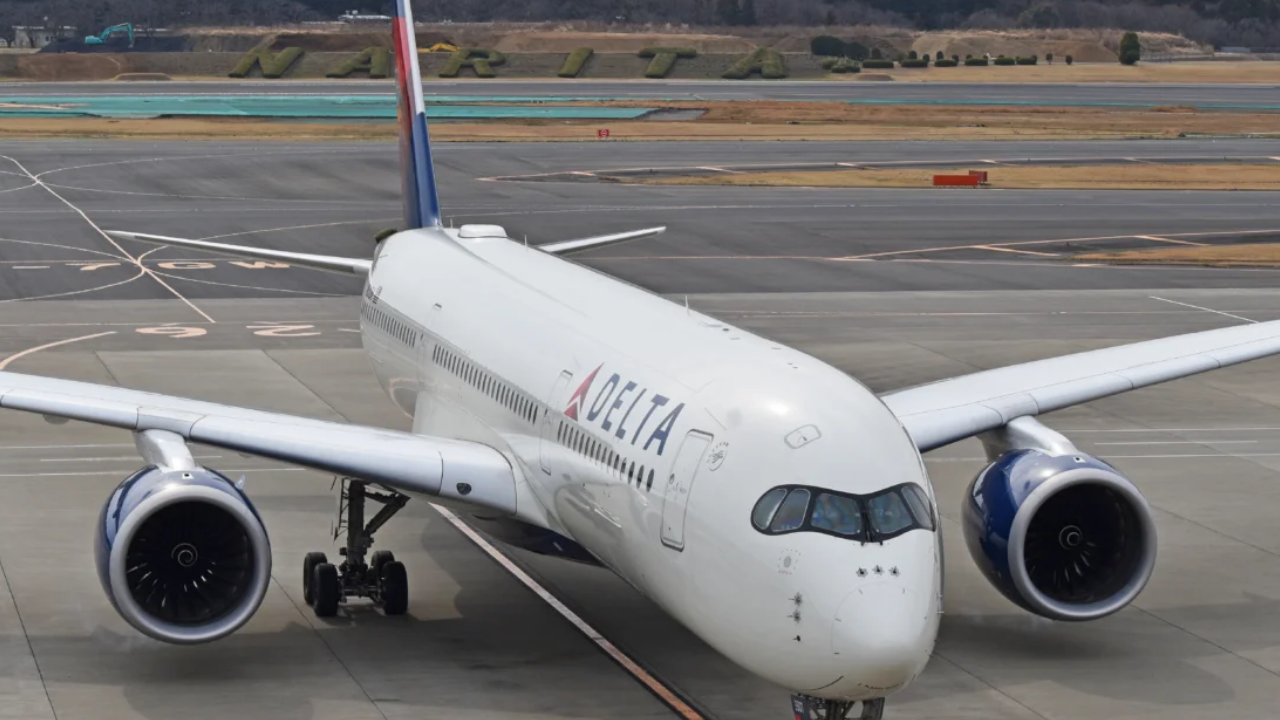
Passengers who paid extra to secure window seats on
Delta Air Lines flights
asserted
who → pay → flights
may have expected an outside view, but some say they ended up staring at a blank cabin wall instead.
uncertain
they → expect → wall
A federal judge in New York has now allowed a proposed class-action lawsuit against the airline to proceed, rejecting Delta’s attempt to have the case dismissed.
asserted
case → allow → attempt
The November 4, 2026 ruling, reported by Reuters, Law360 and Insurance Journal, keeps alive claims that Delta charged passengers for window seats without clearly disclosing that some of those seats had no actual windows.
uncertain
some → report → windows
However, the decision does not establish that the airline broke the law.
asserted
airline → establish → law
The allegations will now have to be examined as the case moves forward.
asserted
case → have → ?
The dispute began with Nicholas Meyer, who booked a journey from New York’s LaGuardia Airport to Orange County, California, on August 16, 2025, with a stop in Atlanta.
asserted
who → begin → Atlanta
According to the lawsuit, he paid extra to select window seats on both flights because he wanted to look outside during the journey.
uncertain
he → accord → journey
His first seat, 32A, had a window.
asserted
seat → have → window
After boarding a Boeing 757-200 in Atlanta, Meyer discovered that his assigned seat, 23F, was positioned beside a blank section of the aircraft wall.
asserted
seat → board → wall
He argued that he would not have selected or paid extra for the seat had Delta disclosed that it did not have a window.
asserted
it → argue → window
The lawsuit was initially filed in August 2025, with three additional passengers, Anthony Bernardo, Justin Valentine and Leah Roberts, joining it in October that year.
asserted
passengers → file → October
Meyer subsequently withdrew his individual claims in May 2026, leaving the other three passengers to continue the case.
uncertain
Meyer → withdraw → case
Why Delta wanted the case dismissed
Delta challenged the lawsuit by arguing that its Conditions of Carriage do not guarantee passengers particular seat assignments.
asserted
Conditions → want → assignments
The airline also maintained that it needs the flexibility to change aircraft and seating arrangements depending on operational requirements.
asserted
it → maintain → requirements
Another part of its defence relied on the federal Airline Deregulation Act, which limits certain state-level regulation of airline services and pricing.
asserted
which → rely → services
Delta argued that the passengers’ claims were barred under the law.
uncertain
claims → argue → law
However, US District Judge Ramón E. Reyes Jr., sitting in Brooklyn, rejected the airline’s request to dismiss the case on November 4.
asserted
Jr. → sit → November
The court found that there was a legitimate question over whether Delta’s contractual terms required it to provide the window seats passengers believed they had purchased.
asserted
they → find → seats
It also allowed the claims to proceed despite Delta’s argument about federal law.
uncertain
claims → allow → law
United Airlines is facing a similar lawsuit
Delta is not the only airline dealing with allegations over windowless window seats.
asserted
Delta → face → seats
United Airlines is facing a separate proposed class-action lawsuit brought by passengers who say they paid additional fees for seats advertised as window seats but discovered there was no window beside them.
asserted
they → face → them
In July 2026, US District Judge James Donato in San Francisco also rejected United’s attempt to dismiss the case.
asserted
Donato → reject → case
The judge pointed to the airline’s booking screens and boarding passes, which identified the selected seats as window seats, allowing the passengers’ contractual claims to move forward.
uncertain
claims → point → seats
The issue stems partly from aircraft design.
asserted
issue → stem → design
On some planes, structural components such as air-conditioning ducts and electrical systems occupy spaces behind the cabin walls where windows would ordinarily be installed.
asserted
windows → occupy → walls
This can leave certain seats without an outside view, even though they are positioned along the aircraft’s exterior wall.
asserted
they → leave → wall
For passengers, the distinction is significant because window seats are often chosen for more than their position in the cabin.
asserted
seats → choose → cabin
Some travellers prefer them to avoid being disturbed by people moving through the aisle, while others choose them for the view, natural light or simply the comfort of having a wall beside them.
asserted
others → prefer → them
The Delta and United cases could therefore have implications for how airlines describe seats during the booking process, particularly when passengers are charged extra for selecting them.
uncertain
passengers → have → them
For now, neither lawsuit has resulted in a finding of wrongdoing or a compensation award.
asserted
lawsuit → result → wrongdoing
The courts have only allowed the claims to proceed, leaving the central question unanswered: When an airline sells a window seat, should passengers be able to expect an actual window?
uncertain
passengers → allow → window
 The Aporia