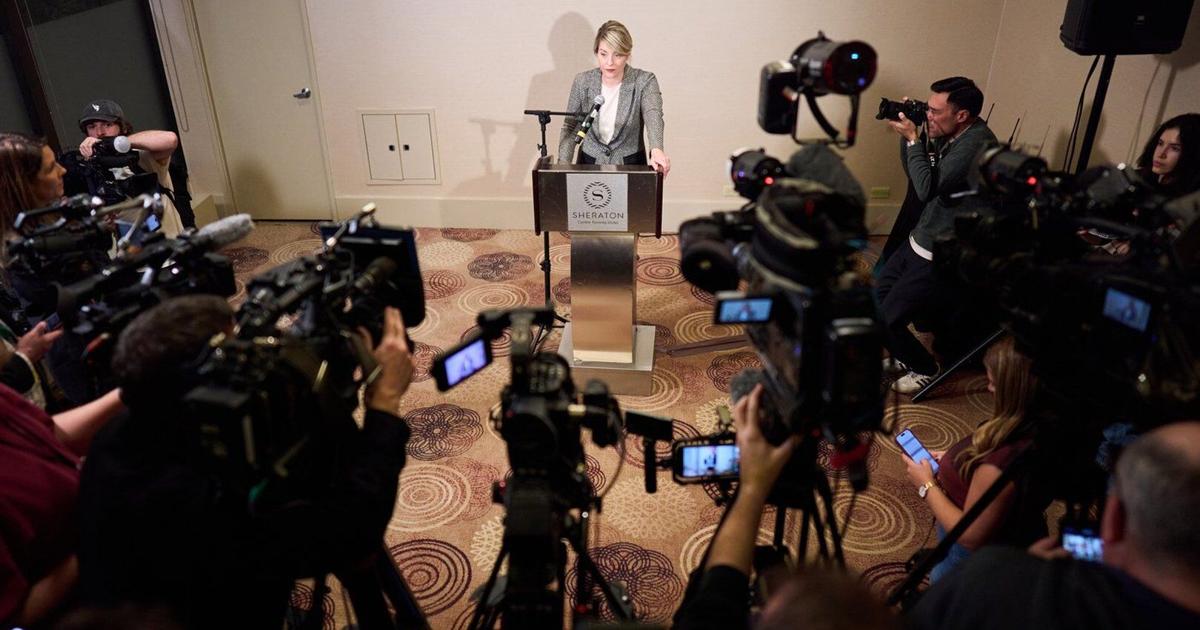
Photo via Toronto Star

Luxury home sales slump in Toronto, Vancouver, but top-end properties buck trend

Read the original at Toronto Star ↗
Cite

Hudes, S. (2026, November 22). Luxury home sales slump in Toronto, Vancouver, but top-end properties buck trend. Toronto Star. https://www.thestar.com/business/luxury-home-sales-slump-in-toronto-vancouver-but-top-end-properties-buck-trend/article_76856391-0122-5be8-9712-2d348e0944a1.html

Dated from the outlet's own feed. Check the original for its byline.

Toronto Star · collected 2026-11-22 · by Sammy Hudes

Quick Summary

Real estate markets in Toronto and Vancouver experienced a slump in luxury home sales in 2026, influenced by high inflation, trade war concerns, and uncertainty about borrowing costs. Despite these challenges, luxury properties priced above $4 million in Vancouver saw only 17 sales for every 100 new listings from January to October, compared to 29 sales in the $2 million to $4 million bracket, indicating that while sales volumes have decreased, prices are relatively stable. Andrew Carros, managing broker for Engel & Volkers Vancouver, attributes the slowdown to fewer wealthy buyers able to enter the market due to economic factors and increased property taxes.
Written by AI on 2026-11-22, from this article's own text only (the story summary below draws on all the coverage).

AI analysis

Story summary

Luxury home sales in Toronto and Vancouver have experienced a significant slump in 2026, according to a new report by real estate agency Engel & Volkers. Despite the downturn, top-end properties have managed to maintain stability in pricing, with sales still occurring within 10% of their asking prices. Andrew Carros, managing broker and chief operating officer for Engel & Volkers Vancouver, attributes this trend to a "stubborn" market where sellers, aware of the value of their properties, are willing to wait for better offers. High inflation, trade war anxieties, and borrowing cost uncertainties have contributed to buyer caution, making it difficult for luxury properties to attract immediate interest. However, real estate brokers predict that 2027 could see an increase in demand as wealthy buyers seek to purchase valuable inventory. Additionally, ongoing restrictions on foreign buyers continue to limit luxury sales.

Written for “Luxury Home Sales Slump” on 2026-11-22, grounded in this article and the 0 other(s) covering the same event.

Compared with similar articles

Nothing to compare against. No article is close enough to this one for the pipeline to have linked or judged the pair.

Story

Luxury Home Sales Slump
Economy/Business · 1 article(s) covering the same event.
How this article was measured signals, leaning charts, publisher record, byline, topics and claims

Signals How these are calculated →

Claims extracted
35
sentences that state something as happening or true
Uncertain
11%
4 of 35 hedged ("reportedly", "may", "according to")
Leaning
not political
takes no side on a contested political question
Publisher signals
65/100
Toronto Star's corrections and hedging, across everything collected from it. Not a measure of accuracy.
Outlets on this story
1
Economy/Business
Same framing elsewhere
1
articles that frame the event the way this one does
Analyzed 2026-11-22 · how these are computed

How this is being covered How these are calculated →

Article leaning vs. publisher reliability
Source leaning vs. consistency

Publisher

Toronto Star · 16802 article(s) · 32 correction(s) detected
Running correction rate · 32 correction(s)
2026-11-17
Correction
2026-10-26
Correction
2026-10-24
Correction
2026-10-07
Correction
2026-09-24
Correction

Who wrote this

Sammy Hudes
23 article(s) here · 1 carrying a prediction
But there’s hope that 2027 could unleash pent-up demand as wealthy buyers look to absorb valuable inventory.
TORONTO - Industry Minister Mélanie Joly is set to meet with representatives of Stellantis, the Ontario government and Unifor again today behind closed doors.
Some telecommunications analysts are casting doubt that a proposed merger between Quebecor Inc. and Telus Corp. would be able to clear all regulatory hurdles and make it to the finish line.
TORONTO - Industry Minister Mélanie Joly is set to hold a four-way meeting today with automaker Stellantis, the union representing its more than 9,000 workers in Canada, and representatives of the Ontario government.
“Reporting that the minister was involved in the (Roshel) deal is false because the minister, the department and the team would have never approved or agreed to a deal that, first, did not honour their commitment under the SRF, but, second, lacked the union’s approval,” said Denis.
Automaker previously halted $15B EV development in Ontario, citing sluggish demand Honda Canada says it will retool its manufacturing facilities in Alliston, Ont., to expand production of hybrid-electric and gasoline-powered vehicles.
A new report says Ontario’s housing market is expected to improve “modestly” next year as favourable economic conditions help push buyers off the sidelines, though higher borrowing costs could dull the extent of the rebound.
The Canadian Real Estate Association has downgraded its forecast for home sales activity in 2026 for the third straight quarter.
TORONTO - Stellantis workers in Canada are set to vote this weekend on whether to authorize a strike as their union says contract negotiations with the automaker remain at a standstill.
The watchdog says the Quebec Professional Association of Real Estate Brokers and its subsidiary, Société Centris, broke abuse of dominance rules by refusing to provide its members with a real estate data feed, while also restricting how such data could be used.
Also by Sammy Hudes
Nothing else under this byline is closely related to this article, so these are simply their most recent.
All 23 articles by Sammy Hudes →

Topics

Canada Engel & Volkers Engel & Volkers Vancouver TORONTO Vancouver

Subjects

TORONTO GPE · 4× Vancouver GPE · 3× Carros PERSON · 2× Re/Max ORG · 2× Andrew Carros PERSON · 1× Canada GPE · 1× Engel & Volkers ORG · 1× Engel & Volkers Vancouver ORG · 1× Re/Max Canada ORG · 1× the Greater Toronto Area GPE · 1×

Narrative

Technologies are different so people don’t even know if their companies are going to be viable in five to 10 years, so the uncertainty of the world has affected the real estate market globally.” Cohen and Carros also both cited ongoing restrictions on foreign buyers as factors limiting luxury sales.
framing: assertive · carried by 1 article(s) · first seen 2026-11-22
But there’s hope that 2027 could unleash pent-up demand as wealthy buyers look to absorb valuable inventory.

Claims (35 extracted, 4 hedged)

It’s been a challenging year for real estate markets across the country, and experts say even typically sought-after high-end properties haven’t been exempt from buyer caution driven by high inflation, trade war anxieties and borrowing cost uncertainties. asserted
properties → say → inflation
But there’s hope that 2027 could unleash pent-up demand as wealthy buyers look to absorb valuable inventory. uncertain
buyers → ’ → inventory
Real estate brokers say a common dynamic emerged in luxury markets throughout Canada in 2026: buyers had room to negotiate, but sellers who could afford to wait still held the upper hand, as they were prepared to stay put until their price was met, according to a new report from real estate agency Engel & Volkers. uncertain
price → say → Engel
“Sellers know what they’re holding onto,” said Andrew Carros, managing broker and chief operating officer for Engel & Volkers Vancouver. asserted
Carros → know → Engel
He described a “stubborn” market that has seen sales volumes decrease considerably since 2022. asserted
volumes → describe → 2022
“We are seeing way less luxury inventory, but the inventory that’s selling is still selling within 10 per cent of its asking price,” he said. asserted
he → see → price
“That shows you that it’s a stable market when it comes to pricing, because people are holding until they get the value they believe is there. asserted
they → show → value
In Vancouver, homes priced at $4 million and above saw the slowest pace of sales relative to new listings from January to October, according to the agency’s data. uncertain
homes → price → data
Carros said it’s not just a sales slowdown. asserted
it → say → ?
He said luxury listings account for just over 15 per cent of new inventory in the region he covers. asserted
he → say → region
Back when the market was red hot, it was common for 35 to 40 per cent of new listings to be priced at over $4 million. asserted
cent → price → million
He likened the luxury market to an engine that can’t run “because there’s not enough gas.” asserted
that → liken → gas
“The luxury market is really determined by people that are getting value from somewhere else as well, meaning that they are getting family money or they’re getting equity from a property they’ve owned for a long time, it could be downsizers, it could be lots of other things,” said Carros. uncertain
Carros → determine → things
“But it’s limited now. asserted
it → ’ → ?
There’s less people able to move in the market because of the economy, and because of all the taxes and everything else that they keep lopping down and adding to these properties, making them more and more expensive. asserted
them → ’ → properties
In Toronto, a higher municipal land transfer tax on residential property purchases over $3 million kicked in on April 1, leading to speculation that high-end buyers would rush to close ahead of the changes. asserted
buyers → kick → changes
A Re/Max Canada report said challenging market dynamics have had the greatest effect on the traditional luxury hubs of Toronto and Vancouver, despite more inventory and greater negotiating flexibility. asserted
dynamics → say → inventory
Data from Re/Max shows that during the first nine months of this year, there were close to 850 transactions in the Greater Toronto Area involving properties sold for more than $3 million — down 9.4 per cent year-over-year. asserted
Data → be → year
However, smaller and resource-driven markets led year-over-year sales growth, such as Burlington, Ont., at 26.3 per cent for homes priced above $2.4 million and Calgary at 20.6 per cent for homes at $1.5 million and up. asserted
markets → drive → million
(Luxury price points vary throughout the country given regional differences.) asserted
points → vary → differences
But the upper-end of Toronto’s luxury housing market has bucked that trend, with 15 properties sold for over $10 million through the first nine months of the year — the most activity at that price point in a decade. “There’s pent-up demand. asserted
properties → buck → decade
I think a lot of wealthy people ... have been sitting on the fence waiting for better economic conditions,” said Barry Cohen, a Re/Max luxury broker who was involved in four of those “uber-luxury” transactions. asserted
who → think → transactions
He said there was initially a brief “revolt” when the city’s tax hike on luxury purchases kicked in as buyers were hesitant to pay higher rates. asserted
buyers → say → rates
But clients soon came to realize that “it’s not going to change, and I need to get on with my life.” asserted
I → come → life
Cohen said while those able to afford the most expensive homes are a “little more immune” to global factors affecting inflation, the job market and borrowing costs, he said a buyer of a $3 million property — lower down on the luxury ladder — is “more susceptible.” asserted
buyer → say → ladder
Carros said those variables affect “every single demographic.” asserted
variables → say → demographic
“If the economy isn’t good, it doesn’t matter how much money you have, you’re still going to be more cautious about what you’re doing and how you’re doing it,” he said. asserted
he → matter → it
“Economies have changed. asserted
Economies → change → ?
The world is changing. asserted
world → change → ?
Technologies are different so people don’t even know if their companies are going to be viable in five to 10 years, so the uncertainty of the world has affected the real estate market globally.” Cohen and Carros also both cited ongoing restrictions on foreign buyers as factors limiting luxury sales. asserted
Cohen → know → sales
The federal government proposed in the 2026 budget to extend its ban on non-citizens or permanent residents from purchasing existing residential properties until 2029, while B.C. has a 20 per cent tax on properties purchased by foreign nationals. asserted
B.C. → propose → nationals
The Re/Max report said that in the current climate, the foreign buyers’ ban “has sidelined affluent international buyers, such as corporate executives, international athletes and high-net-worth professionals from investing in top-tier markets,” which is compounding already soft activity overall. asserted
which → say → activity
“At the end of the day, I think the government needs to look at ways that we can try to make sure that we get the investors coming in,” said Carros. asserted
Carros → think → ways
“We need to see what problems will be solved before we can see real optimism in the market.” asserted
we → need → market
This report by The Canadian Press was first published Nov. 22, 2026. asserted
report → publish → Press

Give feedback · no sign-in needed

No sign-in needed for now. Your note is sent without a name, so it cannot be answered.

History Support