Photo via Toronto Star

Russia and China veto US proposal for UN experts to keep monitoring sanctions on Iran

Read the original at Toronto Star ↗
Cite

Lederer, E. M. (2026, September 17). Russia and China veto US proposal for UN experts to keep monitoring sanctions on Iran. Toronto Star. https://www.thestar.com/news/world/russia-and-china-veto-us-proposal-for-un-experts-to-keep-monitoring-sanctions-on-iran/article_79932c00-0012-5e7b-9504-97dd0104f817.html

Dated when The Aporia collected the article, usually within hours of publication. Check the original for its exact date and byline.

Toronto Star · collected 2026-09-17 · by Edith M. Lederer

Quick Summary

Russia and China used their veto power to block a United Nations resolution proposed by the United States that would have extended the mandate of U.N. experts monitoring sanctions against Iran for another year. The current sanctions, which include asset freezes and arms embargoes on Iran, were reimposed last September due to concerns about Iran's nuclear program. The vote was 11-2 with Somalia and Pakistan abstaining. Iran’s UN mission thanked Russia and China for their support, calling the U.S. resolution an attempt to misuse the Security Council politically. Deputy U.S. Ambassador Jennifer Locetta criticized the vetoes as part of a broader effort to prevent transparency in monitoring sanctions against rogue states like Iran.
Written by AI on 2026-09-18, from this article's own text only (the story summary below draws on all the coverage).
See how they differ ↓

AI analysis

Story summary

On September 17, the UN Security Council voted on a US-sponsored resolution to extend the mandate of the Panel of Experts monitoring Iran’s sanctions. Eleven countries, including the United States, Britain, and France, voted in favor, but Russia and China vetoed it. Pakistan and Somalia abstained from voting.

The vote reflected deep divisions within the council over the “snapback” mechanism that reimposed UN sanctions on Iran after accusations by France, Germany, and the UK that Tehran violated its 2015 nuclear deal commitments. China and Russia have long opposed the snapback mechanism's validity, arguing it undermines the spirit of Resolution 2231 from 2015.

Pakistan’s permanent representative, Ambassador Asim Iftikhar Ahmad, cited concerns over the increasing complexity of the Iran nuclear issue and a perceived move away from cooperative resolution efforts as reasons for its abstention. The veto by China and Russia means that without an independent panel of experts to monitor sanctions violations impartially, 13 countries voted to maintain the current oversight gap.

Written for “Russia and China Veto Iran Sanctions Monitoring” on 2026-11-21, grounded in this article and the 5 other(s) covering the same event.

How they differ

6 outlets covered “Russia China Veto Iran Sanctions”.

What each outlet says

One AI summary per outlet of its latest article on this story, written from that article alone and checked against it. Open the article for the outlet's own words.

Toronto StarThis outlet17 Sep

Russia and China used their veto power to block a United Nations resolution proposed by the United States that would have extended the mandate of U.N. experts monitoring sanctions against Iran for another year. The current sanctions, which include asset freezes and arms embargoes on Iran, were reimposed last September due to concerns about Iran's nuclear program. The vote was 11-2 with Somalia and Pakistan…

Russia and China veto US proposal for UN experts to keep monitoring sanctions on Iran (this article)
Dawn17 Sep

On Thursday, the United Nations Security Council voted on a U.S.-sponsored resolution to extend the mandate of the Iran sanctions panel until September 2027. Eleven members voted in favor while two abstained—China and Russia vetoed it with their votes against. Pakistan was one of the two nations that abstained from voting, reflecting its stance that the Iran nuclear issue should be resolved diplomatically rather…

Pakistan abstains in UN vote on Iran sanctions panel →
The Straits Times17 Sep

Russia and China ended a United Nations mandate for independent monitoring of sanctions on Iran by vetoing a resolution that would have extended the panel's work on September 17. Eleven council members supported the resolution, with Pakistan and Somalia abstaining. The move revives their argument that all UN measures against Iran were lifted under the 2015 nuclear deal, despite France, Britain, Germany, and others…

Russia, China end mandate for independent monitoring of UN sanctions on Iran →
The Hindu17 Sep

Russia and China vetoed a U.S.-drafted resolution on September 17, 2026, at the United Nations Security Council, which would have extended the mandate of UN experts monitoring sanctions imposed on Iran over its nuclear program. The resolution aimed to maintain oversight for another year but was defeated with Russia and China's vetoes, despite support from eleven other countries, two abstentions (Somalia and…

Russia, China veto U.S. proposal for UN experts to keep monitoring sanctions on Iran →
Al Jazeera17 Sep

Russia and China vetoed a United States-backed resolution at the UN Security Council on Thursday that would have authorized monitoring of sanctions against Iran. The resolution aimed to extend the mandate for independent experts to report on potential violations of these sanctions, which were reinstated after allegations of Iran violating its 2015 nuclear pact. Eleven countries voted in favor of extending the…

Russia, China veto UN mandate to monitor Iran sanctions →
Euronews18 Sep

Russia and China vetoed a United States-backed proposal at the UN Security Council on Thursday that aimed to extend the mandate of independent experts monitoring sanctions imposed on Iran for its nuclear program. The resolution was defeated by a vote of 11-2 with Somalia and Pakistan abstaining due to the Russian and Chinese vetoes, dealing a significant blow to international oversight efforts. Meanwhile, the US…

Russia and China veto US-backed resolution to monitor Iran nuclear sanctions →

Where they agree and split

Agreed

Reported by outlets on both sides of the middle

All UN sanctions on Iran were reimposed a year ago after France, Britain and Germany accused Tehran of violating the 2015 nuclear pact meant to prevent it from developing a nuclear weapon.

4 outlets

Framing

How the first headlines put it

Stated as fact6
The headlines (6)

Pakistan abstains in UN vote on Iran sanctions panel Dawn · stated as fact

Russia, China end mandate for independent monitoring of UN sanctions on Iran The Straits Times · stated as fact

Russia, China veto U.S. proposal for UN experts to keep monitoring sanctions on Iran The Hindu · stated as fact

Russia, China veto UN mandate to monitor Iran sanctions Al Jazeera · stated as fact

Russia and China veto US proposal for UN experts to keep monitoring sanctions on Iran Toronto Star · stated as fact

Russia and China veto US-backed resolution to monitor Iran nuclear sanctions Euronews · stated as fact

The full story: what happened, how it changed, and all 6 articles →

Compared with similar articles

This article reads unscored and hedges 4% of its claims. Each row says how that neighbour differs.
Euronews
Hedges 3 of 26 claims Outlet record 60/100
Al Jazeera
Hedges 0 of 14 claims Outlet record 60/100
The Hindu
Centre Hedges 2 of 20 claims Outlet record 60/100
South China Morning Post
Hedges 0 of 4 claims Outlet record 62/100
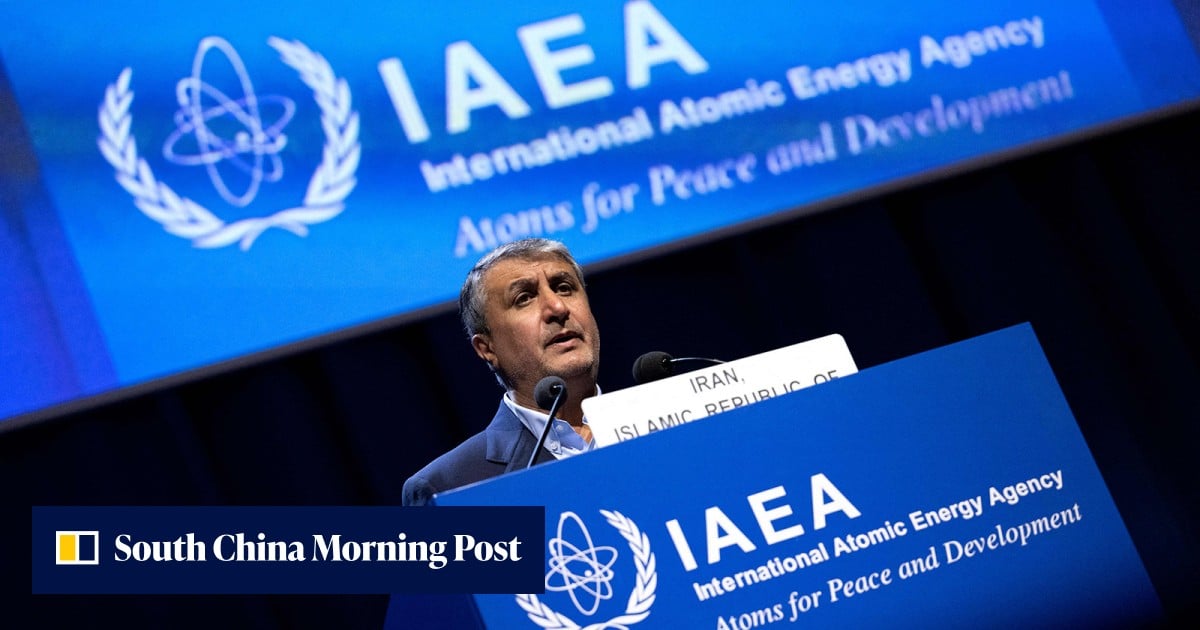
“The articles describe different actions taken regarding Iran's nuclear program: one involves the US blocking Iran’s nuclear chief from entering Austria for a conference, while the other describes Russia and China vetoing a UN resolution to keep monitoring sanctions on Iran.”
The Hindu
Hedges 0 of 4 claims Outlet record 60/100
“The articles describe different events related to Iran's nuclear program but occurring at distinct times and involving separate actions by the U.S., Russia, and China.”
Al Jazeera
Leans left Hedges 0 of 21 claims Outlet record 60/100
“The articles describe different events: one about the US blocking Iran's nuclear chief from attending a conference, and another about Russia and China vetoing a UN resolution regarding sanctions monitoring on Iran.”
The Guardian
Leans left Hedges 1 of 24 claims Outlet record 64/100
“The articles describe different events: one is about US Congress passing a bill to sanction Russia, and the other is about Russia and China vetoing a UN resolution regarding sanctions on Iran.”
Washington Examiner
Hedges 0 of 12 claims Outlet record 67/100
“The articles describe different actions related to sanctions on Iran but occurring at distinct times and involving separate bodies (U.S. Congress vs. U.N. Security Council).”
South China Morning Post
Leans right Hedges 0 of 6 claims Outlet record 62/100
“The articles describe different events: one about US Congress passing a bill targeting Russia's energy buyers and the other about Russia and China vetoing a UN resolution on monitoring sanctions against Iran.”
Euronews
Leans right Hedges 1 of 21 claims Outlet record 60/100
“The articles describe different events: one is about US sanctions against Russia being approved and the other is about Russia and China vetoing a UN resolution regarding Iran sanctions.”

Story

Russia and China Veto Iran Sanctions Monitoring
Politics · 6 article(s) covering the same event. Compare every outlet's account →
How this article was measured signals, leaning charts, publisher record, byline, topics and claims

Signals How these are calculated →

Claims extracted
24
sentences that state something as happening or true
Uncertain
4%
1 of 24 hedged ("reportedly", "may", "according to")
Leaning
withheld
no quote in the article backed the model's score
Publisher signals
64/100
Toronto Star's corrections and hedging, across everything collected from it. Not a measure of accuracy.
Outlets on this story
6
Politics
Same framing elsewhere
1
articles that frame the event the way this one does
Analyzed 2026-09-18 · how these are computed

How this is being covered How these are calculated →

Article leaning vs. publisher reliability
Source leaning vs. consistency

Publisher

Toronto Star · 16334 article(s) · 31 correction(s) detected
Running correction rate · 31 correction(s)
2026-11-17
Correction
2026-10-26
Correction
2026-10-24
Correction
2026-10-07
Correction
2026-09-24
Correction

Who wrote this

Edith M. Lederer
23 article(s) here · 1 carrying a prediction
The U.N. peacekeeping mission in the disputed territory of Western Sahara will start repatriating personnel, closing a dozen facilities and disposing of equipment as part of a “liquidation phase” following a U.S.-Russia standoff at the Security Council last week.
Russia vetoed a U.S.-drafted resolution Friday that would have supported Morocco’s demand for sovereignty over the disputed Western Sahara and ended the U.N.’s 35-year peacekeeping mission, which was charged with helping to prepare a referendum on the future of the mineral-rich territory.
“The recruits were shocked to discover that they would be serving for the Russian armed forces,” it said.
The head of the U.N. nuclear agency said Friday that he expects the use of nuclear power could more than triple by 2060.
The United Nations is launching a new initiative on the military uses of artificial intelligence, aimed at addressing some dire concerns about the threat the rapidly developing technology could pose to humanity.
UNITED NATIONS (AP) — On Jan. 1, the next United Nations secretary-general will take over an aging organization still controlled by World War II powers.
According to the U.N. agency’s recent “gender snapshot,” at the current rate of progress it will take 171 years to achieve gender equality, a U.N. goal initially set for 2015 and then moved to 2030.
Wadephul expressed openness to a better relationship but said it required a genuine willingness from Russia’s leadership to end the war in Ukraine, according to the official.
That wasn’t all, Maysa Jalbout, the director of Education Can’t Wait, recounted of her visit to the school a few weeks ago.
Under a global cloud of wars and bitter divisions, world leaders meet at the United Nations this week facing new fears that runaway artificial intelligence could threaten humanity even as climate shocks and escalating prices are already making life much tougher for hundreds of millions of people.
Also by Edith M. Lederer
Nothing else under this byline is closely related to this article, so these are simply their most recent.
All 23 articles by Edith M. Lederer →

Topics

Iran The United States U.N. U.S. UNITED NATIONS

Subjects

Iran GPE · 12× U.N. ORG · 10× U.S. GPE · 4× China GPE · 3× Iranian NORP · 3× Russia GPE · 3× Russian NORP · 3× The United States ORG · 3× Tehran GPE · 2× UNITED NATIONS ORG · 2×

Narrative

The Treasury and State Departments announced that they had targeted two companies — BitBank and the Pishtaz Simorgh Electronic Trade Co. — and three associates of BitBank’s previously sanctioned chief, Babak Zanjani, who are accused of playing a role in helping Iran evade sanctions.
framing: assertive · carried by 1 article(s) · first seen 2026-09-18
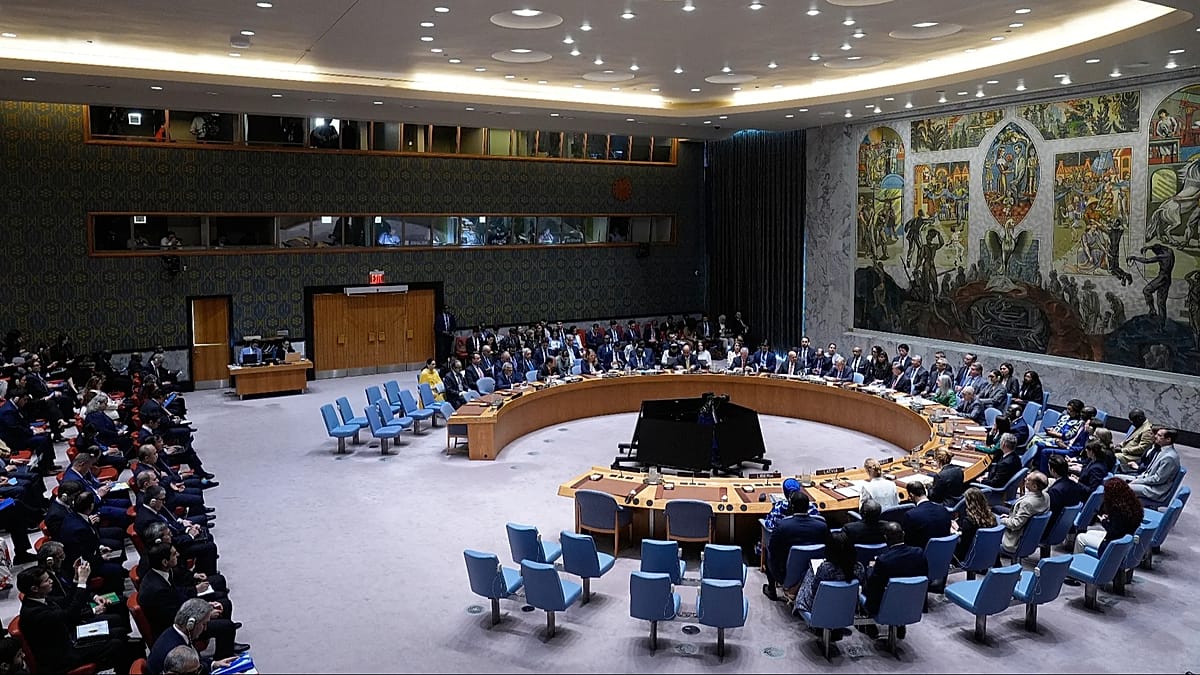
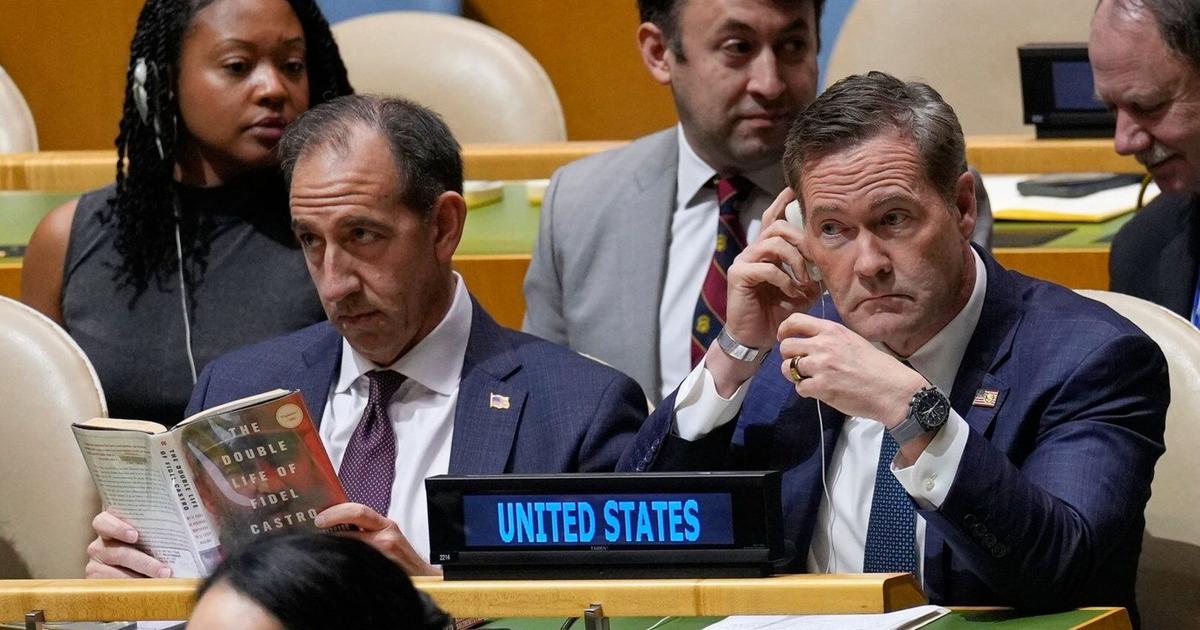
UNITED NATIONS (AP) — Russia and China vetoed a United Nations resolution Thursday that would have authorized U.N. experts to keep monitoring sanctions that were reimposed against Iran last year over its nuclear program.

Claims (24 extracted, 1 hedged)

UNITED NATIONS (AP) — Russia and China vetoed a United Nations resolution Thursday that would have authorized U.N. experts to keep monitoring sanctions that were reimposed against Iran last year over its nuclear program. asserted
that → veto → program
The U.N. Security Council sanctions are still in effect, which freeze Iran’s assets abroad, halt arms deals with Tehran and penalize any development of Iran’s ballistic missile program, among other measures. asserted
which → freeze → measures
Using a provision in the 2015 nuclear deal between Iran and major powers France, Germany and the United Kingdom triggered the “snapback” mechanism, which reimposed the sanctions on Sept. 27, 2025. asserted
which → use → Sept.
It restored the Security Council sanctions committee and authorized a panel of U.N. experts to monitor implementation. asserted
It → restore → implementation
The United States had drafted a resolution to extend the U.N. expert panel’s mandate for a year. asserted
States → draft → year
The proposal was defeated by a vote of 11-2, with Somalia and Pakistan abstaining, because of the Russian and Chinese vetoes. asserted
Somalia → defeat → vetoes
It comes as the Trump administration is pursuing a wider campaign to isolate Tehran from its remaining economic partners as the more than six-month-old war in Iran has hit a stalemate. asserted
war → come → stalemate
Separately, Thursday, the administration went after digital currency networks that it says are illegally providing sanctioned Iranian entities with access to the international financial system. asserted
it → go → system
The Treasury and State Departments announced that they had targeted two companies — BitBank and the Pishtaz Simorgh Electronic Trade Co. — and three associates of BitBank’s previously sanctioned chief, Babak Zanjani, who are accused of playing a role in helping Iran evade sanctions. asserted
Iran → announce → sanctions
At the United Nations, Iran’s U.N. mission thanked China and Russia for vetoing the U.S. resolution, saying on social media that the countries “prevented yet another cynical attempt by the United States and its allies to abuse the Security Council for their political purposes.” asserted
countries → thank → purposes
Since Israel and the U.S. struck Iranian nuclear sites in June 2025, U.N. nuclear inspectors have been unable to verify the status of Iran’s stockpile of enriched uranium. asserted
inspectors → strike → uranium
The U.N. nuclear watchdog has said Iran maintained a stockpile of 440.9 kilograms (972 pounds) of uranium enriched up to 60% purity — a short, technical step away from weapons-grade levels of 90%. asserted
Iran → say → %
U.S. deputy ambassador to the U.N. Jennifer Locetta said the United States wasn’t surprised by the vetoes on Thursday because the experts “would have shined the light” on prohibited cooperation between Iran and its partners. asserted
experts → say → Iran
She said the vetoes are part of a broader effort to prevent expert monitoring of sanctions, and even the appointment of panel members, “to stifle reporting that implicates their own activities in support of rogue regimes.” asserted
that → say → regimes
In March 2024, a Russian veto ended U.N. monitoring of sanctions against North Korea over its nuclear program. asserted
veto → end → program
In Mali, sanctions were terminated, and Locetta said that in Yemen and the Central African Republic expert appointments have been delayed or refused. asserted
appointments → terminate → Yemen
While the panel of experts for Iran was authorized a year ago and Secretary-General Antonio Guterres proposed members, they were never approved. asserted
they → authorize → members
“Without an independent panel of experts, this council loses its principal source of impartial, evidence-based reporting on sanctions violations, creating a monitoring gap that only benefits the Iranian regime and those who profit from evading those measures,” Locetta warned. asserted
Locetta → lose → measures
Russian U.N. Ambassador Vassily Nebenzia reiterated Moscow’s claim that the “snapback” of sanctions against Iran was illegal, and therefore the resolution to extend the mandate of the panel of experts “was deeply flawed and did not have any legal basis.” uncertain
resolution → reiterate → basis
Russia and China had strongly urged the U.S. and its allies not to put the resolution to a vote, which would only increase tensions in the council, Nebenzia said, but Washington “decided to opt for confrontation.” asserted
Washington → urge → confrontation
French U.N. Ambassador Jerome Bonnafont, the current council president, said implementing sanctions is “a crucial instrument to encourage Iran” to return to its nuclear obligations. asserted
implementing → say → obligations
France will study how to ensure sanctions are enforced, he said. asserted
he → study → ?
One possibility would be to follow what happened after the North Korea panel of experts was abolished: establishing a monitoring team that includes France, Germany, the U.K. and the United States. asserted
that → follow → France
_ Associated Press writer Matthew Lee in Washington contributed to this report. asserted
Lee → contribute → report
Give feedback · no sign-in needed

No sign-in needed for now. Your note is sent without a name, so it cannot be answered.

History Support