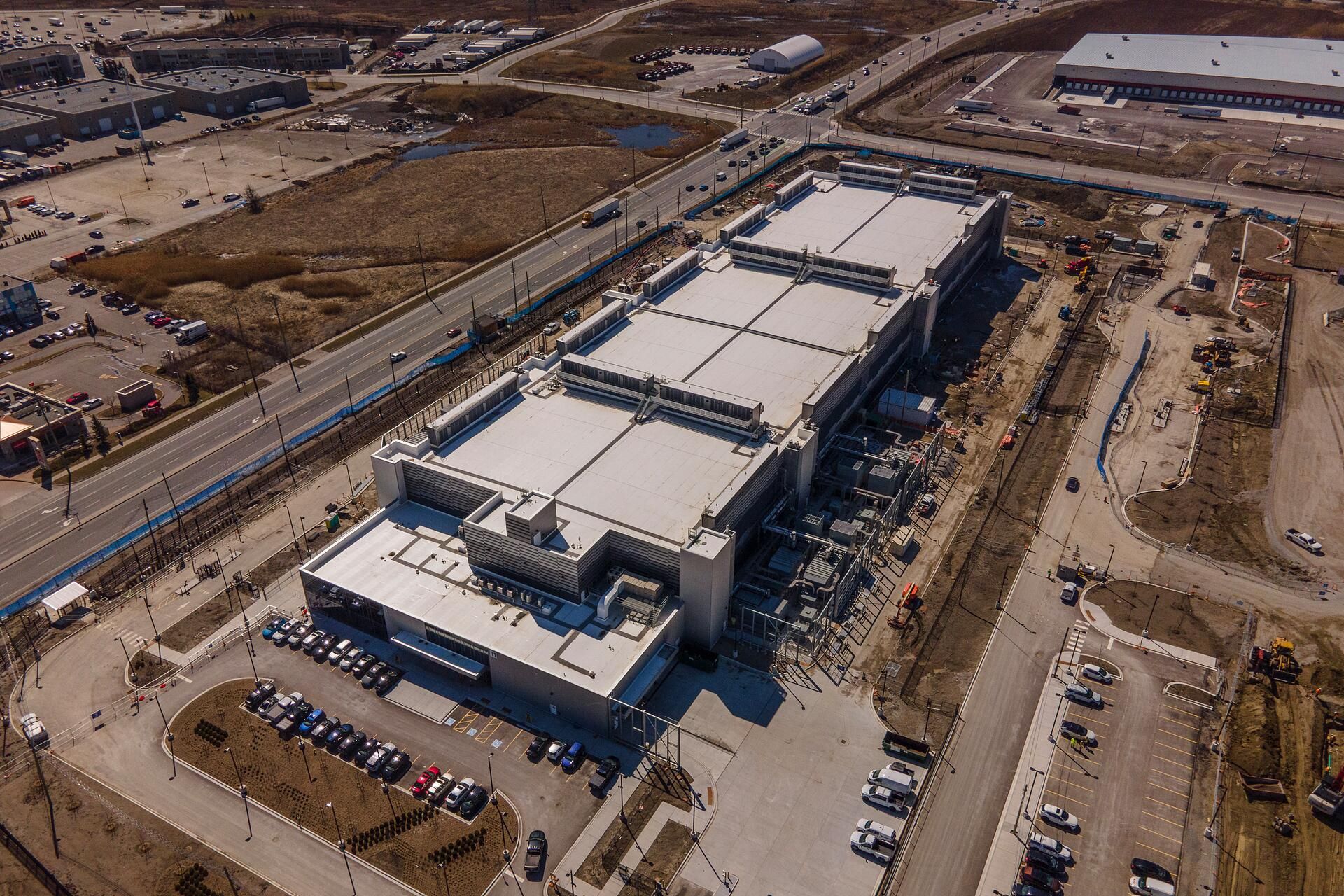
In this three-part series, the Toronto Sun will explore the role of data centres in our province.
asserted
Sun → explore → province
In our first instalment, we look at their general purpose and touch on some of the controversy that surrounds this technology
From artificial intelligence tools to navigation apps and streaming platforms, delivering information to consumers in a timely fashion is routine.
asserted
delivering → look → fashion
But the infrastructure behind the simple delivery mechanism is complex and surrounded by plenty of concerns.
asserted
infrastructure → surround → concerns
Simply put, a data centre is a facility that houses computer equipment for storing, processing, and transmitting digital information.
asserted
that → put → information
When you open an app, save photos, or play online games, you’re using a data centre.
asserted
you → open → centre
Local businesses, hospitals, governments, and schools rely on them to deliver services.
asserted
businesses → rely → services
Types of data centres include artificial intelligence, cloud, colocation and hyperscale.
asserted
Types → include → intelligence
Artificial intelligence centres are specialized facilities built to train and run artificial intelligence and machine learning models.
asserted
centres → build → intelligence
Hyperscale data centres are built to run cloud computing and artificial intelligence workloads.
asserted
centres → build → computing
Cloud computing is simply storing and running data, files and programs over the internet.
asserted
computing → store → internet
Everyday services that utilize the cloud include Netflix and Spotify.
asserted
that → utilize → Netflix
A colocation data centre rents cabinets, racks, cages, or private suites to businesses so they can house their servers.
asserted
they → rent → servers
Public protests against these projects mainly revolve around the large amounts of water and electricity consumed.
asserted
protests → revolve → water
Other issues that rankle the public include land usage concerns, air and noise pollution, digital sovereignty and general anxiety surrounding AI.
asserted
that → rankle → AI
The International Energy Agency says a typical AI-focused data centre consumes as much electricity annually as 100,000 households, but the largest ones could consume 20 times as much.
uncertain
ones → say → much
A recent York University study says that a 122-megawatt data centre, running at 50% to 80% capacity, would consume approximately 534,360 to 854,976 megawatt hours annually, equivalent to the electricity consumption of roughly 49,000 to 78,000 households.
asserted
centre → say → households
The University of Toronto prepared a study for city council back in July.
asserted
University → prepare → July
The study says data centres could represent up to 13% of all electricity consumed in Ontario by 2035.
uncertain
centres → say → 2035
The World Resources Institute says medium-sized data centre facilities can consume 300,000 gallons (approximately 1.16 million litres) of water daily, while larger facilities can consume as much as five million gallons (approximately 19 million litres) of water every 24 hours.
asserted
facilities → say → water
Data centres require water to keep servers cool enough to function.
asserted
centres → require → servers
Fresh water is cheap, abundant, and absorbs heat remarkably well.
asserted
water → absorb → heat
Cloud here to stay
The surge in cloud computing and artificial intelligence is propelling the data centre boom.
asserted
surge → stay → boom
According to the province, the digital expansion underway could bring economic benefits like increased tax revenues, job creation and infrastructure investment.
uncertain
expansion → accord → revenues
In its Data Centre Playbook, the Ontario government says the data centre business could generate $122 billion in future economic growth, while creating more than 17,000 new jobs every year.
uncertain
business → say → jobs
“We think many (municipalities) are very eager,”Economic Development Minister Vic Fedeli said in a recent interview.
asserted
Fedeli → think → interview
It creates jobs, it creates a huge tax base for them, it puts a place for our Canadian data to be in a secure place.”
asserted
data → create → place
Ontario is considered a preferred location with its relatively cool climate, available land, low-cost energy, grid stability, and skilled construction workers.
asserted
Ontario → consider → climate
Because the province does not have a single centralized public registry for all data centres, exact counts in the city vary by source.
asserted
counts → have → source
If not already finished, construction is expected to wrap before the end of the year.
asserted
construction → finish → year
Equipment installation, testing, and preparation activities will continue until sometime late next year.
asserted
installation → continue → ?
Toronto doesn’t have a moratorium on data centres.
asserted
Toronto → have → centres
Neither do Brampton, Burlington, Hamilton, Richmond Hill, Oshawa and Vaughan.
asserted
Brampton → do → ?
Oakville currently has a one-year moratorium on data centres.
asserted
Oakville → have → centres
Mississauga also has a one-year pause, with an option to add an additional year.
asserted
Mississauga → have → year
Next up: Part 2 will focus on the concerns from local communities that have moratoriums in place.
asserted
that → focus → place
 The Aporia