In rural Mississippi, a mechanic who had spent much of his life getting by on modest means began an unusual personal transformation in 1975.
asserted
who → spend → 1975
Inspired by
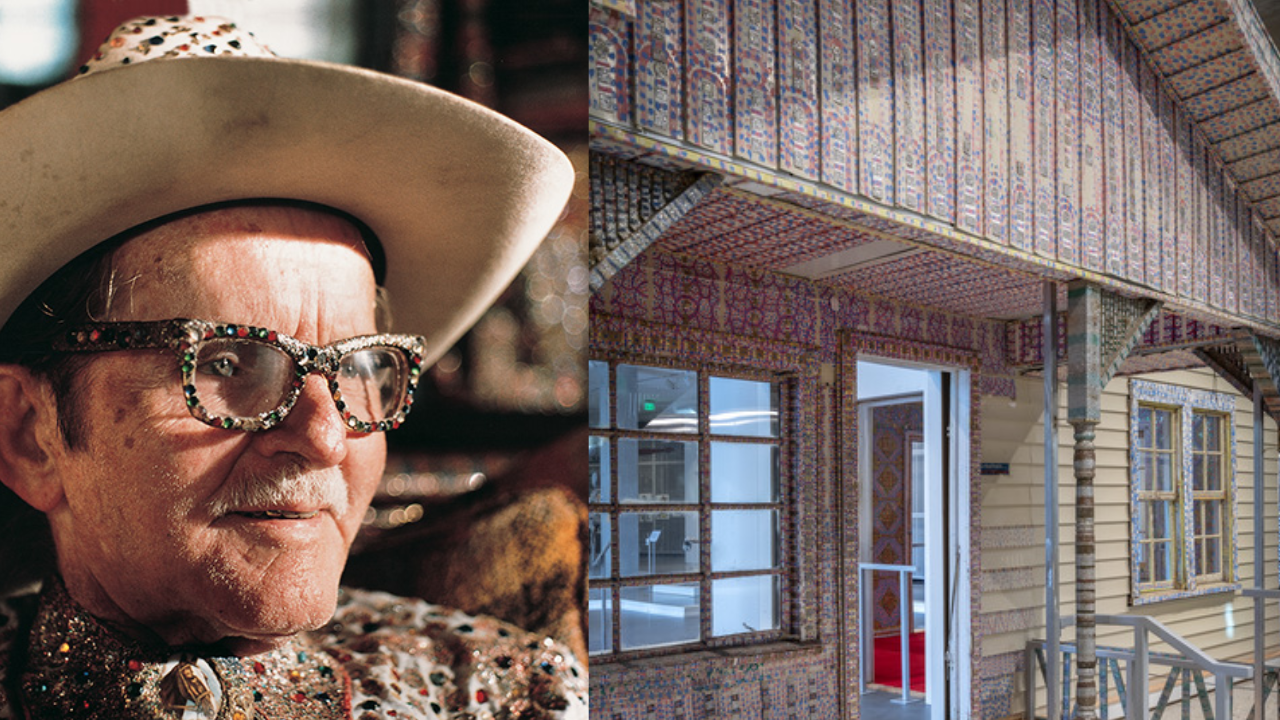
Glen Campbell's hit song Rhinestone Cowboy, Loy Bowlin adopted a new identity and began decorating his clothes with sequins.
asserted
Bowlin → inspire → sequins
The transformation took years, turning an ordinary house into an elaborate display that extended from its rooms to parts of its exterior.
asserted
that → take → exterior
Bowlin, who became known as the Rhinestone Cowboy, died in 1995.
asserted
who → know → 1995
His work did not disappear with him, however.
asserted
work → disappear → him
Several parts of the house, along with his distinctive clothing and furniture, were eventually transferred to a museum in Wisconsin, as reported by Kohler Foundation.
asserted
parts → transfer → Foundation
Born in 1909 in Franklin County, Mississippi, Bowlin grew up in a rural setting where money was often scarce.
asserted
money → bear → setting
He married Ina Mae Mitchell in 1933, and the couple farmed, while Bowlin also earned money by selling scrap metal.
asserted
Bowlin → marry → metal
Their marriage ended in the 1950s.
asserted
marriage → end → 1950s
Following the separation, Bowlin experienced a difficult period, with depression becoming part of his life.
asserted
depression → follow → life
His Christian faith offered him some comfort during those years.
asserted
faith → offer → years
By the middle of the 1970s, he was looking for a way to change his circumstances and how he felt about himself.
asserted
he → look → himself
How Glen Campbell inspired the Rhinestone Cowboy
asserted
Campbell → inspire → Cowboy
In 1975, Bowlin began developing a new identity after being inspired by Glen Campbell's song Rhinestone Cowboy.
asserted
Bowlin → begin → song
The record, released in 1975, gave him the name around which he built his new appearance.
asserted
he → release → appearance
Reportedly, he began decorating his outfits, turning ordinary suits and hats into brightly embellished pieces.
uncertain
he → begin → pieces
Rhinestones, glitter and reflective materials became regular features of his clothing.
asserted
Rhinestones → become → clothing
His appearance gradually became part of a much larger undertaking, one that would eventually take over his home.
asserted
that → become → home
Bowlin was no longer simply adding decorative details to a few personal belongings.
asserted
Bowlin → add → belongings
He was creating an environment in which the same visual style appeared across his clothes, furniture and surroundings.
asserted
style → create → clothes
A house transformed with glitter, photographs and found objects
The house became the centre of Bowlin's artistic work.
asserted
house → transform → work
Over approximately five years, he covered its interior and sections of the outside with an assortment of decorative materials.
asserted
he → cover → materials
Cut-out paper, painted designs, rhinestones, aluminium foil, tinsel, Christmas decorations and collaged images from magazines all became part of the composition.
asserted
paper → Cut → composition
The surfaces were built up with bright colours and intricate arrangements.
asserted
surfaces → build → colours
Photographs and magazine illustrations appeared alongside glittering decorations, while strands of tinsel and ornaments added another layer to the rooms.
asserted
strands → appear → rooms
Rather than following a conventional approach to decorating a house, Bowlin treated its walls and furnishings as places where his ideas could take shape.
uncertain
ideas → follow → shape
The result was closely connected to the persona he had adopted after hearing Campbell's song.
asserted
he → adopt → song
His clothes and home belonged to the same creative world, with the rhinestone-covered suits and decorated rooms reflecting one another.
asserted
suits → belong → one
What happened to the house after Bowlin's death
Bowlin died in 1995, but his decorated home remained on the property.
asserted
home → happen → property
Preserving it in its original location, however, was not possible.
asserted
Preserving → preserve → location
Houston-based artist and collector Katy Emde acquired the house after his death, with an important condition attached to the purchase: the structure had to be removed from the site.
asserted
structure → base → site
Emde documented the property before taking it apart.
asserted
Emde → document → it
The process allowed the different components of Bowlin's creation to be recorded and retained rather than simply discarded.
asserted
components → allow → creation
In 1998, Kohler Foundation, Inc. acquired the collection of dismantled materials.
asserted
Inc. → acquire → materials
The foundation later gifted the preserved components to the John Michael Kohler Arts Center in Sheboygan, Wisconsin.
asserted
foundation → gift → Sheboygan
The transfer included parts of the house as well as many of Bowlin's customised suits, hats and furniture.
asserted
transfer → include → suits
Preserving the work at a Wisconsin arts centre
The John Michael Kohler Arts Center became the home of material from Bowlin's unusual project.
asserted
Center → preserve → project
Its collection preserved elements of an environment that had originally been assembled in a private Mississippi residence, allowing the work to be retained beyond the lifespan of the building itself.
asserted
work → preserve → building
The preservation also brought together different aspects of Bowlin's creative output.
asserted
preservation → bring → output
Keeping these pieces together helped retain the connection between the man, the identity he created and the home he spent years transforming.
asserted
he → keep → years
 The Aporia