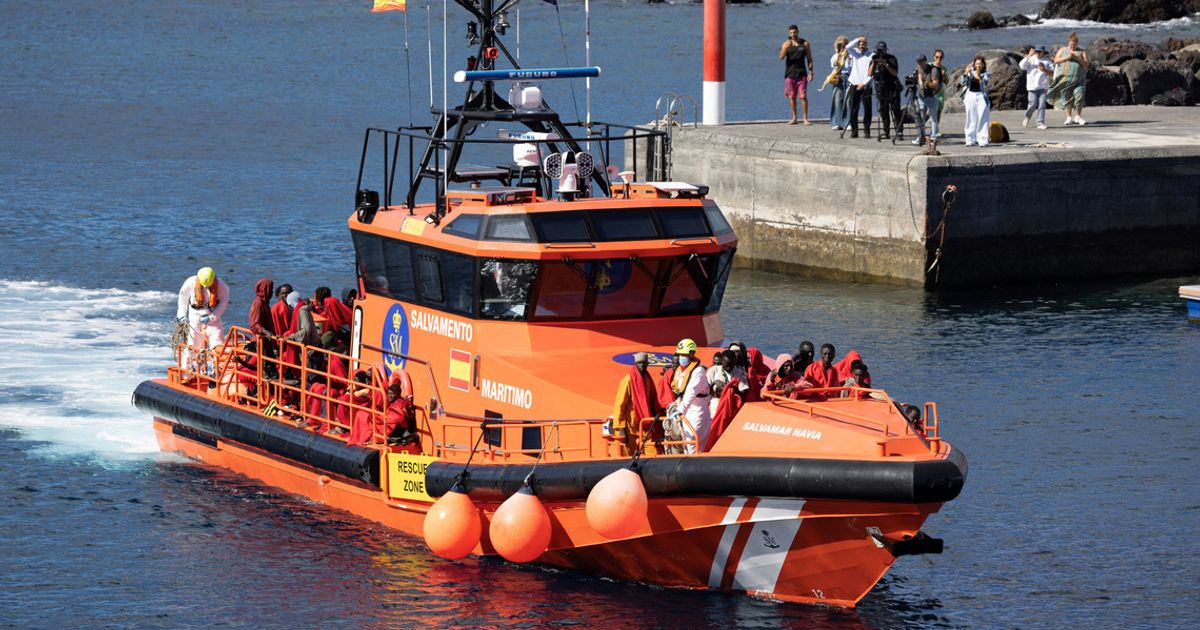
Photo via Toronto Star

Migrants who die in the Atlantic are rarely identified. One official decided to try

Read the original at Toronto Star ↗
Cite

Brito, R. (2026, November 23). Migrants who die in the Atlantic are rarely identified. One official decided to try. Toronto Star. https://www.thestar.com/news/world/migrants-who-die-in-the-atlantic-are-rarely-identified-one-official-decided-to-try/article_8b3ff268-8d71-5e87-af0a-547269c7c0da.html

Dated from the outlet's own feed. Check the original for its byline.

Toronto Star · collected 2026-11-23 · by Renata Brito

Quick Summary

Alexandre Deitos, a Brazilian police criminal forensic investigator, faced the daunting task of identifying eight decomposing bodies and a ninth floating nearby in a small boat off the coast of Mauritania. The boat, carrying West African migrants heading to Europe, had drifted across the Atlantic for weeks before being discovered. Deitos sought help from an Associated Press reporter who had previously covered such incidents, leading to an unusual partnership between a police officer and a journalist. This collaboration aimed to collect DNA from the relatives of the deceased to identify the victims of this dangerous migration route, where the United Nations estimates over 6,500 deaths since 2020.
Written by AI on 2026-11-24, from this article's own text only (the story summary below draws on all the coverage).

AI analysis

Story summary

Alexandre Deitos, a Brazilian criminal forensic investigator, faced the daunting task of identifying bodies of migrants found in a boat off the coast of Mauritania. The boat, which had drifted for weeks across the Atlantic, contained eight decomposing bodies and a ninth floating nearby. Deitos and his team surmised that the vessel, carrying 28 mobile phones and two IDs, had originated in West Africa with the goal of reaching Europe but encountered fatal issues en route.

Deitos, experienced in identifying victims from plane crashes, building collapses, and mudslides, found this case particularly challenging. His efforts were hampered by uncooperative officials in Africa, with emails going unanswered and scant information provided. Realizing traditional methods were insufficient, Deitos and his boss decided to seek help from an unexpected source. This case underscores the rare and difficult task of identifying migrants who perish in the Atlantic, highlighting the bureaucratic and logistical hurdles in such investigations.

Written for “Identifying Atlantic Migrant Deaths” on 2026-11-27, grounded in this article and the 0 other(s) covering the same event.

Compared with similar articles

This article reads leans left and hedges 4% of its claims. Each row says how that neighbour differs.
Al Jazeera
Hedges 0 of 2 claims Outlet record 60/100
“The articles describe related events, but different specific incidents: one about an investigator identifying bodies from a boat found, and another about families waiting for news of a missing boat.”
The Independent
Leans left Hedges 0 of 14 claims Outlet record 59/100
“The articles describe similar events involving migrants found dead in boats, but they appear to be reporting on different incidents at different times and locations.”
The Straits Times
Leans left Hedges 0 of 11 claims Outlet record 64/100
“The articles describe similar events involving migrant deaths but occur in different locations (Mauritania vs Canary Islands) and involve different numbers of bodies and circumstances.”
Al Jazeera
Hedges 5 of 18 claims Outlet record 60/100
“The articles describe different incidents: Article A focuses on an investigator's efforts to identify bodies in a boat off Mauritania, while Article B reports on a boat capsizing off Senegal's coast with four recovered bodies.”

Story

Identifying Atlantic Migrant Deaths
Environment · 1 article(s) covering the same event.
How this article was measured signals, leaning charts, publisher record, byline, topics and claims

Signals How these are calculated →

Claims extracted
168
sentences that state something as happening or true
Uncertain
4%
6 of 168 hedged ("reportedly", "may", "according to")
Leaning
Leans left
of the writing, not the subject · beta estimate
Publisher signals
64/100
Toronto Star's corrections and hedging, across everything collected from it. Not a measure of accuracy.
Outlets on this story
1
Environment
Same framing elsewhere
1
articles that frame the event the way this one does
Analyzed 2026-11-24 · how these are computed

How this is being covered How these are calculated →

Article leaning vs. publisher reliability
Source leaning vs. consistency

Publisher

Toronto Star · 18573 article(s) · 35 correction(s) detected
Running correction rate · 35 correction(s)
2026-11-17
Correction
2026-10-26
Correction
2026-10-24
Correction
2026-10-07
Correction
2026-09-24
Correction

Who wrote this

Renata Brito
1 article(s) here · 1 carrying a prediction
Deitos knew his grim job would not be easy: identifying the dead.
The only article under this byline in the corpus.

Topics

Associated Press Brazilian Mauritania Spain TACHOTT

Subjects

Deitos PERSON · 9× Brazilian NORP · 4× Mauritania GPE · 2× Alexandre Deitos PERSON · 1× Associated Press ORG · 1× Canary Islands GPE · 1× International Organization for Migration ORG · 1× Spain GPE · 1× TACHOTT GPE · 1× The United Nations’ ORG · 1×

Narrative

She called the smuggler — her husband had left his number with her – but each time he gave a different excuse. She joined a WhatsApp group created by relatives of migrants who had vanished on such trips. She found others wondering what happened to her husband’s craft: “Has your brother arrived?” “No.” “Has your father arrived?” “No.”
framing: assertive · carried by 1 article(s) · first seen 2026-11-24
Deitos knew his grim job would not be easy: identifying the dead.

Claims (168 extracted, 6 hedged)

TACHOTT, Mauritania (AP) — Alexandre Deitos studied the shaky video taken by a fisherman as it panned across the small boat stuck on a sandbank. asserted
it → study → sandbank
He sighed. asserted
He → sigh → ?
Inside the craft were eight decomposing bodies and a ninth was floating nearby. asserted
ninth → decompose → craft
Deitos knew his grim job would not be easy: identifying the dead. asserted
job → know → dead
In a long career with the Brazilian police, the criminal forensic investigator had put names to corpses mangled in plane crashes, crushed beneath collapsed buildings and buried in mudslides. asserted
investigator → put → mudslides
But he had never worked on a case like this. asserted
he → work → this
His first mystery would be fairly easy to solve. asserted
mystery → solve → ?
In analyzing the contents of the boat, which included 28 mobile phones and two IDs, Deitos and his colleagues surmised the boat had originated in West Africa carrying migrants to Europe. asserted
boat → analyze → Europe
Something had gone wrong, and the open 13-meter (42-foot) fishing boat had then drifted hopelessly for weeks across the Atlantic. asserted
boat → go → Atlantic
The next part would be harder: putting names to the bodies. asserted
part → put → bodies
He ran into roadblocks with officials in Africa. asserted
He → run → Africa
Some emails went unanswered and the little information shared led nowhere. asserted
information → go → ?
Deitos and his boss realized they needed to take a different approach, and they turned to an unexpected place for a hand: “Would you help us?” Deitos asked me. asserted
Deitos → realize → me
As an Associated Press reporter, I had written about such “ghost boats.” asserted
I → write → boats
I had already been in touch with them for a story about this particular tragedy and shared with them my previous coverage. asserted
I → share → coverage
Their request launched an unusual partnership between a police officer and a journalist to identify the boat’s passengers. asserted
request → launch → passengers
Two years later, our work took us to the nation of Mauritania, in the Sahara Desert, to collect DNA from the grieving parents, wives and children of those who had perished on that fateful voyage. asserted
who → take → voyage
The men on this boat were no different from the thousands of others who have disappeared in the Atlantic trying to reach Spain’s Canary Islands, on what some experts say is the world’s most dangerous migration route. asserted
experts → disappear → Islands
While the majority of the missing vanish without a trace in what are known as “invisible shipwrecks,” at least a dozen such boats have washed ashore in Latin America and the Caribbean in recent years. asserted
boats → vanish → years
The United Nations’ International Organization for Migration estimates that more than 6,500 have died on the route since at least 2020. asserted
6,500 → estimate → 2020
A Spanish migrant rights group, Walking Borders, says it has documented nearly 26,000 such deaths during the same period. asserted
it → say → period
Tens of thousands of migrants have gone missing globally on land or sea journeys, whether crossing the Mediterranean Sea or the U.S.-Mexico border. asserted
thousands → go → Sea
While it is states’ responsibility to investigate and identify these victims, regardless of their nationality, they have largely failed, experts say. asserted
experts → investigate → nationality
The U.N. migration agency has called the global crisis “one of the great political failures of modern times.” asserted
agency → call → times
When I saw news reports about the boat on a Saturday in April 2024, I called Brazilian authorities for comment and wrote a news story. asserted
I → see → story
A few days later, I got in touch with Deitos and his boss. asserted
I → get → Deitos
They explained the Brazilian police had made no headway with authorities in West Africa. asserted
police → explain → Africa
Deitos said he considered the migrant crisis to be an international disaster that deserved more attention. asserted
that → say → attention
In researching the problem, he said he had learned that many dead migrants are never properly identified, meaning their families never learn what happened to them. asserted
what → research → them
While he had gone overseas to identify Brazilian migrants who had died in Mexico and assisted in investigating international plane crashes, Deitos had never handled a case like this. asserted
Deitos → go → this
Brazil had investigated only one such “ghost boat,” in 2021, and police had failed to make any progress in identifying its victims. asserted
police → investigate → victims
He said he hoped his work on this case might become “a model for other countries” to follow. uncertain
countries → say → case
“Each person has the right to be identified,” Deitos said. asserted
Deitos → have → right
“And each family has the right to receive the body of their loved one.” asserted
family → have → one
However, Deitos and his boss said they were not sure how to proceed. asserted
they → say → ?
He did not think he would get anywhere by sticking to official channels. asserted
he → think → channels
He needed to identify the nine victims on the boat. asserted
He → need → boat
To do that, he would have to locate their families. asserted
he → do → families
Deitos thought I might know what to do because I had investigated a similar migrant tragedy in the Caribbean. uncertain
I → think → Caribbean
That reporting had presented some of the same challenges facing Deitos and had required AP to locate relatives and friends of the victims to figure out who had embarked on that deadly journey. asserted
who → present → journey
…and 128 more, not listed.

Give feedback · no sign-in needed

No sign-in needed for now. Your note is sent without a name, so it cannot be answered.

History Support