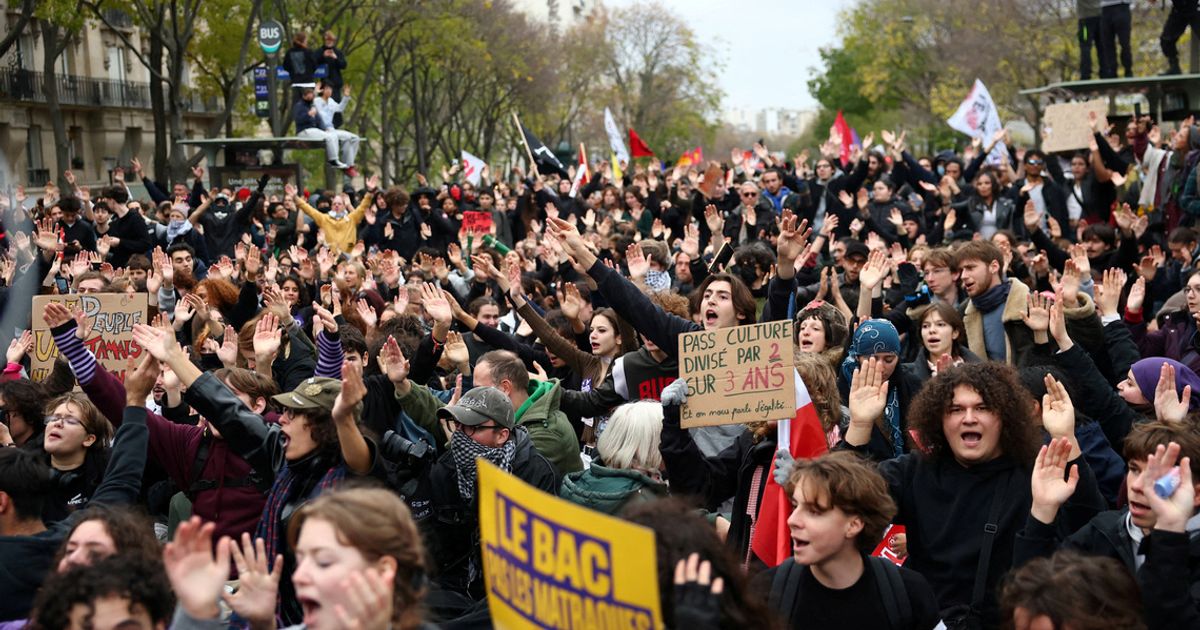
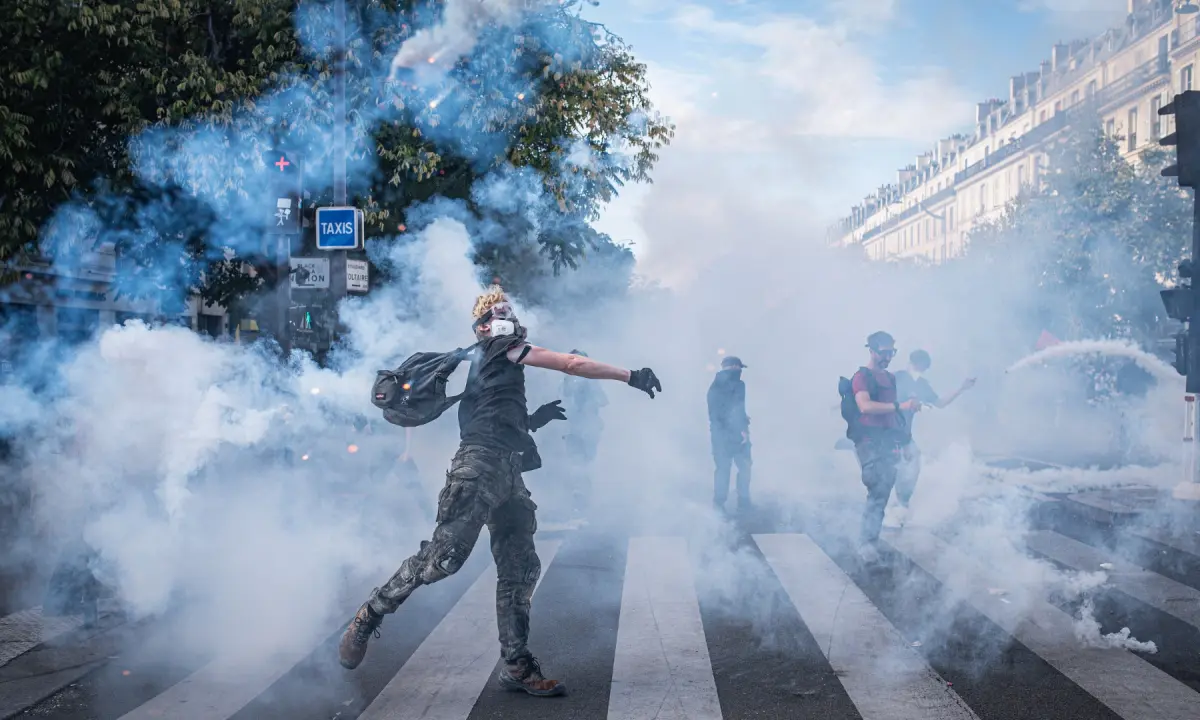
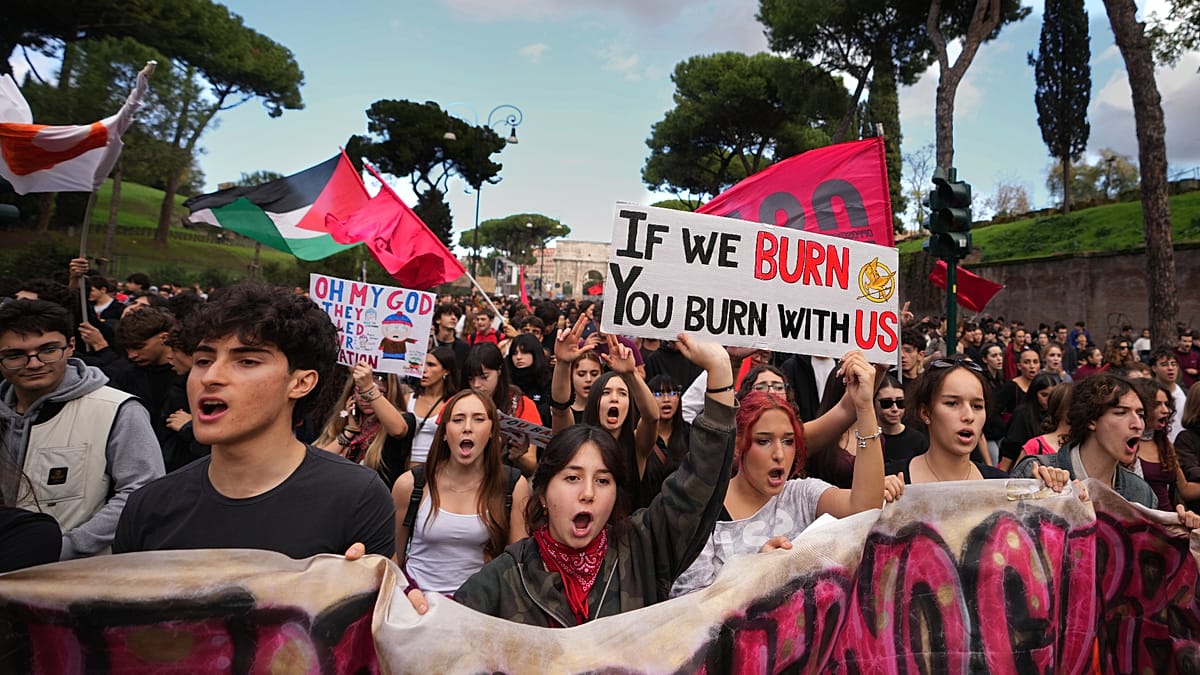
For several weeks now, French students have led mass protests against underinvestment in education, teacher shortages and dilapidated classrooms.
asserted
students → lead → education
In Spain, mass protests broke out after the eviction of an 87-year-old woman from her home of 70 years, after her rent was hiked by 230 percent by an investment fund that bought the property.
asserted
that → break → property
She died a fortnight later after being admitted to hospital.
asserted
She → die → hospital
Now the protests are spreading: to Italy, where upwards of one million people took to the streets of 50 cities last week; to Portugal, where tent encampments have sprung up to oppose rapid hikes in housing costs; to Germany, where riot police with water cannon confronted protesters opposing the creeping extension of conscription; and most recently, to the United Kingdom, where thousands of students joined a day of action on November 20 under the slogan “Fight for our future, not their wars!”
asserted
thousands → spread → future
The common thread which has sparked these Gen Z protests is the rapidly rising cost of living.
asserted
which → spark → living
In the wake of the global pandemic, the war in Ukraine, US tariffs, and now the US-Israel war on Iran, global supply chains are breaking down, sending costs spiralling.
asserted
chains → break → costs
Deregulation and neoliberal policies have allowed corporations to take over not only the economy but also politics.
asserted
corporations → allow → economy
This has led to massive wealth concentration at the top and increasing precarity for the vast majority of the European population.
asserted
This → lead → population
The impact of climate change and the rollout of artificial intelligence (AI), threatening mass unemployment, are making the situation a lot worse.
asserted
situation → threaten → unemployment
If we want to change course, we need to fundamentally rethink how our economy works.
asserted
economy → want → course
And yet we are ruled by a political class which has lost its will to govern.
asserted
which → rule → will
Of course, our rulers still clamour for the perks of office.
asserted
rulers → clamour → office
But they are operating within a logic which prevents them from taking the action necessary to deal with the challenges humanity faces.
asserted
humanity → operate → challenges
In this crisis, the centre cannot hold, and support for both radical right and left-wing parties is growing rapidly.
asserted
support → hold → parties
The problem is this: 40 years ago, politicians came to accept that the free market held the answer to all our problems.
asserted
market → come → problems
Governments gave up trying to manage the economy.
asserted
Governments → give → economy
By handing the levers of control to the private sector, they were told they would unleash the forces of competition and economic growth, free from the sclerotic hand of the state.
asserted
they → hand → state
As the decades wore on, it became increasingly clear that the market looked less like multiple small businesses competing for customers and more like gigantic corporations forcing citizens, governments and the planet itself to bend to their will.
asserted
market → wear → will
Power has been handed to monopolies, which have stretched supply chains to a breaking point, privatised profits while socialising costs, fuelled inequality and trashed the environment.
asserted
which → hand → environment
Key economic decisions once made by elected governments with at least a pretence of public interest in mind are today made in corporate boardrooms, with only the self-interest of their rich investors to trouble them.
When economic decisions are designed primarily to enrich the few, is it any wonder our public infrastructure is crumbling?
asserted
infrastructure → make → few
The things we need to make life acceptable – housing, education, healthcare – have become no more than commodities from which the monopolists can profit.
asserted
monopolists → need → which
Politicians are dismantling our welfare state, claiming that today we can no longer afford to care for the poorest.
asserted
we → dismantle → poorest
They have it the wrong way around.
asserted
They → have → it
Rather, we cannot afford the rich.
asserted
we → afford → rich
In today’s crisis, some in Europe have come to accept the need for industrial strategy, for economic planning and government intervention; all tools which were abandoned at the onset of the “free market” era.
asserted
which → come → era
But these tools cannot be used properly without taking power back from the monopolies – fundamentally shifting the relationship between those who now own society and those of us who live in it.
asserted
who → use → it
It requires a New Deal at least on the scale of President Franklin D Roosevelt’s policies in the 1930s in the United States.
asserted
It → require → States
After World War II, European politicians built a new social contract: we would all share in the massive economic growth which would be unlocked as countries recovered from war and exploited the Earth as never before.
asserted
countries → build → Earth
With high growth, the poor could get richer even while the rich themselves did well.
uncertain
rich → get → growth
In a world facing massive resource constraints, we can no longer operate in this way.
asserted
we → face → way
Indeed, the richest countries have already used up their fair share of global resources.
asserted
countries → use → resources
One way out is to reassert Western dominance.
asserted
way → reassert → dominance
The one economic area in which European governments will invest is the war machine.
asserted
governments → invest → which
Even Germany’s steadfast commitment to balanced budgets – a commitment which it has disastrously imposed on the European Union with almost religious zeal – can seemingly be broken when the military demands it.
asserted
military → impose → it
But military spending will not resuscitate European industry.
asserted
spending → resuscitate → industry
Nor will it keep us safe.
asserted
it → keep → us
It will further empower the monopolies who soak up ever more of our taxes while bringing catastrophic conflict ever closer.
asserted
who → empower → conflict
This is not protecting us from invasion but protecting Europe’s ability to do what it wants, when it wants, where it wants.
asserted
it → protect → what
We cannot, any longer, build prosperity and security on injustice.
asserted
We → build → injustice
The youth protests get that; just look at the explicitly antimilitary slogans on the streets of German cities.
asserted
protests → get → cities
…and 7 more, not listed.
 The Aporia