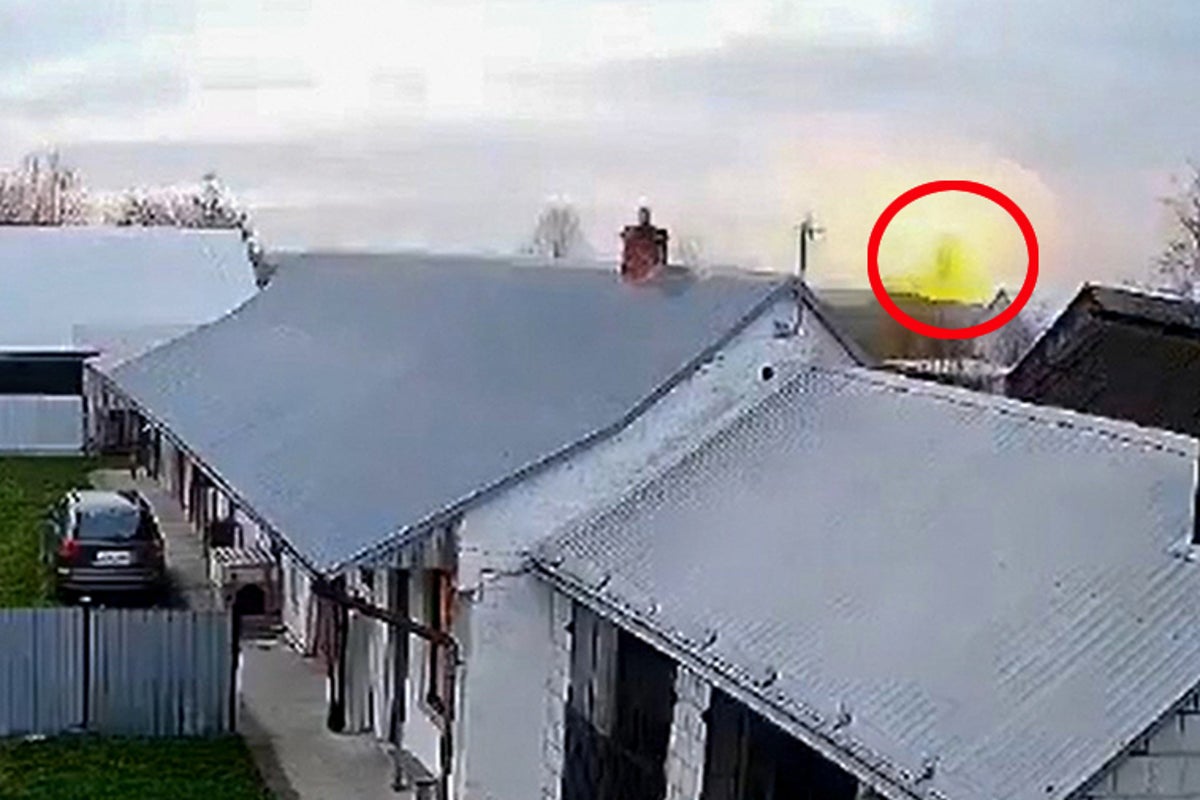
Photo via The Independent

Russia ‘planning to launch satellite with nuclear weapon into space by end of the year’

Read the original at The Independent ↗
Cite

Reynolds, J. C. (2026, November 23). Russia ‘planning to launch satellite with nuclear weapon into space by end of the year’. The Independent. https://www.independent.co.uk/news/world/europe/russia-satellite-nuclear-weapon-space-b3089665.html

Dated from the outlet's own feed. Check the original for its byline.

The Independent · collected 2026-11-23 · by James C. Reynolds

Quick Summary

German intelligence reports suggest Russia may launch a satellite named Sputnik-S equipped with a nuclear warhead by the end of this year. The satellite is reportedly assembled and stationed in the Moscow region. US and German military officials warn that such a weapon could severely disrupt global satellite operations and infrastructure. Russia's embassy denies these allegations, calling them propaganda. The US Defense Intelligence Agency and General Stephen N. Whiting of US Space Command also confirm Russia's development of space-based nuclear weapons, emphasizing the potential violation of international law and the threat to global satellite systems.
Written by AI on 2026-11-23, from this article's own text only (the story summary below draws on all the coverage).
See how they differ ↓

AI analysis

Story summary

As of November 23, 2026, NATO and German intelligence sources believe Russia is preparing to launch a nuclear-armed satellite named Sputnik-S by the end of the year. According to German media outlets NDR, WDR, and Sueddeutsche Zeitung, the satellite has been fully assembled and stored in the Moscow region for several years. NATO and Germany's BND intelligence agency have exchanged intelligence suggesting this capability. Russia's embassy in Germany and NATO headquarters have not yet responded to requests for comment. In 2024, Russia denied similar allegations from US officials about developing space-based nuclear weapons. The German Space Command warns that if launched, Sputnik-S could severely impact Western technology and communications, potentially leading to widespread disruptions in navigation systems, power grids, and food deliveries. Russia’s embassy categorically denies these allegations, calling them part of a propaganda campaign.

Written for “Russia Preparing Nuclear-Armed Space Weapon” on 2026-11-23, grounded in this article and the 3 other(s) covering the same event.
Why this leaning score
This article does not take a side on a contested political question, so it has no leaning score. That is an answer rather than a gap: a match report or a rescue can be warmly or critically written without being left or right, and scoring it anyway is how approval of a subject gets recorded as a political position.
No political leaning scored for article 173362 · logged 2026-11-23

How they differ

4 outlets covered “Russia Preparing Nuclear-Armed Space Weapon”.

What each outlet says

One AI summary per outlet of its latest article on this story, written from that article alone and checked against it. Open the article for the outlet's own words.

The IndependentThis outlet23 Nov

German intelligence reports suggest Russia may launch a satellite named Sputnik-S equipped with a nuclear warhead by the end of this year. The satellite is reportedly assembled and stationed in the Moscow region. US and German military officials warn that such a weapon could severely disrupt global satellite operations and infrastructure. Russia's embassy denies these allegations, calling them propaganda. The US…

Russia ‘planning to launch satellite with nuclear weapon into space by end of the year’ (this article)
The Straits Times23 Nov

German media reports that NATO intelligence services believe Russia plans to launch a nuclear-armed satellite named Sputnik-S in 2026. The satellite, assembled years ago and currently stationed in the Moscow region, has drawn concern from Western intelligence, including Germany’s BND and armed forces. Russia’s embassy in Germany and NATO headquarters did not immediately respond to comments requested by the media…

NATO believes Russia is ready to launch nuclear-armed satellite: German media →
Daily Mail23 Nov

Western intelligence agencies report that Russia is preparing to launch a nuclear-armed satellite called 'Sputnik-S' by the end of this year, which could disrupt Western military technology and communications. If launched, the satellite could affect precision munitions, military drones, and communication networks, potentially leading to widespread failures in navigation systems, power grids, and food deliveries. The…

Russia 'is preparing to launch nuclear-armed space weapon by the end of this year' - capable of devastating Western technology and communications →
New York Post23 Nov

Western intelligence agencies warn that Russia may launch a nuclear-capable satellite named Sputnik-S as early as next month, despite it having been dormant near Moscow for several years. This development, confirmed by reports from NATO countries and Germany, raises concerns about violations of the 1967 Outer Space Treaty. Russia denies the claims, with President Putin reaffirming the country’s stance against…

Russia is preparing to launch a nuclear space weapon — as soon as next month, intelligence warns →

Compared with similar articles

This article reads unscored and hedges 33% of its claims. Each row says how that neighbour differs.

Story

Russia Preparing Nuclear-Armed Space Weapon
Politics · 4 article(s) covering the same event. See how they differ ↑
How this article was measured signals, leaning charts, publisher record, byline, topics and claims

Signals How these are calculated →

Claims extracted
18
sentences that state something as happening or true
Uncertain
33%
6 of 18 hedged ("reportedly", "may", "according to")
Leaning
not political
takes no side on a contested political question
Publisher signals
59/100
The Independent's corrections and hedging, across everything collected from it. Not a measure of accuracy.
Outlets on this story
4
Politics
Same framing elsewhere
1
articles that frame the event the way this one does
Analyzed 2026-11-23 · how these are computed

How this is being covered How these are calculated →

Article leaning vs. publisher reliability
Source leaning vs. consistency

Publisher

The Independent · 4861 article(s) · 10 correction(s) detected
Running correction rate · 10 correction(s)

Who wrote this

James C. Reynolds
91 article(s) here · 1 carrying a prediction
Conservation teams were expected to sedate the cat, which is believed to have escaped from a private property in the region, with a tranquiliser dart, local media reported.
The German military and Federal Intelligence Service have warned other Nato states that a satellite carrying a nuclear warhead could be in orbit by December, a report by Germany’s NDR, WDR and Sueddeutsche Zeitung said.
Prime minister Donald Tusk said the incursions appeared to be an “intentional provocation” from Russia, coming as Poland is set to host “Coalition of the Willing” military exercises with Ukraine’s allies.
Donald Trump’s top foreign envoys have suggested that Ukraine could still join the Nato military alliance in closed-door talks over the past few months, according to a shocking new report.
Putin also admitted afterwards that the summit did not set ambitious goals and that nobody would be forced to comply with its decisions, as he vowed fresh strikes on Ukraine’s energy infrastructure.
Trump on Thursday also appealed to president Xi to help end the war and expressed hope that their three-way meeting with Putin would yield results.
Trump later called into a meeting with the so-called Coalition of the Willing meeting in Germany, attended by UK prime minister Andy Burnham and Ukraine’s president Volodymyr Zelensky among others.
While ceding land that it currently controls had been a red line for Kyiv, Mr Zelensky said he would hold a referendum to allow Ukrainians to vote on a peace agreement should the US and Nato support the proposals.
It was late one Friday afternoon in October when Donald Trump unveiled what he thought would be a bold new plan to rescue America from the fuel crisis.
Born in the Netherlands in 1876, Margaretha Geertruida Zelle would go on to earn a reputation as one of the most dangerous female spies of the First World War.
Also by James C. Reynolds
Nothing else under this byline is closely related to this article, so these are simply their most recent.
All 91 articles by James C. Reynolds →

Topics

Germany Russia Russian Starlink US Space Command

Subjects

Russia GPE · 6× Russian NORP · 5× Moscow GPE · 3× Putin PERSON · 3× Trump PERSON · 3× Ukraine GPE · 3× Germany GPE · 2× Iran GPE · 2× Starlink ORG · 2× US Space Command ORG · 2×

Narrative

Despite repeated warnings about the potential Russian threat to US security, president Donald Trump met with his Russian counterpart Vladimir Putin in China last week and referred to him as a “friend” ahead of talks on Ukraine.
framing: mixed · carried by 1 article(s) · first seen 2026-11-23
The German military and Federal Intelligence Service have warned other Nato states that a satellite carrying a nuclear warhead could be in orbit by December, a report by Germany’s NDR, WDR and Sueddeutsche Zeitung said.

Claims (18 extracted, 6 hedged)

Russia is planning to put nuclear weapons in space by the end of this year, according to a disturbing new report. uncertain
Russia → plan → report
The German military and Federal Intelligence Service have warned other Nato states that a satellite carrying a nuclear warhead could be in orbit by December, a report by Germany’s NDR, WDR and Sueddeutsche Zeitung said. uncertain
report → warn → NDR
Western services exchanged intelligence showing that the satellite, named Sputnik-S, was assembled several years ago and is stationed in the Moscow region, the report said. asserted
report → exchange → region
Such a weapon detonated in low orbit would have devastating consequences for both military and civilian infrastructure on Earth, the head of US Space Command warned earlier this year, referencing similar intelligence. Major General Armin Fleischmann of Germany’s Cyber and Information Space Command (CIR) said Berlin could hope to respond by developing “counterspace capabilities”, able to neutralise the threat posed by nuclear-armed satellites. The Russian embassy rejected “all unfounded allegations” about its “space activities” as propaganda. uncertain
embassy → detonate → propaganda
But similar concerns are shared by the US, where the Defense Intelligence Agency warned only last month that Russia was actively “developing a satellite designed to carry a nuclear weapon”. asserted
Russia → share → weapon
“A space-based capability such as this could cause rapid and sudden loss or degradation of thousands of satellites operated by countries and companies around the world, as well as to the vital communications, navigation, scientific, meteorological, commercial, and national security services they provide,” it said in a report. Gen. Stephen N. Whiting, the head of US Space Command, also testified to the Senate Armed Services Committee in March that Russia has capabilities designed to disrupt US space assets “including the potential placement of a nuclear weapon [in] orbit”. “Armed conflict in space is not inevitable, but should deterrence fail, the integrated space power of our team will provide a decisive advantage,” he said. uncertain
he → base → advantage
Gen. Whiting told The Times in April that placing a nuclear ASAT weapon in space would violate the Outer Space Treaty and “hold at risk everyone’s satellites in low Earth orbit”. asserted
placing → tell → orbit
It would be an outcome “that we just couldn’t tolerate”, he said. asserted
he → tolerate → ?
“All of low Earth orbit would be at risk, and you know, that's over 10,000 satellites today with these new proliferated low earth orbit constellations like Starlink,” he told the newspaper. asserted
he → know → newspaper
Ukraine has relied heavily upon Starlink - a network of satellites that beam broadband service directly to user terminals on the ground - in its frontline defence against the Russian invasion. asserted
that → rely → invasion
Despite repeated warnings about the potential Russian threat to US security, president Donald Trump met with his Russian counterpart Vladimir Putin in China last week and referred to him as a “friend” ahead of talks on Ukraine. asserted
Trump → repeat → Ukraine
Returning to the White House, Trump was asked whether Putin was also a friend to the US. asserted
Putin → return → US
“I can’t speak to America,” he replied, while emphasizing his “very good” personal relationship with the Russian president. asserted
he → speak → president
Democrats widely condemned Trump’s remarks, pointing to Putin’s autocratic rule and his ongoing war against Ukraine, which the US has backed. asserted
US → condemn → which
Multiple reports have also emerged in recent months alleging that Russia has helped Iran in its war with the US, despite Putin’s supposedly cosy relationship with Trump. asserted
Russia → emerge → Trump
An investigation by the FT earlier this year concluded that Moscow was helping Tehran to develop a new class of missile capable of threatening US aircraft carriers and warships stationed in the Middle East. asserted
Tehran → conclude → East
And a confidential document uncovered by The Economist earlier this year suggested that Russia had considered providing Iran with the tools and training needed to fight American soldiers in the Gulf. uncertain
Russia → uncover → Gulf
The document, believed to have been drafted by Russia, was said to outline how Moscow could provide Tehran with 5,000 short-range fibre-optic drones, longer-range satellite guided drones, and guidance on use. uncertain
Moscow → believe → use
Give feedback · no sign-in needed

No sign-in needed for now. Your note is sent without a name, so it cannot be answered.

History Support