Claims extracted
17
sentences that state something as happening or true
Uncertain
24%
4 of 17 hedged
("reportedly", "may", "according to")
Leaning
not political
takes no side on a contested political question
Publisher signals
65/100
Fox News's corrections and
hedging, across everything collected from it. Not a measure of accuracy.
Outlets on this story
1
Science
Same framing elsewhere
1
articles that frame the event the way this one does
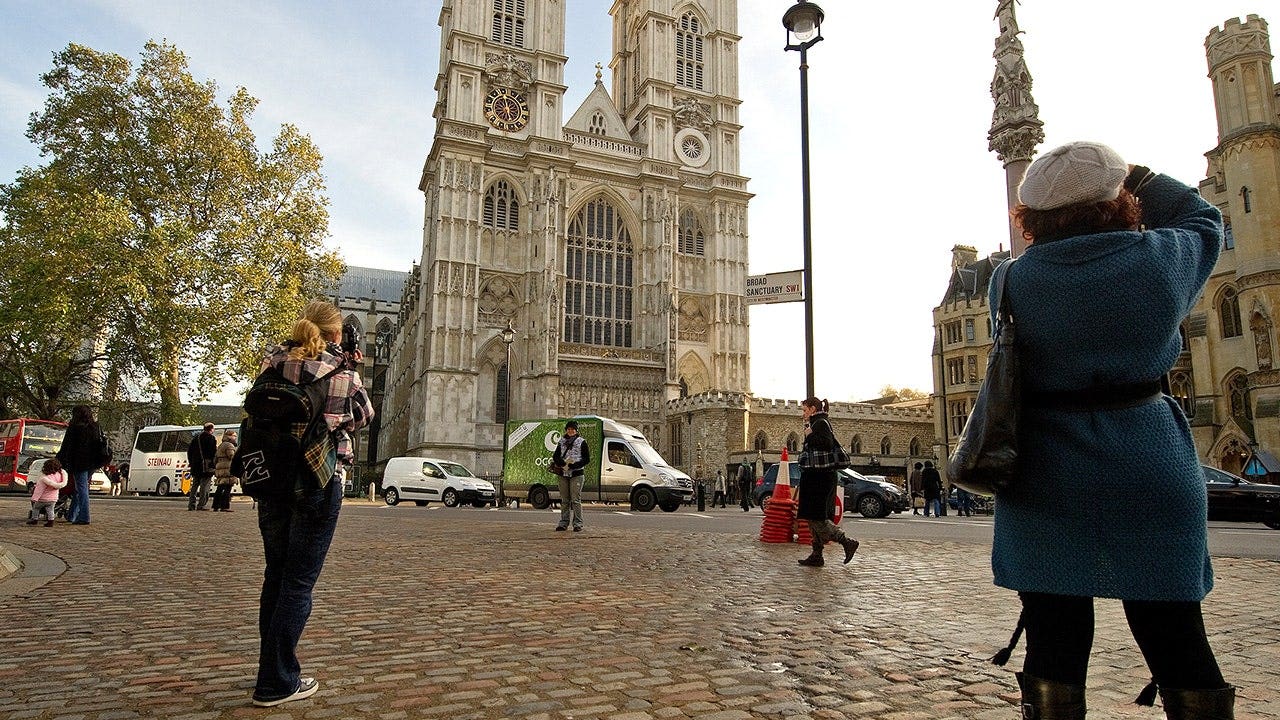
An archaeologist may have finally solved the mystery of the unknown skeleton buried on the grounds of Westminster Abbey, one of London's most popular tourist sites — and the answer points to a 1,000-year-old recycling job.
uncertain
answer → solve → job
The research centers on an unidentified skeleton that was found at Westminster Abbey in 1869, according to news agency SWNS.
uncertain
that → center → SWNS
The skeleton was found inside a Roman limestone sarcophagus bearing an inscription for Valerius Amandinus, a wealthy 4th-century Briton — but the remains inside don't belong to him.
asserted
remains → find → him
When the skeleton was excavated at Westminster Abbey in 1869, archaeologists noticed that a distinctive early medieval Latin cross was sculpted on the lid.
asserted
cross → excavate → lid
The symbol puzzled experts for over 150 years because it didn't match the Roman-era casket.
asserted
it → puzzle → casket
The recent study, published in the Journal of the British Archaeological Association, was led by Warwick Rodwell, a consultant archaeologist at Westminster Abbey, SWNS said.
asserted
SWNS → publish → Abbey
Rodwell's work followed a 2025 excavation of the Abbey's vestry, which was required ahead of construction on the new King Charles III Sacristy set to open in 2027.
asserted
which → follow → 2027
In the study, Rodwell argues the skeleton may belong to one of two high-ranking medieval monks who died in the 11th century.
uncertain
who → argue → century
The two candidates are monks named Aelfwig, who died around 1020, and his successor Wulnoth, who died in 1049.
asserted
who → name → 1049
Carbon dating placed the bones between 987 and 1052 A.D., which lines up with both individuals' lifetimes.
asserted
which → place → lifetimes
"We do not know the date of birth of either," Rodwell said, as SWNS noted.
asserted
SWNS → know → either
"But either would fit equally well if we assume the Abbot was in his early twenties when the appointment was made and close to 50 when he died."
Another clue, Rodwell said, was that the occupant was honored with a "fine" sarcophagus — even if it was recycled.
asserted
it → fit → sarcophagus
The man was likely between 35 and 49 years old when he died, and stood 5 feet, 9 inches tall.
asserted
he → die → feet
Researchers also found white lime residue inside the stone casket outlining where a wooden coffin had once sat before decaying over the centuries.
asserted
coffin → find → centuries
The discovery is one of many recent skeletal finds across England that have shed light on the country's medieval past.
asserted
that → shed → past
In 2025, archaeologists excavating a former department store site at the University of Gloucestershire uncovered 317 skeletons and the ruins of a medieval church.
asserted
archaeologists → excavate → church
At the Tower of London, archaeologists in spring 2025 uncovered the remains of 20 people — including a 14th-century mass grave possibly linked to the Black Death — during a major excavation.
uncertain
archaeologists → uncover → excavation
 The Aporia