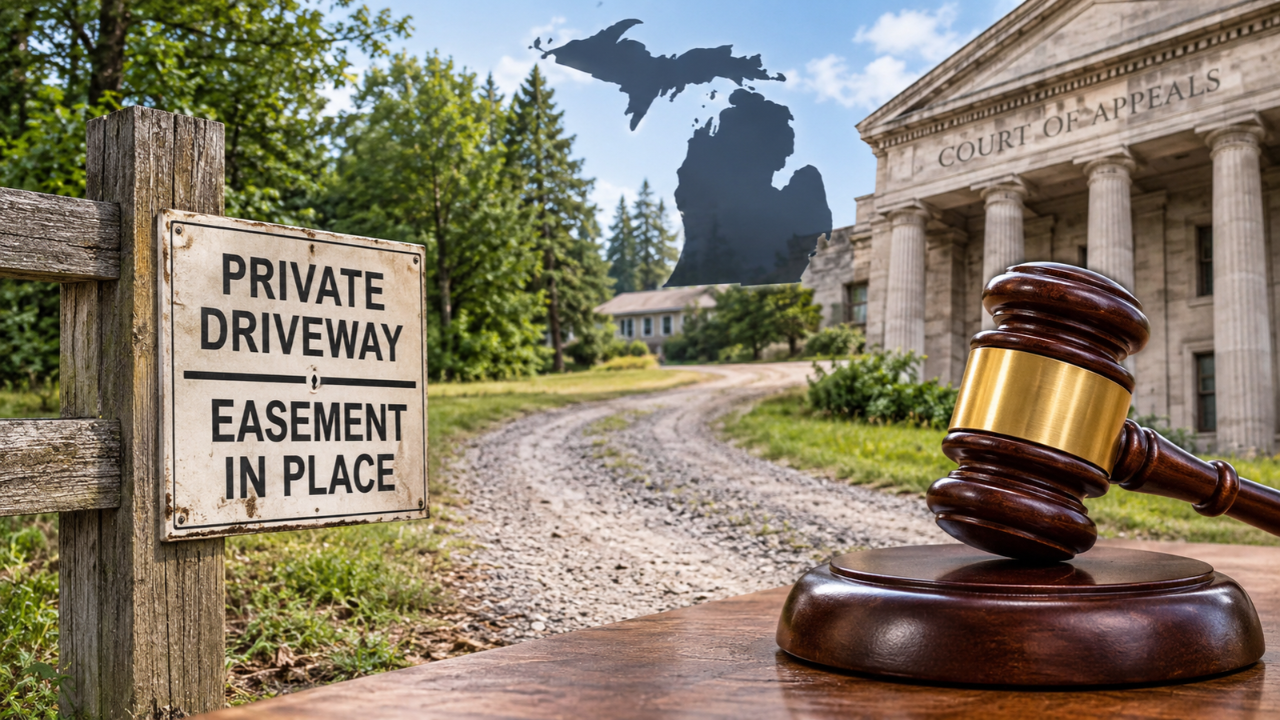
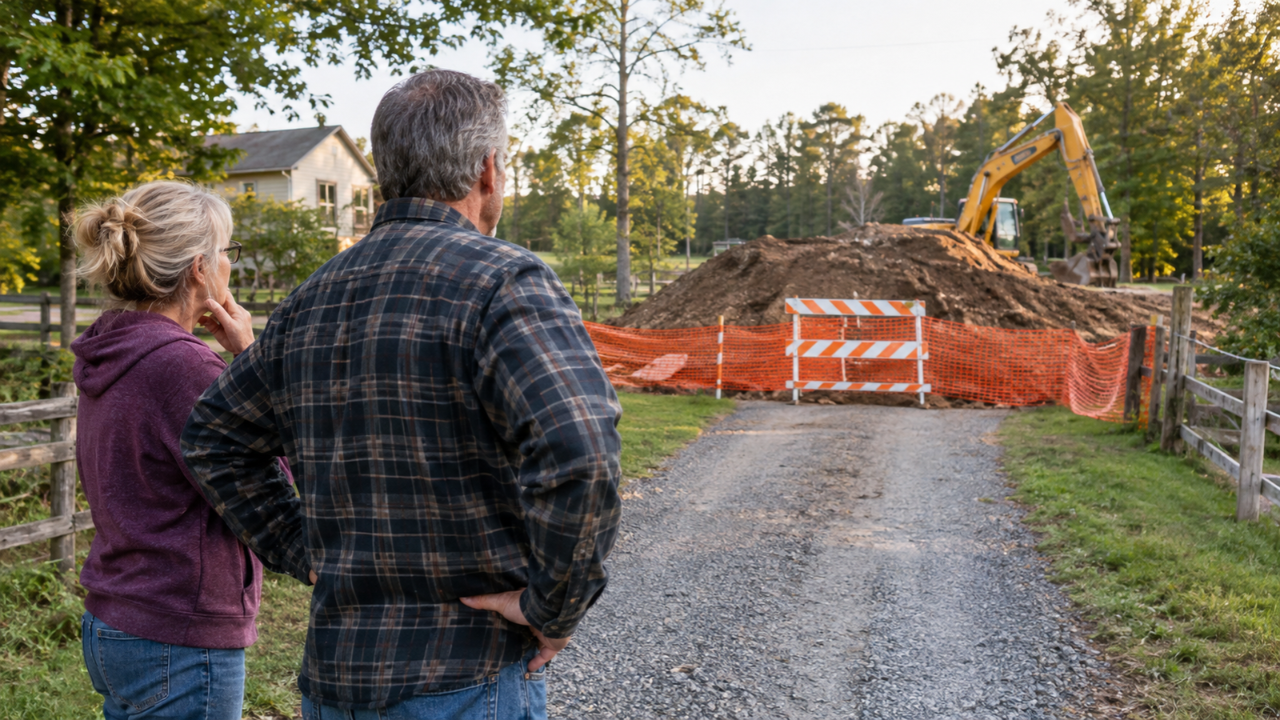
A gravel driveway used for decades became the centre of a family property dispute after construction work blocked access to a route connecting one household to the main road.
asserted
work → use → road
What followed was a legal battle between two Michigan brothers' families, with one side seeking to preserve its long-standing access and the other arguing that it had believed the court proceedings were already over.
asserted
proceedings → follow → access
In an unpublished
opinion dated November 19, 2026, available on Justia, the Michigan Court of Appeals upheld the trial court's order finalising the permanent easement, rejecting the defendants' request to overturn the underlying default.
asserted
Court → date → default
The appeals court rejected arguments by Mark Shattuck and his wife, Michelle, that the default judgment should be set aside because they believed they had prevailed when a judge initially denied a request for a preliminary injunction.
asserted
judge → reject → injunction
David later died during the proceedings, and his son, Corey May Shattuck, was substituted as the plaintiff.
uncertain
son → die → plaintiff
A driveway used since the properties were purchased in 1987
The dispute involved adjoining properties purchased by the families in 1987.
asserted
dispute → use → 1987
According to the original plaintiff, David Shattuck, he had access to a gravel driveway crossing the neighbouring property to reach the main road.
uncertain
he → accord → road
He claimed that his family had used the route for approximately 35 years before construction work obstructed it.
asserted
work → claim → it
The neighbouring property, owned by Mark and Michelle Shattuck, also contained a gravel mine subject to federal regulations.
asserted
property → own → regulations
Although David had another driveway leading to the main road, he argued that it was unsafe to use.
asserted
it → have → road
After access to the gravel route was blocked, David filed a lawsuit seeking several forms of property-related relief.
asserted
David → block → relief
His claims included adverse possession, acquiescence, quiet title and interference with an easement.
uncertain
claims → include → easement
He also sought a declaration recognising either a prescriptive easement or an easement by necessity.
asserted
He → seek → necessity
He requested a preliminary injunction to prevent further interference with the disputed route while the case proceeded.
asserted
case → request → route
Why the defendants believed the case was over
asserted
case → believe → ?
At the preliminary injunction hearing, Mark appeared without a lawyer, while Michelle did not attend.
asserted
Michelle → appear → lawyer
Mark disputed the claim that the alternative driveway was unsafe and argued that David could still use it.
uncertain
David → dispute → it
However, the trial court explained that the hearing was limited to the request for a preliminary injunction, rather than the underlying claims in the lawsuit.
uncertain
hearing → explain → lawsuit
It also indicated that there would be another opportunity to address the complaint.
asserted
It → indicate → complaint
The court eventually denied the preliminary injunction because there was insufficient information to make an informed decision.
asserted
court → deny → decision
However, it directed Mark to maintain the existing situation and refrain from further work in the disputed area until the case was decided.
asserted
case → direct → area
At the end of the hearing, the judge said, "that will conclude the matter".
asserted
that → say → matter
Mark and Michelle later argued that they understood this statement to mean that the entire case had ended.
asserted
case → argue → ?
However, the court had also discussed the fact that the defendants had not filed an answer to the complaint and that their deadline to do so had not yet expired.
asserted
deadline → discuss → complaint
The judge further indicated that another hearing would be scheduled to address the underlying lawsuit.
asserted
hearing → indicate → lawsuit
The defendants did not file an answer.
asserted
defendants → file → answer
At David's request, the court clerk entered a default against them for failing to plead or otherwise defend the case.
asserted
clerk → enter → case
The trial court subsequently entered a default judgment awarding David a permanent easement and requiring the defendants to maintain it.
asserted
court → enter → it
Appeals court rejects request to undo the default
asserted
court → reject → default
After obtaining legal representation, Mark and Michelle sought to have the default judgment set aside.
asserted
judgment → obtain → representation
They argued that Mark's appearance at the preliminary injunction hearing and his objections to the claims meant that he had already defended the lawsuit.
uncertain
he → argue → lawsuit
The trial court partially granted their request because certain questions concerning damages remained unresolved.
asserted
questions → grant → damages
However, it refused to remove the underlying default relating to liability.
asserted
it → refuse → liability
As a result, the court set aside the default judgment but left the underlying default on liability in place.
asserted
court → set → place
The court later finalised the easement arrangements without changing that decision.
asserted
court → finalise → decision
The Michigan Court of Appeals said it did not need to determine whether the clerk had correctly entered the default.
asserted
clerk → say → default
Instead, it examined whether the defendants had established grounds for relief under Michigan Court Rule 2.612(C)(1)(f), which permits a judgment to be set aside for other reasons justifying relief.
asserted
judgment → examine → relief
The rule requires extraordinary circumstances that make setting aside the judgment necessary to achieve justice.
asserted
setting → require → justice
The appeals court found that Mark's participation in the preliminary injunction hearing did not, by itself, establish such circumstances.
asserted
participation → find → circumstances
It also concluded that the judge's closing remarks could not reasonably be interpreted in isolation, given the discussion about the unanswered complaint and the need for further proceedings.
uncertain
remarks → conclude → proceedings
…and 4 more, not listed.
 The Aporia