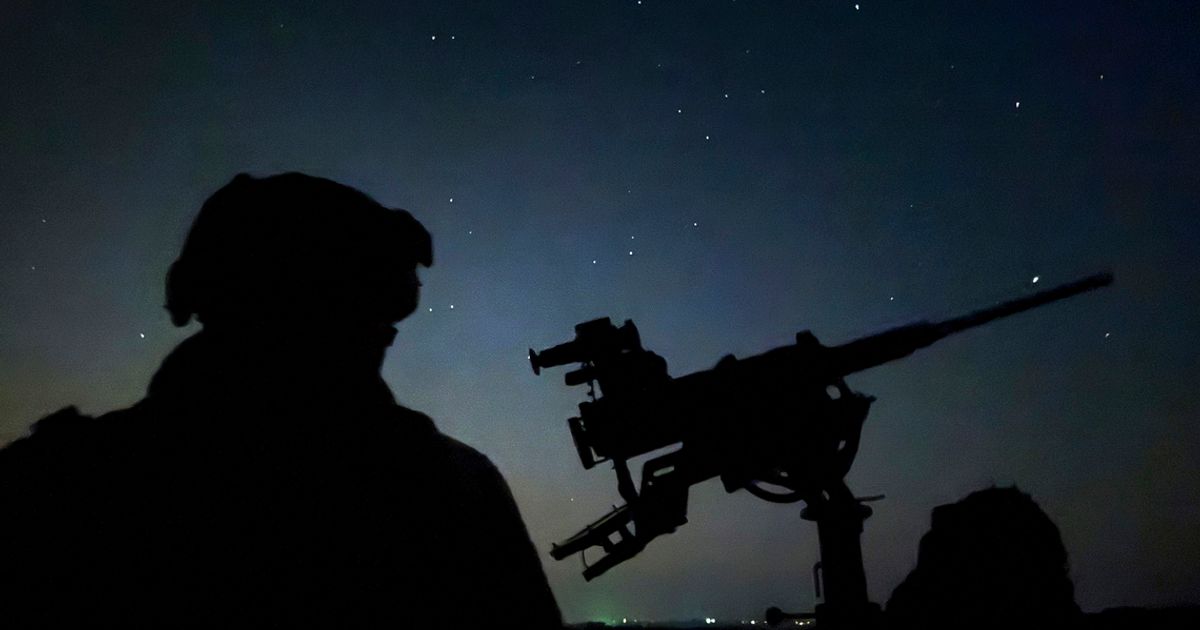
Photo via The Guardian

Germany taking seriously reports Russia may be planning to launch nuclear weapons into space

Read the original at The Guardian ↗
Cite

correspondent, P. B. s. i. (2026, November 23). Germany taking seriously reports Russia may be planning to launch nuclear weapons into space. The Guardian. https://www.theguardian.com/world/2026/nov/23/russia-nuclear-weapons-space-german-intelligence

Dated from the outlet's own feed. Check the original for its byline.

The Guardian · collected 2026-11-23 · by Peter Beaumont senior international correspondent

Quick Summary

German media, citing Western intelligence, report that Russia may be planning to launch a nuclear-armed satellite into space this year, violating international treaties. The German government and intelligence services are taking these reports seriously, while the Russian government denies the allegations, calling them "unfounded" and part of a propaganda campaign. Moscow insists its space activities adhere to international obligations and serve peaceful purposes.
Written by AI on 2026-11-23, from this article's own text only (the story summary below draws on all the coverage).
See how they differ ↓

AI analysis

Story summary

Western intelligence agencies, including Germany’s BND, have concluded that Russia plans to launch a nuclear-armed satellite named Sputnik-S into space by the end of 2026 or possibly within the next few weeks. The satellite, which has been assembled and stored near Moscow for several years, could potentially devastate Western military and communication systems if launched. NATO and Germany's intelligence services have warned that the weapon could disrupt satellite-based navigation, power grids, and communication networks, leading to severe technological and economic impacts. Russia's potential launch would violate the 1967 Outer Space Treaty and the 1963 Partial Nuclear Test Ban Treaty, which prohibit the placement of nuclear weapons in Earth’s orbit.

Written for “Russia Preparing Nuclear Space Weapon Launch” on 2026-11-24, grounded in this article and the 5 other(s) covering the same event.

How they differ

6 outlets covered “Russia Preparing Nuclear Space Weapon Launch”.

What each outlet says

One AI summary per outlet of its latest article on this story, written from that article alone and checked against it. Open the article for the outlet's own words.

The GuardianThis outlet23 Nov

German media, citing Western intelligence, report that Russia may be planning to launch a nuclear-armed satellite into space this year, violating international treaties. The German government and intelligence services are taking these reports seriously, while the Russian government denies the allegations, calling them "unfounded" and part of a propaganda campaign. Moscow insists its space activities adhere to…

Germany taking seriously reports Russia may be planning to launch nuclear weapons into space (this article)
The Straits Times23 Nov

German media reports that NATO intelligence services believe Russia plans to launch a nuclear-armed satellite named Sputnik-S in 2026. The satellite, assembled years ago and currently stationed in the Moscow region, has drawn concern from Western intelligence, including Germany’s BND and armed forces. Russia’s embassy in Germany and NATO headquarters did not immediately respond to comments requested by the media…

NATO believes Russia is ready to launch nuclear-armed satellite: German media →
Daily Mail23 Nov

Western intelligence agencies report that Russia is preparing to launch a nuclear-armed satellite called 'Sputnik-S' by the end of this year, which could disrupt Western military technology and communications. If launched, the satellite could affect precision munitions, military drones, and communication networks, potentially leading to widespread failures in navigation systems, power grids, and food deliveries. The…

Russia 'is preparing to launch nuclear-armed space weapon by the end of this year' - capable of devastating Western technology and communications →
The Independent23 Nov

German intelligence reports suggest Russia may launch a satellite named Sputnik-S equipped with a nuclear warhead by the end of this year. The satellite is reportedly assembled and stationed in the Moscow region. US and German military officials warn that such a weapon could severely disrupt global satellite operations and infrastructure. Russia's embassy denies these allegations, calling them propaganda. The US…

Russia ‘planning to launch satellite with nuclear weapon into space by end of the year’ →
New York Post23 Nov

Western intelligence agencies warn that Russia may launch a nuclear-capable satellite named Sputnik-S as early as next month, despite it having been dormant near Moscow for several years. This development, confirmed by reports from NATO countries and Germany, raises concerns about violations of the 1967 Outer Space Treaty. Russia denies the claims, with President Putin reaffirming the country’s stance against…

Russia is preparing to launch a nuclear space weapon — as soon as next month, intelligence warns →
Fox News23 Nov

Western intelligence agencies warn that Russia could launch a nuclear-capable satellite named "Sputnik-S" within 60 days, potentially threatening thousands of satellites used by the U.S. and its allies. This news comes shortly after a summit in Shenzhen where leaders discussed nuclear arms control but did not commit to new measures. NATO and German officials expressed concern, while the Kremlin dismissed the reports…

Russia could launch nuclear-capable satellite within weeks, Western intelligence warns: report →

Where they agree and split

Framing

How the first headlines put it

Attributed to a source2
Stated as fact4
The headlines (6)

Germany taking seriously reports Russia may be planning to launch nuclear weapons into space The Guardian · attributed to a source

Russia could launch nuclear-capable satellite within weeks, Western intelligence warns: report Fox News · attributed to a source

NATO believes Russia is ready to launch nuclear-armed satellite: German media The Straits Times · stated as fact

Russia 'is preparing to launch nuclear-armed space weapon by the end of this year' - capable of devastating Western technology and communications Daily Mail · stated as fact

Russia ‘planning to launch satellite with nuclear weapon into space by end of the year’ The Independent · stated as fact

Russia is preparing to launch a nuclear space weapon — as soon as next month, intelligence warns New York Post · stated as fact

Words to watch (1)

Russia 'is preparing to launch nuclear-armed space weapon by the end of this year' - capable of devastating Western technology and communications Daily Mail

The full story: what happened, how it changed, and all 6 articles →

Compared with similar articles

This article reads unscored and hedges 50% of its claims. Each row says how that neighbour differs.
The Independent
Hedges 6 of 18 claims Outlet record 59/100
The Straits Times
Hedges 1 of 6 claims Outlet record 64/100
New York Post
Centre Hedges 3 of 15 claims Outlet record 66/100
Fox News
Hedges 11 of 29 claims Outlet record 65/100
The Straits Times
Hedges 2 of 14 claims Outlet record 64/100
“While both articles discuss concerns over potential Russian plans to launch a nuclear-armed satellite and its implications, Article A focuses on the German government's response and the treaties involved, whereas Article B reports on NATO's reaction and commitment to space defense during a visit to Berlin by NATO chief Mark Rutte. These are different specific responses to the same underlying threat.”

Story

Russia Preparing Nuclear Space Weapon Launch
Politics · 6 article(s) covering the same event. Compare every outlet's account →
How this article was measured signals, leaning charts, publisher record, byline, topics and claims

Signals How these are calculated →

Claims extracted
22
sentences that state something as happening or true
Uncertain
50%
11 of 22 hedged ("reportedly", "may", "according to")
Leaning
not political
takes no side on a contested political question
Publisher signals
64/100
The Guardian's corrections and hedging, across everything collected from it. Not a measure of accuracy.
Outlets on this story
6
Politics
Same framing elsewhere
1
articles that frame the event the way this one does
Analyzed 2026-11-23 · how these are computed

How this is being covered How these are calculated →

Article leaning vs. publisher reliability
Source leaning vs. consistency

Publisher

The Guardian · 3852 article(s) · 8 correction(s) detected
Running correction rate · 8 correction(s)

Who wrote this

Peter Beaumont senior international correspondent
1 article(s) here · 1 carrying a prediction
The German government has said it is taking very seriously reports that Russia may be planning to launch a satellite armed with a nuclear weapon into space later this year.
The only article under this byline in the corpus.

Topics

German Moscow Russia Russian the Russian Federation

Subjects

Russia GPE · 9× Moscow GPE · 4× Russian NORP · 3× German NORP · 2× Germany GPE · 2× the Russian Federation GPE · 2× Bundesnachrichtendienst ORG · 1× Troy Meink PERSON · 1× US Air Force ORG · 1× Washington GPE · 1×

Narrative

The reports by a group of German media outlets, based on what they said were assessments by western intelligence agencies, come amid a recent rise in concern over the increasing militarisation of space which had the US Air Force secretary, Troy Meink, admit for the first time in September that Washington had deployed “on-orbit space control weapons”.
framing: mixed · carried by 1 article(s) · first seen 2026-11-23
The German government has said it is taking very seriously reports that Russia may be planning to launch a satellite armed with a nuclear weapon into space later this year.

Claims (22 extracted, 11 hedged)

The German government has said it is taking very seriously reports that Russia may be planning to launch a satellite armed with a nuclear weapon into space later this year. uncertain
Russia → say → space
The move – if confirmed – would be a breach of 1967 Outer Space treaty of which Moscow is a signatory as well the 1963 Partial Nuclear Test Ban treaty – which prohibit the placing of nuclear weapons in Earth’s orbit and test detonations in space. asserted
which → confirm → space
The reports by a group of German media outlets, based on what they said were assessments by western intelligence agencies, come amid a recent rise in concern over the increasing militarisation of space which had the US Air Force secretary, Troy Meink, admit for the first time in September that Washington had deployed “on-orbit space control weapons”. asserted
Washington → base → weapons
Germany’s Bundesnachrichtendienst (BND) intelligence service and armed forces have exchanged intelligence showing that a Russian satellite, named Sputnik-S, was assembled several years ago and is stationed in the Moscow region, a report by broadcasters NDR and WDR, and newspaper Sueddeutsche Zeitung said. asserted
report → exchange → NDR
According to the reports, warnings in early November said the satellite could be launched within 60 days and would be operational shortly afterwards. uncertain
satellite → accord → days
“No, we haven’t seen the report. asserted
we → see → report
But there are so many ‘alleged’ and ‘possible’ claims in it, attributed to who knows whom, that it’s certainly hardly worth taking them seriously,” Kremlin spokesperson Dmitry Peskov told reporters. uncertain
Peskov → be → reporters
The Russian embassy in Berlin said it was not aware of any such plans describing the reports as “unfounded allegations regarding the space activities of the Russian Federation” and calling them “part of a propaganda campaign”. asserted
it → say → campaign
Moscow’s space measures, the embassy added, proceed “in accordance with international obligations” and serve “exclusively peaceful purposes”. asserted
embassy → add → purposes
In 2024, Russia denied assertions by US officials that Moscow was developing a weapon that could destroy enemy satellites by setting off a nuclear explosion in space and triggering an electromagnetic pulse (EMP) to disable the electronic systems of nearby satellites. uncertain
that → deny → satellites
US officials have alleged that Russia has for years been developing a nuclear weapon capable of destroying entire satellite networks, such as SpaceX’s vast Starlink internet system that Ukrainian troops have been using. asserted
troops → allege → that
Concern has been mounting in recent years in Europe and the US that Russia has been seeking to develop an anti-satellite weapon system which experts believe would probably employ an EMP wave. asserted
experts → mount → wave
Two years ago, the Russian president, Vladimir Putin, denied the claim after then US president Joe Biden’s national security spokesperson John Kirby confirmed that the Russian Federation had been developing a “troubling” anti-satellite weapon. uncertain
Federation → deny → weapon
“We’re not talking about a weapon that can be used to attack human beings or cause physical destruction here on Earth,” Kirby said. asserted
Kirby → talk → Earth
Biden told reporters in 2024 that he believed Russia was developing the “capacity to launch a system into space that could theoretically do something that was damaging … my hope is it will not”. uncertain
it → tell → something
While EMPs can occur naturally, it has long been understood that nuclear detonation has the ability to harm electronic systems, including energy networks, with both the US and Russia conducting high altitude tests in the early 1960s. asserted
US → occur → 1960s
There has been increasing discussion over fears that Russia may be planning to place a nuclear weapon in space. uncertain
Russia → increase → space
Germany’s top military space commander earlier this year said he could not rule out that Russia was working on technology to place a nuclear warhead in space, warning that such a move could cripple satellite services and make parts of the orbit unusable for decades. “ uncertain
parts → say → decades
At the very top end of escalation, there is the suspicion that Russia may be working on technology to place a nuclear explosive device in orbit,” Maj Gen Michael Traut, commander of the German Space Command, said in an interview with Politico. uncertain
Traut → be → Politico
Asked whether he considered that realistic, Traut said: “I cannot rule it out.” asserted
I → ask → it
He added that a nuclear detonation in space could impact up to a third of satellites in low Earth orbit with massive global consequences. uncertain
detonation → add → consequences
Suspicions over Russia’s ambitions to place weapons in space were given fresh scrutiny in 2022 with the launch of the Kosmos 2553 test satellite, which US and intelligence sources suggested could be a dummy run for the deployment of a nuclear weapon in space. uncertain
sources → place → space
Give feedback · no sign-in needed

No sign-in needed for now. Your note is sent without a name, so it cannot be answered.

History Support