The southern Taiwanese city of Chiayi has long been synonymous with a cherished culinary staple: turkey rice, served drenched in savory soy broth and topped with lard-fried shallots and pickled radish.
asserted
city → cherish → shallots
Introduced by American GIs after World War II, the non-native bird became an affordable alternative to chicken and quickly became a local icon.
asserted
bird → introduce → chicken
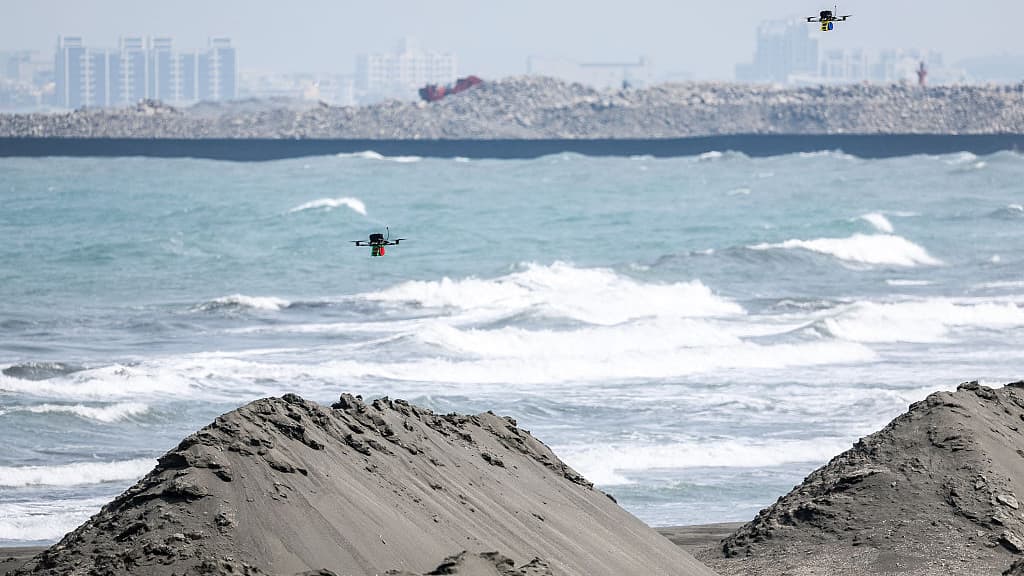
Eight decades later, Chiayi is anchoring its identity in a very different military legacy: uncrewed aerial vehicles (UAVs).
asserted
Chiayi → anchor → legacy
Today, more than 50 companies and research institutions have set up shop nearby, transforming the county into Taiwan’s premier drone hub.
asserted
companies → set → hub
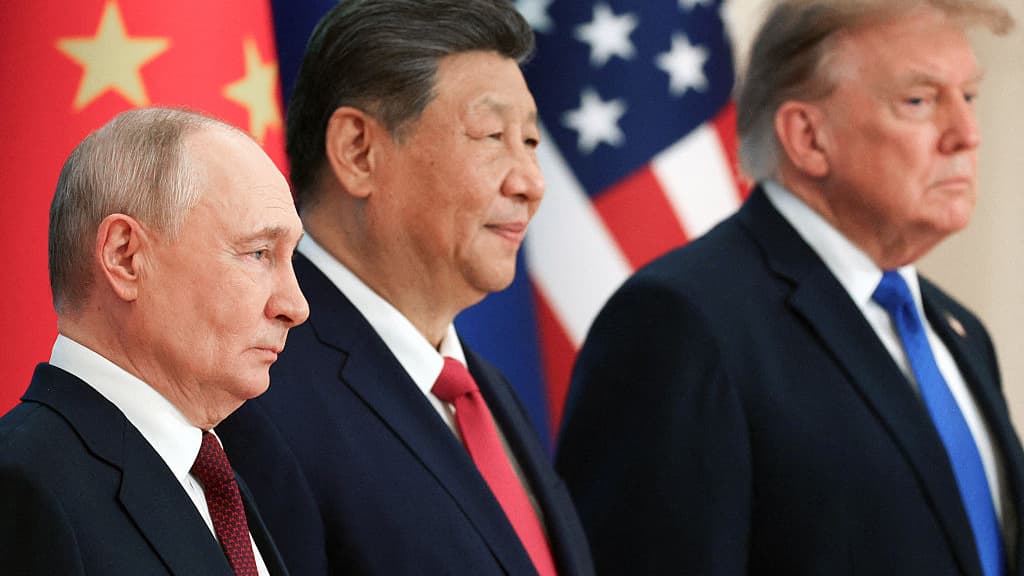
Taiwan's drone industry gained newfound urgency following Vladimir Putin’s February 2022 invasion of Ukraine, where both sides have relied heavily on commercial drones—most notably those produced by Chinese manufacturer DJI.
asserted
sides → gain → DJI
But when reports emerged that DJI’s AeroScope system could track the real-time positions of drone operators, cybersecurity concerns exploded.
uncertain
concerns → emerge → operators
With Beijing and Moscow bound by a "no-limits" partnership, Taiwan has sought to meet growing demand for "non-Red" supply chains.
asserted
Taiwan → bind → chains
Yet drones form just one part of Taiwan’s broader push to ground its security in technological supremacy.
asserted
drones → form → supremacy
By embedding itself irrevocably into global technology supply chains, Taiwan seeks to insulate its 23 million citizens against Beijing’s looming threat of invasion.
asserted
Taiwan → embed → invasion
This industrial dominance has long been dubbed a “silicon shield,” raising the global economic cost of a cross-Strait conflict to catastrophic levels.
asserted
dominance → dub → levels
As geopolitical pressure from Beijing intensifies, Taiwan is weaponizing this commercial electronics ecosystem into an asymmetric shield.
asserted
Taiwan → intensify → shield
The goal is to turn the island's commercial manufacturing grid into an arsenal of low-cost, networked security nodes, rather than attempting to match China ship for ship or jet for jet.
asserted
goal → turn → jet
As such, Taiwan is quietly redefining 21st-century national defense, fusing advanced semiconductors, proprietary software, and autonomous drone swarms.
asserted
Taiwan → redefine → semiconductors
Chiayi-based Kunway Technology began by manufacturing agricultural crop-spraying drones over a decade ago, but pivoted to defense aircraft in the wake of the war in Ukraine.
asserted
Technology → base → Ukraine
Today, Kunway ships more than 2,000 UAVs to Kyiv each month.
asserted
Kunway → ship → Kyiv
“We need to prepare, because Taiwan is isolated,” David Liu, CEO of Kunway, tells TIME.
asserted
Liu → need → TIME
“If war happens, we need to produce military drones by ourselves.”
asserted
we → happen → ourselves
At the firm’s headquarters—housed within the former Chiayi campus of the National Taiwan University of Sport—technicians test an array of hardware, which ranges from “kamikaze” quadcopters and spring-launched surveillance drones to stealth unmanned surface vessels.
asserted
which → house → vessels
After taking office in May 2024, President Lai Ching-te designated drones as one of Taiwan’s five “trustworthy industries” aimed at deepening ties with democratic allies.
uncertain
te → take → allies
Taipei has since signed memorandums of understanding with partners including France, Poland, the Czech Republic, and the U.S., all seeking alternatives to supply chains rooted in China, which controls 70% to 80% of global drone production.
asserted
which → sign → production
“You still need to build up this kind of international collaboration among all these democratic countries,” says Puma Shen, a lawmaker for the ruling Democratic Progressive Party (DPP), who visited Ukraine in 2023.
asserted
who → need → 2023
“Because we need to fight together.”
asserted
we → need → ?
The strategy is delivering dramatic results: Taiwan’s drone exports exploded from just 3,472 units in 2024 to 122,726 in 2025.
asserted
exports → deliver → 2025
In the first seven months of 2026 alone, another 210,000 units worth $238 million took flight for foreign markets.
asserted
units → take → markets
But drones are just a small part of a complex web of technological dependence that Taipei hopes will help secure its precious autonomy.
asserted
Taipei → hop → autonomy
Today, Taiwan Semiconductor Manufacturing Co. (TSMC) produces more than 90% of the world's most advanced chips, while Taiwanese manufacturers assemble 90% of global AI servers, according to Taiwan’s Market Intelligence and Consulting Institute, and hold a virtual monopoly on vital data-center infrastructure, such as high-efficiency power units and liquid-cooling thermal systems.
uncertain
manufacturers → produce → units
Every titan of modern computing—from Apple and Nvidia to AMD and Qualcomm—has its supply chain entwined with the island.
asserted
chain → entwine → island
Propelled by this indispensable role in the AI revolution, in October Taiwan’s stock exchange briefly surged to become the world's fourth-largest by market value.
asserted
exchange → propel → value
“If you look at the AI accelerators powering data centers today from all the existing incumbents, they're all TSMC-manufactured,” says Qualcomm CEO Cristiano Amon.
asserted
Amon → look → incumbents
“The entire semiconductor industry is used to that, and I think we want it to continue that way.
asserted
it → use → that
Under the banner "AI Together," the trade fair transformed Taipei into an electrifying carnival of modern computing.
asserted
fair → transform → computing
A record-setting 111,312 buyers and industry leaders from 152 countries filled the halls, navigating a sprawling grid of 1,500 exhibitors across 6,000 booths featuring breakthroughs in physical AI, robotics, and next-generation silicon.
asserted
buyers → set → AI
In late May, chip giant Nvidia broke ground on a $1.3 billion global headquarters in northern Taipei, built to accommodate more than 10,000 engineers and researchers.
uncertain
Nvidia → break → engineers
Taipei Mayor Chiang Wan-an attended the ceremony, underscoring how preserving and expanding the island’s tech supremacy remains a rare point of cross-party consensus in Taiwanese politics.
asserted
preserving → attend → politics
“It's not just about the company and the technology, it's more about the talent, the people,” says Shen, who is the DPP’s candidate for Taipei Mayor in Nov. 28 elections.
asserted
who → say → elections
“You also need [to tell] all the companies of the world that, ‘hey, Taipei, right now is ready.’”
asserted
Taipei → need → world
Opposition lawmakers have repeatedly stalled the Lai administration’s proposed $40 billion special defense budget, ultimately passing a scaled-back $25 billion package.
asserted
lawmakers → stall → package
While that funding authorized two separate U.S. arms purchases, it stripped out investments meant to bolster Taiwan’s domestic defense industry—clouding the future of indigenous initiatives like the Strong Bow anti-ballistic missile, intended as the backbone of Taiwan’s prospective "T-Dome" air defense system.
asserted
it → authorize → system
Opposition leaders maintain their resistance stems from a lack of transparency regarding how the funds would be allocated, while the DPP accuses rivals of undermining national security to Beijing's benefit.
asserted
DPP → maintain → benefit
Domestic drone manufacturers worry their nascent sector could lose momentum if the opposition Nationalists (KMT) reclaims the presidency in 2028.
uncertain
Nationalists → worry → 2028
…and 14 more, not listed.
 The Aporia