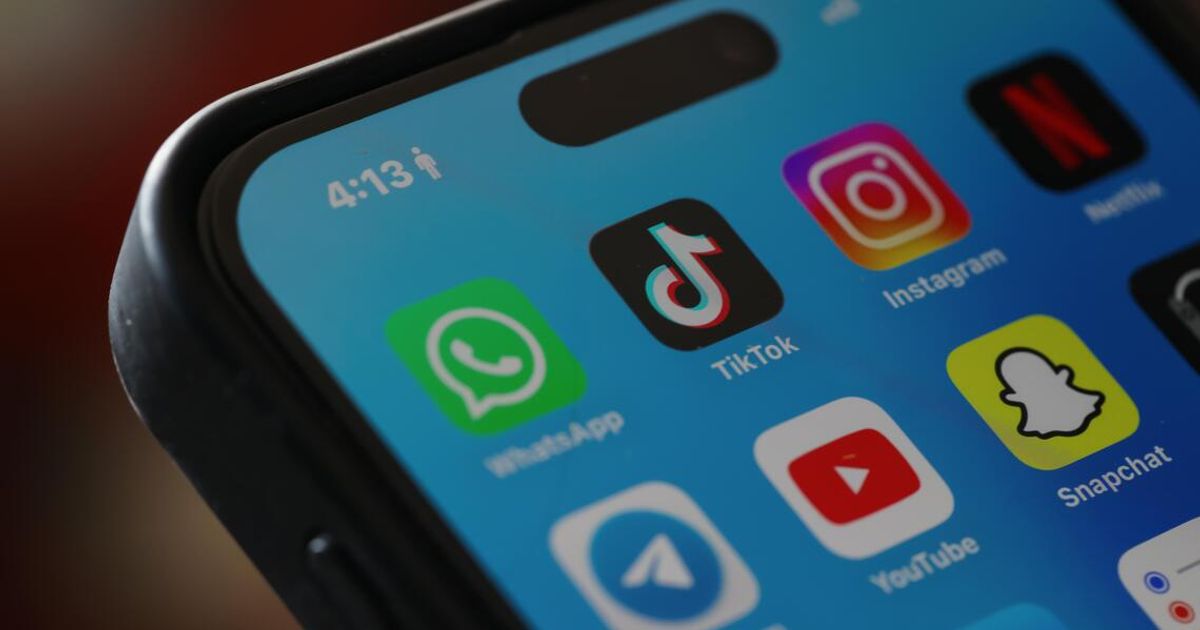
From the 4-judge unsigned majority opinion in Patterson v. Meta Platforms, Inc., decided today by N.Y.'s high court:
On May 14, 2022, a man motivated by heinous white supremacist ideologies he allegedly adopted due to content he viewed on social media carried out a mass shooting at a Buffalo grocery store, killing 10 and injuring three others.
uncertain
he → decide → others
Plaintiffs, victims of the shooting and their family members, commenced these actions against the shooter's parents, firearms manufacturers, and social media companies, seeking compensation for their injuries.
asserted
Plaintiffs → commence → injuries
These appeals concern motions to dismiss plaintiffs' claims against several social media companies whose platforms the shooter allegedly used before committing this unspeakable act of violence.
uncertain
shooter → concern → violence
Specifically, plaintiffs contend that their complaints state causes of action for products liability based on defective features of these social media defendants' platforms and their failure to warn thereof….
asserted
complaints → contend → platforms
[P]laintiffs failed to adequately plead that features of [the] social media defendants' products proximately caused their injuries.
asserted
features → fail → injuries
Generally, a defendant's acts qualify as a proximate cause when they are "a substantial cause of the events which produced the injury."
asserted
which → qualify → injury
This inquiry examines
"the foreseeability of the event resulting in injury; the passage of time between the originally negligent act and the intervening act; the spatial gap, if any, between the original act and the intervening act; whether the original act of negligence was a completed occurrence or was ongoing at the time of the intervening act; whether and, if so, what other forces combined to bring about the harm; as well as public policy considerations regarding the scope of liability."
asserted
forces → examine → liability
Indeed, if an unforeseeable intervening criminal act of a third party causes the plaintiff's injury, the causal connection is severed.
asserted
connection → intervene → injury
Thus, proximate causation will not be found when the intervening act "is extraordinary under the circumstances, not foreseeable in the normal course of events, or independent of or far removed from the defendant's conduct."
asserted
act → find → conduct
"Although foreseeability and proximate cause are generally questions for the factfinder, there are instances in which proximate cause can be determined as a matter of law because 'only one conclusion may be drawn from the established facts'" such as when "the original negligent act merely 'furnished the occasion for'—but did not cause—'an unrelated act to cause injuries not ordinarily anticipated.'
uncertain
act → be → injuries
Here, plaintiffs failed to adequately allege that the remaining social media defendants' product defects proximately caused the shooter to carry out the mass shooting that resulted in plaintiffs' injuries.
asserted
that → fail → injuries
The complaints, even accepting the factual allegations as true, fail to establish that the shooter's actions were a natural and foreseeable consequence of these defendants' decisions about how to design and operate their platforms.
asserted
actions → accept → platforms
Instead, under the circumstances, the shooter's actions were so extraordinary as to sever the causal chain as a matter of law.
asserted
actions → sever → law
{Our conclusion is limited to the unusual facts of this case, where the platforms' assertedly addictive features were alleged to have harmed the shooter rather than the plaintiffs directly.}
asserted
features → limit → plaintiffs
We therefore need not address the scope of section 230 of the Communications Decency Act or how it would apply to the claims against these defendants.
uncertain
it → need → defendants
Judge Halligan joined the majority, but also wrote a concurring opinion:
I join the majority because I agree that the plaintiffs have not adequately pleaded proximate causation.
asserted
plaintiffs → join → causation
I write separately to underscore that, for me, this conclusion rests squarely on the highly unusual facts presented here, and to offer some additional thoughts regarding the scope of section 230.
asserted
conclusion → write → section
As an initial matter, I agree with my dissenting colleagues that the plaintiffs alleged that several of the defendants tortiously designed addictive products.
asserted
several → agree → products
The complaints make a number of general claims about social media and youth: that defendants' platforms are addictive; that compulsive use of social media, particularly by young people, causes emotional disturbance and "impulsive decision-making and risk-taking behavior"; and that such use can also yield other deleterious consequences, including "sleep disturbances, mental health problems and suicidal ideation, and violent, hateful acts."
uncertain
use → make → disturbances
The complaints further assert that the social media defendants, knowing of the addictive quality of their products and the heightened susceptibility of young users, not only failed to implement features for limiting use or warning parents, but also took deliberate advantage of that vulnerability by utilizing "strategic timing and clustering of notifications to lure back users" and by implementing "barriers to the deactivation and deletion of accounts."
asserted
defendants → assert → accounts
I find the claims before us quite distinct from the cases cited by the dissent that have allowed products liability claims premised on the addictiveness of social media platforms to proceed.
uncertain
claims → find → platforms
I have little doubt that a plaintiff could allege a sufficient connection between the design of a platform and adverse consequences for the mental health of young users.
uncertain
plaintiff → have → users
In those cases, the harms that form the basis for the claims—for example, the alleged inducement of "compulsive use among young users to the detriment of their health and well-being"—flow directly from the platforms' allegedly defective features, leaving little question "that the defective design was a substantial factor in causing plaintiff's injury."
uncertain
design → form → injury
But the plaintiffs here are not bringing a claim on behalf of users.
uncertain
plaintiffs → bring → users
Instead, they are seeking recompense for the victims of a crime committed by a social media user.
asserted
they → seek → user
In other words, the allegedly addictive properties of the platforms were not alleged to have harmed the plaintiffs here directly, but rather to have harmed the shooter, who in turn engaged in extensive research and planning before murdering ten people and wounding others….
uncertain
who → allege → others
I do not see the connection between the two as sufficiently articulated to allow the case to proceed.
asserted
case → see → two
Three aspects of these claims inform my conclusion.
uncertain
aspects → inform → conclusion
First, although intervening criminal acts do not necessarily sever the causal chain, the shooter's conduct was apparently painstakingly planned and extraordinarily violent.
asserted
conduct → intervene → chain
Second, the prominence of content in many of plaintiffs' allegations gives me real pause.
asserted
prominence → give → pause
Even if we were to interpret section 230 as not immunizing defendants against claims for actions that rest, at least in part, on content, I am not aware of other instances where a court has held that provocative content proximately caused someone to commit a violent crime, and I am hesitant to take that step here.
uncertain
I → interpret → step
{I understand the plaintiffs to disclaim on appeal any effort to base liability on defendants' roles as publishers of content.
asserted
plaintiffs → understand → content
But their complaints can be read to allege that the platforms are defective at least in part because of the racist and extremist content they make available, and the plaintiffs acknowledge that content is a necessary link in the causal chain leading to their harms.}
asserted
content → read → harms
Third, the defendants' platforms have billions of worldwide users.
asserted
platforms → have → users
To the extent that proximate cause could rest on a correlation between social media use and a specific type of harmful act committed by any one of those users, the potential liability would sweep broadly, to say the least.
uncertain
liability → rest → least
If all such conduct were "a natural and foreseeable consequence" of a platform's design choices, the concept of proximate cause would have little meaning….
asserted
concept → have → meaning
As for section 230, …. "we [have] read section 230 to bar 'lawsuits seeking to hold a service provider liable for its exercise of a publisher's traditional editorial functions.'" …
asserted
provider → read → functions
Our endorsement of a "traditional editorial functions" test for section 230 immunity, however, does little to answer whether the conduct of modern social media platforms can be labelled such a function.
asserted
conduct → do → platforms
As to claims that a defendant designed its platform features to encourage or facilitate addiction, irrespective of the particular content promoted by the platform, I agree with the dissent that they are not barred by section 230.
uncertain
they → design → section
That is because such conduct does not constitute a traditional editorial function, even under a broad understanding of that term.
asserted
conduct → constitute → term
…and 56 more, not listed.
 The Aporia