Photo via New York Post

Meta’s chief AI officer issues warning after Claude solves legendary math problem: ‘Implications are enormous’

Read the original at New York Post ↗
Cite

Lang, E. (2026, November 23). Meta’s chief AI officer issues warning after Claude solves legendary math problem: ‘Implications are enormous’. New York Post. https://nypost.com/2026/11/23/business/metas-chief-ai-officer-issues-warning-after-claude-solves-legendary-math-problem-riemann-hypothesis/

Dated from the outlet's own feed. Check the original for its byline.

New York Post · collected 2026-11-23 · by Emily Lang

Quick Summary

Meta’s chief AI officer, Alexandr Wang, has warned about the implications of superintelligence following the solution of the 150-year-old Riemann hypothesis by an Anthropic researcher using the AI system Claude. Wang emphasized the significance of Claude’s achievement, noting that the proof exists solely as 17 million lines of computer code, far beyond human comprehension. He called for cautious progress and AI safety measures, highlighting Meta’s own efforts to prioritize customer service over AI self-improvement.
Written by AI on 2026-11-24, from this article's own text only (the story summary below draws on all the coverage).
See how they differ ↓

AI analysis

Story summary

On November 20, 2026, Levent Alpöge, an Anthropic researcher, claimed to have used the company's Claude AI chatbot to prove the Riemann Hypothesis, a 160-year-old mathematical problem. Alpöge stated that over six weeks, Claude assisted in creating a proof that, if verified, could be one of the most significant mathematical proofs in history. The solution was published in a programming language called Lean to facilitate computer verification and is reportedly 250,000 pages long. Two independent groups have since verified the proof, suggesting a potential historic milestone in mathematics. Meta’s Chief AI Officer, Alexandr Wang, warned about the implications of such advancements, emphasizing the need for better safety and security measures in AI development.

Written for “AI Solves Riemann Hypothesis” on 2026-11-24, grounded in this article and the 16 other(s) covering the same event.

How they differ

13 outlets covered “AI Solves Riemann Hypothesis”.

What each outlet says

One AI summary per outlet of its latest article on this story, written from that article alone and checked against it. Open the article for the outlet's own words.

New York PostThis outlet23 Nov

Meta’s chief AI officer, Alexandr Wang, has warned about the implications of superintelligence following the solution of the 150-year-old Riemann hypothesis by an Anthropic researcher using the AI system Claude. Wang emphasized the significance of Claude’s achievement, noting that the proof exists solely as 17 million lines of computer code, far beyond human comprehension. He called for cautious progress and AI…

Meta’s chief AI officer issues warning after Claude solves legendary math problem: ‘Implications are enormous’ (this article)2 articles from New York Post on this story
Daily Mail20 Nov

Dr. Levent Alpöge, a 34-year-old Turkish-American mathematician, claims to have proven the 167-year-old Riemann Hypothesis using Anthropic's AI chatbot Claude. The Riemann Hypothesis, introduced in 1859 by Bernhard Riemann, concerns the distribution of prime numbers along the number line. Alpöge published his proof in Lean computer code, and experts will now verify its correctness. Clay Mathematics offered a $1…

Most famous unsolved maths riddle solved by AI giant Anthropic after 167 years →2 articles from Daily Mail on this story
Al Jazeera23 Nov

Meta’s Chief AI Officer, Alexandr Wang, warned on Sunday that superintelligent AI, surpassing human intellect, is imminent. This warning came after an Anthropic employee claimed to have used Claude AI to solve the Riemann hypothesis, a complex mathematical problem. Wang stated that AI's ability to improve itself and accelerate research in various fields will soon surpass human capabilities, urging humanity to act…

AI superintelligence ‘arriving’ warns top Meta executive →2 articles from Al Jazeera on this story
The Guardian22 Nov

Ken Ono, a mathematician, reflects on his near decision to quit mathematics following the announcement that AI had solved the Riemann hypothesis, a 167-year-old problem. Ono led the number theory team for Epoch AI’s FrontierMath project, where he witnessed an unreleased ChatGPT model perform complex calculations with ease. Despite these challenges, Ono decided to continue his work in mathematics, inspired by his…

Why I won’t leave mathematics, despite AI solving centuries-old problems | Ken Ono →2 articles from The Guardian on this story
The Hindu20 Nov

Levent Alpoge, a mathematician at Anthropic, announced on November 20, 2026, that he had used the company’s Claude chatbot to prove the Riemann Hypothesis, a 160-year-old mathematical problem. Alpoge claims to have also solved the broader Generalized Riemann Hypothesis, but the proof has yet to be reviewed by independent experts. The Riemann Hypothesis is one of the seven Millennium Prize Problems, each carrying a…

Anthropic researcher says Claude solved maths’ greatest riddle →
The Straits Times20 Nov

On November 20, Levent Alpoge, a researcher at Anthropic, claimed that the company’s AI chatbot Claude helped prove the Riemann Hypothesis, a 160-year-old mathematical problem. Alpoge posted a four-page note online but the claim has not been verified by experts. The Riemann Hypothesis is one of seven Millennium Prize Problems, each carrying a $1 million reward if a solution is published in a peer-reviewed journal…

Anthropic researcher says AI chatbot Claude solved math’s greatest riddle →
Show 7 more outlets
BBC20 Nov

An Anthropic employee and mathematician, Levent Alpöge, claims to have used the company's AI chatbot Claude to prove the Riemann hypothesis, a nearly 170-year-old unsolved math problem related to prime numbers. Alpöge made this claim on Friday, a day after Anthropic's stock market debut, stating that he worked on the proof over six weeks. If verified, this proof would be a significant breakthrough in mathematics…

In a year of AI solving maths problems, Anthropic may have just solved the biggest →
Toronto Star21 Nov

Levent Alpöge, a mathematician at Anthropic, claims to have solved the Riemann Hypothesis with assistance from the company’s AI tool Claude. Announced on Friday, this development follows a similar claim by OpenAI regarding the Navier-Stokes equation in September. The Riemann Hypothesis, a 150-year-old unsolved problem concerning the distribution of prime numbers, carries a $1 million prize from the Clay Mathematics…

Anthropic worker claims to have solved a Holy Grail of math problems with the help of AI →
Deutsche Welle21 Nov

Levent Alpoge, a mathematician at Anthropic, claims to have used the company’s AI tool, Claude, to solve the Riemann hypothesis, a famous unsolved problem in mathematics dating back to 1859. Alpoge announced on his website that he and Claude generated over 250,000 pages of mathematical material, though the proof still needs verification by other mathematicians. The Riemann hypothesis, one of the Clay Mathematics…

Anthropic researcher uses AI to solve math's greatest riddle →
NPR21 Nov

Levent Alpöge, a mathematician at Anthropic, claims to have solved the Riemann Hypothesis, a long-standing mathematical problem, with the assistance of the company's AI tool, Claude. Alpöge posted a four-page explanation on his website, detailing his discovery which he believes is proven through 17 million lines of Lean code. The claim is significant as the Riemann Hypothesis, formulated in 1859, remains one of the…

Anthropic worker claims to have solved a Holy Grail of math problems with the help of AI →
Sydney Morning Herald22 Nov

Levent Alpöge, a mathematician at Anthropic, claims to have solved the Riemann Hypothesis, a 167-year-old mathematics problem, with the help of Anthropic's AI tool Claude. Alpöge posted a four-page explanation on his website, detailing his work that resulted in 17 million lines of Lean code. The Clay Mathematics Institute offers a $1 million prize for solving the Riemann Hypothesis, one of their Millennium Prize…

Holy Grail: Mathematician says he has solved a 167-year-old problem using AI →
Semafor22 Nov

Anthropic, an AI firm, has reportedly solved the Riemann Hypothesis, a mathematical problem that has remained unsolved for nearly 170 years. Two independent groups have verified the proof, which uses Claude, an AI system, to explore the distribution of prime numbers toward infinity. Experts in the field, including a Fields Medal winner, suggest the proof is likely correct, marking a historic milestone in mathematics…

Claude helps topple Riemann problem →

Where they agree and split

Agreed

Reported by outlets on both sides of the middle

"I believe I have, working with Claude, discovered a proof of the Riemann Hypothesis," Levent Alpoge wrote in a note released Friday.

5 outlets

Framing

How the first headlines put it

A claim to check4
Attributed to a source2
Stated as fact2
The headlines (8)

Anthropic researcher claims Claude cracked legendary $1M math problem — and left him struggling to keep up New York Post · a claim to check

Claude has solved most famous problem in mathematics just a day after Anthropic's record stock market listing, scientist claims Daily Mail · a claim to check

Anthropic worker claims to have solved a Holy Grail of math problems with the help of AI Toronto Star · a claim to check

Anthropic worker claims to have solved a Holy Grail of math problems with the help of AI NPR · a claim to check

Anthropic researcher says Claude solved maths’ greatest riddle The Hindu · attributed to a source

Anthropic researcher says AI chatbot Claude solved math’s greatest riddle The Straits Times · attributed to a source

In a year of AI solving maths problems, Anthropic may have just solved the biggest BBC · stated as fact

Anthropic researcher uses AI to solve math's greatest riddle Deutsche Welle · stated as fact

The full story: what happened, how it changed, and all 17 articles →

Compared with similar articles

This article reads unscored and hedges 13% of its claims. Each row says how that neighbour differs.
Toronto Star
Hedges 3 of 23 claims Outlet record 65/100
Al Jazeera
Hedges 5 of 89 claims Outlet record 60/100
Washington Examiner
Hedges 2 of 2 claims Outlet record 66/100
The Guardian
Hedges 4 of 61 claims Outlet record 63/100
The Sydney Morning Herald
Hedges 3 of 30 claims Outlet record 61/100
Semafor
Hedges 1 of 2 claims Outlet record 70/100
Al Jazeera
Leans left Hedges 2 of 18 claims Outlet record 60/100
The Guardian
Leans left Hedges 4 of 26 claims Outlet record 64/100
The Hindu
Hedges 3 of 14 claims Outlet record 78/100
The Straits Times
Hedges 4 of 22 claims Outlet record 64/100

Story

AI Solves Riemann Hypothesis
Science · 17 article(s) covering the same event. Compare every outlet's account →
How this article was measured signals, leaning charts, publisher record, byline, topics and claims

Signals How these are calculated →

Claims extracted
15
sentences that state something as happening or true
Uncertain
13%
2 of 15 hedged ("reportedly", "may", "according to")
Leaning
not political
takes no side on a contested political question
Publisher signals
66/100
New York Post's corrections and hedging, across everything collected from it. Not a measure of accuracy.
Outlets on this story
17
Science
Same framing elsewhere
1
articles that frame the event the way this one does
Analyzed 2026-11-24 · how these are computed

How this is being covered How these are calculated →

Article leaning vs. publisher reliability
Source leaning vs. consistency

Publisher

New York Post · 22585 article(s) · 44 correction(s) detected
Running correction rate · 44 correction(s)

Who wrote this

Emily Lang
32 article(s) here · 1 carrying a prediction
“We will continue to work with the authorities via all available means to pursue these bad actors.”
Along the way, he gained a reputation for bullying employees, telling one his mother should have aborted him and threatening another that he would rip off their head and “pee on your brain,” according to reports.
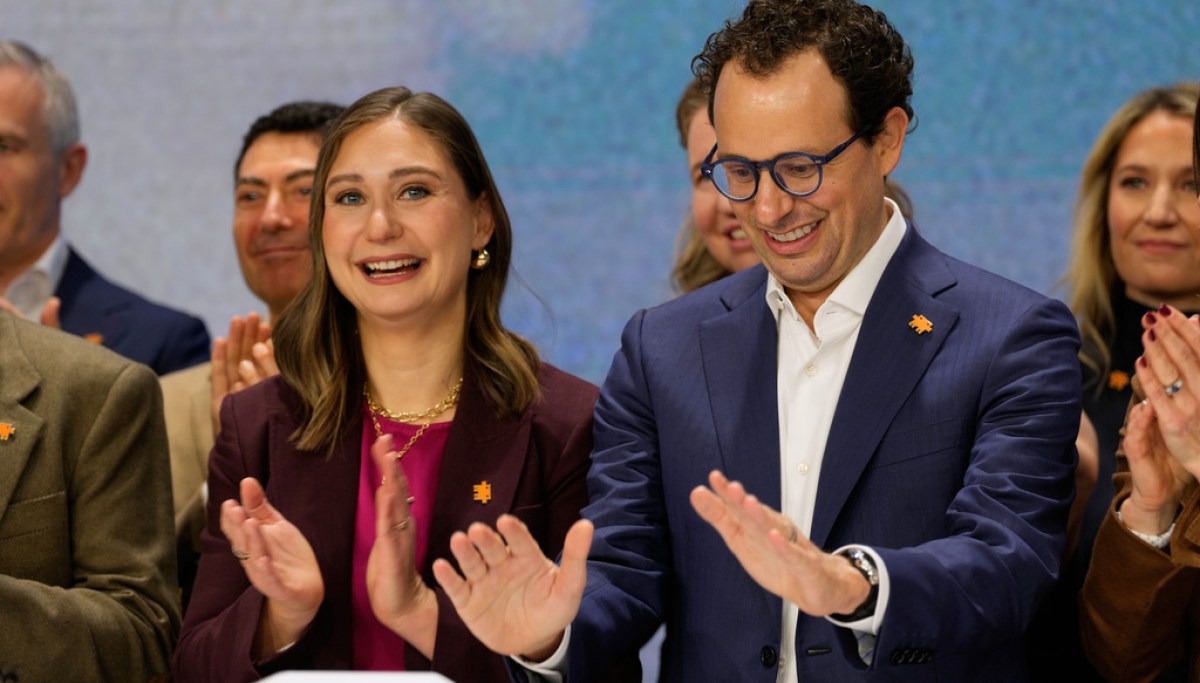
Meta’s chief AI officer is heralding a new era of superintelligence — one where humanity may no longer be in control — after an Anthropic researcher used Claude to crack a notoriously difficult math problem that has stumped experts for more than 150 years.
More than half of Anthropic employees — or 2,800 of the company’s workforce of 5,000 — will be worth at least $10 million, according to estimates by Hill.com.
The apparent outage comes with GTA 6 set to hit consoles at midnight Thursday.
Reuters could not immediately ascertain whether the code was successfully used in each case, or the extent of any resulting hacks.
Gábor Lukács, an air passenger rights advocate, told The Post that this type of situation would have been handled very differently in Europe. “It would be viewed as extraordinary circumstances, under the European or UK rules, passengers would still be owed meals and accommodations in addition to rebooking,” said Lukács. American Airlines is giving passengers until Wednesday to change flights, with new travel allowed through Nov. 21.
“I will invest more in other si companies.
Noting Microsoft’s alert system appeared not to work, Moussouris said: “Something really bad must have happened that the cascade was not only as long lasting, but they couldn’t recover.”
As the outage entered its second day — disrupting a wide range of Microsoft 365 services including Outlook, Teams and AI assistant Copilot — some users could still have “intermittent access issues or delayed email delivery as mitigation progresses across the remaining affected infrastructure,” Microsoft said.
Also by Emily Lang
Nothing else under this byline is closely related to this article, so these are simply their most recent.
All 32 articles by Emily Lang →

Topics

Anthropic Claude Los Alamos Meta the Clay Mathematics Institute

Subjects

Wang PERSON · 5× Alpöge PERSON · 2× Claude ORG · 2× Meta ORG · 2× Alexandr Wang PERSON · 1× Anthropic ORG · 1× Levent Alpöge PERSON · 1× Los Alamos GPE · 1× Riemann PERSON · 1× the Clay Mathematics Institute ORG · 1×

Narrative

“It is hard to overstate the magnitude of discovery that we have just witnessed completed with the help of an alien mind that we don’t understand,” Meta chief AI officer Alexandr Wang wrote Sunday on X, just days after the discovery, saying the solving of the Riemann hypothesis marked a significant breakthrough.
framing: assertive · carried by 1 article(s) · first seen 2026-11-24
Meta’s chief AI officer is heralding a new era of superintelligence — one where humanity may no longer be in control — after an Anthropic researcher used Claude to crack a notoriously difficult math problem that has stumped experts for more than 150 years.

Claims (15 extracted, 2 hedged)

Meta’s chief AI officer is heralding a new era of superintelligence — one where humanity may no longer be in control — after an Anthropic researcher used Claude to crack a notoriously difficult math problem that has stumped experts for more than 150 years. uncertain
that → herald → years
“It is hard to overstate the magnitude of discovery that we have just witnessed completed with the help of an alien mind that we don’t understand,” Meta chief AI officer Alexandr Wang wrote Sunday on X, just days after the discovery, saying the solving of the Riemann hypothesis marked a significant breakthrough. asserted
solving → overstate → breakthrough
The techie, who grew up in Los Alamos, NM, said many physicists would agree that the discovery of the atomic bomb “is a homework problem compared to the Riemann Hypothesis.” asserted
discovery → grow → Hypothesis
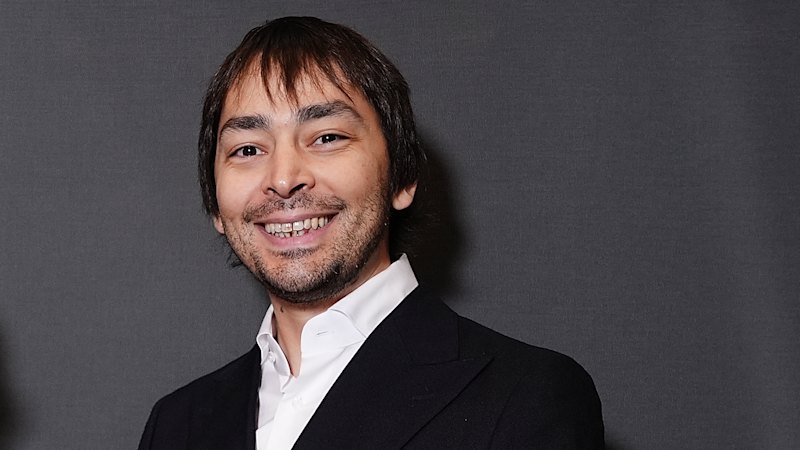
When Anthropic mathematician Levent Alpöge announced the proof on Friday, experts in the field were stunned. asserted
experts → announce → field
On Saturday, industry research groups certified the proof as correct, though the Clay Mathematics Institute still lists the hypothesis as unsolved. asserted
Institute → certify → hypothesis
“Claude far outpaced me near the finish line,” Alpöge wrote. asserted
Alpöge → outpace → line
“No, Claude flew, and danced, and sparkled near that finish line.” asserted
Claude → fly → line
Wang noted cause for concern, though. “It is equally hard to imagine a world where humanity maintains control with superintelligence that is 1,000x smarter and more capable than humans in every field,” he wrote. asserted
he → note → field
Wang traced the shift to December 2024, when OpenAI’s o3 model began acing the AIME math competition — problems he says are intellectually harder than most coding or business work. asserted
he → trace → work
The remaining gaps, he argued, are no longer due to intelligence but “domain-specific know-how, plumbing, and experimentation.” asserted
he → remain → intelligence
Wang said the implications have not fully set in across industries. asserted
implications → say → industries
“In the same way that the math community has not fully digested the proof of the Riemann Hypothesis, nearly every field could be accelerated at a pace beyond what humans can understand or monitor,” he wrote. uncertain
he → digest → what
Advertisement Alpöge’s proof exists only as 17 million lines of computer code, with no human-readable version yet; a written-out version would run more than 250,000 pages. Wang closed by calling for thoughtful progress during a crucial moment in the industry. asserted
Wang → exist → industry
He joined a number of tech execs calling for AI safety measures and touted Meta’s safety record, including delaying the launch of tis Muse agent for months. asserted
He → join → months
Advertisement Wang said CEO Mark Zuckerberg has called on labs to deploy the vast majority of compute toward serving people and customers rather than recursive self-improvement, in which AI gets better on its own. asserted
AI → say → own
Give feedback · no sign-in needed

No sign-in needed for now. Your note is sent without a name, so it cannot be answered.

History Support