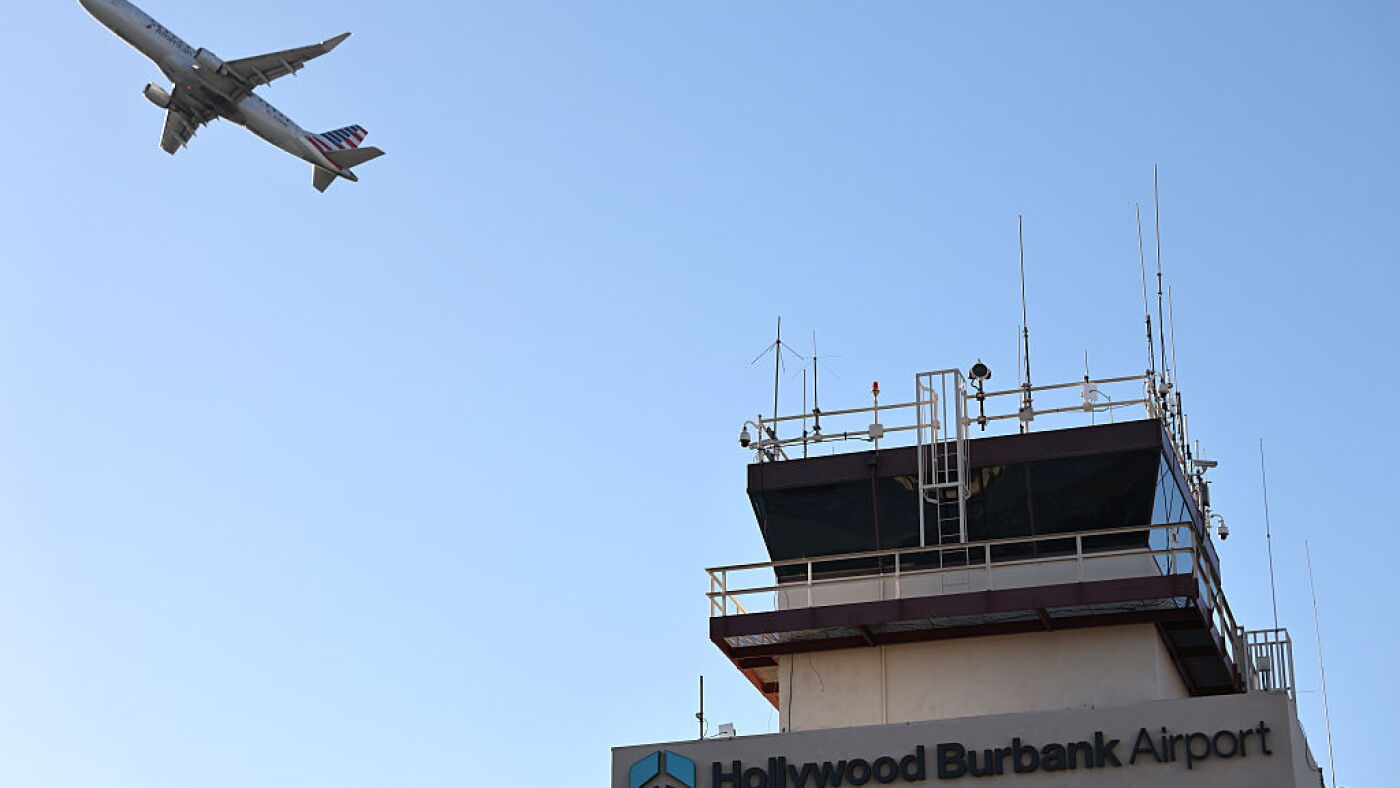
Photo via The Independent

AI-assisted air traffic control is coming to some of the nation’s busiest skies

Read the original at The Independent ↗
Cite

Fernández, J. (2026, September 18). AI-assisted air traffic control is coming to some of the nation’s busiest skies. The Independent. https://www.independent.co.uk/news/world/americas/ai-air-traffic-control-faa-b3052202.html

Dated when The Aporia collected the article, usually within hours of publication. Check the original for its exact date and byline.

The Independent · collected 2026-09-18 · by Jasmine Fernández

Quick Summary

Federal officials plan to introduce an AI-powered air traffic management system called Smart in the Washington, D.C., area starting Monday. Developed under a $875 million contract with Air Space Intelligence, Smart analyzes various data points to predict traffic flows and identify potential bottlenecks, aiming to reduce delays and cancellations during operational disruptions. The FAA sees this as part of broader efforts to modernize aging aviation infrastructure, though industry representatives have voiced concerns about coordination challenges in implementing the new system.
Written by AI on 2026-09-18, from this article's own text only (the story summary below draws on all the coverage).
See how they differ ↓

AI analysis

Story summary

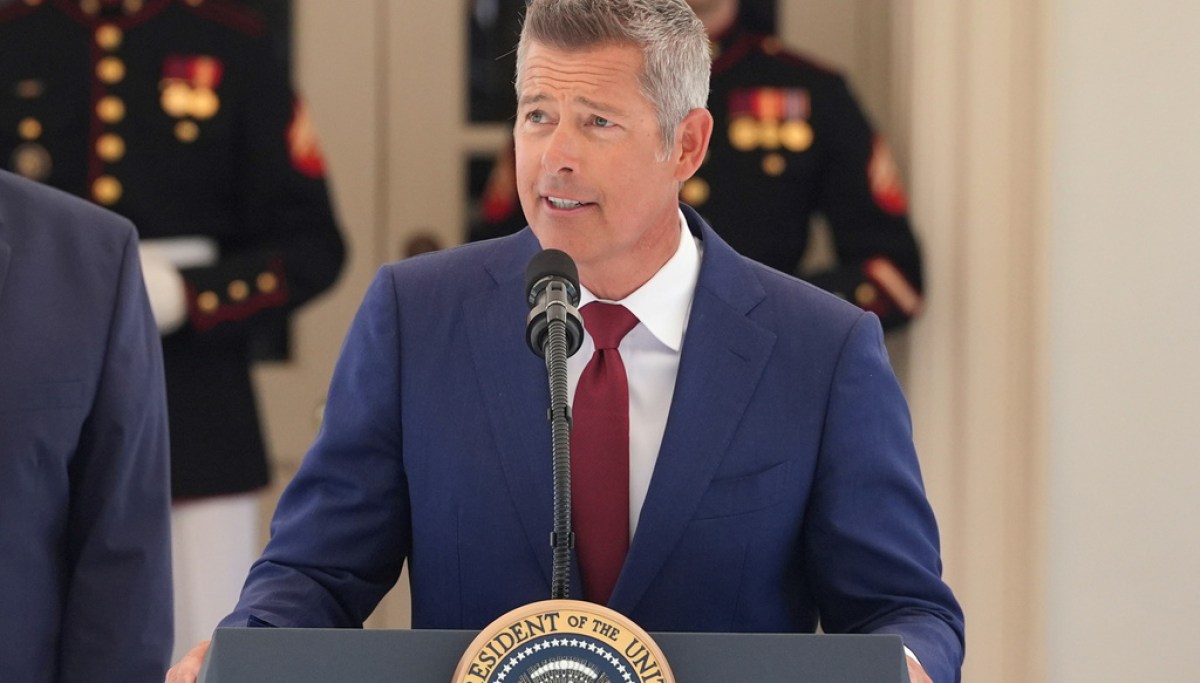
The Federal Aviation Administration (FAA) is launching an artificial intelligence-powered system called SMART, or Strategic Management of Airspace, Routes and Trajectories, in the Washington, D.C., area as early as Monday. Developed by Air Space Intelligence under a $875 million 12-year government contract, SMART aims to predict traffic flows and spot potential bottlenecks ahead of time by analyzing flight schedules, weather forecasts, airport runway capacity, and operational limits. Initially rolled out at three major airports serving Washington D.C., including Ronald Reagan Washington National Airport, the system will assist human air traffic controllers rather than replace them, according to Transportation Secretary Sean Duffy. Critics warn that SMART may not address bigger issues in the air traffic control system but FAA officials emphasize its role as a decision-support tool during disruptions to reduce delays and cancellations.

Written for “AI in Air Traffic Control” on 2026-11-20, grounded in this article and the 3 other(s) covering the same event.

How they differ

4 outlets covered “AI in Air Traffic Control”.

What each outlet says

One AI summary per outlet of its latest article on this story, written from that article alone and checked against it. Open the article for the outlet's own words.

The IndependentThis outlet18 Sep

Federal officials plan to introduce an AI-powered air traffic management system called Smart in the Washington, D.C., area starting Monday. Developed under a $875 million contract with Air Space Intelligence, Smart analyzes various data points to predict traffic flows and identify potential bottlenecks, aiming to reduce delays and cancellations during operational disruptions. The FAA sees this as part of broader…

AI-assisted air traffic control is coming to some of the nation’s busiest skies (this article)
NPR21 Sep

The Federal Aviation Administration has launched a $875 million project called SMART (Strategic Management of Airspace, Routes and Trajectories) aimed at using artificial intelligence to manage the nation's airspace more efficiently. The system will be rolled out initially in three major airports around Washington D.C., with hopes that it will reduce flight delays and stress on air traffic controllers while also…

Aviation regulators turn to AI to help manage the nation's airspace →
Washington Examiner21 Sep

Transportation Secretary Sean Duffy addressed concerns about AI in a new air traffic control system, emphasizing that human controllers remain in charge. On Thursday, Duffy and FAA Administrator Bryan Bedford unveiled the SMART technology at Washington-area airports, which uses AI to predict weather patterns and flight trajectories but does not replace human decision-making. Duffy assured reporters that while the…

Duffy addresses concerns of AI use in air traffic control: ‘Humans control the airspace’ →
CBS News26 Sep

The Federal Aviation Administration is implementing new air traffic control software that incorporates artificial intelligence for predictive purposes. According to a CBS News survey, over half of Americans express concern about AI models potentially acting independently to cause harm.

FAA rolls out new AI flight software →

Where they agree and split

The full story: what happened, how it changed, and all 4 articles →

Compared with similar articles

This article reads unscored and hedges 0% of its claims. Each row says how that neighbour differs.
NPR
Hedges 0 of 27 claims Outlet record 60/100
Toronto Star
Hedges 1 of 3 claims Outlet record 64/100
“The articles describe different events: one about an AI-assisted air traffic control system being launched in Washington D.C., and the other about proposed AI incident alerts discussed during talks with China.”
Al Jazeera
Hedges 4 of 55 claims Outlet record 60/100
“The articles discuss different topics related to AI in air traffic control and international relations, not the same specific incident.”
Washington Examiner
Hedges 0 of 17 claims Outlet record 67/100
“While both articles discuss the unveiling and implementation of an AI-powered air traffic control system, Article A focuses on the initial planning and development stages before Monday's launch, whereas Article B covers Transportation Secretary Duffy addressing concerns about the system after its rollout. They describe different parts of the same process.”
Noahpinion
Leans left Hedges 7 of 144 claims
“Article A describes a specific launch of an AI-assisted air traffic control system, while Article B is a general roundup mentioning AI in various contexts.”

Story

AI in Air Traffic Control
Technology · 4 article(s) covering the same event. Compare every outlet's account →
How this article was measured signals, leaning charts, publisher record, byline, topics and claims

Signals How these are calculated →

Claims extracted
17
sentences that state something as happening or true
Uncertain
0%
0 of 17 hedged ("reportedly", "may", "according to")
Leaning
not political
takes no side on a contested political question
Publisher signals
59/100
The Independent's corrections and hedging, across everything collected from it. Not a measure of accuracy.
Outlets on this story
4
Technology
Same framing elsewhere
1
articles that frame the event the way this one does
Analyzed 2026-09-18 · how these are computed

How this is being covered How these are calculated →

Article leaning vs. publisher reliability
Source leaning vs. consistency

Publisher

The Independent · 4711 article(s) · 10 correction(s) detected
Running correction rate · 10 correction(s)

Who wrote this

Jasmine Fernández
114 article(s) here · 1 carrying a prediction
“So, why might he be saying now he’s not that way?”
Prediction market platform Kalshi has reportedly stopped offering contracts that allow users to wager on what President Donald Trump will say during public appearances, following a federal regulatory order over concerns that the markets could be manipulated.
In his Truth Social post, Trump argued the overhaul would attract major tournaments like the U.S. Open and Ryder Cup, and promised a 50 percent discount on rates for Washington-area residents.
“It is inevitable, with all of the value that he’s created and his role commonly accepted as the godfather of AI, that he will have a second act,” an anonymous executive at a prominent California startup told Politico.
Pennsylvania Sen. John Fetterman signaled that he would consider quitting the Democratic Party if the caucus elected Maryland Sen. Chris Van Hollen as majority leader, citing disagreements over U.S. policy toward Israel.
“I did not know at that time where He would send me.
“While officers searched on the ground, the drones checked several locations the boy was known to frequent or may have traveled to,” St. Louis Police Department said.
2026-11-14 · assertive framing · Called 911? A drone may now be the first response
President Donald Trump said he would consider ordering a military campaign against Cuba before the end of his term, even as his administration pulls back from diplomatic talks over the war with Iran following recent midterm election losses.
Conservative commentator Ben Shapiro said Thursday on Sean Hannity’s “Hang Out” podcast that Democrats would seek to deliberately weaken the U.S. economy over the next two years in an effort to hurt President Donald Trump politically.
"Based on the severity of the coyote’s injuries and significant blood loss, officers believed the animal would not survive.
Also by Jasmine Fernández
Nothing else under this byline is closely related to this article, so these are simply their most recent.
All 114 articles by Jasmine Fernández →

Topics

D.C. FAA Smart The Wall Street Journal Washington

Subjects

FAA ORG · 4× The Wall Street Journal ORG · 2× Air Space Intelligence ORG · 1× D.C. GPE · 1× Senate ORG · 1× U.S. GPE · 1× Washington GPE · 1× the Federal Aviation Administration ORG · 1× the Transportation Department’s ORG · 1× the Trump administration ORG · 1×

Narrative

The software — known as Smart, or Strategic Management of Airspace, Routes and Trajectories — is designed to analyze flight schedules, weather forecasts, airport runway capacity and operational limits to predict traffic flows and spot potential bottlenecks ahead of time.
framing: assertive · carried by 1 article(s) · first seen 2026-09-18
The software — known as Smart, or Strategic Management of Airspace, Routes and Trajectories — is designed to analyze flight schedules, weather forecasts, airport runway capacity and operational limits to predict traffic flows and spot potential bottlenecks ahead of time.

Claims (17 extracted, 0 hedged)

Federal officials plan to launch an artificial intelligence-powered system in the Washington, D.C., area as early as Monday, the first step in a broader push to modernize U.S. air traffic management. asserted
officials → plan → management
The software — known as Smart, or Strategic Management of Airspace, Routes and Trajectories — is designed to analyze flight schedules, weather forecasts, airport runway capacity and operational limits to predict traffic flows and spot potential bottlenecks ahead of time. asserted
software → know → time
Developed by Air Space Intelligence under an $875 million, 12-year government contract awarded earlier this year, the tool is intended to function as a central intelligence center for the nation’s airspace once fully operational, as reported by The Wall Street Journal. asserted
tool → develop → Journal
The primary goal is to help the Federal Aviation Administration and major carriers navigate schedule disruptions, cutting down on delays and cancellations. asserted
Administration → help → delays
Though industry insiders previously anticipated a broader initial release after months of planning, government officials told the publication that the rollout was always meant to begin on a limited scale. asserted
rollout → anticipate → scale
In its current phase, Smart will serve as a decision-support tool during operational disruptions. asserted
Smart → serve → disruptions
Future iterations are expected to handle complex tasks, such as managing flight arrival intervals and mapping out routes days in advance. asserted
iterations → expect → advance
As part of the launch, federal authorities plan to open a centralized office for the program at the Transportation Department’s headquarters on Monday. asserted
authorities → plan → Monday
The initiative comes amid a broader push by the Trump administration to modernize the country’s aging aviation infrastructure through multi-billion-dollar technology investments and expanded controller hiring to address persistent staffing shortages. asserted
initiative → come → shortages
However, the transition presents coordination challenges. asserted
transition → present → challenges
The FAA has been holding talks with commercial carriers regarding schedule alignment, though industry representatives have raised concerns over how the automated system will operate amid intense market competition for peak flight slots. asserted
system → hold → slots
During Senate testimony earlier this year, FAA Administrator Bryan Bedford addressed the need for structural change in airspace management. asserted
Bedford → address → management
“The way we manage traffic today is chaotic, and we can do better,” Bedford said. asserted
Bedford → manage → traffic
“We need to manage that at the FAA, rather than rely on commercial airlines to simply schedule however they want.” asserted
they → need → airlines
Despite operational questions, industry advocates have welcomed the technology. asserted
advocates → welcome → technology
Airlines for America, a trade association representing major domestic carriers, told The Wall Street Journal that the software offered significant potential to boost safety, expand airspace capacity and enhance overall efficiency. asserted
software → represent → efficiency
The organization described the project as “one of the most exciting and bold initiatives taken on by the FAA in decades.” asserted
organization → describe → decades
Give feedback · no sign-in needed

No sign-in needed for now. Your note is sent without a name, so it cannot be answered.

History Support