Photo via ABC News (AU)

What to expect from Victoria's upper house after election day

Read the original at ABC News (AU) ↗
Cite

Briggs, C. (2026, November 24). What to expect from Victoria's upper house after election day. ABC News (AU). https://www.abc.net.au/news/2026-11-24/what-victorian-upper-house-will-look-like-after-state-election/107419706

Dated from the outlet's own feed. Check the original for its byline.

ABC News (AU) · collected 2026-11-24 · by Casey Briggs

Quick Summary

Victoria's upcoming election is expected to bring significant changes to the state's upper house, the Legislative Council, due to reforms abolishing group voting tickets and requiring voters to number at least five boxes. This shift is anticipated to lead to a high turnover of members and limit the chances of minor parties securing seats. The upper house plays a crucial role in reviewing legislation, and the new voting system will likely result in a more divided chamber, making it harder for any single party to control the council.
Written by AI on 2026-11-24, from this article's own text only (the story summary below draws on all the coverage).

AI analysis

Story summary

In the upcoming Victorian election, the upper house, known as the Legislative Council, is set for significant changes. The Legislative Council, similar to the federal Senate, acts as a "house of review" and must approve all bills before they become law. However, it cannot bring down the government by blocking its budget. Due to recent electoral system changes and current polling, a large number of new members and the defeat of existing ones are expected. Voters must now number at least five boxes on their ballots, instead of just one previously. This election is crucial as it will determine the composition of the Legislative Council and influence the negotiation process for future legislation.

Written for “Victoria's Upper House After Election Day” on 2026-11-27, grounded in this article and the 0 other(s) covering the same event.

Compared with similar articles

This article reads unscored and hedges 12% of its claims. Each row says how that neighbour differs.
ABC News (AU)
Hedges 11 of 43 claims Outlet record 66/100
“The articles discuss different aspects of the upcoming Victorian election, not the same specific event or incident.”
Daily Mail
Leans right Hedges 7 of 28 claims Outlet record 68/100
“The articles discuss different aspects of the Victorian election and do not describe the same specific event or incident.”
The Sydney Morning Herald
Hedges 2 of 3 claims Outlet record 61/100
“The articles discuss the Victorian election but focus on different aspects and are published on different dates.”
The Sydney Morning Herald
Leans strongly right Hedges 6 of 45 claims Outlet record 61/100
“The articles discuss the political situation and expected outcomes of the upcoming election in Victoria but do not describe the same specific event or incident.”
The Sydney Morning Herald
Hedges 0 of 3 claims Outlet record 61/100
“The articles discuss the upcoming election in Victoria but do not describe the same specific event or incident.”

Story

Victoria's Upper House After Election Day
Politics · 1 article(s) covering the same event.
How this article was measured signals, leaning charts, publisher record, byline, topics and claims

Signals How these are calculated →

Claims extracted
33
sentences that state something as happening or true
Uncertain
12%
4 of 33 hedged ("reportedly", "may", "according to")
Leaning
not political
takes no side on a contested political question
Publisher signals
66/100
ABC News (AU)'s corrections and hedging, across everything collected from it. Not a measure of accuracy.
Outlets on this story
1
Politics
Same framing elsewhere
1
articles that frame the event the way this one does
Analyzed 2026-11-24 · how these are computed

How this is being covered How these are calculated →

Article leaning vs. publisher reliability
Source leaning vs. consistency

Publisher

ABC News (AU) · 6762 article(s) · 14 correction(s) detected
Running correction rate · 14 correction(s)

Who wrote this

Casey Briggs
8 article(s) here · 1 carrying a prediction
It's trying to improve on that result this week, and the party's rise is the main reason that whoever wins the looming Victorian election will likely win it with a record low primary vote in the state.
The 88 electorates in Victoria's lower house always get more attention during election campaigns, because those are the races that will determine who governs the state for the next four years.
With Victorian Labor's vote apparently set to sink to record lows, and a growing appetite among voters for minor parties and independents, it stands to reason that the Greens should be hopeful of making some gains in the state parliament in this month's election.
The big question hanging over the election for most of this year was whether anyone could win it outright and govern in majority.
All 435 seats in the House are up for election, and Democrats would need a net gain of three, compared to the 2024 election result, to take control there.
With One Nation support nationally now roughly quadruple that result, you would expect its support in Capricornia to be well north of 30 per cent, perhaps even higher than 40 per cent.
At the time of that election, strategists wondered if Trump had catalysed a political realignment in the country that would continue to work in Republicans' favour.
Much has been written about the rise of Pauline Hanson's movement in the past 12 months, and this election will give us our best look yet at the decline in the two-party system that has dominated Australian politics since World War II.
Also by Casey Briggs
Nothing else under this byline is closely related to this article, so these are simply their most recent.
All 8 articles by Casey Briggs →

Topics

Legislative Council Melbourne Senate Victoria the Legislative Council

Subjects

Victoria GPE · 4× Labor ORG · 2× Legislative Council ORG · 2× Senate ORG · 2× the Legislative Council ORG · 2× Australia GPE · 1× Melbourne ORG · 1× Rob Barton PERSON · 1× non-Greens NORP · 1× the Transport Matters Party ORG · 1×

Narrative

Counting for the upper house regions starts on election night, but it will be slower to report than the lower house. The Legislative Assembly is counted first because that's where government is formed, and the upper house ballots also take longer to count because they are larger and more complicated. We should get a sense of how parties have performed on election night, and within a day or two we'll likely know who the winners are in most seats.
framing: assertive · carried by 1 article(s) · first seen 2026-11-24
The 88 electorates in Victoria's lower house always get more attention during election campaigns, because those are the races that will determine who governs the state for the next four years.
2026-11-24 · ABC News (AU)
What to expect from Victoria's upper house after election day · assertive framing

Claims (33 extracted, 4 hedged)

The 88 electorates in Victoria's lower house always get more attention during election campaigns, because those are the races that will determine who governs the state for the next four years. asserted
who → get → years
But changes to the state's electoral system and current opinion polling mean the powerful upper house is set for a massive shake-up this year. asserted
house → mean → up
Voters will also need to change the way they vote, and number at least five boxes rather than just one as they could previously. uncertain
they → need → boxes
Here is everything you need to know about the Legislative Council election, and how to ensure your vote counts. asserted
vote → need → election
The Legislative Council operates much like the federal Senate, as a so-called "house of review". asserted
Council → operate → review
It can't bring down a government by blocking its budget, but every bill has to pass through the upper house before it can become a law, and it is rare for a government to have sole control of the chamber. asserted
government → bring → chamber
Unless the polls are very, very wrong, that will be the case this election too, and so the next government is going to have to negotiate its legislation through a divided chamber. asserted
government → go → chamber
There are 40 members, with five of them elected in each of the eight upper house regions. asserted
five → be → regions
Five of the regions are in Melbourne, and the other three primarily cover regional Victoria. asserted
three → cover → Victoria
What's changed this year? asserted
What → change → ?
In the final sitting weeks of this year, the government passed legislation that will dramatically change how upper house elections are counted, and winners are determined. asserted
winners → pass → legislation
Victoria was the last state in Australia still using group voting tickets, but these have now been abolished. asserted
these → use → tickets
This was the system that saw the vast majority of voters handing the decision about where their preferences flowed in the upper house to the party they gave their first preference too. asserted
they → see → preference
Parties lodged group voting tickets that determined where your vote went if they got excluded, and over many elections we saw micro-parties register and team up to take advantage of this system and harvest preferences. asserted
parties → lodge → preferences
This harvesting saw MLCs elected to parliament like Rob Barton of the Transport Matters Party, who won a seat in 2018 after polling just 0.6 per cent. asserted
who → see → cent
It is hard to believe he would have been elected if voters had chosen their own preferences. asserted
voters → believe → preferences
With group voting tickets gone, voters are in full control of where their ballot flows, and candidates will be much less likely to be elected from minuscule primary votes. asserted
candidates → go → votes
It means most of the current non-Greens crossbenchers will likely struggle to retain their seats, including Georgie Purcell from the Animal Justice Party and David Limbrick from the Libertarian Party. asserted
most → mean → Party
How do I vote? Instead of just voting '1' for a single party above the line, you should number at least five parties above the line or five candidates below the line. asserted
you → vote → line
You can number as many boxes as you like beyond that, but you should keep your numbering either solely above the line or solely below the line. asserted
you → number → line
This is very similar to the same requirement in a Senate election, except that in federal elections you are instructed to number at least six boxes above the line. asserted
you → instruct → line
What does it mean for Victoria's next parliament? asserted
it → mean → parliament
With One Nation currently polling around 10 times higher than its 2022 upper house result statewide, expect the party to gain significant influence regardless of what happens in the Legislative Assembly. One Nation's only current Legislative Councillor Rikkie-Lee Tyrrell is likely to be re-elected, and she should be joined by a member from each of the other seven regions as well. asserted
she → poll → regions
There are some regions where One Nation could be in contention to win two of the five seats. uncertain
Nation → be → seats
Some of these gains will come at the expense of current crossbench parties, but Labor also seems likely to lose some ground in the upper house this year. asserted
Labor → come → house
Four years ago, Labor won two Legislative Council seats in every region except Northern Victoria. asserted
Labor → win → Victoria
But this year, several of those seats appear at risk, and we have seen a number of Labor MLCs shifting to contest new regions this year to improve their chances of re-election. asserted
number → appear → election
The Liberals will be hoping to find some gains in regions like Northern Metropolitan or South-Eastern Metropolitan, while the Greens will be hoping to build on the four seats they won last election, including in Melbourne's western and south-eastern suburbs. asserted
they → hop → suburbs
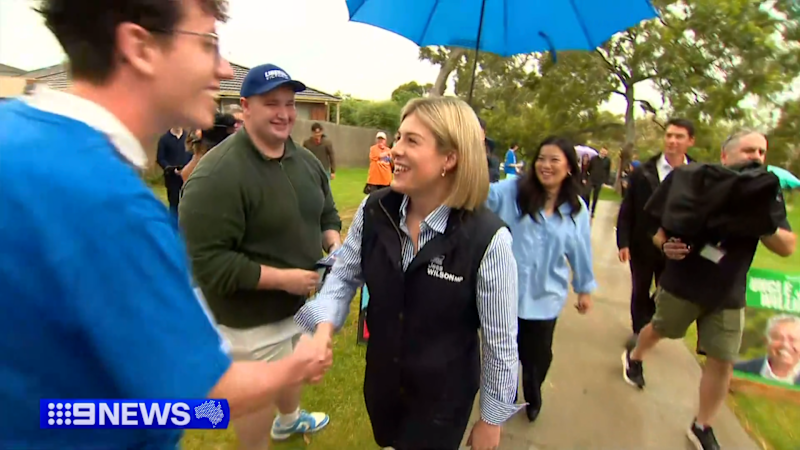
It means that if, as is now widely expected, the Coalition led by Jess Wilson ends up forming government, it is very likely that the next government will have two or three different ways to get legislation passed, by working with Labor, One Nation, or the Greens. asserted
legislation → mean → Labor
When will we know the upper house results? asserted
we → know → results
Counting for the upper house regions starts on election night, but it will be slower to report than the lower house. The Legislative Assembly is counted first because that's where government is formed, and the upper house ballots also take longer to count because they are larger and more complicated. We should get a sense of how parties have performed on election night, and within a day or two we'll likely know who the winners are in most seats. asserted
winners → start → seats
But the winners of the fifth and final seat in each region could be much harder to determine. uncertain
winners → determine → region
We may be waiting a couple of weeks for the distribution of preferences to occur in some or all of those final eight positions. uncertain
distribution → wait → positions

Give feedback · no sign-in needed

No sign-in needed for now. Your note is sent without a name, so it cannot be answered.

History Support