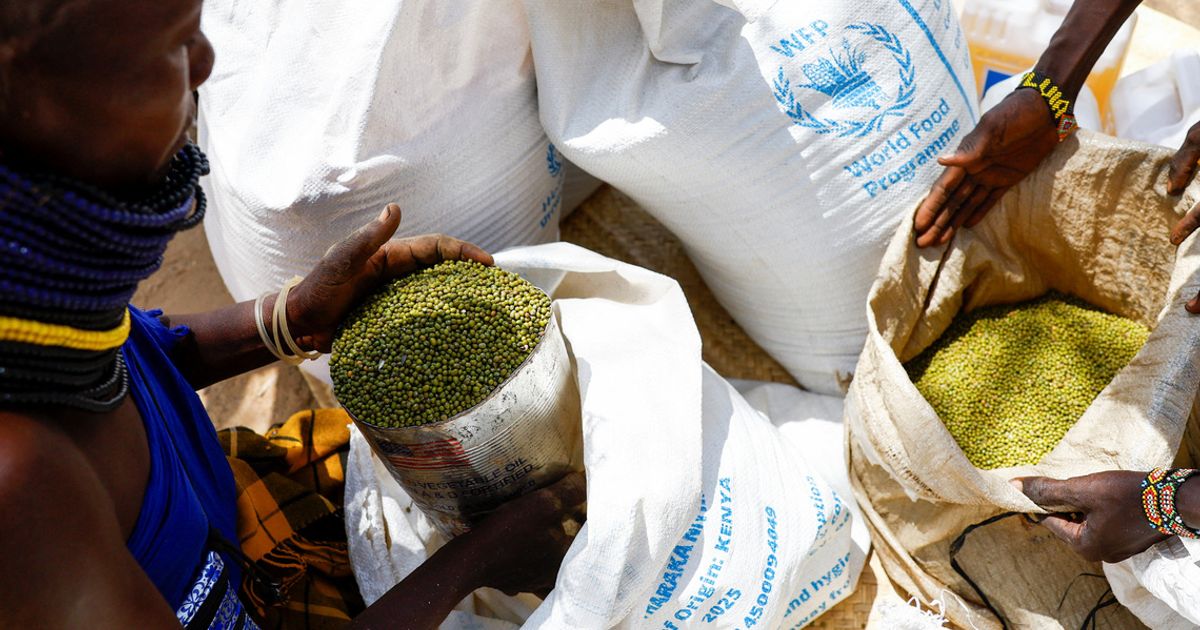
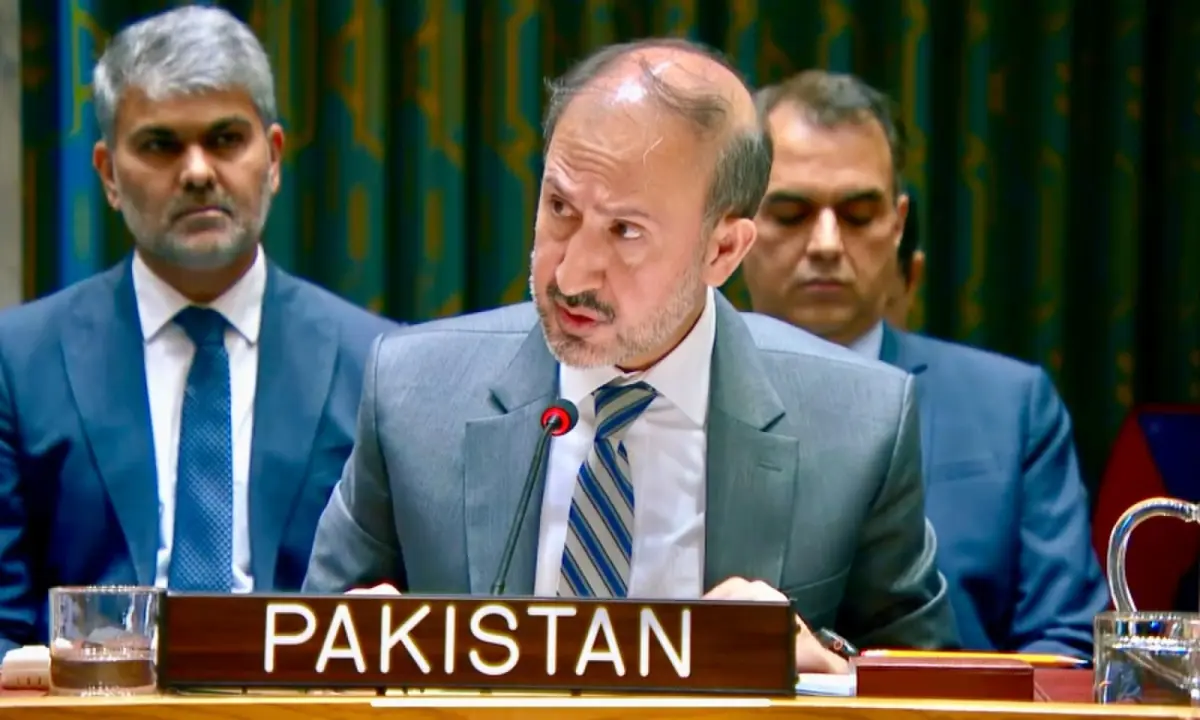
Photo via Al Jazeera

Wars choke global food routes, threatening aid for 7.3 million, WFP warns

Read the original at Al Jazeera ↗
Cite

Habib, H. (2026, November 24). Wars choke global food routes, threatening aid for 7.3 million, WFP warns. Al Jazeera. https://www.aljazeera.com/news/2026/11/24/wars-choke-global-food-routes-threatening-aid-for-7-3-million-wfp-warns?traffic_source=rss

Dated from the outlet's own feed. Check the original for its byline.

Al Jazeera · collected 2026-11-24 · by Heba Habib

Quick Summary

WFP Executive Director Luke Lindberg warned the UN Security Council that disruptions in three key trade routes—the Strait of Hormuz, the Bab al-Mandeb, and the Black Sea—are causing significant food supply issues. These disruptions, combined with conflicts and climate shocks, could cost the WFP an additional $727 million by mid-2027, putting aid for 7.3 million people at risk. Lindberg emphasized that this is a political issue rather than a shortage of food production, urging member states to prevent further famines and attacks on humanitarian efforts.
Written by AI on 2026-11-24, from this article's own text only (the story summary below draws on all the coverage).
See how they differ ↓

AI analysis

Story summary

On November 23, 2026, World Food Programme (WFP) Executive Director Luke Lindberg warned at the UN Security Council that shipping chokepoints linked to wars in the Middle East and Ukraine could raise the agency’s costs by US$727 million by mid-2027, threatening food aid for 7.3 million more people. Lindberg, appointed by US President Donald Trump in September, highlighted the impact of conflicts and climate shocks like El Niño on food exports and farming inputs through strategic straits including the Strait of Hormuz, Bab el-Mandeb, and the Black Sea. He stressed the urgency of resolving the situation in the Black Sea, crucial for countries like Somalia and Yemen, which imports 90% of its food. Currently, about 10 million tonnes of Russian and Ukrainian wheat are at risk of failing to reach global markets, enough to feed an estimated 44 million people.

Written for “Wars Jeopardize Food Aid” on 2026-11-25, grounded in this article and the 2 other(s) covering the same event.

How they differ

2 outlets covered “Wars Jeopardize Food Aid”.

What each outlet says

One AI summary per outlet of its latest article on this story, written from that article alone and checked against it. Open the article for the outlet's own words.

Al JazeeraThis outlet24 Nov

WFP Executive Director Luke Lindberg warned the UN Security Council that disruptions in three key trade routes—the Strait of Hormuz, the Bab al-Mandeb, and the Black Sea—are causing significant food supply issues. These disruptions, combined with conflicts and climate shocks, could cost the WFP an additional $727 million by mid-2027, putting aid for 7.3 million people at risk. Lindberg emphasized that this is a…

Wars choke global food routes, threatening aid for 7.3 million, WFP warns (this article)
The Straits Times24 Nov

On November 23, the World Food Programme’s executive director, Luke Lindberg, warned at the UN Security Council that ongoing conflicts in the Middle East and Ukraine could increase the WFP’s costs by $727 million by mid-2027, potentially leaving 7.3 million more people without food aid. Lindberg emphasized the need for a new humanitarian corridor in the Black Sea to ensure the safe export of grain, similar to the…

UN food agency chief warns wars jeopardise food aid for 7.3 million more people →2 articles from The Straits Times on this story

Compared with similar articles

This article reads unscored and hedges 8% of its claims. Each row says how that neighbour differs.
The Straits Times
Leans left Hedges 2 of 11 claims Outlet record 64/100
The Straits Times
Hedges 5 of 26 claims Outlet record 64/100
Dawn
Leans left Hedges 4 of 22 claims Outlet record 64/100
“While both articles discuss disruptions to global energy and food supplies due to conflicts, they describe different specific events with distinct speakers and focuses.”

Story

Wars Jeopardize Food Aid
Politics · 3 article(s) covering the same event. See how they differ ↑
How this article was measured signals, leaning charts, publisher record, byline, topics and claims

Signals How these are calculated →

Claims extracted
13
sentences that state something as happening or true
Uncertain
8%
1 of 13 hedged ("reportedly", "may", "according to")
Leaning
withheld
no quote in the article backed the model's score
Publisher signals
60/100
Al Jazeera's corrections and hedging, across everything collected from it. Not a measure of accuracy.
Outlets on this story
3
Politics
Same framing elsewhere
1
articles that frame the event the way this one does
Analyzed 2026-11-24 · how these are computed

How this is being covered How these are calculated →

Article leaning vs. publisher reliability
Source leaning vs. consistency

Publisher

Al Jazeera · 6609 article(s) · 4 correction(s) detected
Running correction rate · 4 correction(s)

Who wrote this

Heba Habib
18 article(s) here · 1 carrying a prediction
The senior official told Reuters that the new duties would not be added on top of the forced labour tariffs.
United States President Donald Trump says he will meet Senator-elect Abdul El-Sayed to discuss the Democrat’s push for a single, low-cost government health insurance programme, which El-Sayed has suggested renaming “Trumpcare”.
About 10 million tonnes of Russian and Ukrainian wheat could fail to reach global markets, enough to feed an estimated 44 million people.
Recommended Stories list of 3 items- list 1 of 3California files lawsuit against OpenAI alleging lack of proper safeguards - list 2 of 3AI models abandon climate facts to please users, UNESCO report finds - list 3 of 3China’s DeepSeek unveils latest models a year after upending global tech If his claim holds up, the proof he says he has would settle a question that has defeated mathematicians for 167 years.
Poland’s government says it may have been hit by two missiles and a jet-powered drone.
But on Tuesday, it was clear that even if the “official” Dan Sullivan had received all the votes of his namesake, he would not have gained enough to beat Peltola.
Could Iran build one?
Earlier last week, he said the war was “militarily … effectively over”, though he added that he “would not hesitate” to resume strikes if diplomacy failed.
The government is asking households in England and Wales to make sure they would be able to cope on their own for 72 hours if electricity, water, phone and internet services all fail in the event of a national emergency.
Here is what we know about the outage, what caused it and when services might return.
2026-11-13 · assertive framing · Microsoft hit by global outages: What happened and why?
Also by Heba Habib
Nothing else under this byline is closely related to this article, so these are simply their most recent.
All 18 articles by Heba Habib →

Topics

Somalia Sudan WFP the United Nations Security Council the World Food Programme

Subjects

WFP ORG · 4× Lindberg PERSON · 3× Somalia GPE · 2× Sudan GPE · 2× 3Latvian NORP · 1× Luke Lindberg PERSON · 1× New York GPE · 1× Russia GPE · 1× the United Nations Security Council ORG · 1× the World Food Programme ORG · 1×

Narrative

Recommended Stories list of 3 items- list 1 of 3Grain under fire: Black Sea attacks threaten global food supplies - list 2 of 3Global food security is under threat - list 3 of 3Latvian farmers protest over ‘blood grain’ trade with Russia “Combined with a surge in conflicts and climate shocks like El Nino, the effect on food production and prices has been very real,” he said.
framing: assertive · carried by 1 article(s) · first seen 2026-11-24
About 10 million tonnes of Russian and Ukrainian wheat could fail to reach global markets, enough to feed an estimated 44 million people.

Claims (13 extracted, 1 hedged)

The head of the World Food Programme (WFP) has warned that disruption to three critical trade routes is pushing up food and humanitarian costs, threatening assistance to millions of people. asserted
disruption → warn → people
Addressing the United Nations Security Council in New York on Monday, WFP Executive Director Luke Lindberg said a “triple chokepoint” in the Strait of Hormuz, the Bab al-Mandeb and the Black Sea had “dramatically tightened the supply of food exports and farming inputs”. asserted
chokepoint → address → exports
Recommended Stories list of 3 items- list 1 of 3Grain under fire: Black Sea attacks threaten global food supplies - list 2 of 3Global food security is under threat - list 3 of 3Latvian farmers protest over ‘blood grain’ trade with Russia “Combined with a surge in conflicts and climate shocks like El Nino, the effect on food production and prices has been very real,” he said. asserted
he → threaten → production
If current conditions persist, the agency expects $727m in additional costs by mid-2027, potentially putting assistance for 7.3 million people at risk. “This is taking money straight out of WFP’s operations, directly translating into less food for fewer families,” Lindberg said. asserted
Lindberg → persist → families
The warning comes as 266 million people worldwide face acute hunger, with a risk of famine in parts of Sudan, South Sudan and Somalia. asserted
people → come → Sudan
About 30 percent of global fertiliser supplies pass through the Strait of Hormuz. asserted
percent → pass → Hormuz
The Black Sea is a key source of grain for countries including Somalia and Yemen, which imports 90 percent of its food. asserted
which → include → food
By mid-October, 63 percent fewer wheat and maize vessels were moving through the Bosphorus than a year earlier, the WFP said. asserted
WFP → move → Bosphorus
About 10 million tonnes of Russian and Ukrainian wheat could fail to reach global markets, enough to feed an estimated 44 million people. uncertain
tonnes → fail → people
It is a political problem,” Lindberg said. asserted
Lindberg → say → ?
“Grain is available, but it is not reaching the people who need it.” asserted
who → reach → it
In Sudan, the cost of a basic diet has risen by 130 percent since February. asserted
cost → rise → February
Lindberg urged member states to commit to three “red lines”: no more famines, no more weaponisation of food and no more attacks on humanitarians. asserted
Lindberg → urge → humanitarians
Give feedback · no sign-in needed

No sign-in needed for now. Your note is sent without a name, so it cannot be answered.

History Support