Photo via Times of India

20,000 fake accounts, campaign cash: How China is 'targeting' Taiwan elections

Read the original at Times of India ↗
Cite

Jha, A. (2026, November 24). 20,000 fake accounts, campaign cash: How China is 'targeting' Taiwan elections. Times of India. https://timesofindia.indiatimes.com/world/rest-of-world/20000-fake-accounts-campaign-cash-how-china-is-targeting-taiwan-elections/articleshow/136125325.cms

Dated from the outlet's own feed. Check the original for its byline.

Times of India · collected 2026-11-24 · by Aastha Jha

Quick Summary

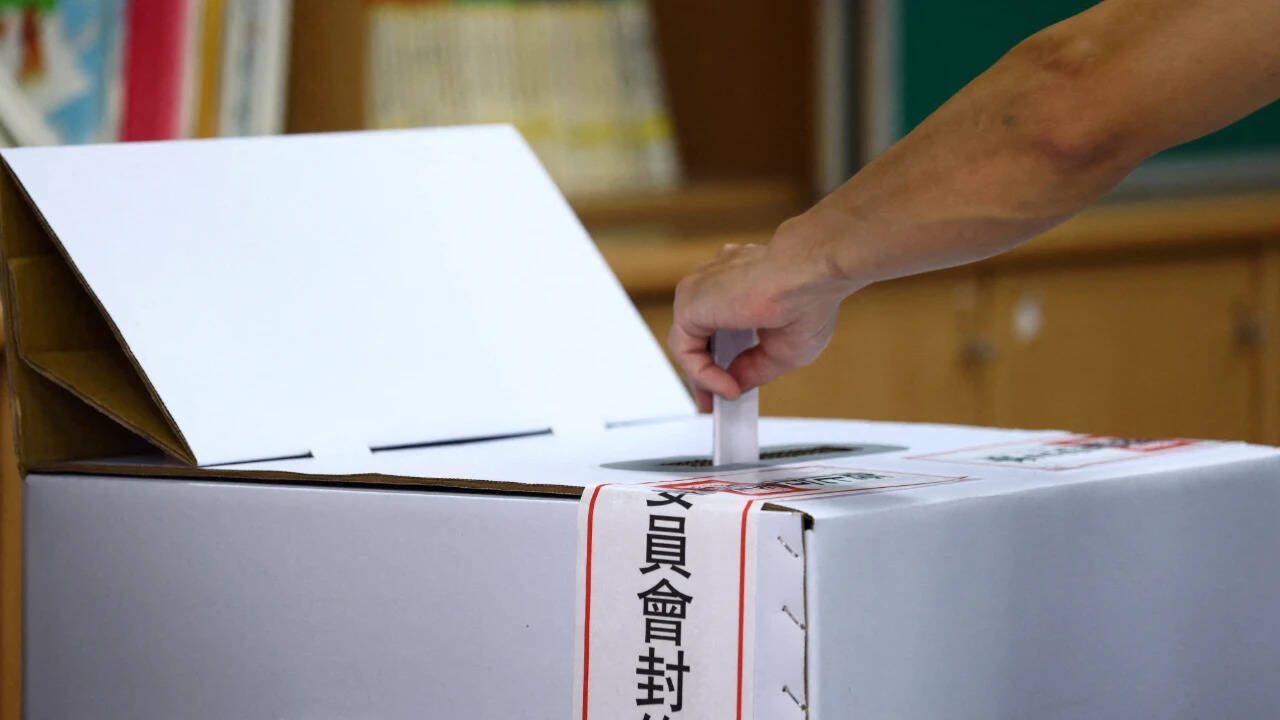
Taiwan’s mainland affairs council deputy minister Shen Yu-chung reported on Monday that China is using sophisticated methods, including fake social media accounts and AI technology, to interfere in Taiwan’s elections. The Taipei Times reported an indictment of a Taoyuan city council candidate, Chou Hsiao-yun, for allegedly accepting Chinese funding and creating about 20,000 fake social media accounts. Shen warned that China’s interference tactics have become more advanced, extending to cognitive warfare and the use of surveillance technology, posing a significant threat to Taiwan’s democratic institutions.
Written by AI on 2026-11-24, from this article's own text only (the story summary below draws on all the coverage).

AI analysis

Story summary

Taiwan's mainland affairs council deputy minister Shen Yu-chung has alleged that China is using sophisticated tactics, including fake social media accounts and artificial intelligence, to interfere in Taiwan's electoral process. On Monday, Shen stated that Taiwan's national security agencies have evidence of underground betting operations linked to electoral financing. A Taoyuan city council candidate, Chou Hsiao-yun, was indicted on Friday for allegedly accepting Chinese campaign funding and collecting photographs of Taiwanese citizens to create about 20,000 fake social media accounts. Prosecutors allege that these actions violate Taiwan's Anti-Infiltration Act. Shen warned that Beijing's interference tactics are becoming more advanced, potentially involving the use of personal information and surveillance data to undermine Taiwan's democracy.
Written for “China Targeting Taiwan Elections” on 2026-11-26, grounded in this article and the 0 other(s) covering the same event.

Compared with similar articles

This article reads leans strongly right and hedges 42% of its claims. Each row says how that neighbour differs.
Deutsche Welle
Leans left further left than this Hedges 13 of 42 claims Outlet record 95/100
“The articles discuss different aspects of interference in Taiwan's elections; one focuses on fake accounts and campaign funding, while the other addresses deepfakes and misinformation claims.”
BBC News
Leans strongly left further left than this Hedges 8 of 38 claims Outlet record 65/100
“The articles discuss similar themes of Chinese interference in Taiwan's elections but cover different specific incidents and aspects of the broader issue.”

Story

China Targeting Taiwan Elections
Politics · 1 article(s) covering the same event.
How this article was measured signals, leaning charts, publisher record, byline, topics and claims

Signals How these are calculated →

Claims extracted
12
sentences that state something as happening or true
Uncertain
42%
5 of 12 hedged ("reportedly", "may", "according to")
Leaning
Leans strongly right
of the writing, not the subject · beta estimate
Publisher signals
58/100
Times of India's corrections and hedging, across everything collected from it. Not a measure of accuracy.
Outlets on this story
1
Politics
Same framing elsewhere
1
articles that frame the event the way this one does
Analyzed 2026-11-24 · how these are computed

How this is being covered How these are calculated →

Article leaning vs. publisher reliability
Source leaning vs. consistency

Publisher

Times of India · 5919 article(s) · 9 correction(s) detected
Running correction rate · 9 correction(s)

Who wrote this

Aastha Jha
34 article(s) here · 1 carrying a prediction
How could the law have been used The 1950 law has historically been used to mobilise private companies to supply the military during wars or national emergencies.
He warned that Beijing could potentially use such technologies to collect personal information and surveillance data on Taiwanese citizens.
Applicants may be asked to prepare research reports for the companies without knowing who is commissioning the work.
Denmark will propose a ban on mobile phones and other private internet-enabled devices in primary and lower secondary schools from the 2027 academic year.
Trump’s trip will take him to the Philippines and China for the ASEAN and APEC summits.
US President Donald Trump, Chinese President Xi Jinping and Russian President Vladimir Putin are expected to meet in China's Shenzhen next week on the sidelines of the Asia-Pacific Economic Cooperation (APEC) forum, raising concerns that the three major powers could discuss global issues and reach understandings without involving countries directly affected by them.
Pakistan interior minister Mohsin Naqvi, however, dismissed reports of any behind-the-scenes arrangement on Thursday, saying Khan and his family would receive whatever relief the courts granted them.
Tehran said the situation would remain unresolved “until the root causes of the present situation are addressed and the essential requirements for normal safeguards implementation are restored”.
He also called on Vice President JD Vance to focus on alleged crime and corruption in cities governed by Democrats, arguing that tackling these issues could help balance the federal budget.
“These allegations are extremely serious, and we will prosecute Mr Markle to the fullest extent of federal law,” Essayli said.
Also by Aastha Jha
Nothing else under this byline is closely related to this article, so these are simply their most recent.
All 34 articles by Aastha Jha →

Topics

Beijing China Chinese Taiwan Taiwanese

Subjects

Chinese NORP · 6× China GPE · 5× Taiwan GPE · 5× Shen PERSON · 4× Taiwanese NORP · 4× Beijing GPE · 3× Hong Kong GPE · 2× MAC ORG · 2× Shen Yu-chung PERSON · 1× mainland affairs council ORG · 1×

Narrative

Referring to alleged cognitive warfare activities during last week's Asia-Pacific Economic Cooperation (APEC) summit, Shen said Taiwan's national security agencies had collected evidence of underground betting operations linked to electoral financing.
framing: mixed · carried by 1 article(s) · first seen 2026-11-24
He warned that Beijing could potentially use such technologies to collect personal information and surveillance data on Taiwanese citizens.

Claims (12 extracted, 5 hedged)

Chinese interference in Taiwan's electoral process is evolving, with Beijing allegedly using campaign funding, fake social media accounts, artificial intelligence and surveillance technologies to influence elections, Taiwan's mainland affairs council (MAC) deputy minister Shen Yu-chung said on Monday. uncertain
chung → evolve → Monday
His remarks came after a Taoyuan city council candidate was indicted for allegedly accepting Chinese funding and collecting photographs of Taiwanese citizens that were used to create about 20,000 fake social media accounts, The Taipei Times reported. uncertain
Times → come → accounts
Taiwan People's Party candidate Chou Hsiao-yun was indicted on Friday for allegedly accepting Chinese campaign funding in violation of Taiwan's Anti-Infiltration Act. uncertain
yun → indict → Act
Prosecutors alleged that she collected photographs of Taiwanese citizens for Chinese operatives based in Xiamen, China. 20,000 fake accounts, campaign cash asserted
she → allege → accounts
The case, along with other investigations into alleged Chinese interference, points to Beijing's alleged financial backing of selected candidates to undermine Taiwan's democratic institutions, Shen said. asserted
Shen → allege → institutions
He said China's interference tactics had become increasingly sophisticated with advancements in artificial intelligence, extending beyond conventional election meddling. asserted
tactics → say → meddling
The MAC deputy minister also flagged concerns over China's extensive facial recognition systems and similar surveillance technologies introduced by Hong Kong police. asserted
minister → flag → police
He warned that Beijing could potentially use such technologies to collect personal information and surveillance data on Taiwanese citizens. uncertain
Beijing → warn → citizens
Cognitive warfare, underground betting networks Shen alleged that China's interference extended beyond financial support for candidates and political parties, encompassing cognitive warfare, information manipulation and underground betting networks allegedly used to channel funds into elections. uncertain
interference → allege → elections
Referring to alleged cognitive warfare activities during last week's Asia-Pacific Economic Cooperation (APEC) summit, Shen said Taiwan's national security agencies had collected evidence of underground betting operations linked to electoral financing. asserted
agencies → refer → financing
He urged Taiwanese citizens to take the threat of Chinese infiltration seriously. asserted
He → urge → infiltration
Meanwhile, Shen said the government welcomed groups from China, Hong Kong, Macau and elsewhere to observe Saturday's local elections, provided they apply in accordance with regulations and receive official approval. asserted
they → say → approval
Give feedback · no sign-in needed

No sign-in needed for now. Your note is sent without a name, so it cannot be answered.

History Support