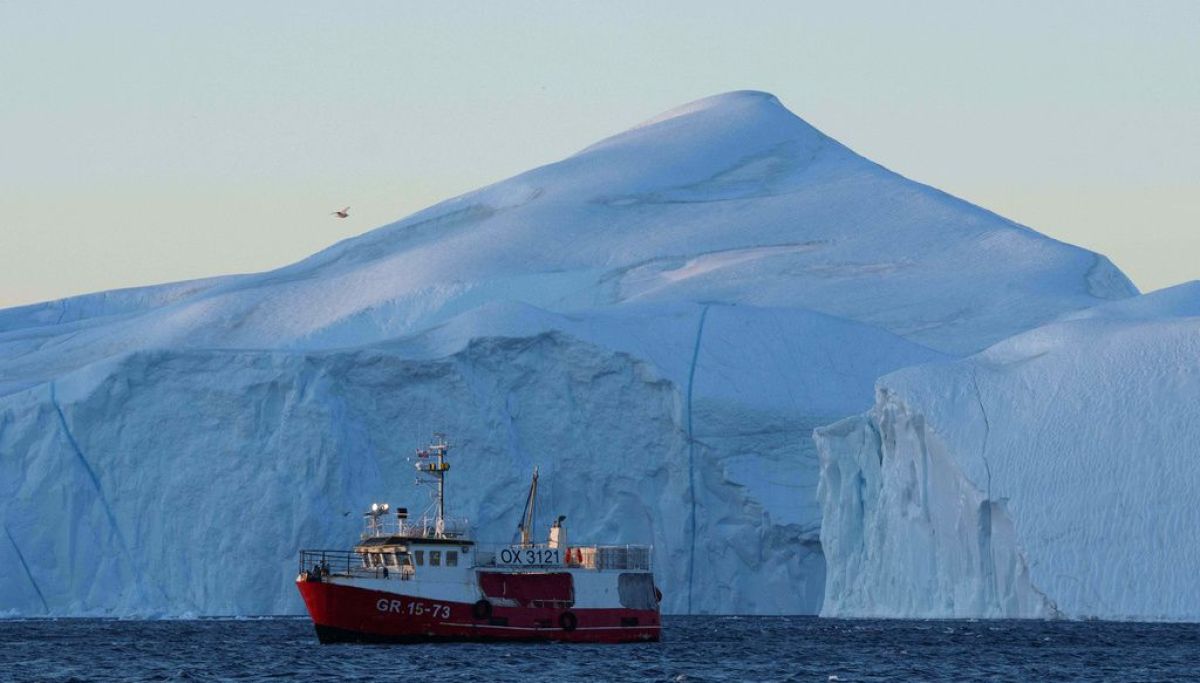
Photo via Washington Examiner

Seward’s second bargain: Lock Greenland, free the Faroe Islands, and end Norway’s surrender of Svalbard

Read the original at Washington Examiner ↗
Cite

Alvarez, J. L. (2026, November 24). Seward’s second bargain: Lock Greenland, free the Faroe Islands, and end Norway’s surrender of Svalbard. Washington Examiner. https://www.washingtonexaminer.com/op-eds/4805192/us-greenland-faroe-islands-svalbard-arctic-security/

Dated from the outlet's own feed. Check the original for its byline.

Washington Examiner · collected 2026-11-24 · by Jose Lev Alvarez

Quick Summary

The article discusses a recent agreement from September 22, 2026, between the United States, Denmark, and Greenland, which enhances American military presence in Greenland. The deal includes expanded access to Pituffik Space Base, new defense areas at Narsarsuaq and Mestersvig, and prohibits non-NATO military presence. Greenland’s parliament ratified the agreement unanimously on November 3, 2026. However, the article notes that the agreement does not fully integrate Greenland as a strategic asset for the U.S. and leaves the Faroe Islands and Svalbard without similar security arrangements.
Written by AI on 2026-11-24, from this article's own text only (the story summary below draws on all the coverage).

AI analysis

Story summary

The United States, Denmark, and Greenland signed an agreement on September 22, 2026, which expanded American military access to Pituffik Space Base and authorized new defense areas at Narsarsuaq and Mestersvig. Greenland's parliament ratified the deal unanimously on November 3, 2026, ensuring it will stand even after Greenland's potential independence. However, the agreement still treats Greenland as a Danish territory rather than an American strategic asset. The deal also excludes the Faroe Islands and Svalbard from a similar security framework. The author draws a parallel to Secretary of State William Seward's 1867 purchase of Alaska from Russia, emphasizing the strategic importance of securing the North Atlantic region against adversaries.


Written for “Seward’s Second Bargain Proposal” on 2026-11-28, grounded in this article and the 0 other(s) covering the same event.

Compared with similar articles

Nothing to compare against. No article is close enough to this one for the pipeline to have linked or judged the pair.

Story

Seward’s Second Bargain Proposal
Politics · 1 article(s) covering the same event.
How this article was measured signals, leaning charts, publisher record, byline, topics and claims

Signals How these are calculated →

Claims extracted
6
sentences that state something as happening or true
Uncertain
0%
0 of 6 hedged ("reportedly", "may", "according to")
Leaning
Leans strongly right
of the writing, not the subject · beta estimate
Publisher signals
66/100
Washington Examiner's corrections and hedging, across everything collected from it. Not a measure of accuracy.
Outlets on this story
1
Politics
Same framing elsewhere
1
articles that frame the event the way this one does
Analyzed 2026-11-24 · how these are computed

How this is being covered How these are calculated →

Article leaning vs. publisher reliability
Source leaning vs. consistency

Publisher

Washington Examiner · 5643 article(s) · 12 correction(s) detected
Running correction rate · 12 correction(s)

Who wrote this

Jose Lev Alvarez
33 article(s) here · 1 carrying a prediction
In 1867, Secretary of State William Seward purchased Alaska from Russia for $7.2 million, or roughly 2 cents an acre.
Sustained American intelligence, equipment, and political will under former President Alvaro Uribe eventually slashed that figure by roughly 40%.
Over the decades, this unchecked ideological hospitality yielded a party structurally unable to rank adversaries, unwilling to defend allies without apology, and incapable of sustained strategic purpose.
In the summer of 1787, delegates gathered in Philadelphia because the Articles of Confederation could not bind 13 fractious states to shared sacrifice, coherent defense, or durable governance.
Intelligence assessments indicate that the complex could support more than 100 launches daily, expanding a network of at least 11 fixed Russian drone locations.
Israel’s founding father, David Ben-Gurion, understood from the start that the newborn Jewish state could never survive by begging hostile neighbors for validation.
This outpost will track Russian proxy flights into the Sahel and choke Turkish weapon resupply into Al Watiya.
By leveraging this, Tehran has shown America’s adversaries that a regional rogue power can sustain a prolonged chokepoint before Washington musters the political will to deploy decisive force.
First, a formal pact will pool computing power, model weights, and elite talent before European regulators turn the West into a technological museum while China weaponizes algorithms.
Over a century ago, Admiral William Caperton mapped this exact transnational vulnerability.
Also by Jose Lev Alvarez
Nothing else under this byline is closely related to this article, so these are simply their most recent.
All 33 articles by Jose Lev Alvarez →

Topics

Alaska American Greenland Russia State

Subjects

American NORP · 2× Greenland GPE · 2× Russia GPE · 2× Alaska GPE · 1× America GPE · 1× Nordic NORP · 1× State ORG · 1× U.S.-Denmark GPE · 1× Washington GPE · 1× William Seward PERSON · 1×

Narrative

The Sept. 22, 2026 U.S.-Denmark-Greenland agreement takes a welcome first step by expanding American military access at Pituffik Space Base, authorizing new defense areas at Narsarsuaq and Mestersvig, and barring any non-NATO military presence.
framing: assertive · carried by 1 article(s) · first seen 2026-11-24
In 1867, Secretary of State William Seward purchased Alaska from Russia for $7.2 million, or roughly 2 cents an acre.

Claims (6 extracted, 0 hedged)

In 1867, Secretary of State William Seward purchased Alaska from Russia for $7.2 million, or roughly 2 cents an acre. asserted
Seward → purchase → million
Contemporary critics mocked the acquisition as an empty icebox, yet within decades the territory delivered gold, oil, and the strategic depth that still shields America’s northern approaches. asserted
that → mock → approaches
That same geopolitical logic now applies across the North Atlantic — except today, Washington’s adversaries already sit within the zone while the responsible Nordic governments have proven weaker than 19th-century Russia. asserted
governments → apply → Russia
The Sept. 22, 2026 U.S.-Denmark-Greenland agreement takes a welcome first step by expanding American military access at Pituffik Space Base, authorizing new defense areas at Narsarsuaq and Mestersvig, and barring any non-NATO military presence. asserted
agreement → take → presence
Greenland’s parliament ratified the text 16-0 on Nov. 3, 2026, ensuring the arrangement survives even after independence. asserted
arrangement → ratify → independence
Even so, the deal still treats Greenland as residual Danish territory rather than a permanent American strategic asset, while leaving both the Faroe Islands and Svalbard outside any comparable security framework. asserted
deal → treat → framework
Give feedback · no sign-in needed

No sign-in needed for now. Your note is sent without a name, so it cannot be answered.

History Support