Photo via The Independent

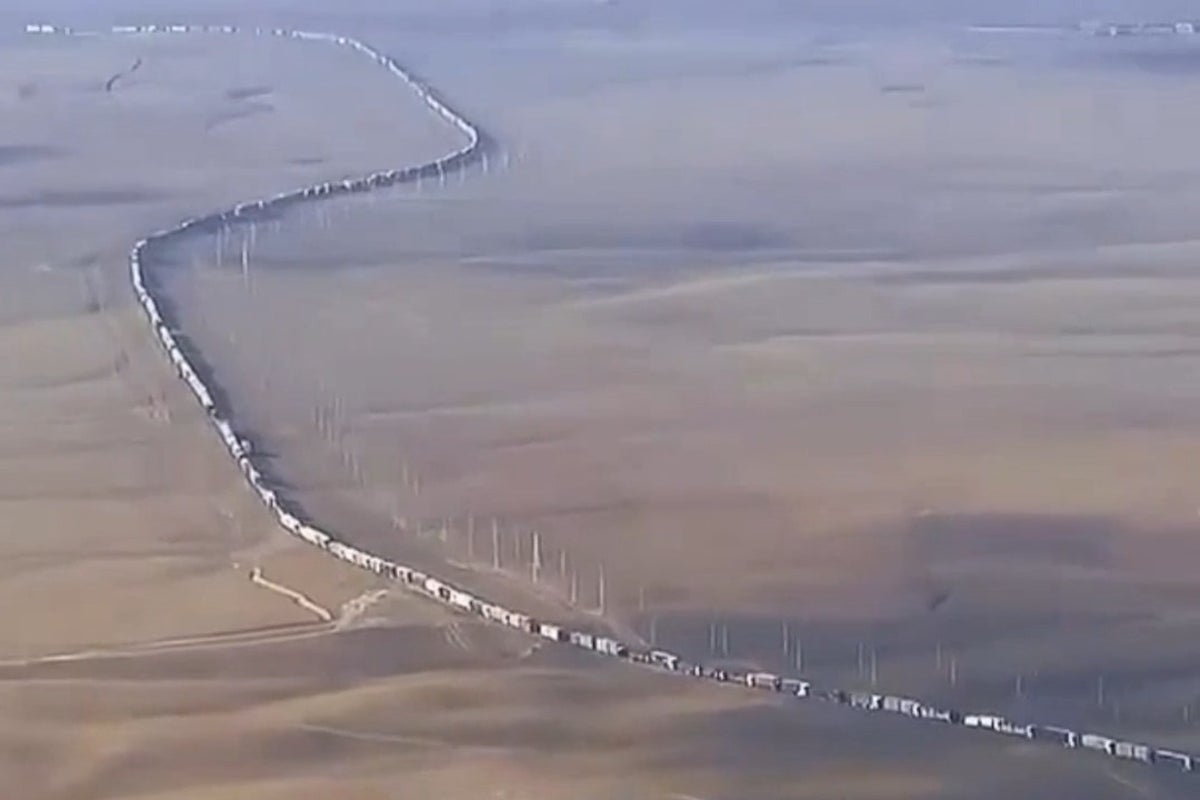
Huge 26-mile lorry jam forms on Iranian border as US naval blockade chokes off imports

Read the original at The Independent ↗
Cite

Kidwai, S. (2026, November 24). Huge 26-mile lorry jam forms on Iranian border as US naval blockade chokes off imports. The Independent. https://www.independent.co.uk/news/world/middle-east/lorry-traffic-iran-border-us-naval-blockade-b3090592.html

Dated from the outlet's own feed. Check the original for its byline.

The Independent · collected 2026-11-24 · by Suha Kidwai

Quick Summary

No summary of this article yet; the story summary below covers the event.
See how they differ ↓

AI analysis

Story summary

As of November 24, 2026, 1,200 trucks are stranded in a 26-mile queue near the Iran border, having waited for several days to enter the country. This traffic jam is part of a broader issue caused by U.S. President Donald Trump's naval blockade, which has forced cargo to travel overland through countries like Kazakhstan, Uzbekistan, and Turkey. The blockade has led to significant delays and increased costs, with shipping containers now costing about £9,177 by land compared to £2,294 by sea. Additionally, perishable goods like fresh produce are struggling to reach their destinations, as they face customs delays and long transit times.

Written for “Trump's Naval Blockade Hits Iran” on 2026-11-24, grounded in this article and the 1 other(s) covering the same event.
Why this leaning score
The article's own words the score was based on. Each is quoted verbatim and was checked against the article text before being stored, so you can find it in the original.
Reading Leans strongly right (beta estimate) Confidence high
Leaning: leans strongly right for article 176696 (high confidence, 4 verified quotes) · logged 2026-11-24

Compared with similar articles

This article reads leans strongly right and hedges 6% of its claims. Each row says how that neighbour differs.
Daily Mail
Leans right further left than this Hedges 2 of 22 claims Outlet record 69/100

Story

Trump's Naval Blockade Hits Iran
Politics · 2 article(s) covering the same event. See how they differ ↑
How this article was measured signals, leaning charts, publisher record, byline, topics and claims

Signals How these are calculated →

Claims extracted
17
sentences that state something as happening or true
Uncertain
6%
1 of 17 hedged ("reportedly", "may", "according to")
Leaning
Leans strongly right
of the writing, not the subject · beta estimate
Publisher signals
59/100
The Independent's corrections and hedging, across everything collected from it. Not a measure of accuracy.
Outlets on this story
2
Politics
Same framing elsewhere
1
articles that frame the event the way this one does
Analyzed 2026-11-24 · how these are computed

How this is being covered How these are calculated →

Article leaning vs. publisher reliability
Source leaning vs. consistency

Publisher

The Independent · 4970 article(s) · 10 correction(s) detected
Running correction rate · 10 correction(s)

Who wrote this

Suha Kidwai
52 article(s) here · 1 carrying a prediction
However, betting markets paint a more decisive picture, spiking concerns that a coalition government could rely on far-right leader Santiago Abascal’s Vox party to secure power, propelling the hard right into government for the first time since the end of the Franco dictatorship.
As long as trade remains curtailed by the blockade, economists warn Tehran will face increasingly longer waits and further price hikes for its imports.
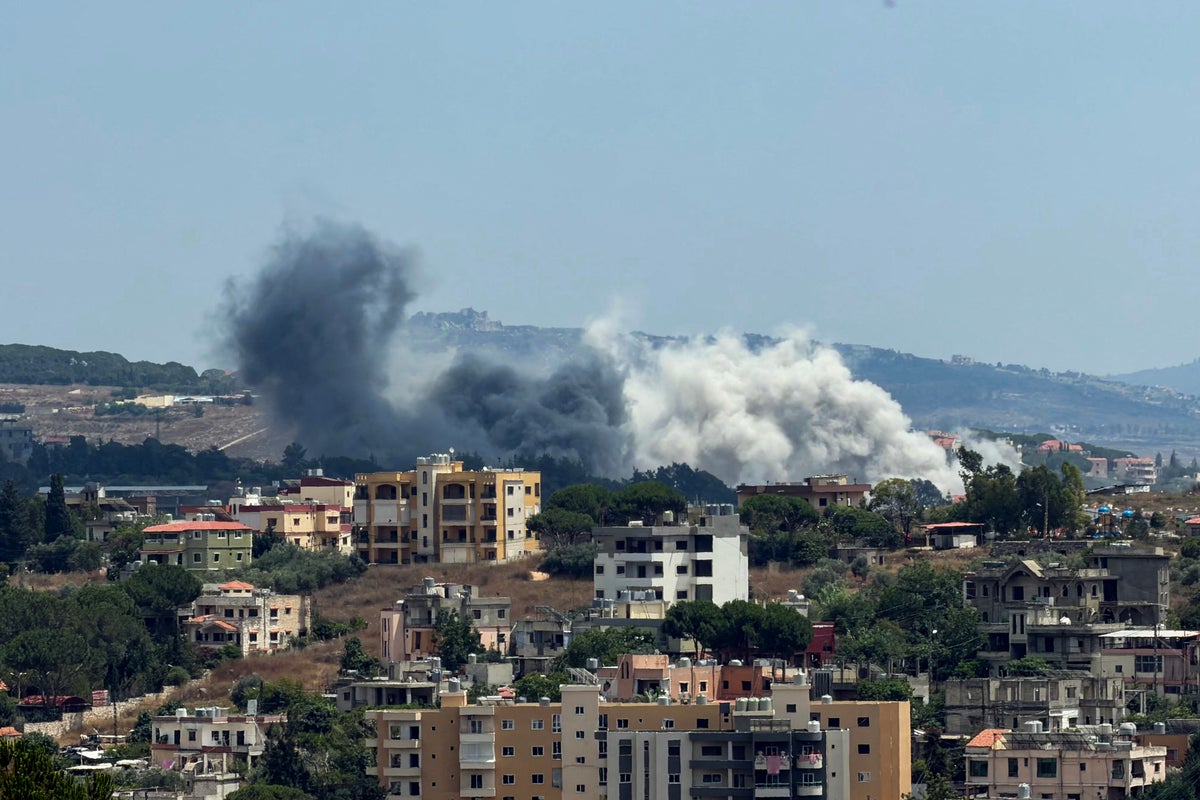
The bottleneck comes amid a steep escalation in hostilities and growing concerns that the conflict may be opening a Mediterranean front, after Kyiv targeted Russian ships in Libyan waters on Monday.
The technology - dubbed “killer robots” by critics - will now continue to be developed unchecked until 2028.
Benjamin Netanyahu has urged Donald Trump to launch new military strikes against Iran “as soon as possible”, according to reports, even as senior Israeli defence officials warn that such action could reignite war across the region.
United Nations relief chief Tom Fletcher has condemned the border delays as “collective punishment,” accusing governments of stalling while families endure freezing conditions. “Foreign ministers and partners have assured me of support, but also repeatedly said that progress would be hard until after Israeli elections,” Mr Fletcher said, referring to Israel’s inconclusive 27 October poll. “Now we’re told to wait for the formation of a government.
Mr Colby reportedly walked out of the room immediately after delivering his remarks, departing before Ukrainian defence minister Yevhenii Khmara could present a classified battlefield briefing.
Saboteurs crossing the frontier were expected to either be killed during the raid or left with forged documents linking them to Kyiv, sources said.
Trump later dialled into a parallel Coalition of the Willing summit in Berlin – attended by prime minister Andy Burnham and Ukrainian president Volodymyr Zelensky – where he reportedly urged European allies to stop funding Kyiv.
The response came after US Undersecretary of Defense for Policy Elbridge Colby questioned the effectiveness of Ukrainian strike deep inside Russia, warning that such attacks could strengthen Moscow’s resolve.
Also by Suha Kidwai
Nothing else under this byline is closely related to this article, so these are simply their most recent.
All 52 articles by Suha Kidwai →

Topics

China Iran Iranian Tehran Uzbekistan

Subjects

Iran GPE · 7× China GPE · 2× Iranian NORP · 2× Tehran GPE · 2× Uzbekistan GPE · 2× Donald Trump PERSON · 1× Kazakhstan GPE · 1× Yalama GPE · 1× the International Maritime Organisation ORG · 1× the US Navy ORG · 1×

Narrative

Since President Donald Trump ordered the US Navy to blockade Iranian ports earlier this year, the country’s primary maritime lifeline for bulk goods, containers and energy has been largely severed. Commercial traffic through the Strait of Hormuz remains roughly 65 per cent below pre-conflict levels, leaving hundreds of tankers and cargo ships anchored outside the Gulf.
framing: assertive · carried by 1 article(s) · first seen 2026-11-24
As long as trade remains curtailed by the blockade, economists warn Tehran will face increasingly longer waits and further price hikes for its imports.

Claims (17 extracted, 1 hedged)

Traffic along key overland trade routes into Iran is at a near standstill as a US naval blockade has forced Tehran to replace vital sea shipments with long-distance road and rail deliveries. asserted
blockade → force → deliveries
At the Yalama checkpoint between Kazakhstan and Uzbekistan, video footage shows roughly 1,200 lorries en route to Iran inching along a 26-mile queue ahead of customs clearance. asserted
lorries → show → clearance
Local authorities in the region have reported a near threefold surge in daily cross-border freight volumes compared with pre-war levels, with drivers waiting days to cross. asserted
drivers → report → days
Since President Donald Trump ordered the US Navy to blockade Iranian ports earlier this year, the country’s primary maritime lifeline for bulk goods, containers and energy has been largely severed. Commercial traffic through the Strait of Hormuz remains roughly 65 per cent below pre-conflict levels, leaving hundreds of tankers and cargo ships anchored outside the Gulf. asserted
traffic → order → Gulf
That maritime chokehold has intensified amid escalating attacks at sea. asserted
chokehold → intensify → sea
According to the International Maritime Organisation, more than 30 vessels were attacked in and around the waterway in October — the highest monthly toll since the conflict began in February — followed by at least 22 further incidents in the first three weeks of November. uncertain
conflict → accord → November
With sea lanes largely closed off, Iranian importers have been forced onto a handful of overland corridors that trade officials acknowledge were never built to handle maritime freight volumes. asserted
officials → close → volumes
The resulting bottlenecks are most visible along three main detour routes, mapped below. asserted
bottlenecks → result → routes
Goods shipped from western China must now travel by road and rail through Uzbekistan and Turkmenistan before reaching northern Iran. asserted
Goods → ship → Iran
Local authorities have reported daily cross-border freight volumes have nearly tripled compared with pre-war levels, leaving perishable goods to rot in customs lines. asserted
volumes → report → lines
At the Gürbulak–Bazargan crossing — Iran’s primary overland gateway for European and Turkish goods — surging traffic has left drivers waiting up to 24 days to cross. asserted
traffic → surge → days
Similar gridlock has hit the Rimdan crossing on the Pakistani border following stricter inspections, while Washington has pressed Baghdad to curtail commercial truck crossings along Iran’s border with Iraq. asserted
Washington → hit → Iraq
In a bid to tighten the economic squeeze even further, US Central Command (CENTCOM) launched Task Force Iron Gate earlier last week — a 20-person unit tasked with targeting cargo moving across Iran’s land borders and the Caspian Sea. asserted
Command → tighten → borders
Inside Iran, quadrupled freight costs and multi-week supply delays have compounded an already-acute cost-of-living crisis. asserted
costs → compound → crisis
Central Bank of Iran figures show urban point-to-point inflation has climbed for an 18th consecutive month to roughly 84 per cent, leaving households paying almost double what they did a year ago for basic goods. asserted
they → show → goods
Prices for vegetables, pulses, dairy products and urban rents have jumped sharply, prompting provincial authorities to introduce flour and bread quotas amid localised shortages. asserted
Prices → jump → shortages
As long as trade remains curtailed by the blockade, economists warn Tehran will face increasingly longer waits and further price hikes for its imports. asserted
Tehran → warn → imports
Give feedback · no sign-in needed

No sign-in needed for now. Your note is sent without a name, so it cannot be answered.

History Support