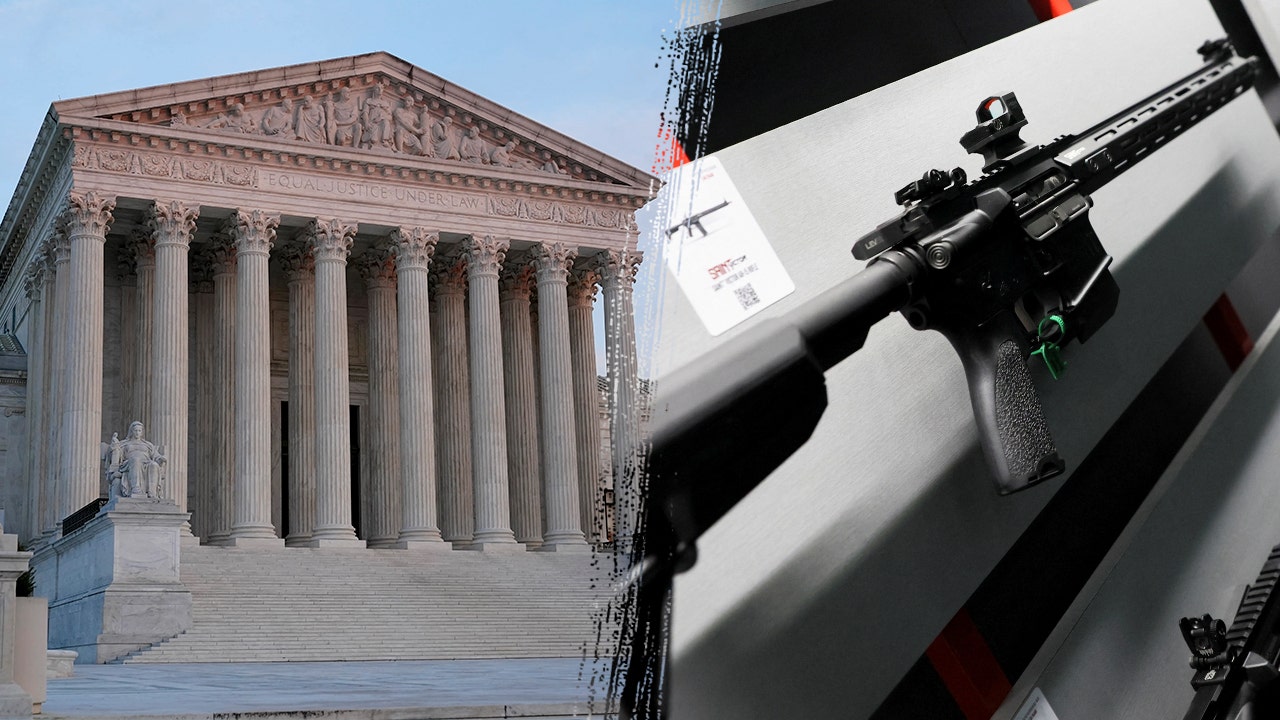
In the 2008 case District of Columbia v. Heller, the Supreme Court rejected a local ban on handguns, saying the Second Amendment guarantees the right to own arms "in common use" for "lawful purposes like self-defense."
asserted
Amendment → reject → defense
Fourteen years later in New York State Rifle & Pistol Association v. Bruen, the Court said the Second Amendment also protects the right to carry handguns in public, noting that they are "indisputably in 'common use' for self-defense today.
asserted
they → say → defense
That common-use test poses an obvious problem for Connecticut and Cook County, Illinois, which are asking the justices to uphold "assault weapon" bans that cover some of the most popular guns sold in the United States, including AR-15 rifles.
asserted
that → pose → rifles
Both jurisdictions therefore are urging the Supreme Court to ignore the choices that millions of American gun owners have made.
asserted
millions → urge → owners
But as the individuals and organizations challenging the bans note in a reply brief filed last Friday, that argument requires the Court to ignore or repudiate what it said in Heller and Bruen.
asserted
it → challenge → Heller
The petitioners in Khaya v. Cook County (previously Viramontes v. Cook County) and Grant v. Higgins, including the Firearms Policy Coalition (FPC) and the Second Amendment Foundation (SAF), want the justices, who will hear oral argument in those consolidated cases on December 2, to overturn decisions by two federal appeals courts that deemed the AR-15 bans constitutional.
asserted
bans → include → courts
"It is not possible for this Court to affirm without overruling the core holdings of Heller and Bruen," they say.
asserted
they → affirm → Heller
"Heller held that 'the sorts of weapons protected were those in common use.'
asserted
sorts → hold → use
And Bruen repeatedly applied this holding."
asserted
Bruen → apply → holding
Connecticut and Cook County nevertheless claim that neither of those precedents "decide[d] anything about the kinds of weapons that people may possess."
uncertain
people → claim → that
They argue that legislators should be free to ban even commonly owned firearms if they decide they are "unusually dangerous."
asserted
they → argue → firearms
That position is hard to reconcile with Heller, which recognized a "historical tradition" of "prohibiting the carrying of 'dangerous and unusual weapons'" but distinguished that category from arms commonly used for lawful purposes, including modern-day handguns, which it described as "the quintessential self-defense weapon."
asserted
it → reconcile → weapon
Although the Court acknowledged the conspicuous role that handguns play in violent crime, it said that consideration cannot override the right of law-abiding Americans to possess them.
asserted
consideration → acknowledge → them
"Laws banning AR-15 platform and similar semiautomatic rifles are unconstitutional under a straightforward application of this Court's precedents," the reply brief says.
asserted
brief → ban → precedents
"Heller concerned a ban on possession of a class of firearms, focused on the historical tradition of dangerous and unusual weapons, and held that the class of firearms at issue could not be banned because they were in common use.
uncertain
they → concern → use
No more need be said to resolve this case in Petitioners' favor."
asserted
need → say → favor
The rifles banned by Connecticut and Cook County readily pass the common-use test.
asserted
rifles → ban → test
Last year, a unanimous Supreme Court described the AR-15 as "the most popular rifle
in the country," noting that such firearms are "both widely legal and bought by many ordinary consumers."
asserted
firearms → describe → consumers
In addition to reaffirming the common-use standard, Bruen clarified the Second Amendment test for gun restrictions, saying the government has the burden of showing they are "consistent with this Nation's historical tradition of firearm regulation."
asserted
they → reaffirm → regulation
That burden typically requires historical analogs that are "relevantly similar" in motivation and scope.
asserted
that → require → motivation
Bruen explicitly rejected "independent means-end scrutiny under the guise of an analogical inquiry."
asserted
Bruen → reject → inquiry
Yet "that is what Respondents would have courts do in assessing
whether the government has properly categorized an arm as unusually dangerous," the petitioners argue.
asserted
petitioners → have → arm
The approach that Connecticut and Cook County favor "closely mirrors Justice [Stephen] Breyer's Heller dissent, which reasoned that the government may be able to ban 'especially dangerous' weapons," the reply brief notes.
uncertain
brief → mirror → weapons
"Respondents' arguments also closely resemble the reasoning of courts of appeals that justified semiautomatic rifle bans under intermediate scrutiny pre-Bruen.
asserted
that → resemble → scrutiny
But although Heller acknowledged 'the problem of handgun violence in this country,' and recognized that 'the Constitution leaves the District of Columbia a variety of tools for combating that problem,' it concluded that the Second Amendment takes 'off the table' the policy choice of categorically prohibiting the possession of commonly used arms."
Given the arbitrary distinctions drawn by "assault weapon" bans, the premise that they target "unusually dangerous" weapons is dubious.
asserted
they → acknowledge → weapons
are not particularly powerful compared to other rifles," the petitioners note, and "the ability to pierce body armor does not distinguish the banned rifles from other centerfire rifles."
asserted
ability → compare → rifles
They add that "matters such as muzzle velocity, firing rate, and ammunition are irrelevant" because the bans "do not regulate them."
asserted
bans → add → them
Rather, "they regulate features such as grips and stocks.
asserted
they → regulate → grips
Those features "promote accuracy, and the usability, adaptability, and accuracy of these firearms are among the reasons why they are so popular among law-abiding citizens," the brief says.
asserted
brief → promote → citizens
"Respondents also concede that barrel shrouds [another disfavored feature] 'shield the operator from the burning temperatures caused by firing multiple rounds,' which is a critical benefit, especially when training."
asserted
which → concede → rounds
The FPC emphasizes the broad scope of Cook County's ban.
asserted
FPC → emphasize → ban
"Under Cook County's ordinance," it says, "a semiautomatic rifle capable of accepting a magazine holding more than ten rounds can be prohibited for having just one of several commonplace features—including a 'barrel shroud' that protects the shooter's supporting hand from being burned by the barrel."
asserted
that → say → barrel
Although "protective handguards have been standard rifle components for generations," the FPC notes, "Cook County treats this basic, longstanding feature of firearm design as grounds for banning a sweeping range of ordinary semiautomatic rifles."
asserted
County → note → rifles
The ordinance also "specifically names dozens of prohibited rifles, including AR-15s, AK-47s, Galils, and even the Ruger Mini-14," the FPC adds.
asserted
FPC → name → AR-15s
The upshot, it says, is that the organization's lawyers "are not aware of a single semiautomatic rifle that would escape the County's ban."
asserted
that → say → ban
People who own AR-15s and similar rifles commonly report that they use them for self-defense, and federal judges, based on expert testimony, have recognized that such guns are "well-adapted" to that purpose.
asserted
guns → own → purpose
Connecticut and Cook County nevertheless assert that the banned rifles are "exceptionally lethal weapons that are disproportionate to the end of self-defense."
asserted
that → assert → defense
But even if their lists of prohibited features made more sense, the petitioners argue, the Second Amendment does not allow politicians to second-guess the judgments of law-abiding gun owners in the name of public safety.
asserted
politicians → prohibit → safety
Under Heller, "criminal misuse cannot justify banning an arm in common use," the petitioners say.
asserted
petitioners → justify → use
"But the criminal misuse of handguns is orders of magnitude greater than the criminal misuse of the banned rifles.
asserted
misuse → ban → rifles
…and 8 more, not listed.
 The Aporia