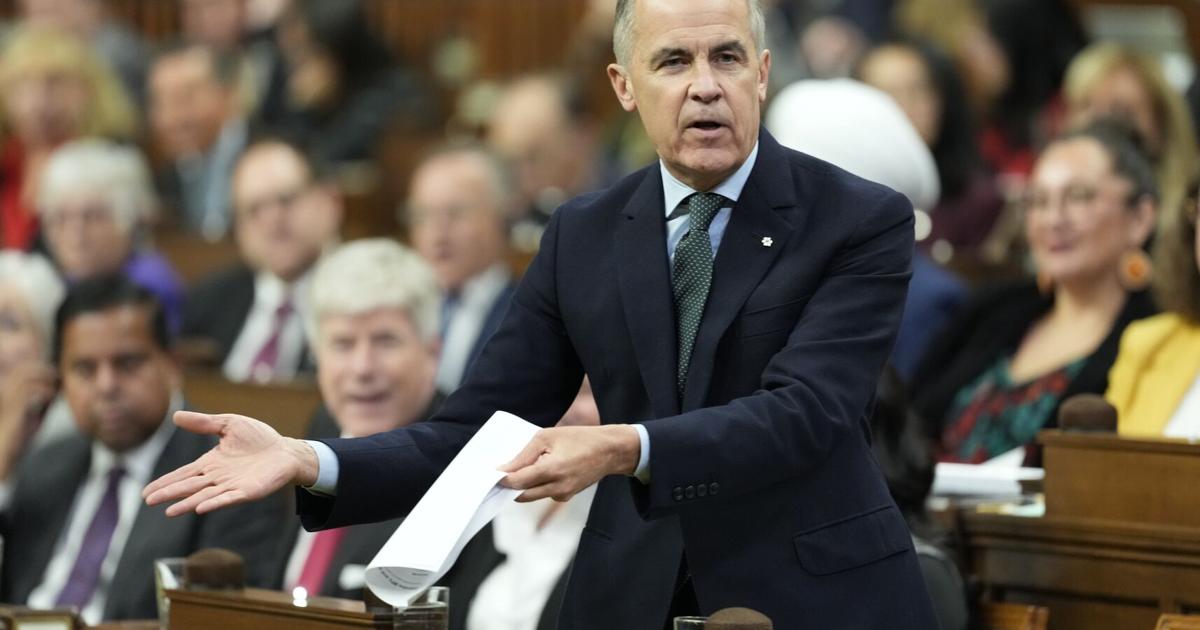
Highest MP turnover rate in decades making for byelection bonanza this Parliament
Last time there were this many byelections this soon after a general election was 1950
A slew of MP resignations is putting this Parliament on track to have the most byelections this soon after a general election in over half a century.
asserted
slew → make → century
It will be 560 days since the 2025 election when voters in six ridings go to the polls on Dec. 7.
asserted
voters → go → Dec.
That will bring the total number of byelections held since the last general election to 13 — and that doesn't include the riding of Parry Sound-Muskoka where current MP Scott Aitchison has signalled his intention to resign in the coming weeks.
asserted
Aitchison → bring → weeks
The last time there were more byelections in that short amount of time was after the 1949 election.
asserted
time → be → election
That year, newly minted Liberal Leader Louis St. Laurent won his first election as prime minister and by October of 1950 he had called 16 byelections.
asserted
he → mint → byelections
Jonathan Malloy, a political science professor at Carleton University, says there are some similarities between the current Parliament and the one elected in 1949, given St. Laurent and Prime Minister Mark Carney both returned the Liberal Party to power after taking over leadership.
asserted
Laurent → say → leadership
But beyond that, he told CBC News that "the political conditions were rather different back then.
asserted
conditions → tell → News
"
"This is a very unusual Parliament and, to me, it's because of the unexpected election results in April 2025," Malloy said, noting that Carney's Liberals were behind in the polls when he took over the party.
asserted
he → say → party
"In both cases you do have a prime minister succeeding another one and successfully winning elections.
asserted
you → have → elections
But on the other hand, the 1949 election was not radically different from what people had been expecting, say a year or two before."
asserted
people → expect → what
Ironically, there is a near identical situation between the Terrebonne byelection held earlier this year and the 1950 byelection in what was then the Nova Scotia riding of Annapolis-Kings: both results from the preceding general election were declared void due to issues around vote counting.
asserted
results → be → counting
But besides that case, the reasons for the rapid turnover rate in the 21st Parliament appear to be quite different from the current crop of MPs who have recently left their seats.
asserted
who → appear → seats
Of the 16 MPs who vacated in the first few years following the 1949 vote, most were appointed to judicial or Senate positions.
asserted
most → vacate → positions
A handful of seats were also left vacant after five MPs died while in office between October 1949 and October 1950.
asserted
MPs → leave → October
Éric Grenier — a polls analyst who noted the byelection trend for his publication, The Writ — told CBC News that the amount of MPs stepping down so far in this Parliament could be "just a bit of a coincidence" because there have been a variety of reasons for their resignations.
uncertain
amount → note → resignations
Conservative Damien Kurek was the first MP to exit to allow for leader Pierre Poilievre to reclaim a seat.
asserted
Poilievre → exit → seat
Carney also appointed former MPs Bill Blair and Jonathan Wilkinson to diplomatic posts — and appointed Richard Martel to the Senate.
asserted
Carney → appoint → Senate
Four MPs swapped their federal roles for provincial or municipal ones.
asserted
MPs → swap → ones
Larry Brock left to return to his local Crown attorney's office.
asserted
Brock → leave → office
Former cabinet ministers Steven Guilbeault and Chrystia Freeland left after serving a number of years in the former Trudeau government and Conservative Cathay Wagantall had been on the Opposition benches since 2015.
asserted
Wagantall → leave → 2015
Malloy said the surprising reversal of Liberal fortunes during the 2025 campaign could have pushed some of those MPs to reassess their career trajectories.
uncertain
reversal → say → trajectories
He suggested that for Liberals, they may have expected to lose their seats (or move to the Opposition benches) under Trudeau and are "not really comfortable in this new situation" of serving in Carney's government — as was the apparent case with Guilbeault.
uncertain
case → suggest → Guilbeault
For Conservatives, Malloy said there are likely some dashed expectations of forming government.
asserted
Malloy → say → government
"Elections have a habit of helping MPs make their career decisions one way or the other," he said.
asserted
he → have → decisions
Grenier said the Liberals attaining a majority in the House earlier this year may have also factored into recent decisions.
uncertain
Liberals → say → decisions
"[That] kind of sets everybody's minds to the next four years rather than the next 18 months," he said.
asserted
he → set → years
The current slate of byelections may not reach the same levels as seen in the early days of Parliament when MPs were expected to resign and rerun in their riding when they were appointed ministers — a practice that was ended in 1931.
uncertain
that → reach → 1931
Still, Grenier says it's been a significant amount of byelections so far this parliamentary session.
asserted
it → say → byelections
"It is just kind of remarkable how many there's been," he said.
asserted
he → be → ?
 The Aporia