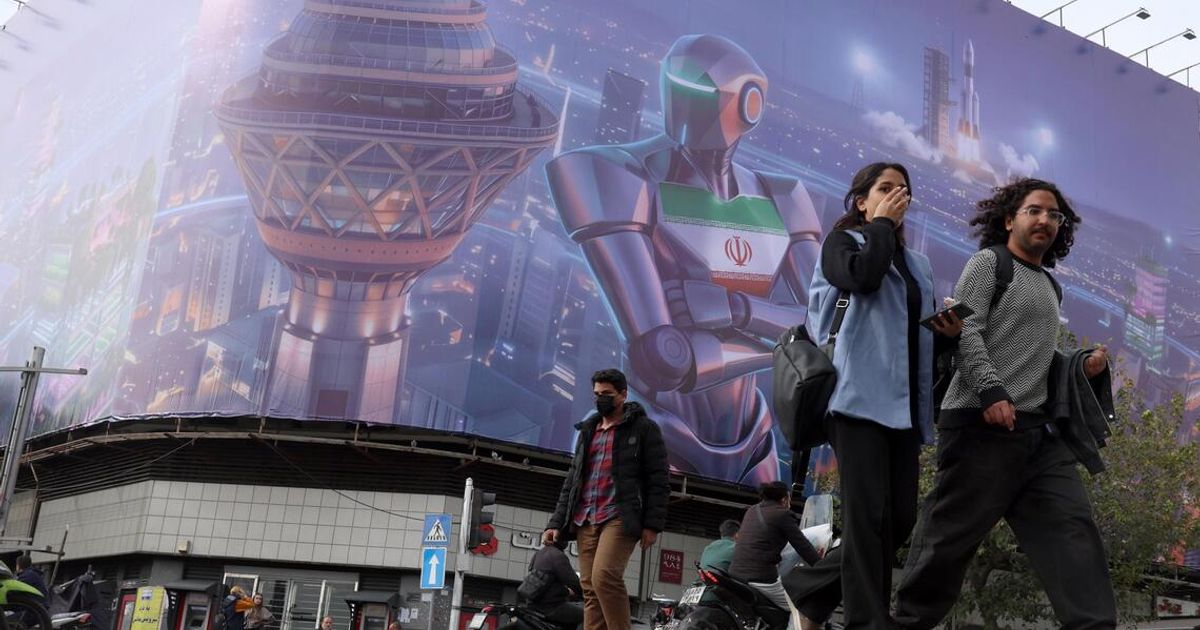
Wearing a blue jacket to protect against the cold, Iranian President Masoud Pezeshkian pores over paperwork under a table lamp in his dimly lit office as he asks millions of Iranians to conserve electricity as an energy crisis compounds the country’s economic battering.
asserted
crisis → wear → battering
During a televised interview with state broadcaster IRIB at the presidential office on Tehran’s Pasteur Street, the chandeliers are switched off and curtains drawn aside to let in daylight instead.
asserted
curtains → televise → daylight
Tehran controls one part of the world’s largest natural gasfield and has the world’s third-largest proven oil reserves.
asserted
Tehran → control → reserves
But millions of Iranians are now rationing electricity as the authorities impose rolling power cuts from Sunday, expected to last for about two hours every day.
asserted
authorities → ration → hours
Iran has been consistent in its refusal to bow to Washington’s demands for ending the war, which is currently at an impasse.
asserted
which → bow → impasse
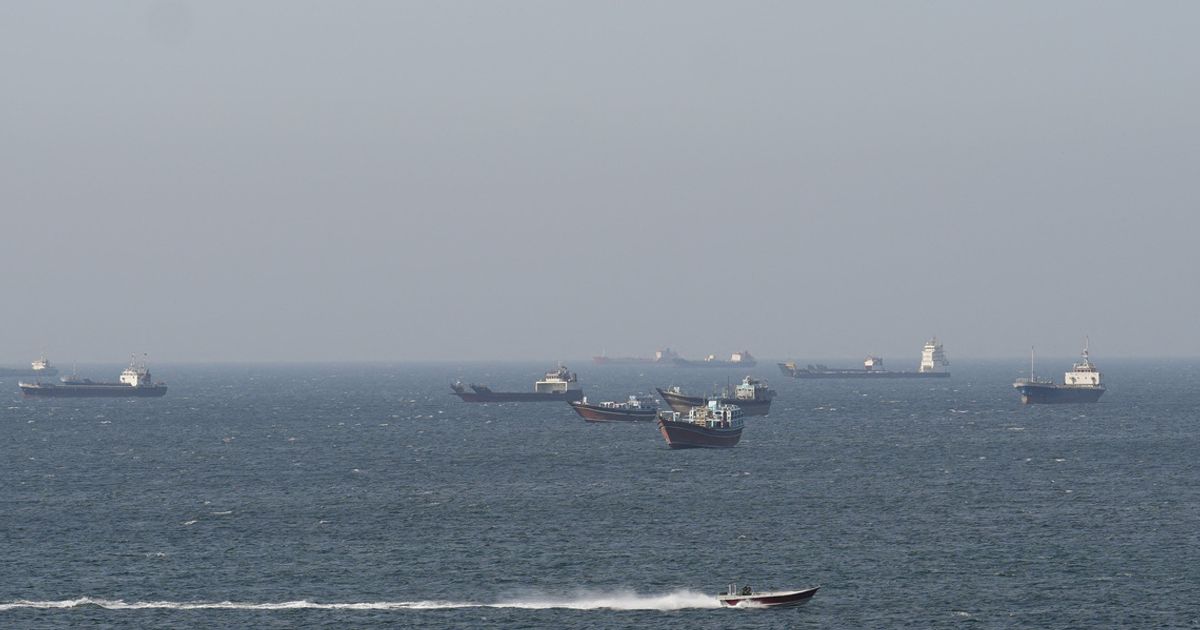
But after months of a US naval blockade against Iranian ports – aggravated by biting sanctions and strikes on Iranian energy infrastructure – its economy is reeling, and a punishing winter looms amid an escalating energy crisis.
asserted
winter → aggravate → crisis
So, how deeply are US sanctions and the blockade biting the Iranian economy?
asserted
sanctions → bite → economy
Iran was suffering gas shortages and power cuts before the United States and Israel jointly attacked Tehran and nuclear facilities across the country on February 28.
asserted
States → suffer → February
Strikes since then have targeted other energy, military and civilian facilities.
asserted
Strikes → target → facilities
Fatemeh Mohajerani, a government spokeswoman, warned last week that Iran’s gas shortfall could reach 430 million cubic metres a day this winter, compared with about 300 million in previous years.
uncertain
shortfall → warn → years
National Iranian Gas Company managing director Saeed Tavakoli said this month that four processing plants had been damaged during the first phase of the conflict early this year, which initially reduced capacity by 230 million cubic metres, of which about 100 million had so far been restored.
asserted
million → say → which
Last week, the company warned that 11 of Iran’s 31 provinces could face supply difficulties this winter, in particular Mazandaran on the Caspian Sea, and Golestan and North Khorasan along Iran’s border with Turkmenistan.
uncertain
11 → warn → Turkmenistan
“Given the country’s fuel supply conditions, the electricity sector will be forced to impose distribution restrictions from Sunday,” Mohammad Allahdad, head of Iran’s national electricity company Tavanir, told state TV, as he announced the power cuts.
asserted
he → give → cuts
How has the war affected Iran’s power generation capacity?
asserted
war → affect → capacity
Iran operates hundreds of power plants which, together, form one of the largest electricity systems in the Middle East, supplying energy to 92 million people.
asserted
which → operate → people
Pezeshkian told ISNA news agency that “the attack on the country’s gas infrastructure has aggravated the situation and we should therefore expect difficulties this winter”.
asserted
we → tell → difficulties
Separately, Pezeshkian told a group of investors and producers on November 21 that Iran is facing a “silent economic war” that is “tougher than a war with missiles,” the state news agency IRNA has reported.
asserted
agency → tell → missiles
An Al Jazeera analysis of Iran’s power grid shows that about 86 percent of the country’s electricity is usually generated from natural gas supplies.
asserted
percent → show → supplies
Some gas-fired power stations switch to diesel or fuel oil when natural gas supplies are tight, especially during winter demand peaks.
asserted
supplies → fire → peaks
Oil-fired plants provide a smaller share, generating roughly 7 percent of the nation’s electricity.
asserted
plants → fire → electricity
Hydropower accounts for about 5 percent of electricity.
asserted
Hydropower → account → electricity
Nuclear energy contributes about 2 percent of the country’s electricity, mainly from the Bushehr Nuclear Power Plant, Iran’s only operational nuclear reactor.
asserted
energy → contribute → Plant
Earlier in August, Iran’s Energy Minister Abbas Aliabadi told reporters that Iran’s power plants lost 4,200 megawatts of generation capacity in war-related attacks and repairs were under way.
asserted
repairs → tell → way
But shortages of fuel to fire up the plants are worsening as well.
asserted
shortages → fire → plants
“Energy imbalance was also a serious issue in Iran even before these wars,” said Iranian economist Mohammad Reza Farzanegan, a professor at Philipps-Universitat Marburg in Germany.
asserted
Farzanegan → say → Germany
“Higher energy consumption driven by subsidised prices, waste, inefficiencies, and mismanagement could not be met with a proportional increase in energy production due to a lack of investment under sanctions, and now wars,” he told Al Jazeera.
uncertain
he → drive → Jazeera
In the years before the current war, Farzanegan said he identified “fragmented governance, structural inefficiencies, and price distortions as the key drivers of chronic energy insecurity in Iran”.
asserted
he → say → Iran
Electricity shortages have also resulted in about 600,000 job losses because of the reduction of industrial production during the US-Israel war, politicians say.
asserted
politicians → result → war
Parliamentarian Nasrollah Pejmanfar told the Khaneh Mellat News Agency (ICANA) on November 21 that more than one million workers could lose their jobs if natural gas shortages continue.
uncertain
shortages → tell → jobs
How is Iran’s economy faring under US pressure?
asserted
economy → fare → pressure
The Trump administration claims that its Operation Economic Outcast – measures it has taken to strangle Iran’s economy by sanctioning those who do business with Iran – will force concessions from an otherwise unrelenting Tehran.
uncertain
who → claim → Tehran
On the ground, that has made the lives of millions of Iranians worse.
asserted
lives → make → Iranians
For the seventh Iranian month of Mehr (September 23 to October 22), Iran’s 12-month average annual inflation rate was 76.8 percent, according to the Statistical Centre of Iran.
uncertain
rate → accord → Iran
Point-to-point inflation, which compares that month with the same month of the previous year, was at 88.7 percent.
asserted
which → compare → percent
Essential goods have already been subject to triple-digit inflation for months, with food, beverages and tobacco experiencing year-on-year inflation of 113.4 percent in October, the centre said.
asserted
centre → experience → October
“The real gross domestic product of Iran is expected to experience significant negative growth in 2026 (about -7 percent) compared to 2025, which was also just below 0 percent,” added economist Farzanegan.
asserted
Farzanegan → expect → percent
“This is the sharpest contraction in the Iranian economy since the end of the Iran-Iraq War, and it represents a steeper decline than earlier sanction episodes after 2012,” he told Al Jazeera.
asserted
he → represent → Jazeera
The reasons are, he argued, “more intense sanctions combined with a physical trade embargo, war damage, and the resulting economic uncertainty and higher business risks”.
asserted
he → argue → embargo
The ongoing US naval blockade on Iranian ports, which has dealt a blow to Iran’s oil revenues, Farzanegan said, is now confronting “the government with budget deficits because, despite lower revenues, government expenditures have not declined proportionally; for example, it is hard to cut large energy subsidies or increase tax revenues under such political conditions”.
asserted
it → deal → conditions
What is Iran doing to address the energy crisis?
asserted
Iran → do → crisis
…and 8 more, not listed.
 The Aporia