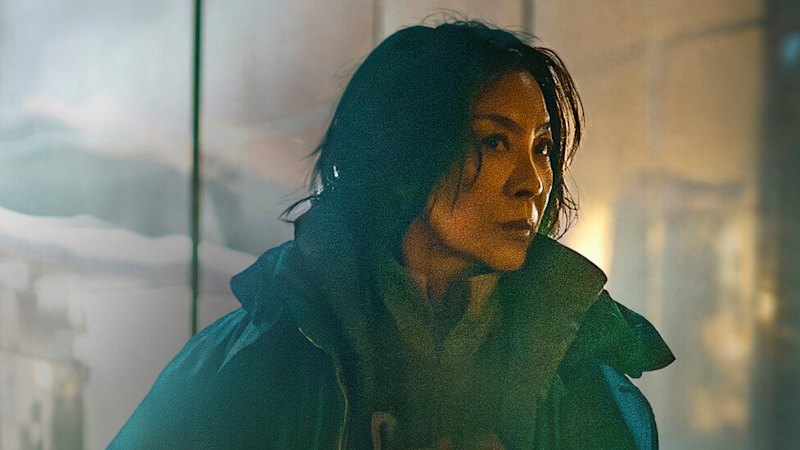
Photo via BBC News

Blade Runner 2099 not just about AI, say star Hunter Schafer and series creator

Read the original at BBC News ↗
Cite

Richardson, T., & Sandhar, J. (2026, November 25). Blade Runner 2099 not just about AI, say star Hunter Schafer and series creator. BBC News. https://www.bbc.co.uk/news/articles/cqpv9kjgy4jno?at_medium=RSS&at_campaign=rss

Dated from the outlet's own feed. Check the original for its byline.

BBC News · collected 2026-11-25 · by Tom Richardson, Jasmine Sandhar

Quick Summary

BBC Newsbeat discusses the upcoming TV series "Blade Runner 2099," set 80 years after the original 1982 film, with interviews from stars Hunter Schafer and Lewis Gribben and showrunner Silka Luisa. Schafer, who stars as Cora, a human fugitive, highlights the series' relevance to current debates about artificial intelligence and existential threats. Showrunner Luisa emphasizes that while AI is a significant theme, the series explores broader questions about the future world and its challenges, including corporate greed and environmental damage.
Written by AI on 2026-11-25, from this article's own text only (the story summary below draws on all the coverage).

AI analysis

Story summary

Blade Runner 2099, a new TV series set in the same universe as the original film, explores themes of artificial consciousness and existential threats. The series, which is set in a dystopian future version of Los Angeles in 2099, stars Hunter Schafer, who plays Cora, a fugitive human, alongside Michelle Yeoh as a replicant named Olwen. The cast and crew, including showrunner Silka Luisa, believe that the central question of what it means to be human remains relevant today, despite the original film's futuristic setting of 2019. Schafer's character, Cora, teams up with Yeoh's replicant to find an artifact that could save humanity. The series aims to delve into the same themes of technological progress and its potential threats that made the original Blade Runner a sci-fi classic.

Written for “Blade Runner Series Update” on 2026-11-27, grounded in this article and the 0 other(s) covering the same event.

Compared with similar articles

This article reads unscored and hedges 10% of its claims. Each row says how that neighbour differs.
The Sydney Morning Herald
Hedges 2 of 30 claims Outlet record 61/100
“The articles discuss different aspects of the Blade Runner 2099 series and are written on different dates, indicating they are not reporting on the same specific incident.”

Story

Blade Runner Series Update
Entertainment · 1 article(s) covering the same event.
How this article was measured signals, leaning charts, publisher record, byline, topics and claims

Signals How these are calculated →

Claims extracted
39
sentences that state something as happening or true
Uncertain
10%
4 of 39 hedged ("reportedly", "may", "according to")
Leaning
not political
takes no side on a contested political question
Publisher signals
67/100
BBC News's corrections and hedging, across everything collected from it. Not a measure of accuracy.
Outlets on this story
1
Entertainment
Same framing elsewhere
1
articles that frame the event the way this one does
Analyzed 2026-11-25 · how these are computed

How this is being covered How these are calculated →

Article leaning vs. publisher reliability
Source leaning vs. consistency

Publisher

BBC News · 6900 article(s) · 11 correction(s) detected
Running correction rate · 11 correction(s)

Who wrote this

Tom Richardson
6 article(s) here · 1 carrying a prediction
Schafer plays Cora, a fugitive human forced to team up with replicant Olwen (played by Michelle Yeoh), as she tries to track down an artefact that could save humanity.
As part of the deal, EA took on $20bn in debt, which the company will have to pay back.
If you'd told us this time last year that a previously unknown French studio would claim game of the year, Battlefield 6 would knock Call of Duty off the top of the annual charts and that Saudi Arabia would buy gaming giant Electronic Arts (EA) we'd have been... sceptical. So you'd have to be very sure of yourself - or very foolish - to try and predict what's going to happen in the year ahead. Luckily, we're not in the crystal ball business here at BBC Newsbeat, but there are a few things we can be confident video game fans should keep an eye on in 2026.
2026-10-15 · assertive framing · The gaming releases to look out for
The eight-piece group, known for performing in masks, will be joined by the US rock musician during their shows at London's Wembley Stadium and multiple dates of the South American leg of the tour.
"If I had delivered a faithful retelling of one of the stories in the games, I feel like those people would probably be upset with me for that too," he says. "Because I would have messed it up somehow, inevitably.
Also by Tom Richardson
Nothing else under this byline is closely related to this article, so these are simply their most recent.
All 6 articles by Tom Richardson →
Jasmine Sandhar
3 article(s) here · 1 carrying a prediction
Schafer plays Cora, a fugitive human forced to team up with replicant Olwen (played by Michelle Yeoh), as she tries to track down an artefact that could save humanity.
"There's going to be people up and down the country that will be able to relate to this in varying degrees.
Also by Jasmine Sandhar
Nothing else under this byline is closely related to this article, so these are simply their most recent.

Topics

BBC Newsbeat Los Angeles a Los Angeles

Subjects

Cora PERSON · 3× Schafer PERSON · 3× Gribben PERSON · 2× Luisa PERSON · 2× BBC Newsbeat ORG · 1× Dimitri Abold PERSON · 1× Hunter Schafer PERSON · 1× Lewis Gribben PERSON · 1× Los Angeles GPE · 1× Silka Luisa PERSON · 1×

Narrative

BBC Newsbeat spoke to stars Hunter Schafer, Lewis Gribben and Dimitri Abold, plus showrunner Silka Luisa, to ask why they think themes of artificial consciousness and existential threats still resonate.
framing: assertive · carried by 1 article(s) · first seen 2026-11-25
Schafer plays Cora, a fugitive human forced to team up with replicant Olwen (played by Michelle Yeoh), as she tries to track down an artefact that could save humanity.

Claims (39 extracted, 4 hedged)

- Published "What does it mean to be human?" is a question that's always been at the heart of Blade Runner. asserted
that → mean → Runner
The first film in the series, released in 1982, depicted a technologically advanced yet dystopian version of Los Angeles in the then-distant future of 2019. asserted
film → release → 2019
While the movie's flying cars haven't - quite - materialised yet in the real world, Blade Runner's themes of technological progress and the threats it poses feel just as relevant. asserted
it → fly → progress
At least that's what the cast and crew of Blade Runner 2099, a new TV series set in the same universe, are hoping. asserted
cast → set → universe
BBC Newsbeat spoke to stars Hunter Schafer, Lewis Gribben and Dimitri Abold, plus showrunner Silka Luisa, to ask why they think themes of artificial consciousness and existential threats still resonate. asserted
themes → speak → consciousness
The original Blade Runner, directed by Sir Ridley Scott, is considered a sci-fi classic that had a long-lasting influence on the genre. asserted
that → direct → genre
It told the story of Detective Deckard, played by Harrison Ford, who hunted down synthetic humans known as replicants. asserted
who → tell → replicants
Schafer says her first exposure to the series was actually marketing for Blade Runner 2049 - the film sequel starring Ford and Ryan Gosling in 2017. asserted
exposure → say → 2017
"I never thought I'd have the opportunity to make an addition to the world," she says. asserted
she → think → world
"And so when that opportunity came along, I was quite thrilled." asserted
I → come → ?
Blade Runner 2099 is set 80 years after the original film, and portrays a Los Angeles where replicants have taken over. asserted
replicants → set → Angeles
Schafer plays Cora, a fugitive human forced to team up with replicant Olwen (played by Michelle Yeoh), as she tries to track down an artefact that could save humanity. uncertain
that → play → humanity
The series lands at a time when there are disagreements about the nature of the threat AI could pose to humans. uncertain
AI → land → humans
"I think it's particularly relevant right now, especially for the youth and young people who are inheriting a world that's asking a lot of the same questions that the show asks," says Schafer. asserted
Schafer → think → that
"I think that's timely and hopefully helpful to some degree." But Blade Runner 2099 isn't "necessarily about just AI", says showrunner Luisa. asserted
Luisa → think → AI
"It's this bigger question of what is the world going to be in 15 years and how can you plan for it?" she says. asserted
she → go → it
The first Blade Runner also touched on themes of corporate greed and environmental damage, which are evident in the new series. asserted
which → touch → series
Luisa hopes the theme of a future that "is not going to be what you were promised" resonates with viewers today. asserted
you → hop → viewers
"The idea that you were born into a world and you thought you were expecting certain aspects of your life just to roll out," she says. asserted
she → bear → life
"That system is collapsing. asserted
system → collapse → ?
And so what will be your place in whatever comes next?" asserted
whatever → come → ?
'People crave human stories' asserted
People → crave → stories
Blade Runner 2049 won awards and scored well with reviewers, but reports suggested it didn't hit box office targets. uncertain
it → win → targets
This was partly blamed on marketing for the film trying to appeal more to existing fans than new ones - so what would the cast say to get younger viewers on board? asserted
cast → blame → board
"It's just a very rich world," says Gribben, who plays Cora's younger brother Elias. asserted
who → say → brother
"It makes you want to learn more." asserted
you → make → more
Gribben also points out that Blade Runner 2099, which employed "hundreds of artists and craftspeople" according to its makers, is a celebration of traditional film-making despite its themes. uncertain
which → point → themes
"I think a lot of people crave human stories," he says. " asserted
he → think → stories
They crave new kind of worlds and new things. asserted
They → crave → worlds
"And I think studios will rely more on technology to make better-looking movies, but they won't have that soul." asserted
they → think → soul
Abold, who plays Cora's human ally Bebeto, says one of the show's key messages is about "the connections that you make". asserted
you → play → that
"And the connections that you make are the foundation of humanity," he says. "Because at the end of the day, all we have is ourselves and each other, right? asserted
we → make → day
And that's what feeds any human emotional experience." asserted
what → feed → experience
There was praise for the lead performances, the show's visual style and the way it updates the themes established in previous series entries. asserted
it → be → entries
The most common criticism was the show's pacing, with several critics describing it as a slow-burn and questioning whether Blade Runner worked as well off the big screen. asserted
Runner → describe → screen
Schafer says she felt a lot of pressure when she signed up for the show, "It's something that we were all aware of when making this show," she says. asserted
she → say → show
"Everybody who was working on this show loves Blade Runner. " asserted
who → work → Runner
Most people who love film-making love Blade Runner, everybody brought their best to work. asserted
everybody → love → best
"It upped our game a bit." asserted
It → up → game

Give feedback · no sign-in needed

No sign-in needed for now. Your note is sent without a name, so it cannot be answered.

History Support