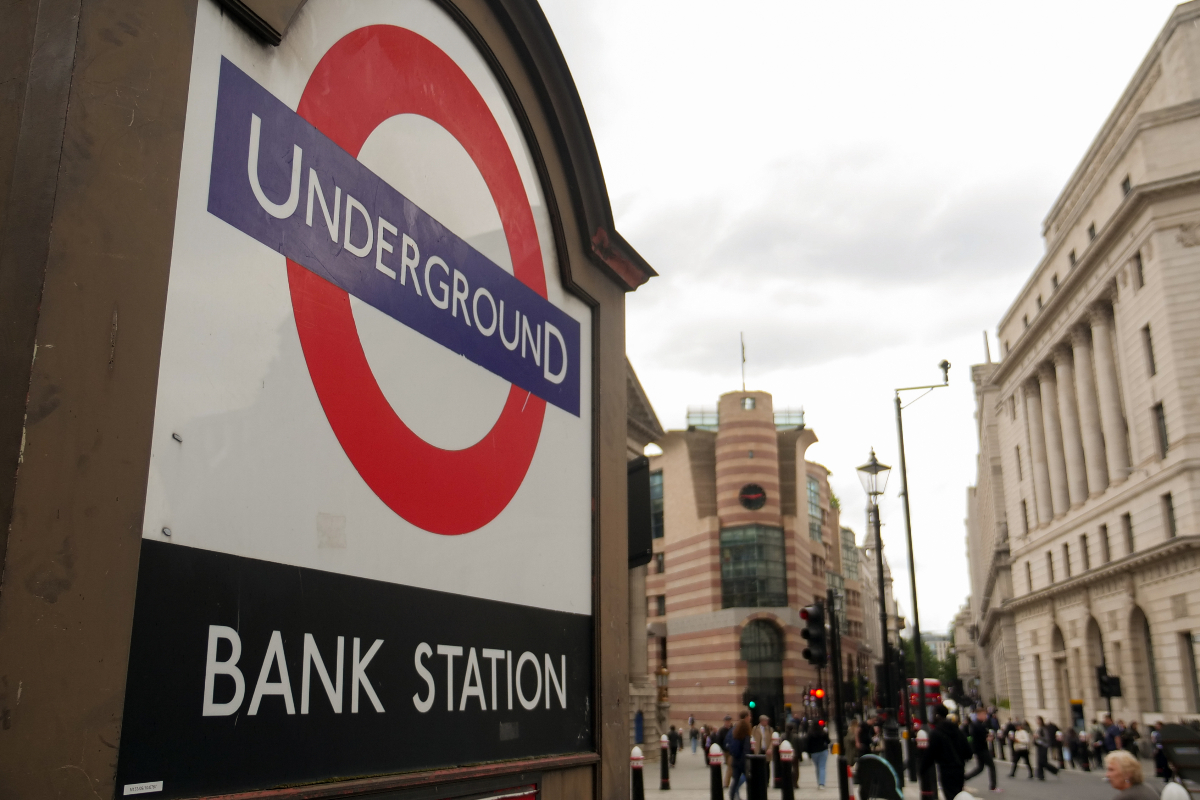
Photo via Evening Standard

Tube strike: Should London Underground drivers be paid to walk to their train?

Read the original at Evening Standard ↗
Cite

Yadav, N., & Cecil, N. (2026, November 25). Tube strike: Should London Underground drivers be paid to walk to their train? Evening Standard. https://www.standard.co.uk/news/transport/tube-strikes-rmt-drivers-walk-depot-train-b1306342.html

Dated from the outlet's own feed. Check the original for its byline.

Evening Standard · collected 2026-11-25 · by Niva Yadav, Nicholas Cecil

Quick Summary

London transport officials and the RMT union are in a dispute over proposed changes to the working conditions of Tube drivers, including whether drivers should start their shifts by booking into a depot or directly at the platform. This change could save time but also removes the current practice of train managers booking drivers in at depots. The disagreement also involves issues like shift cover arrangements and spare staff duties, with TfL aiming to reduce notice periods for shift changes and gain more flexibility in managing spare shifts. The union argues that these changes force drivers to give up existing protections and may lead to longer and more unpredictable shifts.
Written by AI on 2026-11-25, from this article's own text only (the story summary below draws on all the coverage).
See how they differ ↓

AI analysis

Story summary

The first in a series of eight 24-hour strikes by the Rail, Maritime and Transport (RMT) union on London Underground is set to begin on Thursday, November 26, 2026. Despite last-ditch talks between the RMT and Transport for London (TfL) failing to reach a resolution, the strikes will proceed, causing major disruption to commuters. The strikes are scheduled to continue on December 17 and 19, and January 4 and 6, with additional strikes planned for February 17, 23, and 25. Londoners face travel chaos during the busy holiday season, and the hospitality and retail sectors are particularly concerned about the economic impact. The first strike coincides with bitterly cold weather, with temperatures forecast to drop to around 4°C, making commutes uncomfortable and challenging.

Written for “Tube Strike by RMT Union Hits London” on 2026-11-25, grounded in this article and the 25 other(s) covering the same event.
Why this leaning score
This article does not take a side on a contested political question, so it has no leaning score. That is an answer rather than a gap: a match report or a rescue can be warmly or critically written without being left or right, and scoring it anyway is how approval of a subject gets recorded as a political position.
No political leaning scored for article 179553 · logged 2026-11-25

How they differ

3 outlets covered “Tube Strike by RMT Union Hits London”.

What each outlet says

One AI summary per outlet of its latest article on this story, written from that article alone and checked against it. Open the article for the outlet's own words.

Evening StandardThis outlet25 Nov

London transport officials and the RMT union are in a dispute over proposed changes to the working conditions of Tube drivers, including whether drivers should start their shifts by booking into a depot or directly at the platform. This change could save time but also removes the current practice of train managers booking drivers in at depots. The disagreement also involves issues like shift cover arrangements and…

Tube strike: Should London Underground drivers be paid to walk to their train? (this article)22 articles from Evening Standard on this story
Daily Mail24 Nov

RMT union members will strike for 24 hours starting Thursday noon after talks with Transport for London (TfL) failed to resolve a dispute over a four-day working week. The strike is expected to cause significant travel disruption, with most Tube services reducing from around 10 am and only minimal service on the Circle, Piccadilly, and Waterloo & City lines throughout the day. Additional strikes are planned for…

Tube strikes WILL go ahead with travel chaos set to hit London after last-ditch crunch talks between RMT and TfL fail - as rival criticises militant union for fighting against four-day working week →3 articles from Daily Mail on this story

Compared with similar articles

This article reads unscored and hedges 3% of its claims. Each row says how that neighbour differs.
Daily Mail
Hedges 1 of 37 claims Outlet record 68/100
“The articles discuss different aspects of the dispute between RMT and TfL, with Article A focusing on the scheduled strikes and last-ditch talks, while Article B focuses on specific working arrangement disputes.”
Evening Standard
Hedges 0 of 9 claims Outlet record 64/100
“The articles discuss different aspects of the ongoing dispute and do not specifically refer to the same singular strike event, but rather the broader context and specific working arrangement issues.”
City AM
Hedges 0 of 12 claims Outlet record 95/100
“Article A discusses the dispute over working arrangements, while Article B reports on the confirmation of strikes due to failed talks over the same dispute.”
Evening Standard
Hedges 3 of 34 claims Outlet record 64/100
“The articles discuss different aspects of the ongoing dispute and planned strikes, rather than the same specific incident or time.”
Evening Standard
Hedges 0 of 18 claims Outlet record 64/100
Evening Standard
Leans right Hedges 2 of 11 claims Outlet record 64/100
“The articles discuss different aspects of the ongoing dispute and potential strike, but do not describe the same specific incident or occurrence.”
Daily Mail
Leans right Hedges 0 of 23 claims Outlet record 68/100
“Article A discusses the upcoming strikes and last-ditch talks to halt them, while Article B focuses on specific points of dispute regarding the four-day workweek arrangement.”
Daily Mail
Leans right Hedges 1 of 37 claims Outlet record 68/100
“The articles discuss different aspects of the ongoing dispute between RMT and TfL, with Article A focusing on the planned strike and its immediate impact, while Article B delves into specific working arrangement details of the dispute.”
Evening Standard
Hedges 2 of 15 claims Outlet record 64/100
“The articles discuss different aspects of the broader dispute over the four-day week for Tube drivers, but do not describe the same specific incident or happening.”
Evening Standard
Hedges 0 of 9 claims Outlet record 64/100
“While both articles discuss the RMT union's dispute with TfL over a four-day working week, Article A focuses on the strikes and earlier talks, while Article B addresses specific issues within the dispute, such as booking in at depots.”

Story

Tube Strike by RMT Union Hits London
Politics · 26 article(s) covering the same event. See how they differ ↑
How this article was measured signals, leaning charts, publisher record, byline, topics and claims

Signals How these are calculated →

Claims extracted
29
sentences that state something as happening or true
Uncertain
3%
1 of 29 hedged ("reportedly", "may", "according to")
Leaning
not political
takes no side on a contested political question
Publisher signals
64/100
Evening Standard's corrections and hedging, across everything collected from it. Not a measure of accuracy.
Outlets on this story
26
Politics
Same framing elsewhere
1
articles that frame the event the way this one does
Analyzed 2026-11-25 · how these are computed

How this is being covered How these are calculated →

Article leaning vs. publisher reliability
Source leaning vs. consistency

Publisher

Evening Standard · 11835 article(s) · 89 correction(s) detected
Running correction rate · 89 correction(s)

Who wrote this

Niva Yadav
93 article(s) here · 1 carrying a prediction
With depots close to platforms, the change would in many cases only mean a difference of a few minutes in terms of when drivers begin their shift.
“I have made friends for life and I have just loved every single second of it, and I don’t think I could have asked for anything more.”
“His behaviour was vile and he will now serve a significant period of time behind bars where he can cause no further harm to his victim or any other woman who may have crossed his path in the future.
But last-ditch talks held on Tuesday failed to achieve a breakthrough, meaning the walkouts will go ahead as planned.
We know AJ will really appreciate it,” the Instagram story read.
Frostrup later approached Page again, saying: “May I just point out with the water – I can’t carry it. “When the camp runs out of water, I don’t know what I’ll do.”
I would like to apologise to anyone who has been affected by my actions.”
Detective Superintendent Lindsey Billany, who is leading the Metropolitan Police investigation, said: “The seizure of these drugs, which would have been worth millions of pounds, represents a significant loss to this criminal enterprise and is one of the largest drug seizures we’ve seen.
But the LAS believes the early surge will provide “an opportunity for people to do more to protect themselves”, including extra time to sign up for flu and Covid-19 vaccines and to stock up on medications before winter officially gets underway.
Also by Niva Yadav
Nothing else under this byline is closely related to this article, so these are simply their most recent.
All 93 articles by Niva Yadav →
Nicholas Cecil
160 article(s) here · 1 carrying a prediction
Here are the key timings and details of which Tube lines will be affected.
With depots close to platforms, the change would in many cases only mean a difference of a few minutes in terms of when drivers begin their shift.
The first of a wave of Tube strikes by the RMT union will start hitting London in less than 24 hours.
The union said drivers will face longer hours driving trains, longer duties, earlier starts and later finishes, short-notice changes to shifts and attacks on existing transfer rights between depots and annual leave arrangements.
Train drivers will walk out for 24 hours at midday on Thursday for the start of the industrial action which will run into the following day, Black Friday, when millions will seek to take advantage of retail discounts.
The £99,000-a-year union chief will serve a five-year term until March 2030. But he faces a challenge to live up to the record of some of his predecessors, with growing questions over whether he has picked the wrong battle to hit London with eight Tube strikes over a voluntary four-day week for train drivers. He died in the spring of 2014 of a suspected heart attack at the age of 52, having led the union since 2002.
Travel in and around London will also be hit by a series of works to upgrade railway lines over the festive period.
But last-ditch talks held on Tuesday failed to achieve a breakthrough, meaning the walkouts will go ahead as planned.
He added: “In the meantime, we are asking customers to check before they travel and allow extra time for their journeys during this strike action." After the talks ended in deadlock, the union claimed the reforms would “force drivers to surrender hard-won protections”.
Travel in and around London will also be hit by a series of works to upgrade railway lines over the festive period.
Also by Nicholas Cecil
Nothing else under this byline is closely related to this article, so these are simply their most recent.
All 160 articles by Nicholas Cecil →

Topics

London London Underground RMT TfL Tube

Subjects

TfL ORG · 7× RMT ORG · 3× ASLEF ORG · 1× London GPE · 1× London Underground ORG · 1× Nick Dent PERSON · 1× Standard ORG · 1× Tube ORG · 1×

Narrative

Moving to the voluntary four-day week with new working conditions, staying on the old hours and working arrangements, though some faced having to move depot, or a third option of a 36-hour week, new working conditions and staying at their depot.
framing: assertive · carried by 1 article(s) · first seen 2026-11-25
With depots close to platforms, the change would in many cases only mean a difference of a few minutes in terms of when drivers begin their shift.
2026-11-25 · Evening Standard
Tube strike: Should London Underground drivers be paid to walk to their train? · assertive framing

Claims (29 extracted, 1 hedged)

London transport bosses are locked in a dispute with the RMT over working arrangements for a four-day week for Tube drivers. asserted
bosses → lock → drivers
One of them is whether train drivers should start their work by booking in at their depot, as currently happens. asserted
drivers → start → depot
With depots close to platforms, the change would in many cases only mean a difference of a few minutes in terms of when drivers begin their shift. asserted
drivers → mean → shift
But TfL says the practice would be in line with many other train companies. asserted
practice → say → companies
It would also mean a train manager no longer having to book drivers in at depots. asserted
manager → mean → depots
Other issues in the dispute include cover arrangements and spare staff duties. asserted
issues → include → arrangements
No service is expected on the Circle or Piccadilly lines throughout the day or on the Waterloo & City line after midday. asserted
service → expect → midday
Nick Dent, Director of Customer Operations for London Underground, said: “We committed to working on proposals to address several of their concerns and asked them to postpone any industrial action until we had done so. asserted
we → say → action
“We have amended our proposals to guarantee that drivers who wish to continue working a five-day working pattern can do so, and have worked hard, alongside the RMT and our other union ASLEF, to resolve many of their other concerns.” asserted
who → amend → concerns
Drivers are being offered three options. asserted
Drivers → offer → options
Moving to the voluntary four-day week with new working conditions, staying on the old hours and working arrangements, though some faced having to move depot, or a third option of a 36-hour week, new working conditions and staying at their depot. asserted
some → move → depot
Read More He said: “There is nothing voluntary about a scheme that forces drivers to give up existing protections whether they work four days or five and threatens those who refuse with displacement from their depots. asserted
who → read → depots
“Our members are being asked to spend more time driving trains, accept longer and more unpredictable shifts and surrender agreements that have been negotiated and defended over many years.” asserted
that → ask → years
TfL highlighted four key issues, including picking up trains, about which the RMT has reportedly raised concerns. uncertain
RMT → highlight → concerns
It believes those issues, which largely relate to notification times and depot arrangements, can be resolved with further discussions. asserted
which → believe → discussions
Coverage arrangements One sticking point involves how much notice should be given to alter staff shifts. asserted
notice → involve → shifts
TfL wants to reduce the existing one-week notice period required to change shifts, allowing for more flexibility to plug gaps and reassign drivers. asserted
TfL → want → drivers
Currently, if a driver were to call in sick, a replacement would be arranged. asserted
replacement → call → sick
However, that shift then becomes fixed, meaning that if the original driver returns to work early, TfL would end up paying two people for the same duty. asserted
TfL → become → duty
Spare staff duties Spare shifts are another issue which TfL wants to resolve. asserted
TfL → want → which
Shifts are scheduled with fixed start times, even when drivers don’t have specific work assigned to them. asserted
drivers → schedule → them
Those start times cannot be moved and can lead to drivers ending up idle at depots when no cover is needed. asserted
cover → move → depots
TfL wants the flexibility to move these start times on spare shifts by two hours each way to help cover duties when it is required. asserted
it → want → duties
Fixing to depots asserted
Fixing → fix → depots
At the moment, it takes 14 weeks to train a new driver for a specific line. asserted
it → take → line
They are eligible to move from that line after just 18 months. asserted
They → move → months
Transferring lines means more retraining for drivers, so often staff can spend as many as six months out of their first two years off the track - creating capacity gaps. asserted
staff → transfer → gaps
TfL wants to introduce a rule which means drivers can only move lines every five years in a bid to reduce the impact of drivers changing soon after qualifying. asserted
drivers → want → impact
The Standard has approached the union for comment. asserted
Standard → approach → comment
Give feedback · no sign-in needed

No sign-in needed for now. Your note is sent without a name, so it cannot be answered.

History Support