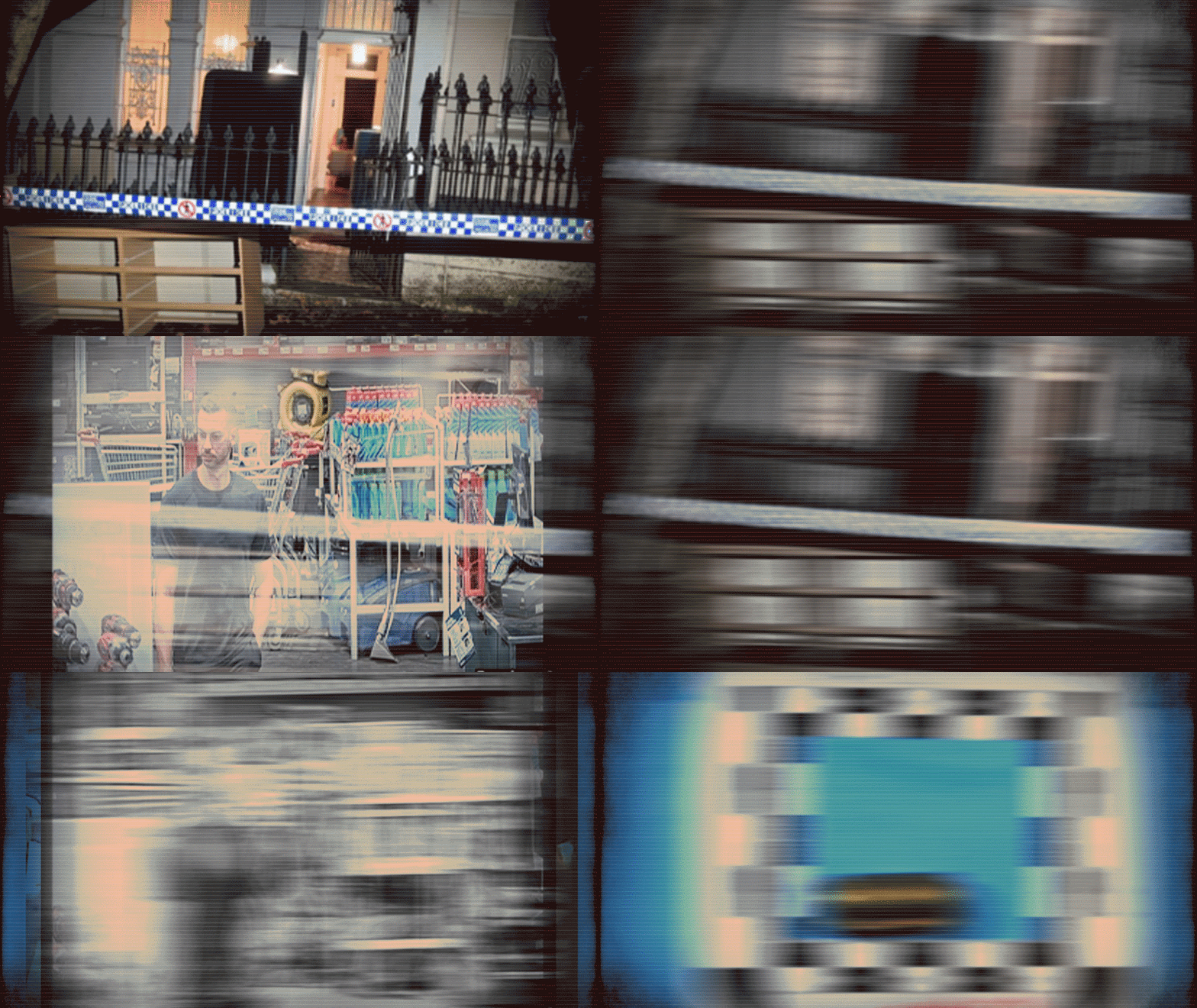
Beau Lamarre-Condon subjected an ex-partner to allegedly troubling behaviour before he met and later killed TV presenter Jesse Baird, according to a statement that was not deployed in his double murder trial.
uncertain
that → subject → trial
Lamarre-Condon, 31, was found guilty on Wednesday by a NSW Supreme Court jury of two counts of murder over the shooting deaths of Baird, a former Network Ten producer and presenter, and Luke Davies, a Qantas flight attendant, on February 19, 2024.
asserted
Condon → find → February
The former NSW Police officer was also found guilty of breaking into Baird’s home six months earlier on August 17, 2023, and stealing his mobile phone and wallet.
asserted
officer → find → phone
During legal argument in the absence of the jury in November, the court heard that an ex-partner of Lamarre-Condon had given a statement about the now convicted killer.
asserted
partner → hear → killer
The prosecution alleged that Lamarre-Condon killed Baird after developing an obsessive and jealous infatuation with him that escalated when Baird ended their casual relationship in November 2023.
asserted
Baird → allege → November
Lamarre-Condon’s barrister, John Stratton, SC, had sought a direction by the judge to the jury that they were entitled to consider his “absence of a history of physical violence” before the men’s deaths.
asserted
they → seek → deaths
The court heard the prosecution would have sought to deploy evidence from the ex-partner if the defence raised Lamarre-Condon’s alleged “good character”.
asserted
defence → hear → character
Justice Natalie Adams said the former partner’s statement would be “highly relevant if the accused had sought to raise good character generally, because it’s very similar conduct to some of the undisputed evidence before the court”.
asserted
it → say → court
“Do you say it shows previous physical violence?” Adams asked the Crown.
asserted
Adams → say → Crown
Crown prosecutor Brett Hatfield, SC, submitted that this raised questions of the “divisibility of violence from domestic violence”, and said it was “artificial to divide those two concepts in a case like this”.
asserted
it → submit → this
Adams said that evidence of stalking and possessive behaviour and “escalating conduct up to a murder” was “before the jury, and it’s also in the statement” of the former partner.
asserted
it → say → partner
“There’s previous evidence, and evidence in this trial, that he exhibited the sort of possessive and stalking and coercive control conduct that leads to a murder,” the judge said.
asserted
judge → ’ → murder
“How can I say he’s of good character in that respect?” Adams asked Stratton.
asserted
Adams → say → Stratton
“It is a very fraught matter to suggest he’s of good character.
asserted
he → suggest → character
There’s previous evidence … that he exhibited the sort of possessive and stalking and coercive control conduct that leads to a murder.
asserted
that → ’ → murder
Justice Natalie Adams on Beau Lamarre-Condon
“They are the sort of offences that one sees when dealing with a domestic violence murder.
asserted
one → see → murder
It’s consistent conduct.”
asserted
It → ’ → ?
Stratton said he sought a direction “simply in relation to acts of physical violence” and submitted the judge could tell the jury Lamarre-Condon was a “person without a history of physical assaults”.
uncertain
Condon → say → assaults
Hatfield argued that Lamarre-Condon had “engaged in a whole escalating pattern of coercive control” with Baird, and it was “very much the old-fashioned view” to assert there was “no physical violence”.
asserted
it → argue → Baird
“There is [violence]; that’s our case,” Hatfield said.
asserted
Hatfield → be → ?
“It’s very difficult to see how logically those concepts can be separated in a case like this.
asserted
concepts → ’ → this
He pointed to evidence that Lamarre-Condon had gone into Baird’s bedroom at night while he was sleeping “at least three times”, according to witnesses who recalled conversations with the then police officer.
uncertain
who → point → officer
He was only charged over one incident.
asserted
He → charge → incident
The prosecutor said this amounted to “serious criminality [and] intrusive conduct” and was “really at the upper end of domestic violence-type of conduct”.
asserted
this → say → conduct
The judge suggested during the parties’ legal argument that evidence of the accused’s “increasingly erratic behaviour, or of animus”, might be “evidence of bad character consistent in the domestic violence context of escalating towards a planned murder”.
uncertain
evidence → suggest → murder
“Not all escalating controlling behaviour ends in murder,” Stratton said.
asserted
Stratton → escalate → murder
He accepted there was “a lot of evidence of what could be described as controlling behaviour” but said he had “never been convicted of an offence of actual violence”.
uncertain
he → accept → violence
Lamarre-Condon’s trial heard evidence he repeatedly accessed Baird’s phone, read messages from other men, and blocked or deleted male contacts.
asserted
he → hear → contacts
Baird had been explicit that they were not in an exclusive relationship, the court heard.
asserted
court → hear → relationship
‘Paints a very different picture’
Earlier in the trial, a former police colleague was cross-examined by the defence about Lamarre-Condon’s reaction to the end of his previous relationship.
“From your discussions as friends with the accused at the end of that relationship, it’s the case from your observation that he didn’t appear to be worried or obsessed or anything like that?” barrister James Lang asked.
asserted
Lang → paint → that
The Crown objected to the line of questioning.
asserted
Crown → object → questioning
In the absence of the jury, prosecutor Caitlin Diggins said the statement from the accused’s ex-partner “paints a very different picture”.
asserted
statement → say → picture
The prosecution would “seek to rebut the accused’s good character” evidence if the defence continued with that line of questioning, Diggins foreshadowed.
asserted
Diggins → seek → questioning
Michael Woodhouse, chief executive of NSW’s leading LGBTQ+ health organisation, ACON, said: “There is a clear need for the entire community to be more aware of coercive control including LGBTQ+ communities.
asserted
community → lead → communities
More community education is needed to help people recognise the warning signs of abuse across the diversity of our relationships and experiences, and to encourage people to seek help early.”
asserted
people → need → help
The case showed that “domestic and family violence occurs in LGBTQ+ relationships and families in the same ways as heterosexual relationships”, Woodhouse said.
asserted
Woodhouse → show → relationships
“That means police, support services and the broader justice system must be equipped to recognise, respond and be inclusive of our experiences.”
asserted
police → mean → experiences

 The Aporia