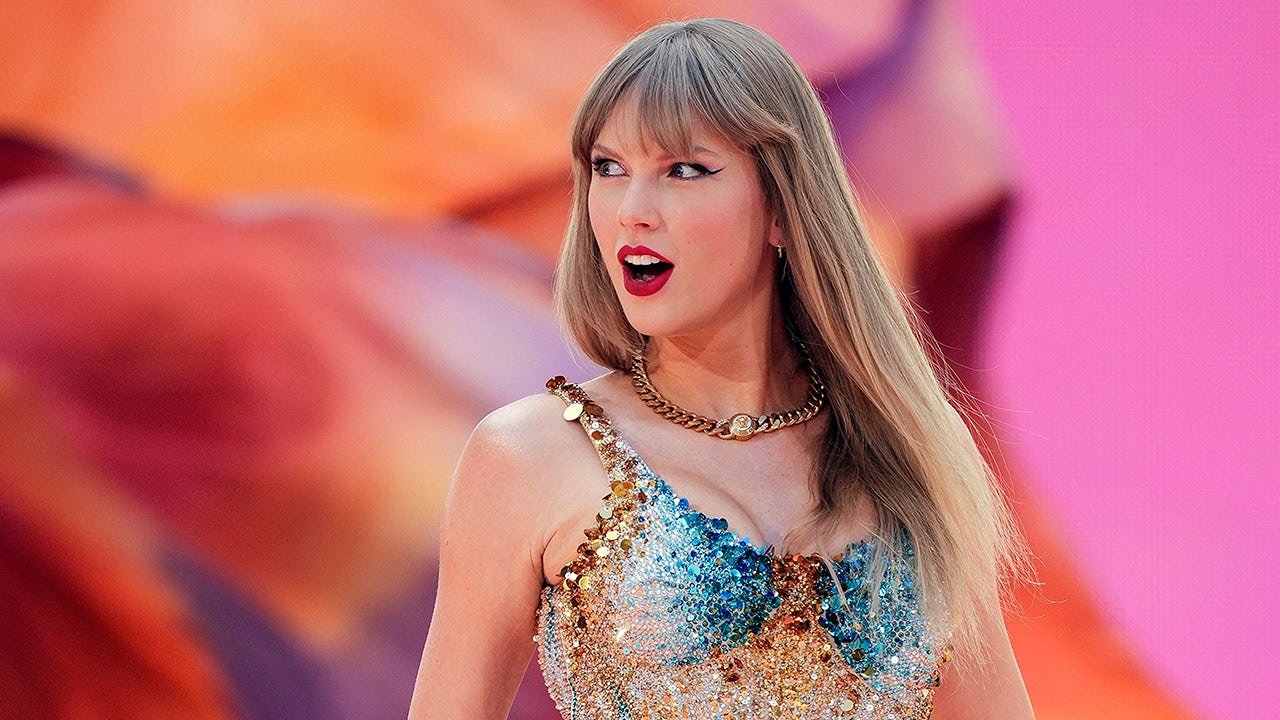
Vanity Fair published a piece on Taylor Swift Monday that didn't name the pop superstar directly, quoting mostly anonymous sources from her early life and in the music industry, raising eyebrows across her fandom as well as in the media.
asserted
that → publish → media
May Jeong, a Vanity Fair journalist, spoke with more than 100 people for the story and used almost no names at all throughout it.
uncertain
Jeong → speak → it
Instead, she referred to Swift as "The Star," and used similar descriptors for others.
asserted
she → refer → others
Some of the people she spoke to were named.
asserted
she → speak → people
The piece was headlined, "The Mastermind," a reference to Swift's track on her "Midnights" album.
asserted
piece → headline → album
The story is split up into an "A Side" and a "B Side," and random capitalized letters – seemingly an attempt to mimic the style of Swift's clues for her fans – spell out "Look What You Made Me Do," the title of a track off her "Reputation" album.
asserted
Me → split → album
Variety's chief music critic, Chris Willman, published a column Tuesday headlined, "Is Vanity Fair’s Hit Piece on Taylor Swift Really Journalism?"
asserted
Piece → publish → Swift
Willman called Monday, the day of the piece's publication, "a bad day for journalism."
asserted
Willman → call → journalism
The piece names an anonymous industry executive, "The Exec," who refers to Swift as "Regina George," one of the titular "Mean Girls" in the 2004 hit comedy.
asserted
who → name → comedy
Swift's team did not return Fox News Digital's requests for comment.
asserted
team → return → comment
Vanity Fair also did not return a request for comment.
asserted
Fair → return → comment
Dan Wakeford, founder of Celebrity Intelligence and former editor-in-chief of People, told Fox News Digital in a statement, "I think Vanity Fair was building a creative framework, and I applaud the ambition.
asserted
I → tell → ambition
Tina Brown rebuilt the magazine in the 1980s on high-low: serious writing about popular subjects, gossip given a literary treatment.
asserted
Brown → rebuild → treatment
'The Mastermind' tries the same trick.
asserted
Mastermind → try → trick
It takes the most popular star alive and runs her through the oldest format in gossip, the blind item.
asserted
It → take → gossip
However, Wakeford argued that the "blind item" format only works when readers really don't know who it is.
asserted
it → argue → ?
"Here everybody knows," he continued.
asserted
he → know → ?
"So the device has nothing to hide and just looks timid.
asserted
device → have → nothing
Every source hiding behind a code name makes the piece feel unsigned, like nobody wants their fingerprints on it, including the magazine."
One of the portions of the article going viral is a former classmate's recollection of Swift wearing Ugg boots at their Pennsylvania school.
"
asserted
Swift → hide → school
She asked her mother for a pair of the same boots.
asserted
She → ask → boots
'Do you know how much they cost?' her mother said.
asserted
mother → know → much
A pair of Uggs amounted to half her single mother’s paycheck working variously at a bakery, at a dairy mill, and as a caretaker.
asserted
pair → amount → caretaker
Peppers recalls The Star owning multiples of Uggs: 'She had the brown one, the black one, the blue one,'" the piece reads.
asserted
piece → recall → one
The portion about the Uggs was widely mocked on TikTok and X.
"A profile that never names its subject and leans on more than 100 sources, many anonymous or renamed, asks readers for a lot of trust.
asserted
many → mock → trust
When people can't tell who said what, the story stops reading as reporting and starts reading as a grudge.
asserted
story → tell → grudge
That's why the Ugg boots detail became the meme.
asserted
detail → become → ?
It told readers how thin some of the material was," Amore Philip, a communications advisor and founder of Apples & Oranges Public Relations, told Fox News Digital.
asserted
Philip → tell → Digital
Philip said that detail became a symbol of the whole piece — which probed Swift's curated image and school background — for a reason.
asserted
which → say → reason
"The Uggs prove the point.
asserted
Uggs → prove → point
Run a woman's teenage boot rotation as evidence and you've told readers how thin the rest is.
asserted
rest → run → readers
There's a genuinely moving story about class in that anecdote, and it belongs in a braver article," Philip added.
asserted
Philip → be → article
Piers Morgan called out the article on X.
"This may be the bitchiest, nastiest hatchet job I’ve ever read in a supposedly elite magazine.
uncertain
I → call → magazine
From my personal experience and knowledge of @taylorswift13 she is a hard-working, talented, generous and surprisingly down-to-earth woman given her superstardom," he wrote.
asserted
he → work → superstardom
David Christopher Lee, a celebrity and portrait photographer, as well as an editor-in-chief of David's Guide, said in a statement to Fox News Digital, "A profile built on more than 100 voices, most of them anonymous or renamed, is not a portrait of a person.
asserted
most → say → person
It is a collage of other people's versions of her, and the subject never gets to answer any of it."
asserted
subject → get → it
Lee added, "I have spent 27 years photographing famous people, and the gap between the person in front of my lens and the person in the coverage is always wide.
asserted
gap → add → coverage
Anonymous sourcing at this scale does not close that gap.
asserted
sourcing → close → gap
It widens it."
asserted
It → widen → it
Wakeford argued that Vanity Fair told the story with the lights off.
"
asserted
Fair → argue → lights
There's a real story in there, which is a shame.
asserted
which → be → ?
…and 13 more, not listed.
 The Aporia