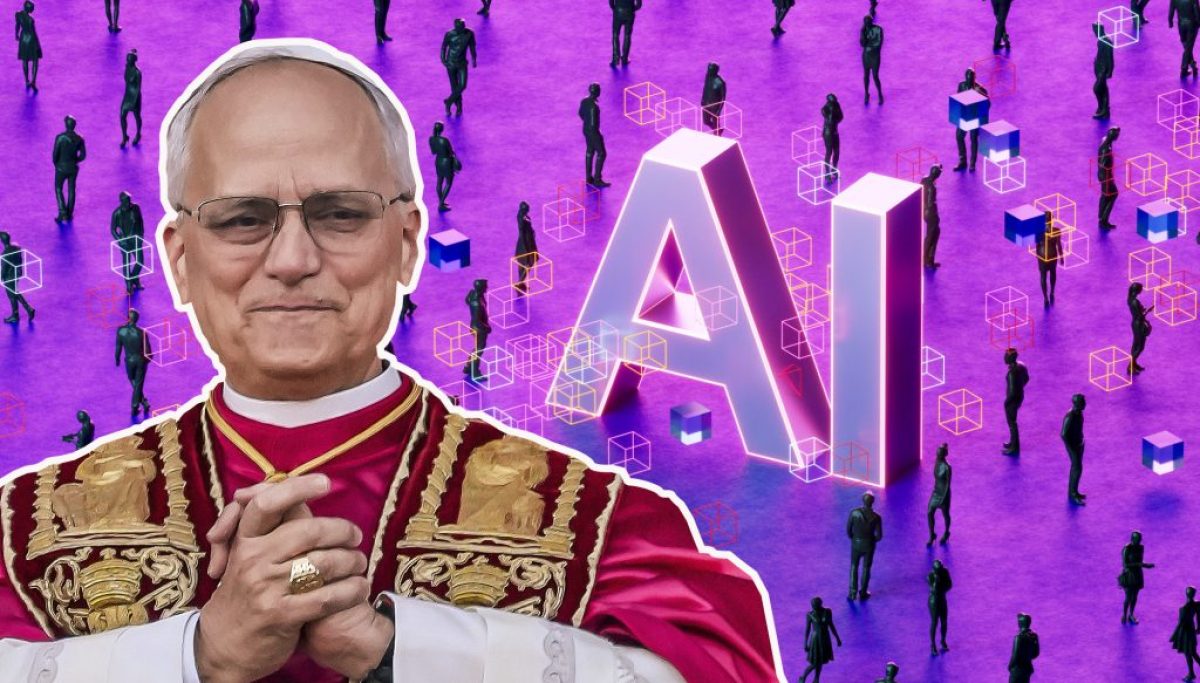
Photo via Washington Examiner

Silicon Valley can’t answer AI’s biggest question. It needs the church

Read the original at Washington Examiner ↗
Cite

Camosy, C. (2026, November 25). Silicon Valley can’t answer AI’s biggest question. It needs the church. Washington Examiner. https://www.washingtonexaminer.com/in_focus/4815470/silicon-valley-needs-church-answer-ai-biggest-question/

Dated from the outlet's own feed. Check the original for its byline.

Washington Examiner · collected 2026-11-25 · by Charles Camosy

Quick Summary

The University of Notre Dame will host a group from OpenAI on December 4 for private discussions and a public event about the implications of artificial intelligence. The public event, titled “From Rerum Novarum to Magnifica Humanitas: What Does it Mean for AI to Benefit Humanity?,” highlights the urgent need to address how AI can serve human welfare. The article emphasizes that significant and unprecedented questions about AI's impact are now being widely discussed, reflecting a broader societal interest in the technology's ethical and societal implications.
Written by AI on 2026-11-26, from this article's own text only (the story summary below draws on all the coverage).

AI analysis

Story summary

On December 4, the University of Notre Dame will host a contingent from OpenAI for private discussions and a public event, which will be recorded by the OpenAI Forum. The event aims to address the urgent questions arising from the AI revolution, focusing on how AI can benefit humanity. The public event is titled "From Rerum Novarum to Magnifica Humanitas: What Does it Mean for AI to Benefit Humanity?" This gathering follows a series of discussions highlighting the transformative impact of AI on society and the need for significant responses.

Written for “Ai Ethics Debate” on 2026-11-27, grounded in this article and the 0 other(s) covering the same event.

Compared with similar articles

This article reads leans left and hedges 0% of its claims. Each row says how that neighbour differs.
The Straits Times
Leans strongly left further left than this Hedges 5 of 13 claims Outlet record 65/100
“The articles describe different events, one is a proposal by OpenAI’s chief scientist for industry limits on AI development, and the other is about a public event hosted by Notre Dame to discuss AI's impact on humanity.”
Washington Examiner
Leans strongly right further right than this Hedges 0 of 4 claims Outlet record 66/100
“The articles discuss different aspects of AI regulation and ethical considerations without clearly referring to the same specific event or time.”
The Guardian
Leans strongly left further left than this Hedges 9 of 41 claims Outlet record 63/100
“Article A describes a specific event at the University of Notre Dame on Dec. 4, while Article B mentions a gathering of religious leaders in San Francisco, though both discuss AI ethics.”

Story

Ai Ethics Debate
Technology · 1 article(s) covering the same event.
How this article was measured signals, leaning charts, publisher record, byline, topics and claims

Signals How these are calculated →

Claims extracted
5
sentences that state something as happening or true
Uncertain
0%
0 of 5 hedged ("reportedly", "may", "according to")
Leaning
Leans left
of the writing, not the subject · beta estimate
Publisher signals
66/100
Washington Examiner's corrections and hedging, across everything collected from it. Not a measure of accuracy.
Outlets on this story
1
Technology
Same framing elsewhere
1
articles that frame the event the way this one does
Analyzed 2026-11-26 · how these are computed

How this is being covered How these are calculated →

Article leaning vs. publisher reliability
Source leaning vs. consistency

Publisher

Washington Examiner · 5560 article(s) · 12 correction(s) detected
Running correction rate · 12 correction(s)

Who wrote this

Charles Camosy
2 article(s) here · 1 carrying a prediction
On Dec. 4, the University of Notre Dame will host a contingent from OpenAI for several private discussions and a public event, to be recorded by the OpenAI Forum.
There have been warnings about catastrophic risk from uncontrollable artificial intelligence for the better part of a year now, but the resignation of Anthropic researcher Jacob Coxon — claiming that AI could “kill us all by the end of the decade” — unleashed a flood of built-up concern.
Also by Charles Camosy
Nothing else under this byline is closely related to this article, so these are simply their most recent.

Topics

Magnifica Humanitas OpenAI the OpenAI Forum the University of Notre Dame

Subjects

Magnifica Humanitas ORG · 1× OpenAI ORG · 1× the OpenAI Forum ORG · 1× the University of Notre Dame ORG · 1×

Narrative

The event has the urgent energy of the moment: a clear sense that something big and dramatic needs to happen to respond to what the artificial intelligence revolution is doing.
framing: assertive · carried by 1 article(s) · first seen 2026-11-26
On Dec. 4, the University of Notre Dame will host a contingent from OpenAI for several private discussions and a public event, to be recorded by the OpenAI Forum.
2026-11-26 · Washington Examiner
Silicon Valley can’t answer AI’s biggest question. It needs the church · assertive framing

Claims (5 extracted, 0 hedged)

On Dec. 4, the University of Notre Dame will host a contingent from OpenAI for several private discussions and a public event, to be recorded by the OpenAI Forum. asserted
University → host → Forum
The event has the urgent energy of the moment: a clear sense that something big and dramatic needs to happen to respond to what the artificial intelligence revolution is doing. asserted
revolution → have → what
The title of the public event says it all: “From Rerum Novarum to Magnifica Humanitas: What Does it Mean for AI to Benefit Humanity?” asserted
AI → say → Humanity
The focus of my first column back in July was that the biggest and most important questions are being blown wide open in ways we have never seen before. asserted
we → blow → ways
In the age of the AI revolution, even the normies are asking them. asserted
normies → ask → them
Give feedback · no sign-in needed

No sign-in needed for now. Your note is sent without a name, so it cannot be answered.

History Support