Photo via CBS News

Most Polymarket users lost money betting on the U.S. midterms

Read the original at CBS News ↗
Cite

Cunningham, M. (2026, November 25). Most Polymarket users lost money betting on the U.S. midterms. CBS News. https://www.cbsnews.com/news/prediction-markets-polymarket-kalshi-trader-losses/

Dated from the outlet's own feed. Check the original for its byline.

CBS News · collected 2026-11-25 · by Mary Cunningham

Quick Summary

A study by the Anti-Corruption Data Collective shows that most users of the prediction market platform Polymarket lost money betting on the U.S. midterm elections. The top 1% of accounts earned 91% of the $23 million in profits, while the remaining 99% lost $15 million. The study analyzed nearly 82,000 accounts and found that more than half of them lost money, highlighting the challenge for average traders against professional and automated traders.
Written by AI on 2026-11-26, from this article's own text only (the story summary below draws on all the coverage).
See how they differ ↓

AI analysis

Story summary

The Anti-Corruption Data Collective published a study finding that the top 1% of Polymarket accounts, mostly professional and sophisticated traders, won 91% of the $23 million in profits from bets on U.S. midterm congressional races, while the bottom 99% of traders lost a total of $15 million. The study, released on November 23, 2026, also revealed that Polymarket and its rival Kalshi were only as accurate as mainstream forecasting models in predicting election outcomes, with an accuracy rate of 91% for Senate races and 95% for House races. This finding challenges the argument that prediction markets provide unbiased, accurate information and raises questions about their social value. Additionally, the study found that nearly 82,000 Polymarket accounts participated, with more than half losing money.

Written for “Polymarket Midterm Bets Skew Rich” on 2026-11-26, grounded in this article and the 2 other(s) covering the same event.
Why this leaning score
The model judged this article politically coded and scored it +0.35, but every quote it verified points left, so the score is not published.
Written under an earlier scoring contract, which gave a paragraph rather than checkable quotes. Re-analysing this article replaces it.
Leaning score withheld for article 180848: score contradicts its own evidence · logged 2026-11-26

How they differ

3 outlets covered “Polymarket Midterm Bets Skew Rich”.

What each outlet says

One AI summary per outlet of its latest article on this story, written from that article alone and checked against it. Open the article for the outlet's own words.

CBS NewsThis outlet25 Nov

A study by the Anti-Corruption Data Collective shows that most users of the prediction market platform Polymarket lost money betting on the U.S. midterm elections. The top 1% of accounts earned 91% of the $23 million in profits, while the remaining 99% lost $15 million. The study analyzed nearly 82,000 accounts and found that more than half of them lost money, highlighting the challenge for average traders against…

Most Polymarket users lost money betting on the U.S. midterms (this article)
The Independent23 Nov

A study by the Anti-Corruption Data Collective reveals that the top 1% of accounts on Polymarket, mostly professional and automated, won 91% of the $23 million in winnings from U.S. midterm election bets. The research indicates that these prediction markets did not outperform traditional forecasting models and questions their societal value, given the concentration of financial rewards among a few traders while the…

Top 1% of Polymarket accounts took 91% of U.S. midterm winnings, study finds →
The Straits Times23 Nov

A report by the Anti-Corruption Data Collective indicates that the top 1% of bettors, mostly professional and automated accounts, won 91% of the $23 million in winnings from Polymarket’s midterm election bets. The study, scheduled for publication on November 23, also suggests that Polymarket and rival Kalshi did not significantly outperform traditional forecasting models, challenging the notion that prediction…

Most winnings on Polymarket midterm bets went to top 1% of bettors, report says →

Compared with similar articles

This article reads unscored and hedges 22% of its claims. Each row says how that neighbour differs.
The Independent
Hedges 4 of 21 claims Outlet record 59/100
The Straits Times
Hedges 4 of 19 claims Outlet record 64/100
Reason
Leans right Hedges 3 of 32 claims Outlet record 65/100
“The articles discuss different aspects of prediction markets, with Article A focusing on losses by young users in general, and Article B specifically addressing the distribution of profits and losses during the U.S. midterms.”

Story

Polymarket Midterm Bets Skew Rich
Politics · 3 article(s) covering the same event. See how they differ ↑
How this article was measured signals, leaning charts, publisher record, byline, topics and claims

Signals How these are calculated →

Claims extracted
23
sentences that state something as happening or true
Uncertain
22%
5 of 23 hedged ("reportedly", "may", "according to")
Leaning
withheld
no quote in the article backed the model's score
Publisher signals
66/100
CBS News's corrections and hedging, across everything collected from it. Not a measure of accuracy.
Outlets on this story
3
Politics
Same framing elsewhere
1
articles that frame the event the way this one does
Analyzed 2026-11-26 · how these are computed

How this is being covered How these are calculated →

Article leaning vs. publisher reliability
Source leaning vs. consistency

Publisher

CBS News · 6354 article(s) · 12 correction(s) detected
Running correction rate · 12 correction(s)

Who wrote this

Mary Cunningham
75 article(s) here · 1 carrying a prediction
The Federal Communications Commission on Wednesday greenlit SpaceX's request to put 1 million satellites in space that will create orbital data centers, bringing CEO Elon Musk closer to his goal of harnessing the sun to generate computing power.
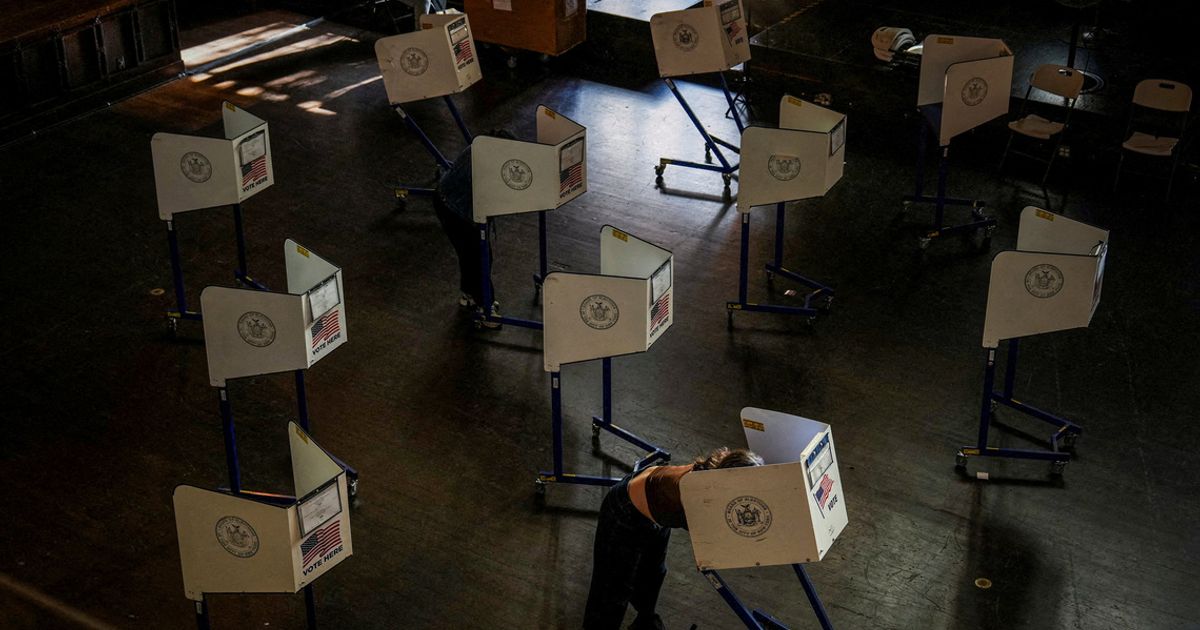
Take the U.S. midterm elections, which generated ample business for prediction market platforms as users wagered on who would win congressional races nationwide.
The U.S. will increase tariffs on Chinese goods by an additional 20%, while also raising import taxes on goods from the European Union, Japan, South Korea, Taiwan and nine other economies.
He alleges that Wendy's engaged in "anticompetitive conduct" that resulted in artificially high prices, causing him to pay more than he otherwise would have.
Jensen Huang's first task in returning to lead Nvidia after resigning last week under a cloud will be to deal with the fallout from his stunning exit and even more surprising reprieve.
2026-11-24 · assertive framing · Can Jensen Huang put out the fire he started at Nvidia?
Yet in reversing itself, Nvidia is undermining its own corporate code of conduct and could expose the company to potential legal liability, Charles Elson, founding director of the John L. Weinberg Center for Corporate Governance at the University of Delaware, told CBS News.
"Sentiment remains pretty bleak — most people are looking at this [Monday] uptick as nothing more than technical in nature, a partial reversal of extremely oversold conditions," he added. Friday as concerns swelled about a possible slowdown in data center construction across the U.S. and tightening restrictions on chip exports, both of which could hurt corporate profits.
2026-11-23 · assertive framing · Stock futures rise, erasing some losses after tech rout
With voters pressing for relief from high costs in the midterm elections, lawmakers may face more pressure in 2027 to focus on bipartisan housing proposals that would lower the cost of buying a home.
The game's official album was created in partnership with Atlantic Records, and will be available on music platforms such as Spotify and Apple Music beginning on Nov. 20.Rockstar
Analysts say the game, which took 13 years to make, is expected to be the largest entertainment release of all time.
2026-11-19 · assertive framing · Hardcore GTA fans ditch work so they have time to play
Also by Mary Cunningham
Nothing else under this byline is closely related to this article, so these are simply their most recent.
All 75 articles by Mary Cunningham →

Topics

ACDC Kalshi Polymarket U.S. the Anti-Corruption Data Collective

Subjects

Polymarket ORG · 6× Kalshi ORG · 3× ACDC ORG · 2× CBS News ORG · 1× New York City GPE · 1× Pew ORG · 1× U.S. GPE · 1× the Anti-Corruption Data Collective ORG · 1× the New York City Council ORG · 1× the Pew Research Center ORG · 1×

Narrative

"Prediction markets have become an important source of real-time election information as they bring together the knowledge and insights of informed participants to show the public how likely different outcomes are," a Polymarket spokesperson said in an email to CBS News.
framing: mixed · carried by 1 article(s) · first seen 2026-11-26
Take the U.S. midterm elections, which generated ample business for prediction market platforms as users wagered on who would win congressional races nationwide.
2026-11-26 · CBS News
Most Polymarket users lost money betting on the U.S. midterms · mixed framing

Claims (23 extracted, 5 hedged)

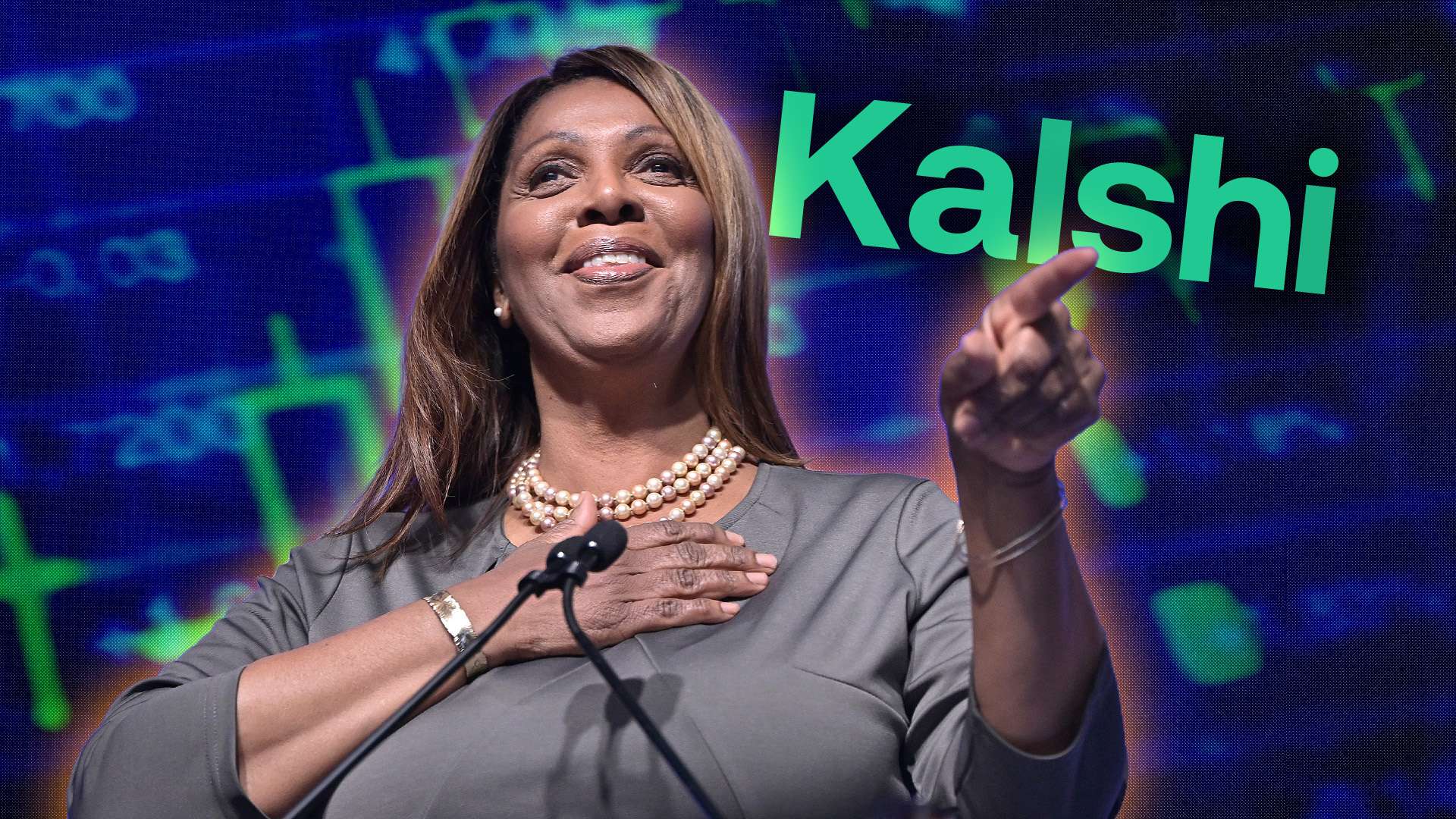
Prediction market companies tout themselves as a place where anyone can make a quick buck. asserted
anyone → tout → buck
Don't bet on it, recent data suggests. uncertain
data → bet → it
Take the U.S. midterm elections, which generated ample business for prediction market platforms as users wagered on who would win congressional races nationwide. asserted
who → take → races
And a few people did, in fact, clean up — very few. asserted
people → clean → fact
On Polymarket, the top 1% of accounts took home 91% of the profits from midterm bets, totaling roughly $23 million, according to research this week from the Anti-Corruption Data Collective (ACDC), a nonprofit advocacy group focused on corporate and financial corruption. uncertain
% → take → corruption
The bottom 99% of traders lost a total of $15 million. asserted
% → lose → million
Of the nearly 82,000 accounts that the group analyzed, more than half lost money on Polymarket's midterm-focused markets. asserted
half → analyze → markets
"At a time [when] affordability was a major issue at the ballot box, average traders handed over their cash to an elite few, including many professional and automated traders," ACDC said in its study. asserted
ACDC → hand → study
According to Polymarket, 95% of the markets on its platform accurately predicted the outcome of this year's midterm elections. uncertain
% → accord → elections
"Prediction markets have become an important source of real-time election information as they bring together the knowledge and insights of informed participants to show the public how likely different outcomes are," a Polymarket spokesperson said in an email to CBS News. asserted
spokesperson → become → News
"Polymarket continues to be a destination for timely, accurate information that anyone can follow as events unfold, whether they trade or not. asserted
they → continue → that
According to the Pew Research Center, Polymarket and rival prediction market Kalshi hosted a combined 34,000 contracts related to the midterms, up from 2,300 in 2024. uncertain
Polymarket → accord → 2024
The midterms generated $2.7 billion in trading volume on the platforms, compared with $8.5 billion during the 2024 presidential and congressional elections, Pew found. asserted
Pew → generate → elections
Other recent data point to the challenge of winning money on prediction markets. asserted
data → point → markets
Findings released by the New York City Council on Tuesday show that, from Jan. 1 to Aug. 11, New York City residents who traded on Kalshi lost a total of $17.6 million. asserted
who → release → million
So-called institutional traders on the platform won $210 million over the same period. asserted
traders → call → period
On Wall Street, institutional investors generally refer to financial firms, market makers and other pros who invest money on behalf of their clients. asserted
who → refer → clients
In Kalshi's case, it also encapsulates retail traders, solo forecasters and two-person teams that use LLCs for tax or business purposes, according to Elisabeth Diana, a spokesperson for the prediction market. uncertain
that → encapsulate → market
"Most winning traders [are] labeled as 'institutional' even though they are often 'individuals'," she said in an email, adding, "These are not Wall Street institutions." asserted
These → win → email
Diana also said that, as in other financial markets, a trader's skill level matters. asserted
level → say → markets
"Traders who get better at forecasting can earn more, and their trades make the market more efficient," she said. asserted
she → get → more
"Individuals do worse day trading on the stock markets than professionals. asserted
Individuals → do → professionals
The only difference here is that prediction markets give more people an opportunity to be a 'professional'." asserted
markets → give → opportunity

Give feedback · no sign-in needed

No sign-in needed for now. Your note is sent without a name, so it cannot be answered.

History Support