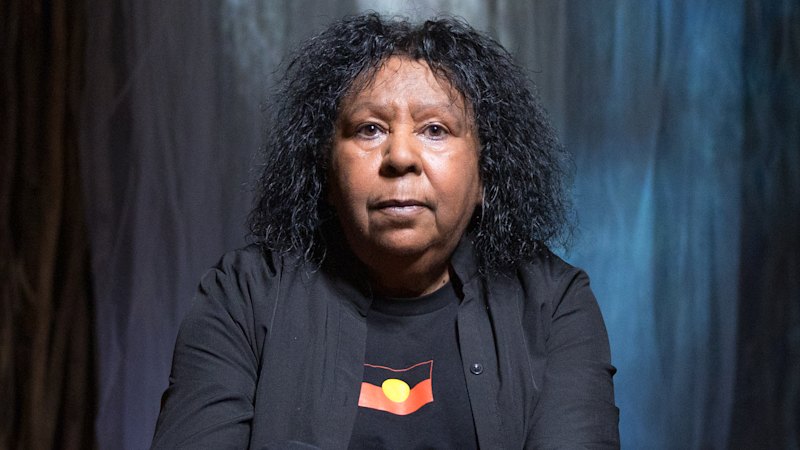
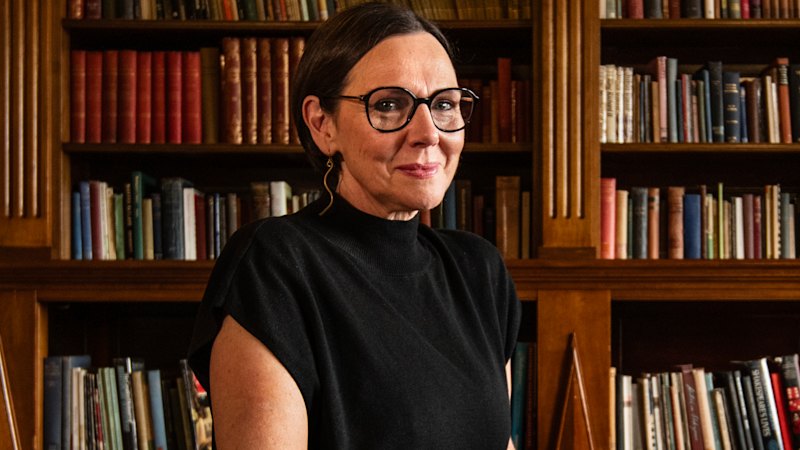
The timing and the location are perfect for artists Maree Clarke and Megan Evans to tell uncomfortable truths.
asserted
Clarke → tell → truths
On the eve of the state election, the pair are confronting the treatment of Indigenous people in Victoria and the would-be next premier’s plans to abolish a treaty between those people and the state government.
asserted
pair → confront → people
They are staging an exhibition in Liberal heartland, on the doorstep of Liberal leader Jess Wilson’s seat.
asserted
They → stag → seat
Should her party win this Saturday’s state election, Wilson plans to abolish the laws enacting a treaty: a binding agreement, established by Labor, between the state government and Victoria’s First Nations people that would provide the power to negotiate terms with the state government, hold public hearings and question government ministers.
asserted
that → win → ministers
Wilson pledged that “we will repeal that, upon coming into government, within the first 100 days”.
asserted
we → pledge → days
The artists have invited Wilson to visit their show at Hawthorn Town Hall gallery, called The Uncomfortable Truth, which explores loss, truth-telling, dispossession and responsibility.
asserted
which → invite → loss
Wilson declined but the invitation stands, along with the offer of a personalised tour.
asserted
invitation → decline → tour
“I thought it was a perfect place being in Hawthorn because it’s like the heart of the wealth of the colony,” says Clarke, a Mutti Mutti/Yorta Yorta and Boon Wurrung/Wemba Wemba artist.
asserted
Clarke → think → colony
As a fifth-generation settler Australian of Scottish and Irish ancestry, Evans comes from the opposite side of Australia’s colonial history to Clarke, but she also believes a treaty is essential.
asserted
treaty → come → Clarke
“It’s been so carefully developed over such a long time.
asserted
It → develop → time
All those fantastic young folk ... who are representing all the different mobs around the state, they’ve been doing such a great job.
asserted
they → represent → job
And to lose that is really deeply sad,” she says.
asserted
she → lose → that
“A lot of other non-Indigenous people [and I] would be so grateful to keep the treaty and ... feel like we’ve got some sort of honourable way to be here.”
asserted
we → keep → way
Victoria has gone further than any other state in establishing a treaty, the centrepiece of which is Gellung Warl, a permanent truth-telling body and an accountability commission.
asserted
centrepiece → go → which
It is currently funded for just over $70 million a year, indexed for inflation.
asserted
It → fund → inflation
Asked about dismantling the policy, a Liberal Party spokesperson said on Thursday: “We must take meaningful steps to address Indigenous disadvantage and empower Aboriginal people and Aboriginal communities.
asserted
We → ask → people
“We believe that reconciliation cannot be achieved through the creation of overlapping institutions but through honesty, partnership and practical action that improves lives.
asserted
that → believe → lives
“A Jess Wilson-led Liberals and Nationals government will invest $52 million to expand the Urgent Care Pathways initiative as part of ‘Our Plan to Deliver for Victorians’, giving more Aboriginal Victorians access to vital healthcare closer to home.”
asserted
government → lead → home
In an interview with this masthead in October, Wilson said of her pledge: “We’re doing so to ensure that we see a billion dollars in savings over the next decade, and that we can ensure that we are putting money into programs and outcomes that are going to deliver for Aboriginal Victorians.”
asserted
that → say → Victorians
Clarke and Evans, however, argue that treaty abolition would be a travesty.
asserted
abolition → argue → ?
“We both hope the exhibition might have opened peoples eyes to the possibility of retaining the treaty that was so hard won,” Evans says.
uncertain
Evans → hope → treaty
“In the last 238 years of being dictated to and being ‘looked after’ … it hasn’t worked,” says Clarke.
asserted
Clarke → dictate → years
“For Aboriginal people to look after [ourselves] and govern, to make decisions for ourselves, for our community, is the way to go.
asserted
look → look → community
Why can’t we have self-determination and look after our own affairs?”
asserted
we → have → affairs
Ideas explored in the show go to the heart of why the treaty process was developed in the first place.
asserted
process → explore → place
In the centre of the gallery is a chaise lounge – symbolising wealthy colonisers – redesigned by Evans.
asserted
lounge → symbolise → Evans
Called Proof (2017), its side features a massacre map, marking the sites where Indigenous people were killed during the Frontier Wars in this state.
asserted
people → call → state
It has extended legs, fashioned from rifles and picket fences, and is lined with rabbit fur, a nod to the idea of the rabbit-proof fence.
asserted
It → have → fence
Evans has also embroidered a series of christening dresses in red.
asserted
Evans → embroider → red
Beautiful from afar, it’s only when you get up close that you can read what is written on them.
asserted
what → ’ → them
In old-school cursive script, Evans documents the names of the children’s homes her late husband – Gunditjmara artist Les Griggs – lived in growing up.
asserted
husband → document → homes
Taken from his mother when he was two years old, Griggs was one of the tens of thousands of Aboriginal children who became part of the stolen generations.
asserted
who → take → generations
“He was very good at escaping,” Evans says, “and as a result he was in lots of different homes.
asserted
he → escape → homes
For the show, Clarke created a series of kopis, the traditional mourning caps made and worn by Indigenous people when grieving.
asserted
Clarke → create → people
Made from a net of emu sinew and river clay, a kopi can weigh anywhere up to eight kilograms.
asserted
kopi → make → kilograms
“Traditionally, it was worn until it fell off your head, or your mourning period was over.
asserted
period → wear → head
You take it off and place it on the grave,” Clarke says.
asserted
Clarke → take → grave
“Western practices don’t work for you fellas and they don’t work for us.”
asserted
they → work → us
The acclaimed artist, whose mural Barerarerungar is at the new Town Hall station in Melbourne’s CBD, often uses traditional practices.
asserted
mural → use → practices
She also mentors the next generation, passing on her knowledge, “because we were forbidden to practice cultural practice, to speak language.”
asserted
we → mentor → language
…and 5 more, not listed.
 The Aporia