Photo via Al Jazeera

Iqbal in space: Urdu poet’s verses unite India, Pakistan beyond Earth

Read the original at Al Jazeera ↗
Cite

Hussain, A. (2026, November 26). Iqbal in space: Urdu poet’s verses unite India, Pakistan beyond Earth. Al Jazeera. https://www.aljazeera.com/news/2026/11/26/iqbal-in-space-urdu-poets-verses-unite-india-pakistan-beyond-earth?traffic_source=rss

Dated from the outlet's own feed. Check the original for its byline.

Al Jazeera · collected 2026-11-26 · by Abid Hussain

Quick Summary

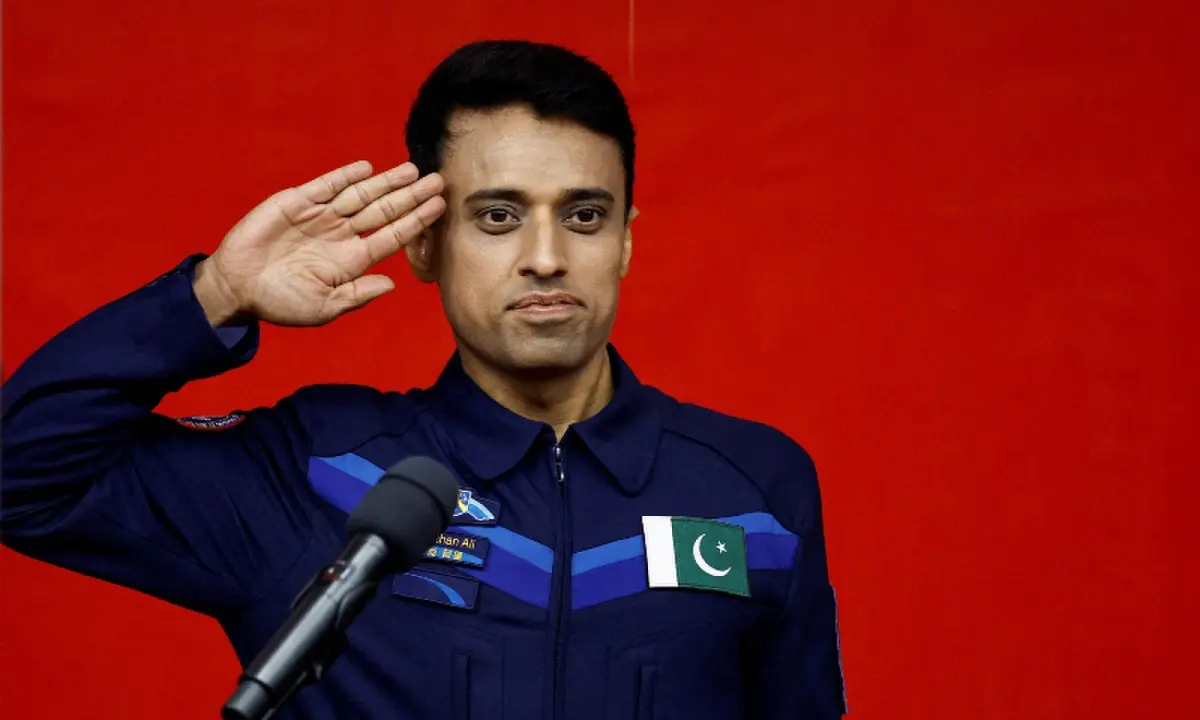
Muhammad Zeeshan Ali, Pakistan's first astronaut, recited a verse by Muhammad Iqbal during a space mission aboard China’s Tiangong space station on Wednesday. Wearing a Pakistani flag-emblazoned flight suit, Ali recited the poetic lines in Urdu, which were then translated into Mandarin by his Chinese crewmates. This moment echoed a similar instance in 1984 when Indian astronaut Rakesh Sharma recited Iqbal’s poetry while in space. Iqbal, a renowned poet, philosopher, and political thinker, is celebrated for his significant contributions to Muslim politics in South Asia and is widely recognized in Pakistan as the visionary behind the country's creation.
Written by AI on 2026-11-26, from this article's own text only (the story summary below draws on all the coverage).
See how they differ ↓

AI analysis

Story summary

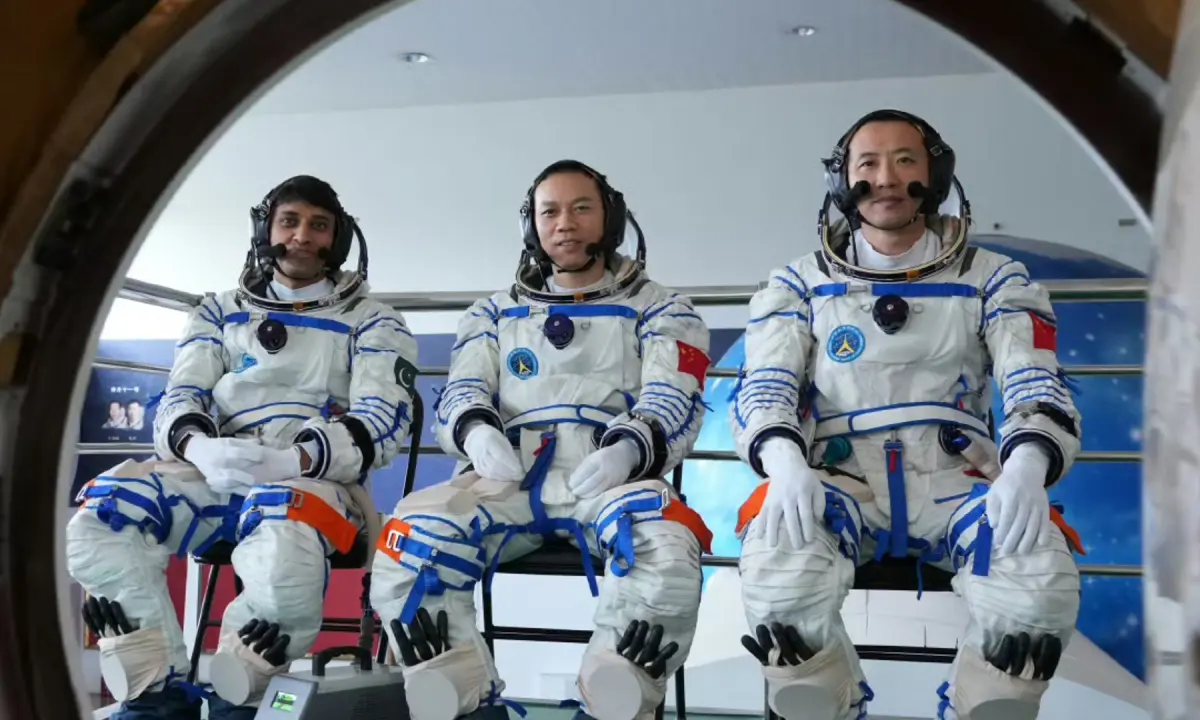
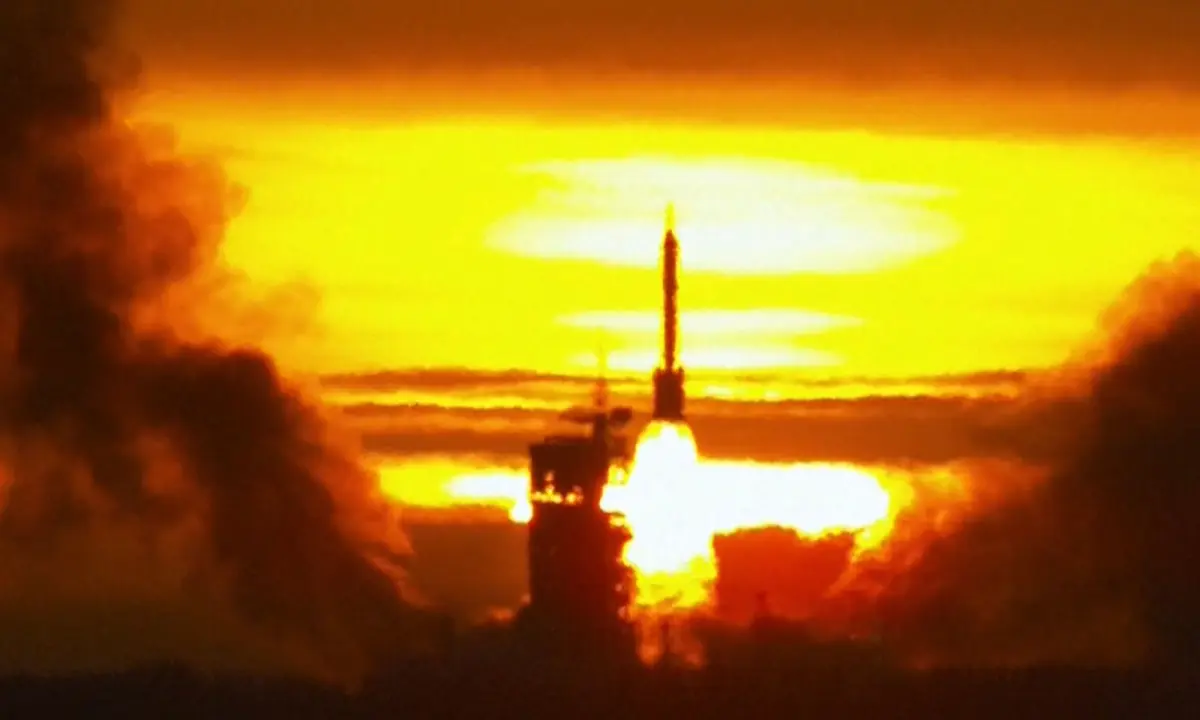
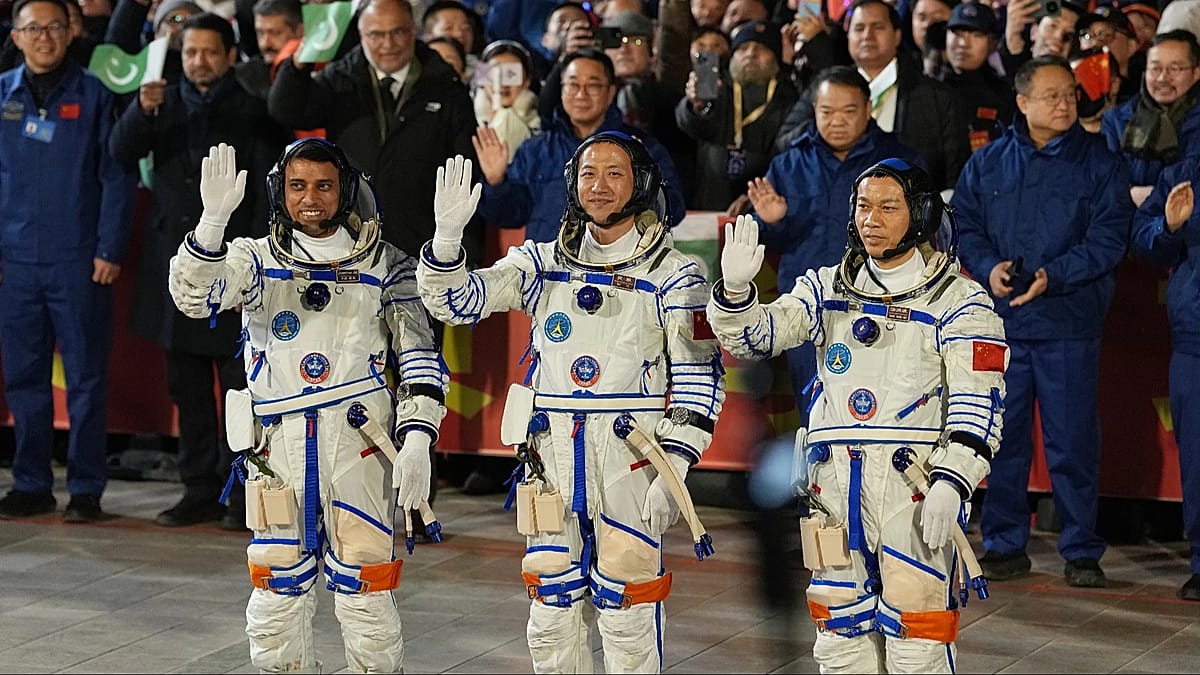
On November 25, 2026, China launched the Shenzhou-24 spacecraft from the Jiuquan Satellite Launch Center, carrying a three-person crew including Muhammad Zeeshan Ali, a 40-year-old Pakistani astronaut, who became the first foreign national to board China’s Tiangong space station. The other crew members are Chinese astronauts Tang Hongbo and Wu Yi. Ali, a former pilot in the Pakistan Air Force, trained for seven months to prepare for the mission, including learning Mandarin. The launch marks a significant milestone in international space cooperation between China and Pakistan. Pakistan's Prime Minister Shehbaz Sharif congratulated China on the launch and described it as "living proof of the ironclad friendship" between the two countries.

Written for “Pakistani Astronaut Reaches Tiangong” on 2026-11-26, grounded in this article and the 29 other(s) covering the same event.

How they differ

9 outlets covered “Pakistani Astronaut Reaches Tiangong”.

What each outlet says

One AI summary per outlet of its latest article on this story, written from that article alone and checked against it. Open the article for the outlet's own words.

Al JazeeraThis outlet26 Nov

Muhammad Zeeshan Ali, Pakistan's first astronaut, recited a verse by Muhammad Iqbal during a space mission aboard China’s Tiangong space station on Wednesday. Wearing a Pakistani flag-emblazoned flight suit, Ali recited the poetic lines in Urdu, which were then translated into Mandarin by his Chinese crewmates. This moment echoed a similar instance in 1984 when Indian astronaut Rakesh Sharma recited Iqbal’s poetry…

Iqbal in space: Urdu poet’s verses unite India, Pakistan beyond Earth (this article)6 articles from Al Jazeera on this story
Dawn26 Nov

Prime Minister Shehbaz Sharif met with Chinese Ambassador Jiang Zaidong to congratulate China on the Shenzhou-24 mission, which includes Pakistan’s first astronaut, Wing Commander Muhammad Zeeshan Ali, on board China’s Tiangong space station. Sharif highlighted the mission as a symbol of Pakistan-China friendship and praised China’s leadership for its achievements in space exploration and its willingness to include…

‘To the moon and beyond’: PM says Shenzhou-24 mission ‘living proof’ of Pak-China friendship →13 articles from Dawn on this story
Toronto Star26 Nov

Pakistan’s Prime Minister Shehbaz Sharif congratulated China on the successful launch of the Shenzhou 24 mission, which carried Muhammad Zeeshan Ali, a 40-year-old Pakistani astronaut, to the Tiangong space station. Ali became the first foreign crew member to reach the station, joining Chinese astronauts Tang Hongbo and Wu Yi. The mission launched from the Jiuquan Satellite Launch Center in northwestern China on…

Pakistan congratulates China on flight that carried a Pakistani astronaut to space station →3 articles from Toronto Star on this story
The Hindu25 Nov

On November 25, 2026, China launched the Shenzhou-24 space mission from the Jiuquan Satellite Launch Centre, carrying a three-person crew that includes Zeeshan Ali, a 40-year-old Pakistani pilot who will be the first foreign astronaut to board the Tiangong space station. Ali will spend 5 to 10 days conducting experiments and has been training in Beijing for seven months, learning Chinese language and culture. The…

China’s Shenzhou-24 space flight takes off with Pakistani national as first foreign astronaut →2 articles from The Hindu on this story
BBC25 Nov

China has launched the Shenzhou-24 mission, carrying two Chinese astronauts and the first Pakistani astronaut, Muhammad Zeeshan Ali, a 40-year-old air force pilot. This marks the debut of a foreign national aboard China's Tiangong space station, signaling China's ambition to make Tiangong an international research hub. The mission is scheduled to last several days.

Why has China sent the first Pakistani astronaut to space? →2 articles from BBC on this story
The Independent24 Nov

China is preparing for a landmark space launch with its Shenzhou 24 mission, set to lift off on Wednesday from the Jiuquan Satellite Launch Centre, carrying Muhammad Zeeshan Ali, a Pakistani astronaut, who will be the first foreigner to board China’s Tiangong space station. The mission includes Chinese astronauts Tang Hongbo and Wu Yi, and marks a significant step in international space cooperation. Zeeshan Ali, who…

China set for landmark space launch with rocket carrying first foreign astronaut →
Show 2 more outlets
CBS News25 Nov

China launched the Shenzhou 24 spacecraft on Wednesday from the Jiuquan Satellite Launch Center, carrying two Chinese astronauts and a Pakistani astronaut, Muhammad Zeeshan Ali, marking the first time a foreign astronaut has flown on a Chinese mission. The crew will conduct over 90 experiments during their mission, including a photosynthetic cyanobacteria experiment by Ali. The launch is part of a 2025 agreement…

China launches first foreign astronaut to its space station →
Euronews25 Nov

China launched the Shenzhou 24 spacecraft from the Jiuquan Satellite Launch Center, carrying Muhammad Zeeshan Ali, a 40-year-old Pakistani astronaut, along with Chinese astronauts Tang Hongbo and Wu Yi. This marks the first time a foreign national has joined China’s Tiangong space station crew. The mission, part of a February 2025 agreement between China and Pakistan, involves more than 90 scientific experiments…

China sends first foreign astronaut to its space station as Pakistani joins Shenzhou 24 crew →

Where they agree and split

Framing

How the first headlines put it

Stated as fact4
An achievement1
The headlines (5)

Pakistan’s Zeeshan Ali set to become country’s first astronaut in space on Nov 25 Dawn · stated as fact

China unveils new space mission crew, with a Pakistani astronaut set to board its space station Toronto Star · stated as fact

China's Shenzhou-24 spaceship to include first foreign astronaut from Pakistan The Hindu · stated as fact

China set for landmark space launch with rocket carrying first foreign astronaut The Independent · stated as fact

Pakistan’s Zeeshan Ali set for historic flight to China’s space station Al Jazeera · an achievement

The full story: what happened, how it changed, and all 30 articles →

Compared with similar articles

This article reads unscored and hedges 0% of its claims. Each row says how that neighbour differs.
Al Jazeera
Hedges 4 of 68 claims Outlet record 60/100
Al Jazeera
Hedges 0 of 1 claims Outlet record 60/100
Dawn
Hedges 0 of 26 claims Outlet record 64/100
Dawn
Hedges 0 of 26 claims Outlet record 64/100
The Hindu
Hedges 0 of 9 claims Outlet record 78/100
Al Jazeera
Hedges 0 of 1 claims Outlet record 60/100
Euronews
Hedges 2 of 23 claims Outlet record 60/100

Story

Pakistani Astronaut Reaches Tiangong
World · 30 article(s) covering the same event. Compare every outlet's account →
How this article was measured signals, leaning charts, publisher record, byline, topics and claims

Signals How these are calculated →

Claims extracted
40
sentences that state something as happening or true
Uncertain
0%
0 of 40 hedged ("reportedly", "may", "according to")
Leaning
not political
takes no side on a contested political question
Publisher signals
60/100
Al Jazeera's corrections and hedging, across everything collected from it. Not a measure of accuracy.
Outlets on this story
30
World
Same framing elsewhere
1
articles that frame the event the way this one does
Analyzed 2026-11-26 · how these are computed

How this is being covered How these are calculated →

Article leaning vs. publisher reliability
Source leaning vs. consistency

Publisher

Al Jazeera · 6695 article(s) · 4 correction(s) detected
Running correction rate · 4 correction(s)

Who wrote this

Abid Hussain
19 article(s) here · 1 carrying a prediction
Gujral recited the opening line of the same couplet Ali would read to his Chinese crewmates decades later.
The crew were expected to enter the station at about 11:45am (06:45 GMT).
Muhammad Zeeshan Ali, 40, will fly as a payload specialist alongside commander Tang Hongbo and flight engineer Wu Yi.
Pakistan’s climate change minister, Musadik Malik, arrived in New Delhi on Friday, becoming the first Pakistani federal minister to visit India since the neighbours fought a four-day war in May 2025.
Pakistan’s defence minister has said the country could have multiple new provinces as early as the New Year.
Without another operation, he said, “she may lose her sight permanently”.
Sitting outside his shop in late October, Ijaz recalled how his youngest daughter, Laiba, would make tea for him every morning and then again at night before bedtime.
As the US holds its midterm elections on November 3, with the power in the House of Representatives and Senate at stake, Pakistan is one country that will prefer success for Trump and his Republican Party, which at present is expected to lose critical seats in both chambers. “The prime minister of Pakistan – terrific man – said that Donald Trump was responsible for saving 30 million lives and probably many more than that,” the US president said, addressing the United Nations General Assembly in September, referring to Pakistan Prime Minister Shehbaz Sharif – and to a war that appears to have endeared Islamabad to Trump.
The Pakistani army chief is expected to meet Iranian Foreign Minister Abbas Araghchi first, IRNA said.
Sheikh Waqas Akram, the PTI’s central information secretary, told Al Jazeera that the party would challenge the imposition of emergency laws — suspending civil liberties — and governor’s rule in the province in court on Tuesday.
Also by Abid Hussain
Nothing else under this byline is closely related to this article, so these are simply their most recent.
All 19 articles by Abid Hussain →

Topics

China Chinese Indian Lahore Pakistan

Subjects

Iqbal PERSON · 8× India GPE · 7× Pakistan GPE · 6× Indian NORP · 4× China GPE · 3× Chinese NORP · 3× Lahore GPE · 3× 4Pakistan GPE · 2× Ali PERSON · 2× Rakesh Sharma PERSON · 2×

Narrative

Recommended Stories list of 4 items- list 1 of 4From stargazing to space: Pakistan watches its first astronaut take flight - list 2 of 4Pakistan rejoices as country’s first astronaut enters orbit - list 3 of 4Pakistan’s Zeeshan Ali set for historic flight to China’s space station - list 4 of 4Pakistani astronaut to join China’s next space station mission “Sitaron se aage jahan aur bhi hain / abhi ishq ke imtihan aur bhi hain,” Ali said.
framing: assertive · carried by 1 article(s) · first seen 2026-11-26
Gujral recited the opening line of the same couplet Ali would read to his Chinese crewmates decades later.
2026-11-26 · Al Jazeera
Iqbal in space: Urdu poet’s verses unite India, Pakistan beyond Earth · assertive framing

Claims (40 extracted, 0 hedged)

Floating inside China’s Tiangong space station on Wednesday, Muhammad Zeeshan Ali turned to a poet from home. asserted
Ali → float → home
Wearing a blue flight suit bearing the green-and-white Pakistani flag and surrounded by five Chinese crewmates, Pakistan’s first astronaut recited a couplet by Muhammad Iqbal, the country’s national poet. asserted
astronaut → wear → Iqbal
Recommended Stories list of 4 items- list 1 of 4From stargazing to space: Pakistan watches its first astronaut take flight - list 2 of 4Pakistan rejoices as country’s first astronaut enters orbit - list 3 of 4Pakistan’s Zeeshan Ali set for historic flight to China’s space station - list 4 of 4Pakistani astronaut to join China’s next space station mission “Sitaron se aage jahan aur bhi hain / abhi ishq ke imtihan aur bhi hain,” Ali said. asserted
Ali → watch → mission
He paused briefly between the two lines before repeating the opening phrase and completing the verse, trying to steady himself as he floated. asserted
he → pause → himself
He then smoothly switched to Mandarin, translating the couplet’s meaning to his Chinese crewmates. asserted
He → switch → crewmates
“Countless worlds lie beyond the stars, and countless trials are still ahead,” he said. asserted
he → lie → stars
As he finished with a thank-you and a smile, the crew broke into applause and cheers before coming together for midair hugs and laughter. asserted
crew → finish → hugs
But this was not the first time Iqbal’s poetry had travelled from Earth into orbit. asserted
poetry → travel → orbit
The first such exchange took place in 1984, when Rakesh Sharma, the first Indian in space, invoked the poet’s words while responding to then Indian Prime Minister Indira Gandhi’s question about how India looked from above. asserted
India → take → question
In 1997, another Indian-born astronaut, Kalpana Chawla, heard Iqbal’s poetry quoted by then-Indian Prime Minister Inder Kumar Gujral during a conversation from orbit. asserted
poetry → bear → orbit
Gujral recited the opening line of the same couplet Ali would read to his Chinese crewmates decades later. asserted
Ali → recite → crewmates
Iqbal was a poet, philosopher and political thinker whose ideas helped shape Muslim politics in South Asia in the early 20th century. asserted
ideas → shape → century
Born on November 9, 1877, in Sialkot in what was then British India, he studied in Lahore, England, and Germany; qualified in law; and earned a doctorate in philosophy. Across South Asia, he is still widely known as Allama, meaning the learned one. He wrote primarily in Persian and Urdu. asserted
He → bear → Persian
His Persian poetry earned him a lasting following in Iran, as well, where he is known as Iqbal-e-Lahori, or Iqbal of Lahore. asserted
he → earn → Lahore
In 1930, while presiding over the annual session of the All-India Muslim League in Allahabad, he proposed that Punjab, the North-West Frontier Province, Sindh and Balochistan be brought together in a single self-governing state, within or outside the British Empire. asserted
Punjab → preside → Empire
Although he did not use the word “Pakistan” in his address, his proposal came to be regarded as the intellectual idea that eventually led to the country’s creation. asserted
that → use → creation
In Pakistan, he is often described as the man who dreamed of the country. asserted
who → describe → country
Iqbal died in Lahore on April 21, 1938, nine years before Partition led to the creation of Pakistan in 1947. asserted
Partition → die → 1947
When did India’s first astronaut quote him? asserted
astronaut → quote → him
Rakesh Sharma, a squadron leader in the Indian Air Force, flew on board the Soviet Soyuz T-11 mission on April 3, 1984. asserted
Sharma → fly → April
He spent nearly eight days on board the Salyut 7 space station. asserted
He → spend → station
That month, Prime Minister Indira Gandhi spoke to him during a televised conversation. asserted
Gandhi → speak → conversation
“Upar se Bharat kaisa dikhta hai aapko?” she asked. asserted
she → ask → ?
(How does India look to you from up there?) asserted
India → look → you
“Ji, main baghair kisi jhijhak ke keh sakta hoon ke sare jahan se achha,” Sharma replied. asserted
Sharma → reply → ?
(I can say without any hesitation, better than the whole world.) asserted
I → say → world
His response referred to Iqbal’s famous poem, Tarana-e-Hindi, written in 1904, which includes the line “Sare jahan se achha, Hindustan hamara” (Better than the whole world, our India). asserted
which → refer → world
Later rendered as a song, Sare jahan se achcha was one of the anthems of India’s independence struggle. asserted
achcha → render → struggle
It remains one of India’s most popular patriotic songs, and the Indian Army band frequently performs it on major occasions. asserted
band → remain → occasions
When did India’s prime minister cite Iqbal during a space mission? asserted
minister → cite → mission
Chawla, born in the Indian state of Haryana, made her first spaceflight on board the US space shuttle Columbia, which launched on November 19, 1997. asserted
which → bear → November
During her next space visit in 2003, she died along with her crewmates when the shuttle broke apart during its return to Earth. asserted
shuttle → die → Earth
Gujral, who was born in Jhelum, in what is now Pakistan, was fluent in Urdu and had a fondness for poetry. asserted
what → bear → poetry
During a conversation with Chawla on board the 1997 shuttle journey, he turned to Iqbal. asserted
he → turn → Iqbal
“There is a saying by one of our poets who’s very well known in the subcontinent, Iqbal.” He then recited the opening line of the same couplet that Ali would quote nearly three decades later. “There are worlds beyond stars. asserted
Ali → be → stars
And now you have seen them. asserted
you → see → them
How do you feel about them?” he asked. asserted
he → feel → them
“It’s a very special feeling … asserted
It → ’ → ?
What you are saying does become very literal,” Chawla replied. asserted
Chawla → say → What
“It’s a dome of a dark sky and stars everywhere,” she said. asserted
she → ’ → sky
Give feedback · no sign-in needed

No sign-in needed for now. Your note is sent without a name, so it cannot be answered.

History Support